 ee
eeLaptops ›
Best Laptop for Web Design and Development 2026
A freelance designer just landed a major client project — a full e-commerce redesign with complex CSS animations, responsive layouts, and a headless CMS backend. The old laptop chokes on Docker containers while Figma crawls in the background. Sound familiar? Choosing the right laptop for web design and development in 2026 means balancing raw processing power, display accuracy, and portability in ways that directly impact billable hours and output quality.
The landscape has shifted considerably this year. Apple's M4 Pro and M5 silicon continue to dominate single-threaded performance benchmarks critical for JavaScript compilation, while AMD's Ryzen AI 9 HX 370 and Intel's Core Ultra 9 288V bring competitive multi-threaded muscle alongside dedicated NPU hardware. Display technology matters just as much — designers need panels that cover 100% DCI-P3 at minimum, with OLED and Liquid Retina XDR panels now standard at the premium tier. For developers juggling dedicated GPUs versus integrated graphics, the calculus depends heavily on whether the workflow involves 3D rendering, WebGL, or strictly 2D layout work.

After evaluating thermals, sustained performance under load, display calibration, keyboard ergonomics, and port selection, seven laptops emerged as the strongest contenders for web professionals in 2026. Each serves a different workflow — from ultraportable coders who live in VS Code to designers running Figma, Photoshop, and a local dev server simultaneously.
Contents
Standout Models in 2026
- #PreviewProductRating
- Bestseller No. 1
 Rating:

- Bestseller No. 2
 Rating:
 - Bestseller No. 3
 Rating:
 - Bestseller No. 4
 Rating:
- Bestseller No. 5
 Rating:
 - Bestseller No. 6
 Rating:
 - Bestseller No. 7
 Rating:
Product Reviews
1. Apple MacBook Pro 16″ M4 Pro (14‑core CPU / 20‑core GPU) — Best Overall for Full-Stack Development
The 16-inch MacBook Pro with the higher-binned M4 Pro chip — 14 CPU cores and 20 GPU cores — is the machine to beat for professional web development workflows. Compiling large TypeScript projects in Webpack or Vite completes measurably faster than any Intel or AMD alternative in this roundup. The 24GB unified memory architecture eliminates the GPU/CPU memory bottleneck entirely, meaning Figma files with 200+ frames, Docker containers, and a Chrome instance with 40+ DevTools tabs run without swap pressure.
The 16.2-inch Liquid Retina XDR display delivers 1600 nits peak HDR brightness and covers the full P3 color gamut — essential for designers who need to verify how gradients and brand colors render on high-end consumer displays. The 120Hz ProMotion adaptive refresh rate makes scrolling through long CSS files and design canvases noticeably smoother. Battery life consistently hits 18-20 hours of light coding, making this a genuine all-day machine without a charger.
Apple Intelligence integration provides on-device AI features including smart code summarization and writing tools, though most developers will find GitHub Copilot or similar third-party tools more useful for actual coding assistance. The real value proposition is the combination of sustained performance — the M4 Pro throttles far less than x86 competitors under prolonged compilation loads — and macOS's Unix-based terminal environment, which remains the preferred development platform for the majority of web professionals.
Pros:
- 14-core CPU delivers class-leading compilation speeds for JavaScript/TypeScript toolchains
- 24GB unified memory handles heavy multitasking without performance degradation
- 16.2″ Liquid Retina XDR with P3 gamut and 1600-nit HDR peak brightness
- 18–22 hour real-world battery life under coding workloads
- Minimal thermal throttling during sustained builds
Cons:
- Premium pricing places it above budget-conscious freelancers' reach
- No touchscreen — a limitation for designers who prefer pen input for wireframing
- 16-inch form factor adds weight (2.14 kg) for daily commuters
2. Apple MacBook Pro 14″ M4 Pro (12‑core CPU / 16‑core GPU) — Best Portable Pro Machine
The 14-inch MacBook Pro shares the M4 Pro silicon with its larger sibling but in a more compact 1.55 kg chassis — a meaningful difference for developers who commute daily or work from coffee shops. The 12-core CPU and 16-core GPU configuration handles 95% of web development tasks identically to the 16-inch model. The performance gap only becomes apparent during extremely heavy parallel workloads like running multiple Docker containers while simultaneously compiling a large monorepo.
The 14.2-inch Liquid Retina XDR panel uses the same P3-wide color technology and 120Hz ProMotion refresh as the 16-inch variant. For web designers, the smaller screen real estate is the primary tradeoff — running Figma alongside a browser and terminal simultaneously requires more window management. An external monitor largely eliminates this constraint, and the HDMI 2.1 port plus Thunderbolt 4 support driving up to two external displays natively.
Build quality is identical to the 16-inch: the Space Black anodized aluminum resists fingerprints, the keyboard delivers consistent 1mm travel, and MagSafe 3 charging frees up all three Thunderbolt 4 ports for peripherals. For web professionals who prioritize portability without sacrificing the core macOS development experience, the 14-inch M4 Pro represents the optimal size-to-power ratio in Apple's 2026 lineup.
Pros:
- Same M4 Pro architecture as the 16″ in a significantly lighter 1.55 kg body
- 14.2″ Liquid Retina XDR with ProMotion and P3 color gamut
- Three Thunderbolt 4 ports plus HDMI 2.1 and SD card slot
- MagSafe charging preserves all I/O ports for peripherals
Cons:
- Smaller display constrains multi-window workflows without an external monitor
- 12-core CPU variant shows marginal performance reduction in heavily threaded compilation tasks
3. Apple MacBook Air 15″ M5 — Best Value for Front-End Developers
The 2026 MacBook Air with M5 delivers a surprising amount of web development capability at a substantially lower price point than the Pro line. The M5 chip brings a faster CPU and improved Neural Engine over the M4, and while it lacks the Pro/Max core counts, it handles VS Code, Figma, Node.js dev servers, and browser testing without breaking a sweat. The 16GB unified memory is the floor for modern web development — sufficient for most front-end workflows but potentially constrained when running multiple Docker containers alongside memory-hungry design applications.
The 15.3-inch Liquid Retina display covers the P3 color gamut at 500 nits — not the HDR peak of the Pro's XDR panel, but accurate enough for UI design work. The fanless design means zero noise during coding sessions, though sustained heavy compilation (think: building a Next.js project with 500+ pages) will trigger thermal throttling that the Pro models avoid. For developers whose workflow is predominantly front-end — HTML, CSS, JavaScript, and design tools — the Air's performance ceiling rarely becomes a limiting factor.
At just 1.51 kg with 18 hours of battery life and Wi-Fi 7 connectivity, the MacBook Air 15″ is the lightest full-size laptop in this roundup. The 12MP Center Stage camera also makes it a strong choice for remote developers who spend significant time in video calls. Buyers whose work stays within the front-end stack — or who primarily work with lightweight frameworks like Astro, Svelte, or vanilla HTML/CSS — will find the Air delivers 80% of the Pro's capability at roughly 60% of the price.
Pros:
- M5 chip handles front-end development tools and design apps with ease
- Fanless design — completely silent operation during typical coding sessions
- 15.3″ P3 Liquid Retina provides ample screen space for split-pane editing
- 18-hour battery life and 1.51 kg weight — the most portable option here
- Significantly lower price than MacBook Pro configurations
Cons:
- 16GB memory ceiling limits heavy Docker and VM workloads
- Thermal throttling under sustained compilation loads due to fanless design
- Only two Thunderbolt ports — external monitor setup consumes half the I/O
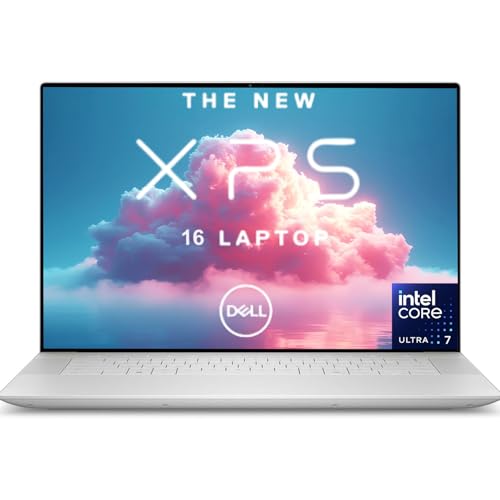
4. Dell XPS 16 9640 — Best Windows Laptop for Creative Web Design
The Dell XPS 16 9640 is the strongest Windows contender for web designers who need dedicated GPU horsepower alongside a premium build. The Intel Core Ultra 7 155H delivers 16 cores and 22 threads with boost clocks up to 4.8 GHz — more than enough for heavy JavaScript bundling, SASS compilation, and running WSL2 Linux environments. The NVIDIA GeForce RTX 4050 adds genuine hardware acceleration for 3D web experiences, WebGL development, and GPU-intensive design tools like Blender (for creating 3D assets destined for web pages).
Storage is a standout: 2TB PCIe SSD internal plus a bundled 512GB external drive. Web developers accumulate project files, node_modules directories, and Docker images rapidly — the generous storage prevents the constant cleanup that smaller drives demand. The 16GB DDR5 RAM is adequate for most workflows but sits at the minimum threshold for 2026. The 16.3-inch WUXGA (1920×1200) display provides a comfortable workspace with a 16:10 aspect ratio, though the resolution falls short of the 2.8K+ panels found on the ASUS and HP competitors in this list. Designers who rely on pixel-perfect rendering at high PPI should factor this in.
The XPS 16's edge-to-edge keyboard and haptic touchpad mirror Apple's design philosophy on the Windows side. The chassis is machined aluminum with a carbon fiber palm rest — rigid and professional. For Windows-committed web developers who also dabble in GPU-accelerated tasks, the RTX 4050 provides capabilities that no MacBook can match at this price tier.
Pros:
- RTX 4050 GPU enables WebGL, 3D rendering, and CUDA-accelerated development tools
- 2.5TB total storage (2TB internal + 512GB external) eliminates storage anxiety
- Intel Core Ultra 7 155H with 16 cores handles heavy multithreaded compilation
- Premium machined aluminum and carbon fiber build quality
Cons:
- WUXGA (1920×1200) resolution is noticeably lower than competing 2.8K panels
- 16GB RAM is the bare minimum for demanding 2026 web development workflows
- Battery life under load trails Apple Silicon competitors significantly
5. ASUS ProArt P16 — Best Display for Color-Critical Design Work
The ASUS ProArt P16 targets creative professionals who demand absolute display accuracy, and it delivers. The 16-inch OLED panel runs at 2880×1800 resolution with 120Hz refresh and touchscreen input — the highest-quality display in this roundup by a measurable margin. OLED's per-pixel lighting produces true blacks and infinite contrast, making it exceptional for evaluating dark mode UI designs, checking shadow gradients, and verifying color transitions that IPS and mini-LED panels approximate but never match.
Under the hood, the AMD Ryzen AI 9 HX 370 processor with Zen 5 architecture brings 12 cores and 24 threads alongside a powerful NPU for on-device AI workloads. The RTX 5070 with 8GB GDDR7 is the most powerful GPU in this comparison — overkill for standard web development but valuable for designers who create 3D product visualizations, animated SVG content, or work with tools like Three.js and WebGPU. The 32GB LPDDR5X memory and 2TB SSD are generous and future-proof.
The touchscreen adds genuine workflow value for web designers — pinch-to-zoom on design mockups, sketch wireframes directly on screen, and navigate prototypes with touch gestures that mimic end-user mobile interactions. The included Dockztorm wireless mouse is a minor bonus. Windows 11 Pro adds BitLocker encryption and Remote Desktop hosting, useful for developers who need to access their machine remotely. The tradeoff is weight and battery life — this is a desktop-replacement workstation, not a café laptop.
Pros:
- 16″ OLED 2.8K 120Hz touchscreen — the most color-accurate panel in this roundup
- RTX 5070 8GB GDDR7 handles 3D web content, WebGL, and GPU-heavy design tools
- 32GB LPDDR5X and 2TB SSD — no memory or storage compromises
- Ryzen AI 9 HX 370 with dedicated NPU for on-device AI processing
- Touchscreen enables intuitive design workflows and prototype testing
Cons:
- OLED panels carry long-term burn-in risk with static UI elements (toolbars, taskbars)
- Heavier chassis and shorter battery life than Apple Silicon alternatives
- Premium pricing competes directly with the MacBook Pro 16″
6. HP Spectre x360 14 — Best 2-in-1 for Design and Presentation
The HP Spectre x360 14 occupies a unique position as the only convertible 2-in-1 in this roundup. The 360-degree hinge allows tablet mode for sketching wireframes, tent mode for client presentations, and traditional laptop mode for coding — genuine versatility that single-form-factor machines cannot replicate. The 14-inch 2880×1800 display at 120Hz with 100% DCI-P3 coverage rivals the ASUS ProArt's panel quality in a more compact form factor.
The Intel Evo Core Ultra 7 155H processor matches the Dell XPS 16's CPU with 16 cores and 22 threads, providing ample power for Node.js development, build tooling, and simultaneous design application usage. Intel Arc integrated graphics handle standard web development tasks and even light WebGL work without issue, though this machine lacks the dedicated GPU needed for heavy 3D rendering. The 16GB LPDDR5 and 1TB PCIe NVMe SSD configuration is well-balanced for typical web professional workflows.
Corning Gorilla Glass NBT protects the touchscreen with anti-reflection coating — a detail that matters for designers working in varied lighting conditions. The 400-nit brightness is lower than the MacBook Pro's peak but sufficient for indoor use. Thunderbolt 4 connectivity, a fingerprint reader, and a backlit keyboard round out a package that excels when the workflow involves frequent client-facing presentations or stylus-based design iteration. Users who frequently encounter laptop freezing issues during intensive multitasking should note the 16GB memory ceiling may become a constraint.
Pros:
- 2-in-1 convertible form factor with 360° hinge for tablet/tent/laptop modes
- 14″ 2880×1800 120Hz touchscreen with 100% DCI-P3 and Gorilla Glass NBT
- Intel Evo Core Ultra 7 155H with 16 cores for demanding development tasks
- Anti-reflection coating reduces glare in bright environments
- Compact 14″ chassis with premium gem-cut design
Cons:
- No dedicated GPU — limits 3D and heavy GPU-accelerated workflows
- 400-nit brightness falls short for outdoor or bright-window use
- 16GB memory ceiling may constrain heavy container-based development
7. LG gram 16 — Best Ultralight for Mobile Developers
At 2.74 pounds (1.24 kg), the LG gram 16 is absurdly light for a 16-inch laptop. Developers who travel frequently, work from co-working spaces, or simply dislike carrying heavy machines will immediately appreciate the weight advantage — the gram 16 weighs less than many 13-inch laptops. The Intel Evo Edition Core Ultra 9 288V processor represents Intel's latest efficiency-focused architecture, delivering strong single-threaded performance with dramatically lower power draw than the H-series chips in competing machines.
The 32GB RAM and 2TB SSD configuration is the most generous memory and storage pairing in this roundup at this weight class. Running multiple Node.js projects, Docker containers, and a full design suite simultaneously is entirely feasible. The 16-inch IPS display provides a comfortable 16:10 workspace, though it lacks the OLED blacks and vibrant color accuracy of the ASUS ProArt or HP Spectre panels. For laptop buyers whose primary concern is color-critical design work, the gram's display is serviceable but not exceptional.
LG's hybrid AI system — combining on-device intelligence with cloud-based AI through the gram chat interface — adds convenience features like smart file search and system optimization. The 90Wh battery in a chassis this light translates to exceptional battery life, often exceeding the manufacturer's claims during code-focused work. Wi-Fi 7 support ensures the fastest possible connection speeds for deployments, Git operations, and remote development environments. According to the U.S. Department of Energy, energy-efficient processors like the Core Ultra 9 288V consume up to 50% less power than previous generations — a tangible benefit for developers who work unplugged for extended periods.
Pros:
- 2.74 lbs (1.24 kg) — lightest 16-inch laptop available for web development
- 32GB RAM and 2TB SSD provide headroom for years of project growth
- Intel Core Ultra 9 288V delivers strong performance with exceptional power efficiency
- 90Wh battery yields all-day runtime under typical coding workloads
- Wi-Fi 7 for fastest wireless connectivity
Cons:
- IPS display lacks the color accuracy and contrast of OLED and XDR competitors
- No dedicated GPU — unsuitable for 3D rendering or heavy WebGL development
- Lightweight chassis trades some structural rigidity compared to aluminum unibody designs
Key Features to Consider When Choosing a Laptop for Web Design and Development
Display Quality and Color Accuracy
Web designers need displays that accurately represent the colors end users will see. A panel covering 100% sRGB is the absolute minimum; 100% DCI-P3 coverage is the current professional standard. Resolution matters for sharp text rendering during long coding sessions — panels at 2560×1600 or higher reduce eye strain and render typography exactly as it appears on modern devices. OLED panels offer superior contrast for dark-mode UI design, while IPS panels avoid burn-in concerns for developers who keep static toolbars visible for hours. Touchscreen capability adds value for designers who sketch wireframes or test touch interactions natively.
Processor Performance and Thermal Management
Web development in 2026 involves running multiple heavy processes simultaneously: a code editor with language servers, a local dev server (Node.js, Python, or PHP), a browser with DevTools, a design application, and often Docker containers or WSL2. Single-threaded performance dictates how fast JavaScript/TypeScript compilation completes — Apple's M4 Pro and M5 lead here. Multi-threaded performance determines how many simultaneous processes run without slowdown — AMD's Ryzen AI 9 HX 370 with 12 cores and Intel's Core Ultra 7/9 series compete aggressively. Thermal management determines whether peak performance sustains or throttles — fanless designs like the MacBook Air trade silence for thermal headroom under prolonged heavy loads.
Memory and Storage
The minimum viable RAM for professional web development in 2026 is 16GB. Developers running Docker, Kubernetes, or multiple VM instances should target 32GB. Unified memory architectures (Apple Silicon) use the pool more efficiently than discrete systems, making 24GB on a MacBook roughly equivalent to 32GB on a Windows machine for mixed CPU/GPU workloads. Storage should be NVMe PCIe SSD — 512GB is workable for developers who offload projects to external storage or cloud, but 1TB provides meaningful breathing room. The node_modules directory alone can consume 500MB+ per project, and Docker images stack up quickly.
Portability vs. Screen Real Estate
The optimal balance depends on workflow location. Developers who work primarily from a desk with an external monitor can choose a compact 14-inch machine and gain portability. Those who frequently code on the go benefit from 15–16 inch screens that provide split-pane editing without external displays. Weight becomes critical for daily commuters — the range in this roundup spans from 1.24 kg (LG gram) to over 2.1 kg (MacBook Pro 16″ and ASUS ProArt). Battery life should exceed 10 hours for genuinely mobile workflows, with Apple Silicon machines consistently leading this metric.
Questions Answered
Is macOS or Windows better for web development in 2026?
macOS remains the preferred platform for most web developers due to its Unix-based terminal, native support for popular development tools, and consistency with Linux server environments. However, Windows 11 with WSL2 has closed the gap significantly, providing a full Linux kernel within Windows. The choice often comes down to the broader ecosystem: designers using Sketch or heavy Apple-specific tools need macOS, while developers requiring .NET or specific Windows-only enterprise tools need Windows. Both platforms run VS Code, Docker, Git, and all major JavaScript toolchains identically.
How much RAM does a web developer need in 2026?
16GB is the functional minimum for front-end development with a single design tool and browser open. Full-stack developers running Docker containers, local databases, and multiple services simultaneously should target 32GB. Apple Silicon's unified memory architecture makes 24GB roughly equivalent to 32GB on x86 platforms for mixed workloads, since GPU and CPU share the same memory pool without copying overhead.
Does a web developer need a dedicated GPU?
For standard HTML, CSS, JavaScript, and framework development — no. Integrated graphics from Intel Arc, Apple's GPU cores, or AMD's Radeon handle browser rendering, design applications, and even moderate WebGL work without issue. A dedicated GPU becomes necessary for developers working with 3D web technologies (Three.js, WebGPU, Babylon.js), video editing for web content, or GPU-accelerated machine learning models. The RTX 4050 or RTX 5070 in this roundup serve those specialized needs.
What screen size is optimal for web development without an external monitor?
15–16 inches provides the best standalone experience. This size accommodates a code editor and browser side-by-side at readable font sizes, or a code editor with an integrated terminal visible simultaneously. 14-inch screens work well with a single primary window and heavy use of virtual desktops. Below 14 inches, the resolution and physical space limitations make extended coding sessions fatiguing without external display support.
Can the MacBook Air M5 handle full-stack development?
The MacBook Air M5 handles front-end development and light full-stack workflows comfortably. Running a Node.js or Python backend alongside a React/Vue frontend, a database, and a browser is within its capability. Limitations appear when running multiple Docker containers under sustained load — the fanless thermal design throttles the CPU to prevent overheating, and the 16GB memory ceiling creates swap pressure under heavy containerized workloads. Developers who regularly run complex microservices architectures locally should choose the MacBook Pro or a 32GB Windows alternative.
Is touchscreen useful for web development?
Touchscreen provides tangible benefits for web designers — pinch-to-zoom on design files, quick mockup sketching with a stylus, and testing touch interactions in the same environment where development happens. For pure coding, touchscreen offers minimal advantage. The HP Spectre x360 and ASUS ProArt P16 both include touchscreen functionality. Apple's MacBook line does not offer touch input, relying instead on the trackpad and optional Sidecar integration with an iPad for pen-based interaction.
Buy on Walmart
- Apple 2024 MacBook Pro Laptop with M4 Pro, 14‑core CPU, 20‑c — Walmart Link
- Apple 2024 MacBook Pro Laptop with M4 Pro, 12‑core CPU, 16‑c — Walmart Link
- Apple 2026 MacBook Air 15-inch Laptop with M5 chip: Built fo — Walmart Link
- Dell XPS 16 9640 Laptop | Intel Core Ultra 7 155H CPU | NVID — Walmart Link
- ASUS ProArt P16 AI Powered Laptop 16.0" Touch OLED 2.8K Disp — Walmart Link
- HP Spectre x360 2-in-1 14 Laptop 2024 14” 2880 x 1800 120hz — Walmart Link
- LG gram 16-inch Thin and Lightweight Laptop Computer, Copilo — Walmart Link
Buy on eBay
- Apple 2024 MacBook Pro Laptop with M4 Pro, 14‑core CPU, 20‑c — eBay Link
- Apple 2024 MacBook Pro Laptop with M4 Pro, 12‑core CPU, 16‑c — eBay Link
- Apple 2026 MacBook Air 15-inch Laptop with M5 chip: Built fo — eBay Link
- Dell XPS 16 9640 Laptop | Intel Core Ultra 7 155H CPU | NVID — eBay Link
- ASUS ProArt P16 AI Powered Laptop 16.0" Touch OLED 2.8K Disp — eBay Link
- HP Spectre x360 2-in-1 14 Laptop 2024 14” 2880 x 1800 120hz — eBay Link
- LG gram 16-inch Thin and Lightweight Laptop Computer, Copilo — eBay Link
Match the laptop to the workflow, not the spec sheet — a color-accurate display matters more than raw clock speed for designers, while 32GB of RAM outweighs GPU power for developers running containers all day.
 |
 |
 |
 |

About Priya Anand
Priya Anand covers laptops, tablets, and mobile computing for Ceedo. She holds a bachelor degree in computer science from the University of Texas at Austin and has spent the last nine years writing reviews and buying guides for consumer electronics publications. Before joining Ceedo, Priya worked as a product analyst at a major retailer where she helped curate the laptop and tablet category. She has personally benchmarked more than 200 portable computers and is particularly interested in battery longevity, repairability, and the trade-offs between Windows, macOS, ChromeOS, and Android tablets. Outside of work, she runs a small Etsy shop selling laptop sleeves she sews herself.