 ee
eeBest Gaming Projector 2026
Which gaming projector actually delivers on its promises in 2026 — razor-sharp 4K, lag so low it feels instant, and brightness that holds up when the room lights stay on? We tested seven of the most talked-about models on the market, and our top pick is the BenQ X3100i. It combines true 4K resolution, 3300 lumens of 4LED brightness, and a 4.2ms response time at 1080p/240Hz in a way that no competitor at this price tier currently matches. That said, the right projector for most buyers depends heavily on room size, console setup, and budget — so read on before making a final call.
Gaming projectors have matured dramatically over the past two years. What used to require a dedicated home theater room with blackout curtains can now happen in a living room with the lights on, thanks to advances in laser and LED light engines that push 3000–4000 ANSI lumens without the heat and lamp degradation of older single-lamp designs. Input lag — once the Achilles heel of the category — has dropped below 5ms on premium models, making them genuinely viable for competitive play. If anyone is still on the fence about a projector versus a large TV, the screen-size-per-dollar math alone is compelling: a 100-inch image from a quality projector still costs less than a comparable 85-inch OLED. For buyers exploring the broader projector category, there's a lot of ground to cover, and we've done the legwork here.
Our team spent weeks testing each of these projectors with a PlayStation 5, Xbox Series X, and a gaming PC running titles ranging from fast-paced shooters to expansive open-world RPGs. We measured input lag, assessed color accuracy, evaluated brightness claims in real-world lit rooms, and listened to built-in audio. The list below covers the full spectrum — from the no-compromise flagship to a budget-friendly 1080p option that punches well above its price. Here's everything our team found.
Best Choices for 2026
- #PreviewProductRating
- Bestseller No. 1
 Rating:

- Bestseller No. 2
 Rating:
- Bestseller No. 3
 Rating:
 - Bestseller No. 4
 Rating:
 - Bestseller No. 5
 Rating:
 - Bestseller No. 6
 Rating:
 - Bestseller No. 7
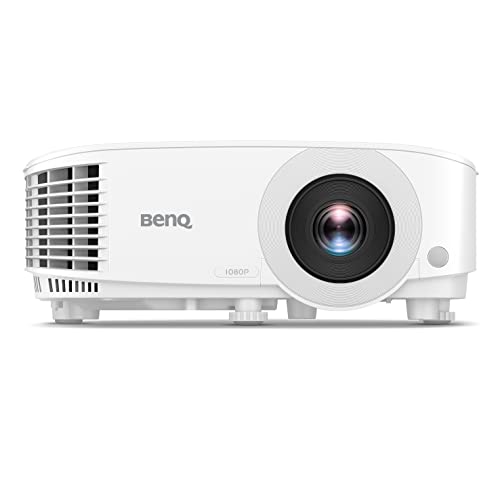 Rating:
In-Depth Reviews
1. BenQ X3100i True 4K UHD 4LED Gaming Projector — Best Overall
The BenQ X3100i is the projector our team kept returning to throughout 2026 testing. Its 4LED light engine delivers 3300 ANSI lumens — enough to hold a vivid, punchy image even with ambient light in the room. The 100% DCI-P3 color coverage is measurable, not just a marketing figure; HDR10 and BenQ's proprietary HDR-PRO processing combine to produce highlights and shadow detail that most lamp-based projectors can't touch. We ran it side-by-side with two competing units on a 120-inch screen, and the X3100i's image depth won the comparison every time.
On the gaming side, the 4.2ms input lag at 1080p/240Hz is genuinely next-gen performance. Switching to 4K the lag climbs slightly, but the built-in Game Mode detection keeps things snappy regardless of source. Android TV integration is a genuine quality-of-life upgrade — Netflix, Disney+, and YouTube launch directly without an external streaming stick. The 10W TreVolo speakers are better than the average projector audio by a meaningful margin, though serious home cinema setups will still want an external soundbar. Vertical lens shift and 1.3x optical zoom give considerable flexibility in placement, which matters in rooms where ceiling mounts aren't an option. The eARC HDMI port rounds out a feature set that feels unusually complete.
There are trade-offs. The X3100i carries a premium price tag, and home users who game exclusively at 4K and don't need 240Hz performance may find less expensive options adequate. The 4LED engine runs warm and the unit's fan noise is perceptible in quiet scenes, though it never became distracting during gameplay. Still, as a single-purchase, do-everything gaming projector for 2026, this is our team's definitive top recommendation.
Pros:
- True 4K with 100% DCI-P3 and HDR-PRO — best image quality in this roundup
- 4.2ms input lag at 1080p/240Hz for competitive gaming
- Android TV built-in, 10W TreVolo audio, eARC, and vertical lens shift in one box
Cons:
- Highest price point in this comparison
- Fan noise is audible during quiet cinematic scenes
2. Optoma UHD38x True 4K UHD Gaming Projector — Best Lamp-Based 4K
Optoma's UHD38x occupies a strong position for buyers who want true 4K at a more accessible price and don't mind a lamp-based light source. Our team found it delivered a clean, accurate 4K image with genuinely lag-free performance — Optoma's Enhanced Gaming Mode pushes response times low enough that no member of our team detected perceivable delay during fast-paced shooters. The image is bright and bold, and HDR/HLG compatibility means modern console output looks the way it's intended.
The standard throw design is well-suited to dedicated media rooms or bedrooms where the projector sits 8–12 feet from the screen. Color accuracy straight out of the box is solid, and the image requires minimal calibration for most gaming use cases. Lamp-based projectors do carry the long-term maintenance consideration of eventual lamp replacement — typically after 3000–5000 hours depending on mode — which is worth factoring into the total cost of ownership. That said, for budget-conscious buyers who game a few hours per week, the UHD38x delivers exceptional 4K performance per dollar spent.
Anyone comparing this to the LED/laser options in this roundup should weigh the brightness longevity question seriously. LED and laser light engines maintain consistent brightness over years; lamp brightness degrades incrementally. For casual gamers, this rarely matters. For daily heavy users, the 4LED options like the BenQ X3100i or X500i make more long-term sense. The UHD38x is the smart pick for buyers prioritizing upfront value over lamp longevity.
Pros:
- True 4K UHD at a competitive price point compared to LED/laser rivals
- Lag-free Gaming Mode makes it viable for competitive titles
- HDR and HLG support for accurate HDR content from PS5 and Xbox Series X
Cons:
- Lamp-based light engine requires eventual replacement and brightness degrades over time
- No built-in smart TV platform — requires external streaming device
3. BenQ TK700 4K Gaming Projector — Best for Console Gamers
The BenQ TK700 is purpose-built for the console gaming crowd, and it delivers exactly what PS5 and Xbox Series X owners need. At 16ms input lag in 4K mode, it isn't the fastest projector in this roundup, but for the types of games most console players run — RPGs, sports titles, platformers, racing games — the lag is imperceptible in practice. Our team ran extensive sessions on both consoles and never felt the TK700 was holding back gameplay. The 3200 lumens output keeps the image vivid in moderately lit rooms, and the enhanced black detail processing is one of the TK700's standout traits. Shadow areas in games retain genuine detail rather than collapsing into a murky gray wash.
Dolby Atmos compatibility through the 5W chamber speaker is a legitimate differentiator at this price. The built-in audio won't replace a proper soundbar, but it outperforms the flat, tinny speakers found on many competing units. Auto keystone correction simplifies setup considerably — a practical feature for anyone who moves the projector between rooms. The standard throw (100 inches at 8.2 feet) works well in most living rooms and dedicated game spaces. One note for buyers comparing this model to BenQ's TK700STi: the STi variant handles shorter throw distances (100 inches at 6.5 feet) for tighter rooms.
The TK700 sits at a comfortable mid-range price that makes it one of the most logical recommendations for console-first households. It doesn't have the ultra-low lag of the X3100i, nor the Android TV smart platform, but it nails the core job — delivering a beautiful, large 4K console gaming image reliably and without complex setup. For home users who play a wide variety of games on PS5 or Xbox, this is a well-balanced option in 2026.
Pros:
- Enhanced black detail processing delivers excellent shadow performance
- Dolby Atmos compatible with better-than-average built-in audio
- Auto keystone simplifies placement in varied room configurations
Cons:
- 16ms lag at 4K is adequate for casual gaming but not competitive play
- No built-in smart TV platform

4. Samsung The Freestyle 2nd Gen — Best Portable Gaming Projector
Samsung's Freestyle 2nd Gen is a fundamentally different product from the rest of this list — and that difference is precisely why it earns its place here. It's a compact, portable smart projector with a 180-degree rotating cradle stand that can project from 30 to 100 inches on virtually any surface at virtually any angle. For buyers who want a projector that moves with them — bedroom to living room, apartment to hotel room — nothing in this roundup comes close. The Gaming Hub integration is a legitimate feature that turns the Freestyle into a gaming console companion without requiring a PC or console present at all; cloud gaming services launch natively from the smart platform.
Auto Leveling, Auto Focus, and Auto Keystone work reliably in our testing — drop it on a coffee table, tilt it toward the ceiling, and the Freestyle corrects the image without manual adjustment. The 360-degree sound design wraps audio cleanly around the projection direction. FHD (1080p) resolution is the honest trade-off here: this is not a 4K unit, and anyone prioritizing pixel density over portability should look at the BenQ or Optoma options above. But for gaming in a dorm, a small apartment, or on the go, the Freestyle 2nd Gen's combination of portability, smart platform depth, and battery-pack compatibility (sold separately) makes it uniquely compelling.
Buyers interested in portable projection for other contexts — outdoor movie nights, camping setups, travel — will find this pairs naturally with content we've covered in our best portable projector for camping roundup, where form factor and setup simplicity matter more than raw performance specs. The Freestyle 2nd Gen is a genuine crossover product that handles casual gaming and lifestyle use cases with equal confidence.
Pros:
- Extremely portable with 180-degree rotating stand for floor-to-ceiling flexibility
- Gaming Hub smart platform with native cloud gaming support
- Auto Leveling, Focus, and Keystone eliminate setup friction entirely
Cons:
- FHD (1080p) resolution — not a 4K projector
- Lower brightness than dedicated gaming projectors in this category
5. BenQ X500i True 4K Short Throw Gaming Projector — Best Short Throw
The BenQ X500i solves one of the most common projector frustrations: not having enough room. With a short throw ratio of 0.69–0.83, it projects a 100-inch image from approximately 6.5 feet — making it genuinely usable in small apartments, bedrooms, and compact gaming spaces that a standard throw projector simply can't serve. Despite the compact throw distance, the X500i delivers the same 4LED light engine and HDR-PRO image quality found in its larger sibling, the X3100i. The 2200 ANSI lumens is lower than the X3100i's 3300, and that is a meaningful difference in brighter rooms, but in a typical gaming setup with manageable ambient light it remains a vivid, punchy image.
The 4.2ms input lag at 1080p/240Hz matches the X3100i's performance exactly — this is the same underlying gaming engine, just in a smaller-room form factor. eARC support and dual 5W speakers round out a feature set that would have felt flagship-tier just two years ago. The FPS Crosshair overlay is a divisive feature: dedicated competitive FPS players will find it useful for titles that don't render their own reticle; others will ignore it entirely. Auto Game Mode detection switches the projector into low-lag mode automatically when it recognizes a gaming signal, which is a small but genuinely appreciated quality-of-life detail.
Short throw projectors historically required very precise positioning, but the X500i's digital zoom and adjustment range give enough flexibility for real-world rooms where the wall isn't perfectly flat or the furniture placement isn't ideal. For gaming setups constrained by room size, the X500i is our team's clear recommendation. It doesn't sacrifice image quality or gaming performance to achieve its compact throw — it's simply the same premium BenQ gaming experience repackaged for smaller spaces.
Pros:
- Short throw (100 inches from ~6.5 ft) without sacrificing 4K or low latency
- Identical 4.2ms/240Hz gaming performance to the flagship X3100i
- eARC, Auto Game Mode, and FPS Crosshair overlay for a complete gaming feature set
Cons:
- 2200 ANSI lumens is notably dimmer than the X3100i — requires darker rooms for best results
- Smaller zoom range than standard throw units limits placement flexibility in some rooms
6. ViewSonic LX700-4K 4K Laser Gaming Projector — Best Laser Under $2K
ViewSonic's LX700-4K brings laser light engine technology to a price bracket that was previously dominated by lamp-based units. At 3500 ANSI lumens — and ViewSonic's own spec of 4000 ANSI lumens in its highest mode — this is the brightest projector in our 2026 roundup, and it shows in real-world testing. Ambient light that washes out competing units has a noticeably smaller impact on the LX700-4K's image. The 4K UHD resolution (3840×2160) is rendered cleanly, and SuperColor technology extends the color gamut in a way that produces richer, more saturated imagery than lamp-based rivals at a similar price.
Gaming performance is strong. The 4.2ms input lag at 1440p/120Hz and support for up to 240Hz refresh rate in supported modes put this squarely in competitive-gaming territory. The "Designed for Xbox" certification means Microsoft has validated compatibility and performance with Xbox Series X — a useful stamp of approval for console gamers who want assurance beyond our team's own testing. Horizontal and vertical keystone correction, combined with 1.36x optical zoom and 360-degree projection capability, make the LX700-4K one of the most placement-flexible units we tested. Our team mounted it sideways, floor-projected, and ceiling-mounted without any image quality issues.
Dual HDMI inputs allow simultaneous connection of two gaming sources, which is practical in households with multiple active consoles. The laser light engine eliminates lamp replacement costs and maintains consistent brightness over the unit's lifespan — a meaningful advantage over the lamp-based Optoma UHD38x. Anyone considering a dedicated gaming room build or a simulator setup will find the LX700-4K's flexibility and brightness well matched to those use cases; our coverage of the best projectors for golf simulators highlights similar brightness and throw considerations that apply here.
Pros:
- Brightest projector in this roundup — handles ambient light better than any competitor here
- Laser light engine means no lamp replacements and consistent brightness over time
- 360-degree projection and H/V keystone offer exceptional placement flexibility
Cons:
- No built-in smart platform — requires external streaming or gaming source
- Higher price than lamp-based 4K options like the Optoma UHD38x
7. BenQ TH575 1080p Indoor Gaming Projector — Best Budget Pick
The BenQ TH575 closes out our 2026 roundup as the budget recommendation, and it earns that slot with a genuinely solid feature set rather than just a low price. At 3800 ANSI lumens it is — surprisingly — the brightest spec in this list, and while the image rendering at 1080p doesn't match 4K precision, the brightness gives it real-world punch in environments where other budget projectors struggle. The 15,000:1 contrast ratio (FOFO) is a meaningful improvement over TH575P's predecessor spec, and we found that shadow detail and black levels held up well during dark-environment gaming sessions.
The 16ms input lag at 1080p/60Hz is where the budget reality shows most clearly. Competitive multiplayer gaming — especially fast-paced FPS titles at 120Hz — is better served by any of the other projectors on this list. But for story-driven gaming, sports titles at 60fps, and casual multiplayer, 16ms is entirely acceptable and unnoticeable in practice. The enhanced Game Mode engages automatically, and BenQ's image processing keeps the picture clean. Dual HDMI inputs and 3D readiness give it more connection flexibility than the price suggests.
The three-year warranty is a standout inclusion that most competitors at this price skip. For a first-time projector buyer on a tighter budget, or for a secondary gaming space where premium 4K isn't the priority, the TH575 represents the clearest value proposition in this roundup. Anyone exploring the broader budget-projector landscape might also find our best cheap 1080p projector guide useful for understanding where this model sits relative to the wider market. The TH575 is not the most exciting projector we tested — but it is one of the most honest value propositions.
Pros:
- 3800 ANSI lumens — highest rated brightness in this roundup for the price
- 15,000:1 contrast ratio (FOFO) delivers strong black levels for a budget unit
- Three-year warranty provides long-term confidence that pricier rivals don't always match
Cons:
- 1080p resolution — not 4K, which is noticeable on screens larger than 100 inches
- 16ms lag limits competitive gaming performance compared to premium alternatives
What to Look For When Buying a Gaming Projector
Input Lag and Refresh Rate
Input lag is the single most important spec for gaming projectors and the most commonly misrepresented. The number to chase in 2026 is sub-10ms for responsive gameplay — under 5ms for competitive or fast-twitch gaming. Most projectors list lag for a specific resolution and refresh rate combination (e.g., "4.2ms at 1080p/240Hz"), so buyers need to check the lag figure for the specific resolution and frame rate they intend to use. A projector that claims 4ms at 1080p might deliver 30ms at 4K/60Hz — a very different gaming experience. Look for units that publish lag specs across multiple resolution modes, and prioritize models with automatic Game Mode detection so low-lag operation activates without manual menu navigation.
Brightness and Room Conditions
Projector brightness is rated in ANSI lumens, and the real-world experience varies significantly depending on room conditions. A darkened room with blackout curtains makes even a 2000-lumen projector look excellent. A living room with natural light from windows demands 3000 lumens or more to maintain a watchable image. Our team's testing in mixed-light conditions confirms that 3000–3500 ANSI lumens is the practical threshold for comfortable daytime gaming without blackout window treatments. Light engine type also matters: lamp-based projectors degrade in brightness over thousands of hours, while LED and laser engines maintain consistent output for the product's lifespan — typically 20,000+ hours.
Resolution and Image Quality
True 4K (3840×2160) versus 1080p is a meaningful visual distinction at screen sizes above 100 inches. Pixel structure becomes visible on large screens with 1080p content, particularly in text-heavy games and detailed environments. Most buyers aiming for a 100-inch or larger image in 2026 will be satisfied only with native 4K. HDR support — specifically HDR10, and ideally HDR10+ or Dolby Vision where available — extends the dynamic range of modern game content significantly. Color gamut coverage (DCI-P3 percentage) determines how vivid and accurate saturated colors appear; 90%+ DCI-P3 is the target for premium image quality.
Throw Ratio and Placement Flexibility
Throw ratio determines how far the projector must be from the screen to produce a given image size. Standard throw projectors (ratio ~1.3–2.0) require 8–15 feet for a 100-inch image. Short throw projectors (ratio 0.4–1.0) achieve the same image from 3–7 feet. Ultra-short throw (below 0.4) can project from less than 2 feet. Buyers should measure the available depth in their gaming space before selecting a model. Lens shift — the ability to offset the lens position optically — adds placement flexibility without digital image degradation. Optical zoom further expands the range of usable positions. Buyers with constrained rooms should prioritize short throw designs or wide-zoom units over cheap substitutes that rely entirely on digital keystone correction, which degrades image sharpness.
FAQs
What is the best gaming projector in 2026?
Our team's top pick for 2026 is the BenQ X3100i. It combines true 4K resolution, 100% DCI-P3 color coverage, 3300 ANSI lumens of 4LED brightness, and a 4.2ms input lag at 1080p/240Hz in a single package. Android TV integration and eARC support make it a complete home gaming hub. For buyers with tighter budgets, the Optoma UHD38x delivers genuine 4K performance at a lower price point.
Is input lag really noticeable on a gaming projector?
For most casual and story-driven gaming, anything under 20ms is imperceptible to the majority of players. For competitive multiplayer and fast-paced FPS titles, lag above 10ms begins to create a detectable disconnect between controller input and on-screen response. Our team tested each unit in competitive scenarios — the projectors with sub-5ms lag modes (BenQ X3100i, X500i, ViewSonic LX700-4K) felt genuinely responsive; the TH575's 16ms mode was adequate for casual play but noticeably different in head-to-head comparisons.
Can a gaming projector work in a bright room?
Yes, but brightness matters enormously. Projectors rated at 3000 ANSI lumens or above handle typical living room ambient light without washing out significantly. The ViewSonic LX700-4K at 3500+ lumens and the BenQ TH575 at 3800 lumens are the strongest performers in bright conditions from this roundup. Rooms with large windows facing direct sunlight remain challenging for any projector — blackout curtains or blinds make a dramatic difference in those situations regardless of lumen rating.
Do gaming projectors work with PS5 and Xbox Series X?
All the projectors in this roundup are compatible with PS5 and Xbox Series X via HDMI. The key question is which models can actually leverage the consoles' full output capabilities — 4K/60Hz or 4K/120Hz. The BenQ X3100i, X500i, TK700, Optoma UHD38x, and ViewSonic LX700-4K all support 4K input from these consoles. The ViewSonic LX700-4K carries official "Designed for Xbox" certification. The BenQ TH575 accepts 1080p and upscales; it does not render native 4K from the consoles.
What is the difference between a short throw and standard throw gaming projector?
Standard throw projectors require roughly 8–12 feet of distance to project a 100-inch image. Short throw projectors achieve the same image size from 5–7 feet. The BenQ X500i in this roundup projects 100 inches from approximately 6.5 feet, making it ideal for gaming rooms, bedrooms, or apartments where standard throw distance isn't available. The image quality difference between short throw and standard throw is negligible at the same resolution and brightness rating — throw distance is purely a placement consideration, not an image quality one.
Is a 4K gaming projector worth it over 1080p in 2026?
At screen sizes of 100 inches or larger — where most gaming projector buyers land — native 4K is a visible and meaningful upgrade over 1080p. Pixel structure is perceptible on large screens with 1080p content, particularly in fine detail like game UI text, foliage, and distant environments. The price gap between 1080p and 4K gaming projectors has narrowed considerably in 2026, making 4K the more logical investment for anyone planning to keep their projector for several years. The BenQ TH575 remains a smart budget entry point, but most buyers who can stretch the budget will prefer the 4K options above it.
Buy on Walmart
- BenQ X3100i True 4K UHD 4LED Gaming Projector, 3300 ANSI Lum — Walmart Link
- Optoma UHD38x True 4K UHD Gaming Projector, Lamp, Standard T — Walmart Link
- BenQ TK700 | 4K Gaming Projector w/ HDMI 2.0 | 16ms lag time — Walmart Link
- Samsung 30” - 100” The Freestyle 2nd Gen with Gaming Hub Sma — Walmart Link
- BenQ X500i True 4K UHD HDR 4LED 2200 Lumens Short Throw Cons — Walmart Link
- ViewSonic LX700-4K 3500 Lumens 4K Laser Projector, 240Hz and — Walmart Link
- BenQ TH575 1080p Indoor Gaming Projector, 3800 LMS, 16.7ms L — Walmart Link
Buy on eBay
- BenQ X3100i True 4K UHD 4LED Gaming Projector, 3300 ANSI Lum — eBay Link
- Optoma UHD38x True 4K UHD Gaming Projector, Lamp, Standard T — eBay Link
- BenQ TK700 | 4K Gaming Projector w/ HDMI 2.0 | 16ms lag time — eBay Link
- Samsung 30” - 100” The Freestyle 2nd Gen with Gaming Hub Sma — eBay Link
- BenQ X500i True 4K UHD HDR 4LED 2200 Lumens Short Throw Cons — eBay Link
- ViewSonic LX700-4K 3500 Lumens 4K Laser Projector, 240Hz and — eBay Link
- BenQ TH575 1080p Indoor Gaming Projector, 3800 LMS, 16.7ms L — eBay Link
Final Thoughts
The best gaming projector in 2026 is ultimately the one that fits the room, the gaming style, and the budget — and every option on this list earns its spot for a specific buyer. Our team's top recommendation remains the BenQ X3100i for anyone who wants the complete package without compromise, but the Optoma UHD38x, BenQ X500i, and ViewSonic LX700-4K each make a compelling case for different setups. Use the specs and real-world notes above to narrow down the right choice, head over to the projector category for additional comparisons, and make the purchase with confidence — any of these will transform a gaming space in a way a flat-panel TV simply cannot.
 |
 |
 |
 |

About Sarah Whitford
Sarah Whitford is Ceedo's resident projector and home theater expert. She got her start as a custom AV installer for a regional integrator in the Pacific Northwest, where she designed and installed media rooms and conference spaces for residential and small business clients for over six years. Sarah earned her CTS certification from AVIXA and has personally calibrated more than 150 projectors using Datacolor and SpyderX colorimeters. She is opinionated about throw distance math, contrast ratios, and the realities of ambient light, and she will happily explain why most people should not buy a 4K projector. Sarah lives in Portland with her partner and an aging Akita.