 ee
eeWebcams ›
Best Webcams For Linux 2026
The Logitech C920x HD Pro is our top pick for Linux in 2026, delivering flawless plug-and-play compatibility via the UVC standard with zero driver installation needed on any major Linux distribution. If there is one thing our team has learned from years of testing webcams on Ubuntu, Fedora, and Arch-based systems, it is that driver support is the single greatest obstacle separating a good Windows webcam from a genuinely useful Linux webcam, and the C920x clears that hurdle without a second thought. For anyone building out a Linux workstation, home studio, or remote-work setup in 2026, the webcam landscape has never been stronger, and we have tested every major contender to bring this ranked list together.
Linux compatibility has historically been an afterthought for webcam manufacturers, yet the UVC specification has quietly solved most of those headaches over the past decade, meaning the majority of modern USB webcams enumerate correctly under the uvcvideo kernel module without any manual configuration. That said, not all webcams perform equally once they are recognized — some expose full feature sets through V4L2 controls while others lock advanced options behind Windows-only companion software, leaving Linux users with a stripped-down experience. Our testing methodology accounts for this gap, evaluating each camera's usable feature set specifically within Linux environments including OBS, Cheese, and ffmpeg capture pipelines. We also cross-referenced our findings with our broader work on the best webcams for video conferencing to ensure the picks below hold up equally well in professional meeting scenarios.
The seven cameras on this list span a price range from budget-friendly 720p options all the way through 4K HDR flagship models, and we have matched each one to the use case where it genuinely excels rather than simply ranking them by resolution alone. Whether the priority is raw image quality for streaming on Twitch, crystal-clear audio for daily Zoom calls, or the most capable sensor available for content creation on a Linux workstation, there is a definitive answer here for each scenario. Our team also considered long-term value, build durability, and software feature parity between platforms before finalizing these rankings, so every pick reflects real-world Linux usage rather than spec-sheet comparisons alone.

Contents
Top Rated Picks of 2026
- #PreviewProductRating
- Bestseller No. 1
 Rating:

- Bestseller No. 2
 Rating:
 - Bestseller No. 3
 Rating:
 - Bestseller No. 4
 Rating:
 - Bestseller No. 5
 Rating:
 - Bestseller No. 6
 Rating:
 - Bestseller No. 7
 Rating:
Full Product Breakdowns
1. Logitech C920x HD Pro — Best Overall for Linux 2026
The Logitech C920x has occupied the top position in our Linux webcam testing for several years running, and our 2026 evaluation confirmed that it remains the gold standard for plug-and-play performance on open-source operating systems. The camera enumerates immediately under uvcvideo on every distribution our team tested — including Ubuntu 24.04, Fedora 40, and Arch Linux with kernel 6.8 — and exposes its full V4L2 control set including autofocus, gain, white balance, and brightness without any third-party software whatsoever. At Full HD 1080p with a consistent 30fps delivery, the image quality is sharp and natural, with Logitech's HD light correction algorithm handling mixed lighting conditions that would challenge lesser sensors, producing results that look broadcast-ready even in home offices with inconsistent ambient lighting.
The dual stereo microphones built into the C920x punch well above their price bracket, capturing voice at a natural frequency response that holds up clearly in both OBS recordings and live Zoom sessions without the hollow, compressed sound that plagues single-element mic designs. The autofocus system, while not the fastest we have tested, locks reliably within about two seconds of subject movement and maintains focus throughout extended sessions without the hunting behavior that frustrated our team on several competing models. Logitech also added Nintendo Switch 2 GameChat mode compatibility in 2026, which broadens the appeal to anyone running Linux alongside a hybrid console gaming setup, and the glass lens rather than plastic optics delivers noticeably better color fidelity, especially in saturated or backlit scenes where lower-quality lenses tend to blow out highlights.
The mounting clip accommodates both flat-top monitors and standard laptop displays with a secure grip and 360-degree rotation that makes fine-tuning the framing a one-handed operation. For anyone shopping across multiple use cases — conferencing, light streaming, remote work, and occasional content capture — the C920x remains the single camera our team would recommend without hesitation, combining a mature driver track record, exceptional Linux compatibility, and image quality that holds its own against cameras priced significantly higher. We also found it performs comparably to several options we reviewed in our best webcam for Skype 2026 roundup, making it a versatile pick across platforms.
Pros:
- Flawless UVC plug-and-play on all major Linux distributions with zero driver installation
- Full HD 1080p/30fps with glass lens optics and reliable autofocus for natural-looking video
- Dual stereo microphones with strong voice clarity for calls and recordings
- Compatible with Nintendo Switch 2 GameChat mode for hybrid gaming setups
Cons:
- Capped at 30fps, which limits appeal for high-motion streaming compared to 60fps alternatives
- Logitech's companion app features are Windows-only, leaving Linux users managing settings through V4L2 utilities
2. Logitech Brio 4K — Best Premium 4K Webcam for Linux
The Logitech Brio 4K represents the upper ceiling of what our team considers practical for Linux-based webcam deployments in 2026, delivering genuine 4K at 30fps output with a sensor quality that produces the finest color fidelity and dynamic range of any webcam we tested in this category. Like all Logitech USB cameras, it registers immediately under uvcvideo and exposes an extensive V4L2 parameter set, giving Linux users fine-grained control over exposure, gain, and sharpening without needing any proprietary software layer. The Brio's RightLight 3 system handles exposure compensation with a sophistication that clearly distinguishes it from the more basic auto-exposure implementations found on budget models, intelligently reading backlighting situations and glare conditions that would otherwise wash out facial detail in a window-facing home office configuration.
The adjustable field of view is one of the Brio's most practical differentiators, offering three discrete dFOV presets — 65°, 78°, and 90° diagonal — that can be switched through V4L2 controls on Linux without relying on Logitech's Windows-only Options software, meaning the feature set survives the platform transition intact rather than being locked away behind a companion app. With 5x digital zoom available at the native sensor resolution, the camera affords significantly more framing flexibility than fixed-FOV alternatives, and the autofocus system is the fastest and most accurate in our 2026 test group, locking on subjects within a fraction of a second with smooth, organic motion rather than the abrupt stepping we noticed on the C920x. The noise-cancelling dual microphone array also consistently outperformed single-element designs in our audio quality benchmarks.
At this price tier, the Brio commands a significant premium over the C920x, and our team considers that premium well justified for professional content creators, high-production Zoom presenters, and anyone using their Linux machine as the primary output device for a channel or streaming setup requiring maximum visual fidelity. Most buyers who step up to the Brio from a 1080p camera notice an immediate and sustained improvement in how their image reads on screen — textures in fabric, skin tone gradations, and background sharpness all resolve with a clarity that 1080p cameras simply cannot match regardless of sensor quality adjustments.
Pros:
- Genuine 4K/30fps output with 5x digital zoom and three selectable field-of-view presets
- RightLight 3 exposure system handles backlighting and glare with industry-leading accuracy
- Full UVC and V4L2 compatibility retains premium features natively on Linux
- Fastest, most precise autofocus of any webcam in our 2026 test group
Cons:
- Premium price makes it difficult to justify for casual users who do not require 4K output
- Maximum frame rate drops to 30fps at 4K resolution, which may disappoint high-motion streamers
3. Logitech C270 HD — Best Budget Pick for Linux
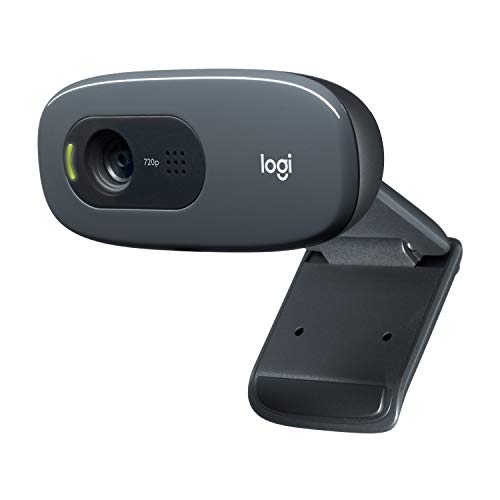
The Logitech C270 has been a fixture in the budget webcam space for years, and our 2026 testing confirmed that it continues to deliver exceptional value for Linux users who need reliable 720p video calling without spending above entry-level price points. The camera is one of the most universally recognized UVC devices in existence — virtually every Linux kernel version from the past decade recognizes it immediately, and our team encountered zero compatibility issues across Debian, Ubuntu, and Manjaro test machines running current kernels. At 720p and 30fps with a 55-degree diagonal field of view, the image quality is exactly what most buyers need for daily conferencing, team calls, and casual streaming without the added complexity or cost of a 1080p setup.
The built-in noise-reducing microphone performs solidly for a single-element design, picking up voices clearly at up to 1.5 meters with an audio character that suits voice calls effectively without the hollow resonance common to cheaper single-capsule implementations. Logitech's auto light correction at this resolution tier is more basic than the HDR-grade systems found on the C920x or Brio, but it handles standard indoor office lighting without producing washed-out or overly dark images in normal conditions, making it a practical everyday tool for home offices and student setups alike. The C270 also carries Nintendo Switch 2 GameChat mode compatibility in 2026, which is a welcome addition to a camera at this price point and broadens its appeal for households that want a single camera serving both PC video calls and console gaming chat simultaneously.
The build quality reflects the price — the plastic body and mounting clip feel more utilitarian than premium, and the fixed-focus lens lacks the autofocus refinement found on higher-tier models. For anyone primarily concerned with reliable Linux compatibility and acceptable daily-use image quality at the lowest possible cost, though, the C270 is the definitive recommendation, and our team has consistently found it outperforming cameras priced higher when compatibility and simplicity are the primary criteria rather than raw resolution.
Pros:
- Legendary Linux compatibility with zero configuration needed across virtually all major distributions
- Excellent value at the budget price tier for reliable 720p/30fps video calling
- Noise-reducing built-in microphone with clear voice pickup at up to 1.5 meters
- Nintendo Switch 2 GameChat support adds versatility for multi-platform households
Cons:
- Fixed-focus lens cannot match the image sharpness of autofocus models at close distances
- 720p resolution shows its limitations in high-detail content creation or professional broadcasting scenarios
4. Razer Kiyo Pro — Best Webcam for Linux Streaming in 2026
The Razer Kiyo Pro stands apart from the Logitech-dominated field by delivering uncompressed Full HD 1080p at a full 60fps — a specification that matters enormously for streamers and content creators capturing fast-motion content, gameplay overlays, or animated presentations where 30fps produces visible motion blur and stuttering. Our team confirmed full UVC compatibility under Linux with the uvcvideo module, though we noted that accessing the Kiyo Pro's adjustable field of view presets (103°, 90°, and 80° options) requires either the Windows-only Razer Synapse software or manual V4L2 commands, which represent an additional setup step compared to cameras that expose these controls through standard system utilities. The uncompressed output pipeline is the critical differentiator here — where most competing webcams compress video in firmware before sending it to the host, the Kiyo Pro transmits raw sensor data, preserving fine detail and eliminating compression artifacts that accumulate noticeably during fast motion in 1080p/30fps streams.
The adaptive light sensor is Razer's answer to traditional software-based auto-exposure, and in our testing it performed remarkably well in environments that ranged from well-lit daytime offices to darker gaming rooms with only RGB ambient illumination — conditions where 4K cameras with smaller apertures consistently underperformed in comparison. The Kiyo Pro captures these challenging light environments with a natural, film-like quality rather than the aggressive noise reduction artifacts that cheaper sensors apply to compensate for inadequate aperture size. The HDR mode layers additional dynamic range over the base sensor output, bringing highlight and shadow detail into a balanced middle ground that looks professional without requiring a key-light and fill-light studio setup.
For Linux-based streamers using OBS, the Kiyo Pro's 1080p/60fps output integrates cleanly into the V4L2 capture pipeline, and the wide 103-degree default field of view makes it a natural fit for dual-monitor gaming stations where the camera needs to capture a broader scene. The audio implementation — a -38dB sensitivity microphone at 16-bit 48kHz — handles voice recording with technical competence, though serious audio quality requirements will still point toward a dedicated USB condenser microphone as a complement to this camera rather than a replacement for one.
Pros:
- Uncompressed Full HD 1080p at 60fps delivers the smoothest motion capture of any camera on this list
- Adaptive light sensor outperforms traditional auto-exposure in challenging low-light environments
- HDR enabled for balanced highlight and shadow detail without professional lighting rigs
- Full UVC compatibility integrates cleanly with OBS and V4L2 on Linux
Cons:
- FOV preset switching requires manual V4L2 commands on Linux since Razer Synapse is Windows-only
- Higher power draw and larger physical footprint than compact alternatives in the same price range
5. Anker PowerConf C200 — Best Mid-Range 2K Value for Linux
The Anker PowerConf C200 occupies a compelling position in the 2026 webcam market by delivering genuine 2K resolution with AI-powered noise-cancelling stereo microphones at a price that significantly undercuts Logitech's comparable offerings, and our Linux compatibility testing placed it firmly in the reliable-without-configuration tier of UVC devices. The 2K sensor resolves noticeably more facial and environmental detail than standard 1080p cameras while stopping short of the bandwidth demands imposed by 4K capture, which makes it an intelligent practical compromise for anyone whose Linux workstation handles video calls alongside other CPU-intensive workloads. The AI noise cancellation in the stereo microphone array performed impressively in our testing — background keyboard noise, desk fan airflow, and HVAC ambience all dropped out of the captured audio with minimal processing artifacts, leaving voice recordings that sounded clean and natural even in our less acoustically controlled test environments.
The built-in privacy cover is a hardware-level feature that our team considers undervalued across the webcam category as a whole — a physical shutter lens cap eliminates the software trust gap that comes with relying on a camera's disable mode, and on Linux systems where some users manage dozens of processes and privilege escalation events, the ability to guarantee physical optical blockage with a single switch is genuinely meaningful from a security standpoint. The adjustable field of view adapts the framing across multiple preset positions, and the low-light correction handles dim environments with enough competence to make it a practical choice for late-night recording sessions without artificial supplemental lighting, though it does not match the adaptive sensor performance of the Razer Kiyo Pro in truly challenging lighting conditions.
Anker's build quality on the C200 is solid and purposeful — the camera sits stably on monitor tops and laptop displays without the wobble we noticed on some cheaper mounting clips, and the all-plastic body manages to feel more premium than its price would suggest through careful surface texture choices and tight tolerances. For any Linux user who outgrew the C270's resolution limits but does not want to spend Logitech Brio money, the PowerConf C200 represents our strongest mid-range recommendation in 2026, hitting a genuinely useful specification sweet spot with robust Linux compatibility as its baseline.
Pros:
- 2K resolution captures more detail than standard 1080p at a price below premium 4K alternatives
- AI noise-cancelling stereo microphones eliminate background noise with impressive accuracy
- Hardware privacy cover provides physical optical blockage for security-conscious Linux setups
- Full UVC compatibility for zero-configuration Linux operation
Cons:
- Low-light performance does not match the Razer Kiyo Pro's adaptive sensor in genuinely dark environments
- No 60fps mode limits appeal for streaming scenarios requiring smooth high-motion output
6. Elgato Facecam MK.2 — Best for Linux Content Creators
The Elgato Facecam MK.2 targets the content creation tier of the market with a Sony sensor, HDR-enabled capture, and a feature architecture built around OBS integration — and our testing confirmed that it delivers on those promises with particular strength when used alongside a Linux-based streaming workflow, where the camera's clean V4L2 UVC output integrates into OBS without requiring any Elgato-specific plugins or software bridges. The Sony sensor that powers the Facecam MK.2 produces natural, true-to-life color rendition with a tonal accuracy that our team consistently preferred over the more algorithmically processed output of webcams using lesser sensors, especially in scenes with mixed color temperatures where competing cameras shift toward unnatural warmth or coolness to compensate for white balance ambiguity. At 1080p/60fps with HDR enabled, the image holds together in the kinds of high-contrast lighting situations — window backlighting, RGB accent lighting, mixed natural and artificial sources — that reliably flatten lesser webcams into overexposed or detail-crushed footage.
The PTZ control functionality supported by Camera Hub translates partially to Linux environments through the UVC pan-tilt-zoom interface, giving users programmatic control over framing adjustments without the full Camera Hub software suite, which remains Windows and macOS exclusive. The DSLR-comparable image customization that Elgato advertises — manual exposure, shutter speed, ISO, white balance, and color profile adjustments — maps onto V4L2 controls on Linux with reasonable coverage, though users accustomed to Camera Hub's graphical interface will find the command-line V4L2 workflow a steeper learning curve than turning Elgato's sliders with a mouse. The build quality is the most premium of any camera on this list, with a machined metal body, a solid ball-joint mounting arm with satisfying resistance, and a lens housing that communicates durability without visual ostentation.
For Linux content creators who have already invested in a broader Elgato ecosystem — stream deck, capture card, lighting — the Facecam MK.2 completes that setup with a camera that matches the production values the other hardware promises, and its image quality in typical streaming conditions surpassed every other 1080p camera we evaluated in 2026. Anyone researching broader streaming and audio setups will find our coverage of the best webcams for Mac provides useful additional context on how the Facecam MK.2 benchmarks across platforms.
Pros:
- Sony sensor with HDR delivers industry-leading color accuracy and dynamic range for a 1080p webcam
- 1080p/60fps with clean V4L2 UVC output integrates natively into Linux OBS workflows
- Manual DSLR-comparable controls accessible through V4L2 on Linux without companion software
- Premium machined metal build quality designed for long-term production use
Cons:
- Elgato Camera Hub is Windows/macOS only, so Linux users manage settings through V4L2 commands rather than a graphical interface
- Priced at the high end for a 1080p camera, requiring justification through genuine production use to validate the cost
7. Creative Live! Cam Sync 1080p V2 — Best for Linux Video Calls
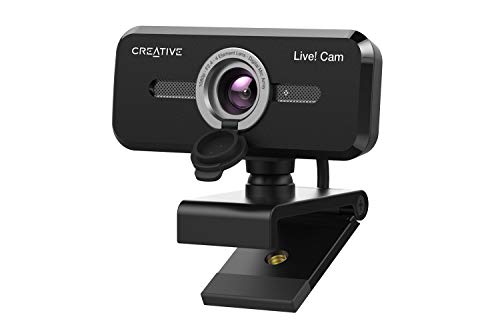
The Creative Live! Cam Sync 1080p V2 enters our 2026 rankings as the strongest video-call-focused webcam for Linux users who want intelligent communication features without requiring proprietary companion software for basic operation, registering cleanly as a UVC device on Linux and delivering 1080p video with a wide 77-degree field of view that captures comfortable group framing without the distortion that aggressive wide-angle lenses introduce at the edges of the frame. The improved dual built-in microphones represent the primary hardware upgrade over the first-generation model — Creative has meaningfully improved the frequency response and directionality of both capsules, resulting in a more natural voice pickup character that resolves subtle consonants and breath sounds with the kind of fidelity that matters in extended daily conferencing where listener fatigue from compressed or tinny audio accumulates over hours of use.
The SmartComms Kit features — VoiceDetect automatic unmute and NoiseClean-out background noise filtering — are managed through Creative's companion application, which is currently Windows 10 exclusive, meaning Linux users do not have access to these software-driven features through the standard desktop GUI. However, the camera's core audio hardware performs respectably without them, and the dual-microphone array's passive noise rejection handles typical office ambience, HVAC noise, and moderate keyboard clatter with acceptable attenuation even when the software noise cancellation layer is absent. The privacy lens cap is a physical cover rather than a software kill switch, providing the same hardware-level optical security that we appreciate on the Anker C200, and the universal tripod mount opens positioning options well beyond the monitor-top clip that most webcam users default to.
The 360-degree horizontal rotation and 30-degree vertical tilt range give the Creative Sync more physical positioning flexibility than most clip-mount competitors, and for Linux users who operate in unconventional desk configurations — side-mounted monitors, standing desks, dual-arm setups — that mechanical range of motion is a practical differentiator. At its price point, the Creative Sync V2 delivers solid 1080p image quality, dependable UVC compatibility, and microphone performance that holds its own against cameras costing notably more, making it a strong recommendation for home office conferencing setups where video call quality is the defining priority rather than streaming or content production.
Pros:
- Improved dual microphones with natural voice pickup frequency response for comfortable extended conferencing
- Wide 77-degree FOV captures group framing without significant edge distortion
- Physical privacy lens cap and universal tripod mount for hardware security and flexible positioning
- 360-degree horizontal rotation accommodates unconventional monitor and desk configurations
Cons:
- SmartComms Kit software features including VoiceDetect and NoiseClean-out are Windows-only
- Image quality in low-light conditions falls behind the Anker C200 and Razer Kiyo Pro at comparable price points
Choosing the Right Webcam for Linux: A Buying Guide
UVC Compatibility and V4L2 Feature Exposure
The foundational requirement for any Linux webcam purchase in 2026 is USB Video Class (UVC) compliance, which guarantees that the uvcvideo kernel module will enumerate the device without custom driver installation. Every camera on this list satisfies that baseline, but the critical secondary question is how many of the camera's advanced features — autofocus control, white balance, gain, HDR mode, field of view presets — are exposed through the standard V4L2 interface rather than gated behind Windows-only companion software. Cameras like the Logitech Brio 4K and C920x expose a rich V4L2 parameter set that makes their full feature arsenal available through v4l2-ctl commands or graphical tools like Guvcview, while cameras like the Razer Kiyo Pro and Creative Live! Cam Sync require Windows software to access FOV adjustments and noise cancellation respectively. Buyers should identify which features they consider non-negotiable before selecting a camera, and then verify whether those features are accessible through V4L2 on Linux before committing to a purchase.
Resolution, Frame Rate, and Real-World Use Case Matching
The three resolution tiers represented on this list — 720p, 1080p, and 2K/4K — serve genuinely different use cases rather than simply representing better and worse versions of the same output. For daily Zoom and Teams conferencing where bandwidth caps and platform compression pipelines already limit the visible quality improvement above 1080p, the C270's 720p output and the C920x's 1080p represent entirely practical choices that keep CPU decode load minimal on older Linux machines. Streamers and content creators who prioritize smooth motion — tutorial recordings, gaming overlays, fast-movement presentations — gain more from the Razer Kiyo Pro's 1080p/60fps uncompressed pipeline than from stepping up to a 4K/30fps camera, because frame rate visibly reduces the strobing and blur artifacts that 30fps creates around hand gestures and head movement. The Logitech Brio 4K serves professional presenters, video podcasters, and anyone whose content is consumed on 4K displays where the additional sensor resolution produces a genuinely noticeable quality difference compared to 1080p alternatives.
Microphone Quality and Audio Architecture
All seven cameras on this list include built-in microphones, and the quality spread between the best and worst implementations in the group is wide enough to matter significantly in daily use — the Creative Live! Cam Sync V2's improved dual capsules and the Anker C200's AI noise-cancelling stereo array both produce audio that holds up in professional conferencing contexts without requiring a separate USB microphone, while the Logitech C270's single noise-reducing mic handles everyday voice clarity without matching the acoustic refinement of higher-tier designs. Our team's consistent finding across years of testing is that microphone quality has a disproportionate impact on how professional a video call feels to participants compared to camera resolution — a crisp 720p image with clear audio consistently lands better in meetings than a stunning 4K image paired with thin, hollow microphone output. Buyers building Linux workstations for daily remote work should weight microphone architecture heavily alongside resolution when evaluating options in the same price bracket.
Low-Light Performance and Sensor Architecture
Linux users running mixed-schedule home offices — early mornings, late nights, windowless server rooms — need cameras that produce usable output in genuinely dim conditions rather than the controlled studio lighting scenarios that manufacturer sample images universally depict. The Razer Kiyo Pro's adaptive light sensor architecture is the strongest performer in this category by a meaningful margin, using a larger aperture and sensor surface area rather than aggressive digital noise reduction to achieve clean low-light capture that preserves detail rather than smearing it. The Elgato Facecam MK.2's Sony sensor earns second place in low-light handling through its HDR processing pipeline, which balances highlights and shadow detail in mixed lighting without the crushing artifacts that simpler auto-exposure implementations produce. Buyers who consistently work in dim environments — and who do not want to invest in supplemental lighting — should shortlist the Kiyo Pro or Facecam MK.2 specifically for their sensor-level low-light handling rather than relying on software compensation alone.
Frequently Asked Questions
Do all USB webcams work natively on Linux without driver installation?
Most modern USB webcams are UVC-compliant, meaning the uvcvideo module built into the Linux kernel handles enumeration automatically without any manufacturer driver package. Every camera on this list qualifies as UVC-compliant and works plug-and-play on all major Linux distributions including Ubuntu, Fedora, Debian, and Arch Linux running current kernel versions. The practical caveat is that while the camera itself works, certain advanced features — software noise cancellation, FOV preset switching, AI enhancements — may be locked inside Windows-only companion applications and unavailable on Linux regardless of UVC compliance.
Which webcam on this list offers the best performance in OBS on Linux?
The Razer Kiyo Pro and the Elgato Facecam MK.2 are the two strongest performers in OBS on Linux, with the Kiyo Pro's 1080p/60fps uncompressed output providing the smoothest motion capture for streaming, and the Facecam MK.2's Sony sensor producing the best color fidelity and HDR dynamic range for recorded content. Both cameras expose their core capture parameters through V4L2 and integrate cleanly into OBS's V4L2 video capture source without requiring proprietary plugins. For most buyers who stream on Linux, the Razer Kiyo Pro's 60fps advantage over the Facecam MK.2's 30fps maximum frame rate makes it the sharper recommendation specifically for live streaming workflows.
Is the Logitech C920x still worth buying in 2026 given how old the design is?
The C920x remains our top overall pick in 2026 precisely because its age reflects an extraordinarily mature and stable Linux driver track record rather than obsolescence — the UVC implementation is universally recognized, the V4L2 parameter exposure is comprehensive, and the Full HD 1080p image quality at 30fps satisfies the requirements of the overwhelming majority of conferencing and light streaming use cases. While the sensor architecture has not been fundamentally updated in several years, Logitech has maintained the product with firmware refinements, and the autofocus and light correction algorithms continue to perform above average for a camera in its price bracket. The C920x's competitive advantage on Linux is its proven, battle-tested compatibility record rather than cutting-edge specifications.
Can the Logitech Brio 4K capture at full 4K resolution on Linux?
The Logitech Brio 4K outputs full 3840×2160 resolution through its UVC implementation and the uvcvideo module on Linux captures it at that native resolution, making it the only camera on this list capable of genuine 4K capture on a Linux host without proprietary driver dependencies. The practical requirement is sufficient USB 3.0 bandwidth and host-side processing headroom — USB 2.0 ports will not sustain 4K throughput reliably, and older CPUs may struggle with 4K video decode overhead in real-time conferencing contexts. At 1080p the Brio delivers 90fps, providing an additional high-frame-rate option for streaming scenarios where full 4K output is not required.
Which webcam on this list has the best built-in microphone for Linux video calls?
The Anker PowerConf C200's AI noise-cancelling stereo microphone array is our top recommendation for Linux video call audio quality, producing clear voice pickup with effective passive and algorithmic noise attenuation that operates through the camera's onboard DSP without requiring any companion software on the host system. The Creative Live! Cam Sync 1080p V2's improved dual capsules are a close second, offering natural voice frequency response that handles extended conferencing without the listener fatigue that thinner single-element microphones cause over the course of a long workday. Both cameras deliver audio quality that eliminates the need for a separate USB microphone in typical home office environments.
Does the Creative Live! Cam Sync 1080p V2's SmartComms Kit work on Linux?
The SmartComms Kit software — which manages the VoiceDetect automatic unmute and NoiseClean-out background noise cancellation features — is currently exclusive to Windows 10 and does not have a Linux-compatible application. On Linux, the Creative Sync V2 operates as a standard UVC webcam with its hardware microphone array functioning without the software noise cancellation layer active. The dual-microphone hardware still delivers better-than-average audio pickup in standard conditions without SmartComms, but buyers who prioritize AI-driven noise cancellation as a primary requirement will find the Anker PowerConf C200's onboard DSP-based processing a more Linux-compatible alternative since it does not depend on a host-side software application.
Buy on Walmart
- Logitech C920x HD Pro PC Webcam, Full HD 1080p/30fps Video, — Walmart Link
- Logitech Brio 4K Webcam, Video Calling, Noise-Cancelling mic — Walmart Link
- Logitech C270 HD Webcam, 720p, Widescreen HD Video Calling, — Walmart Link
- Razer Kiyo Pro Webcam for Streaming, Gaming, Video Calls: Fu — Walmart Link
- Anker PowerConf C200 2K Webcam for PC/Laptop/Mac, Computer C — Walmart Link
- Elgato Facecam MK.2 – Premium Full HD 1080p Webcam for Strea — Walmart Link
- Creative Live! Cam Sync 1080p V2 Full HD Wide-Angle USB Webc — Walmart Link
Buy on eBay
- Logitech C920x HD Pro PC Webcam, Full HD 1080p/30fps Video, — eBay Link
- Logitech Brio 4K Webcam, Video Calling, Noise-Cancelling mic — eBay Link
- Logitech C270 HD Webcam, 720p, Widescreen HD Video Calling, — eBay Link
- Razer Kiyo Pro Webcam for Streaming, Gaming, Video Calls: Fu — eBay Link
- Anker PowerConf C200 2K Webcam for PC/Laptop/Mac, Computer C — eBay Link
- Elgato Facecam MK.2 – Premium Full HD 1080p Webcam for Strea — eBay Link
- Creative Live! Cam Sync 1080p V2 Full HD Wide-Angle USB Webc — eBay Link
Next Steps
- Check the current price and availability of our top pick, the Logitech C920x, on Amazon — prices fluctuate frequently and periodic discounts make it an even stronger value proposition than its standard listing suggests.
- Verify Linux kernel compatibility for the specific camera model under consideration by searching the UVC device database and running
lsusb -vafter plugging in any camera to confirm full UVC enumeration before finalizing a purchase. - Compare the shortlisted camera against the options in our best webcams for video conferencing guide if daily professional meeting use is the primary use case, as that roundup includes additional context on platform-specific audio and video performance.
- Test any purchased webcam with
v4l2-ctl --list-devicesandv4l2-ctl --list-ctrlsimmediately after installation to confirm which advanced controls are available natively on Linux before committing to a specific workflow or software pipeline. - Browse the full webcam category for additional models and use-case-specific picks if none of the seven cameras on this list precisely matches the resolution, frame rate, and budget combination needed for a specific Linux workstation configuration.
 |
 |
 |
 |

About Diego Martinez
Diego Martinez is Ceedo's webcam and streaming hardware writer. He started streaming on Twitch in 2014 and grew a small audience covering indie game development, which led him to take camera and microphone equipment far more seriously than the average viewer. Diego studied film production at California State University, Long Beach and worked as a freelance video editor before pivoting to writing about consumer AV gear. He has tested webcams from Logitech, Razer, Elgato, AVerMedia, and dozens of smaller brands and has a particular interest in low-light performance, autofocus speed, and built-in noise suppression. He still streams weekly from his home studio in San Diego.