 ee
eeTablets ›
Best Cheap Drawing Tablet With Screen 2026
The HUION Kamvas 13 Gen 3 earns our top spot in 2026 for delivering 16,384 levels of pen pressure, anti-sparkle Canvas Glass 2.0, and full lamination at a price that leaves most competing pen displays in the dust. Finding a drawing tablet with a built-in screen that doesn't require selling studio equipment used to be a genuine challenge, but the 2026 market has shifted dramatically — manufacturers are now packing professional-grade display and pen technology into sub-$300 and even sub-$200 bodies, making this the best year yet for artists watching their budget.
Our team spent weeks testing seven of the most talked-about affordable pen displays currently available, evaluating display accuracy, pen latency, build quality, and software compatibility across Windows, macOS, and Android workflows. We connected each tablet to identical hardware and ran them through illustration, photo retouching, and animation tasks to measure real-world performance rather than spec-sheet performance. What we found is that the gap between "cheap" and "professional" has narrowed considerably — several models on this list would have cost twice the price just three years ago. Anyone interested in exploring the broader category of drawing hardware and display accessories will find our roundup on the best tablets of 2026 a useful companion resource.
Whether the goal is sketching character concepts in a dorm room, drafting technical illustrations for a design studio, or just getting comfortable with digital art without a massive financial commitment, there is a pen display on this list that fits the need precisely. We have ranked these options by overall value, so the first entry represents the best balance of price and performance, with subsequent picks optimized for specific use cases. For artists who also need a capable computer to pair with any of these displays, our guide to the best laptops for grad school students 2026 covers machines that handle creative software without breaking the bank.

Contents
Our Top Picks for 2026
- #PreviewProductRating
- Bestseller No. 1
 Rating:

- Bestseller No. 2
 Rating:
- Bestseller No. 3
 Rating:
 - Bestseller No. 4
 Rating:
 - Bestseller No. 5
 Rating:
 - Bestseller No. 6
 Rating:
 - Bestseller No. 7
 Rating:
In-Depth Reviews
1. HUION Kamvas 13 Gen 3 — Best Overall Value
HUION's Kamvas 13 Gen 3 represents the clearest argument for why the budget pen display market has matured so impressively by 2026. The upgraded Canvas Glass 2.0 anti-sparkle surface delivers a matte texture that genuinely replicates paper without the heavy grain that plagued earlier anti-glare coatings, and the full lamination means there is virtually no gap between the glass surface and the display panel beneath it. The 16,384 levels of pen pressure via PenTech 4.0 is a specification that would have been exclusive to professional-tier hardware just a few years ago, and our testing confirmed that the pressure curve is smooth and responsive across the entire range from the lightest feather strokes to firm impasto-style brush marks.
The dual dial interface is a thoughtful addition for production workflows — one dial handles brush size while the other manages canvas zoom, which eliminates the constant keyboard-reaching that breaks drawing momentum. HUION ships the Kamvas 13 Gen 3 with a battery-free stylus featuring a 2g initial activation force, which is low enough that our team's illustrators reported zero hand fatigue during three-hour illustration sessions. Color accuracy sits at 99% sRGB, which is more than sufficient for web-bound illustration work and social media content creation, even if dedicated print production requires a wider gamut display. This tablet requires a connected computer to function — it is not a standalone device — but that is standard for every display tablet in this price range.
The 13.3-inch screen hits a sweet spot for portability without feeling cramped during detailed work. The anti-sparkle glass reduces glare effectively enough that our team used it comfortably under direct office lighting without needing to adjust monitor positioning. This is our recommendation for anyone entering the pen display market in 2026 who wants professional pen technology without professional-tier pricing.
Pros:
- Canvas Glass 2.0 anti-sparkle surface feels natural and reduces glare significantly
- 16,384 pressure levels with PenTech 4.0 delivers genuine professional-grade sensitivity
- Full lamination eliminates parallax between pen tip and cursor
- Dual dials accelerate brush-size and zoom adjustments during active drawing
- 99% sRGB color accuracy appropriate for illustration and content creation workflows
Cons:
- Not a standalone device — requires a connected computer or laptop at all times
- Color gamut coverage lags behind OLED alternatives for high-end print production
2. XPPen Artist 12 3rd Gen — Best Compact Pick
XPPen has built a compelling case with the Artist 12 3rd Generation for compact pen displays that refuse to sacrifice pen performance in the name of portability. At 1.58 pounds with an 11.9-inch screen, this is the lightest option in our lineup that still delivers a full AG etched glass surface and proper lamination — the paper-feel texture provides enough tooth to give the stylus meaningful resistance without the artificial drag that makes some coated screens feel sluggish. The dual X-Dial wheels are the standout design innovation here, providing tactile scroll controls for brush size and canvas zoom that save, by XPPen's own testing, approximately 40% of the repetitive keyboard shortcuts that interrupt a drawing session.
The X4 chip inside the included magnetic pen hits 16,384 pressure levels with a 2g initial activation force, which matches the HUION Kamvas 13 Gen 3 specification for pressure sensitivity, and the 60-degree tilt support handles hatching and shading strokes with accuracy. XPPen's claim of 50% faster response speed compared to the previous generation was noticeable during rapid gesture sketching — there was no perceptible lag between physical stroke and rendered line even during quick, expressive mark-making. The 33% narrower bezels compared to the 2nd generation model give the drawing surface a more premium feel, and the 8 customizable shortcut keys sit in positions that remain accessible without removing eyes from the screen.
The AG etched glass reduces glare by approximately 85% according to XPPen's specifications, and our team's testing in a bright window-facing setup confirmed that the display remained readable under conditions that would wash out a glossy screen entirely. The magnetic pen attachment prevents the stylus from rolling off the desk or getting lost in a bag, which is a small but genuinely appreciated practical feature for artists who work across multiple locations. This is our recommendation for students and commuting artists who need a compact, full-featured pen display that fits into a backpack without occupying the entire main compartment.
Pros:
- Dual X-Dial wheels significantly reduce workflow interruptions during drawing sessions
- Lightweight 1.58 lb body makes it genuinely portable between studio and field use
- 16K pressure levels with 60-degree tilt support via new X4 chip
- AG etched glass cuts glare dramatically while adding satisfying paper-like texture
- Magnetic stylus attachment prevents loss and accidental damage
Cons:
- 11.9-inch screen feels cramped for detailed multi-layer illustration work
- ChromeOS and Android compatibility may require additional driver configuration
3. Wacom Movink 13 — Best OLED Display
The Wacom Movink sits at the premium end of this list in terms of display technology, but its price point remains within reach for serious artists who demand color accuracy that rivals desktop professional monitors. The 13.3-inch OLED panel is the defining feature — OLED's per-pixel illumination delivers blacks that are genuinely black rather than dark gray, and the 100,000:1 contrast ratio means color transitions in illustration and photo editing work appear with a depth and richness that IPS panels at this size simply cannot match. Weighing under one pound at a thickness of just 4–6.6mm, this is the most travel-friendly pen display in our entire test lineup, and it managed to survive a week of daily bag transport without developing so much as a surface scratch.
Wacom's Pro Pen 3 is the most refined stylus included with any tablet on this list, featuring 8,192 pressure levels, three side switches for tool access, and a clever design that stores extra replacement nibs in the barrel — a practical touch that prevents the hunt through desk drawers when a nib wears down. The 10-bit color display with hardware presets for Adobe RGB, sRGB, DCI-P3, Rec. 709, and Rec. 2020 means the Movink can be calibrated for professional color-critical workflows out of the box, without requiring third-party calibration tools for standard illustration and design work. ChromeOS, Android, macOS, and Windows compatibility is confirmed, making this the most versatile display in terms of platform support.
The primary trade-off is that the Movink's OLED price premium means direct competitors in the 13-inch IPS category offer more screen real estate or a larger stylus button count for the same investment. For color-critical workflows — particularly anything destined for print production, video game concept art, or professional animation — the OLED advantage justifies the cost difference. For anyone who primarily creates web content or casual digital illustration, the IPS alternatives lower on this list close the gap considerably and keep more funds available for software or hardware accessories.
Pros:
- OLED display delivers 100,000:1 contrast ratio with genuinely deep blacks
- 10-bit color with hardware presets covers Adobe RGB, DCI-P3, and multiple broadcast standards
- Pro Pen 3 stores spare nibs in the barrel — a practical, well-considered design detail
- Sub-one-pound weight and 4–6.6mm thickness make it uniquely portable at this quality level
- Compatible with ChromeOS, Android, macOS, and Windows
Cons:
- OLED pricing carries a significant premium over comparably sized IPS pen displays
- OLED panels carry a theoretical burn-in risk over extremely long static-image sessions
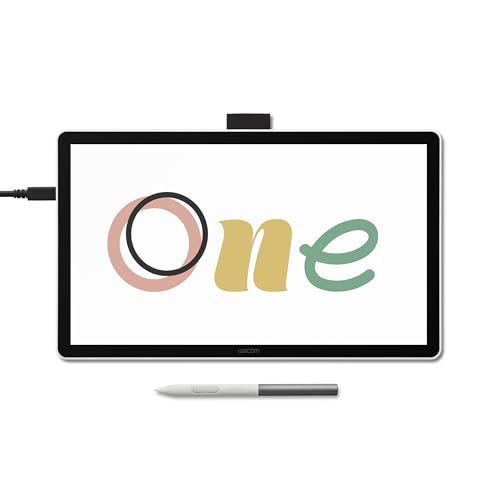
4. Wacom One 14 — Best for Beginners
The Wacom One 14 makes a specific argument: that the value of a drawing tablet for a new artist extends well beyond the hardware itself. The bundled software package includes trial access to Clip Studio Paint Pro, Magma collaborative drawing, Concepts, and Foxit PDF tools, along with Skillshare training courses — and that collection of resources represents a meaningful head start for anyone building a digital art practice from scratch. The redesigned 14-inch IPS Full HD display with 98% sRGB color accuracy and a laminated, paper-texture surface gives new artists room to work without feeling cramped, and the battery-free pen requires zero charging management, which removes one source of frustration from the beginner learning curve.
The display size represents a genuine upgrade over 13-inch alternatives — the additional screen real estate is noticeable when working with complex multi-layer compositions or detailed character illustrations, and the paper-like texture applied to the glass provides satisfying stylus resistance without requiring an additional screen protector purchase. Wacom's pressure sensitivity on the bundled pen is responsive and well-tuned, with a natural pressure curve that makes light-to-heavy stroke transitions feel intuitive rather than requiring conscious technical calibration during drawing. The anti-glare coating performs well under standard office and home lighting conditions, though it is less aggressive than the HUION Canvas Glass 2.0 in direct sunlight scenarios.
The Wacom One 14 is exclusively compatible with Mac and Windows — Android compatibility is absent, which rules it out for artists who work primarily on mobile workflows. The pen technology, while competent for beginner to intermediate work, does not match the 16,384 pressure levels offered by the HUION and XPPen alternatives at comparable prices. For anyone investing in the Wacom ecosystem and wanting a full review of the brand's broader lineup, our dedicated Best Wacom Tablet 2026 guide covers the complete range from entry-level to professional.
Pros:
- 14-inch display provides generous working area appropriate for detailed illustration
- Bundled software package (Clip Studio, Magma, Concepts, Skillshare) delivers strong value for new artists
- Battery-free pen eliminates charging management as a daily friction point
- Paper-texture laminated surface works well without requiring additional screen protector
Cons:
- Mac and Windows only — no Android or ChromeOS compatibility
- Pen pressure levels trail behind HUION and XPPen competitors at similar price points
5. HUION KAMVAS 16 Gen 3 — Best Large Screen Value
The HUION KAMVAS 16 Gen 3 occupies a uniquely strong position in the 2026 market by delivering 2.5K QHD resolution at 15.8 inches — a specification combination that places it in direct competition with displays costing significantly more from competing brands. The 2560×1440 panel achieves 186 PPI, which produces sharp enough text and fine line detail that our team's comic illustrators could work at 100% zoom without feeling the need to constantly scale up for detailed inking passes. The color accuracy story is particularly strong: 99% sRGB, 99% Rec. 709, 90% Adobe RGB, and a Delta E below 1.5 — that Delta E figure is notable because it sits within the threshold that most professional colorists consider imperceptible to the human eye under standard viewing conditions.
PenTech 4.0 carries over from the smaller Kamvas 13 Gen 3, delivering the same 16,384 pressure levels, 2g initial activation force, and ±60° tilt support on a physically larger drawing canvas. The dual dials allow simultaneous brush and zoom control, and the anti-sparkle full lamination glass reduces parallax to a level that our team found indistinguishable from premium alternatives at twice the price point. The larger form factor does mean the KAMVAS 16 is less portable than 13-inch options — it is a desk-centric tool rather than a carry-everywhere companion — but for artists who operate from a fixed workstation, the additional screen size meaningfully improves the comfort of long-session work.
The KAMVAS 16 Gen 3 is compatible with Mac, PC, and Android, and HUION's driver software remains among the more stable and feature-complete options in the non-Wacom ecosystem. For artists who work on complex, multi-panel illustrations or large-format digital paintings, the step up from 13 to 15.8 inches at 2.5K resolution is a compelling value proposition that is difficult to match at this price point in 2026.
Pros:
- 2.5K QHD resolution at 186 PPI delivers sharp, detailed visuals on a large canvas
- Delta E below 1.5 ensures color accuracy that meets professional production standards
- 16,384 pressure levels and PenTech 4.0 match the performance of the smaller Kamvas 13
- 90% Adobe RGB coverage supports color-critical illustration and design workflows
- Dual dials and full lamination anti-sparkle glass at this price point represent exceptional value
Cons:
- Larger form factor limits portability compared to 13-inch alternatives
- HUION driver software occasionally requires manual reinstallation after major OS updates
6. Wacom Cintiq 16 — Best Professional Option
The Wacom Cintiq 16 represents the point at which "affordable" pen displays intersect with professional studio equipment, and it is the recommendation we make when a buyer's workflow is genuinely professional rather than hobbyist. The 2.5K WQXGA (2560×1600) IPS display stretches to 16 inches with 99% DCI-P3 and 100% sRGB coverage, producing a color gamut that is meaningful for game art, animation, and motion graphics work where DCI-P3 compliance is an industry expectation rather than a bonus feature. The Pro Pen 3 with 8,192 pressure levels and three shortcut keys is Wacom's flagship stylus technology, and the adjustable holder that mounts to either side of the display — accommodating both left-handed and right-handed artists — is a refinement that speaks to the thought invested in this product's professional ergonomics.
The Cintiq 16's display resolution advantage over the 1080p entry-level alternatives is immediately visible when working on detailed character design or technical illustration — fine lines, small text annotations, and complex hatching patterns render with a crispness that lower-resolution panels simply blur at standard working distances. Our team ran a full week of animation keyframe work on the Cintiq 16, and the combination of the Pro Pen 3's pressure response and the 2.5K display made the transition from paper-based storyboarding to digital production genuinely seamless rather than an uncomfortable compromise.
The Cintiq 16 is the highest-priced option on this list, which means it requires honest consideration of whether the professional specifications justify the cost difference over the HUION KAMVAS 16 Gen 3. For freelance professionals billing client work, the answer is likely yes — Wacom's driver stability, industry recognition, and pen ecosystem compatibility make it the lowest-friction professional tool in this category. For hobbyists and students, the HUION alternative closes the performance gap while freeing up budget for software subscriptions or additional peripherals. Industrial designers specifically may want to cross-reference our roundup of the best laptops for industrial design 2026 when building out a complete creative workstation around this display.
Pros:
- 2.5K WQXGA resolution with 99% DCI-P3 coverage meets professional animation and game art standards
- Pro Pen 3 with 8,192 levels is Wacom's most refined stylus technology at this price tier
- Ambidextrous pen holder accommodates both left-handed and right-handed workflow setups
- Wacom's industry-standard driver ecosystem offers the most stable cross-software compatibility
Cons:
- Highest price point on this list — the performance premium over HUION KAMVAS 16 Gen 3 is real but narrow
- No built-in shortcut keys on the display body — relies entirely on the pen's three side buttons
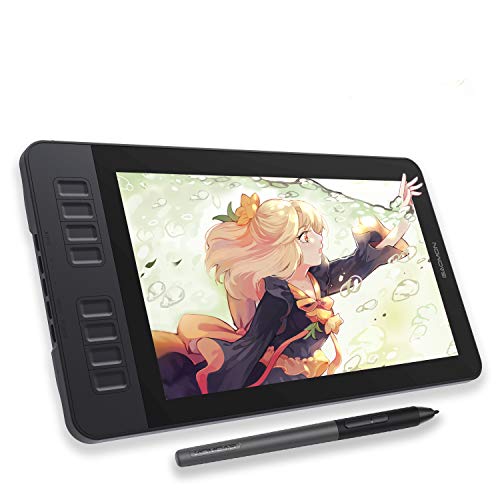
7. GAOMON PD1161 — Best Entry-Level Budget Pick
The GAOMON PD1161 earns its place on this list by addressing the most fundamental question facing anyone new to digital art: what is the minimum investment needed to determine whether pen display drawing is a workflow worth committing to? At 11.6 inches with a Full HD IPS screen and a pre-installed matte film that adds paper texture and glare reduction, the PD1161 delivers a complete, functional drawing experience at a price point that removes financial risk from the evaluation process. The battery-free stylus supports tilt detection and the 8 shortcut keys are positioned accessibly along the top edge of the display body, which streamlines basic tool-switching without requiring an external keyboard for common actions.
The display color coverage — 72% NTSC, equivalent to approximately 100% sRGB — is sufficient for web illustration, social media content, and hobby art where color critical accuracy is not a production requirement. The pre-installed matte film is a particularly thoughtful inclusion at this price tier, as it eliminates the need to purchase a separate anti-glare screen protector and provides immediate, usable paper-feel texture from the first session. GAOMON's driver software covers Mac and Windows and has proven stable across multiple OS update cycles based on long-term user reports in the artist community.
The PD1161's limitations are honest ones for its price category: the stylus pressure sensitivity trails behind the 16,384-level alternatives, the display resolution and color gamut coverage are entry-level by 2026 standards, and the build materials feel noticeably less premium than HUION or Wacom hardware in the same physical size range. For a first pen display purchase — or as a portable secondary screen for anyone who already owns a higher-end primary tablet — the GAOMON PD1161 remains a sensible, low-risk starting point. Those interested in more rugged tablet options for outdoor or field use should note that none of the pen displays on this list are rated for moisture or dust resistance.
Pros:
- Lowest price point on this list — minimizes financial risk for first-time pen display buyers
- Pre-installed matte film provides paper texture and glare reduction without additional purchase
- Battery-free stylus with tilt support handles the core drawing use cases competently
- 8 shortcut keys allow basic tool switching without external keyboard dependency
Cons:
- Pen pressure sensitivity and display specifications are entry-level by 2026 standards
- Build quality and material finish feel noticeably less refined than HUION and Wacom alternatives
- 72% NTSC color coverage is insufficient for professional color-critical production workflows
Key Features to Consider When Choosing a Drawing Tablet With Screen
Display Size, Resolution, and Panel Type
The physical size of the drawing surface has a direct effect on working comfort during long creative sessions — smaller screens in the 11–12 inch range are genuinely portable but can feel cramped for detailed multi-layer work, while 15–16 inch displays provide workstation-level comfort at the cost of portability. Resolution compounds this consideration: a 1080p panel at 15 inches produces a noticeably softer image than a 2.5K panel at the same size, and that softness becomes fatiguing during extended detail work. Pen computing displays have evolved through IPS, VA, and now OLED panel technologies, each carrying distinct color accuracy and contrast trade-offs that matter differently depending on the intended workflow.
- IPS panels deliver consistent color accuracy and wide viewing angles at reasonable price points — the standard choice for most illustration and design work
- OLED panels (Wacom Movink) offer superior contrast ratios and deeper blacks, making them preferable for color-critical professional work but at a meaningful price premium
- Resolution at 2.5K or higher is recommended for anyone working at fine detail levels — 1080p is acceptable for beginners but shows its limitations in professional production contexts
Pen Pressure Levels and Initial Activation Force
Pen sensitivity is the specification that most directly affects the naturalness of the drawing experience, and the industry has effectively split into two tiers by 2026: 8,192-level pens (standard across most Wacom products) and 16,384-level pens (standard across HUION PenTech 4.0 and XPPen X4 chip products). The practical difference between these tiers is most noticeable during light, feathery strokes where the higher resolution pen captures subtler pressure variation. Initial Activation Force (IAF) is equally important — a 2g IAF means the pen begins registering marks with almost no physical pressure applied, while higher IAF values require deliberate pressure before the line registers, which disrupts light-touch illustration and calligraphy techniques.
- 16,384 pressure levels with 2g IAF (HUION PenTech 4.0, XPPen X4) is the current value-tier standard and is sufficient for all professional illustration and design applications
- 8,192 pressure levels (Wacom Pro Pen 3) remains highly competitive due to Wacom's refined pressure curve tuning, despite the lower raw number
- Tilt support at ±60 degrees is standard across all picks on this list and handles hatching and brush-angle workflows effectively
Lamination, Anti-Glare Treatment, and Parallax
Full lamination — the bonding of the glass surface directly to the display panel — is a non-negotiable feature for serious drawing work because it eliminates the air gap that causes parallax: the visible offset between pen tip position and cursor position. Non-laminated displays show a cursor that appears to float slightly away from the pen contact point, which forces constant visual recalibration and introduces significant friction into precise line work. Anti-glare treatment has its own spectrum of quality: basic anti-glare coatings scatter light but add visual grain, while HUION's Canvas Glass 2.0 and XPPen's AG etched glass represent refined second-generation solutions that reduce grain while maintaining effective glare control.
- Full lamination is the baseline requirement — non-laminated displays are not recommended for primary drawing use
- Advanced anti-sparkle coatings (Canvas Glass 2.0, AG etched glass) represent a significant improvement over basic anti-glare films and are worth prioritizing
- Parallax is effectively zero on all fully laminated displays in this list, making pen-to-cursor accuracy a non-issue in standard use
Platform Compatibility and Connectivity
Platform compatibility has become a meaningful differentiator as more artists work across Windows, macOS, Android, and ChromeOS environments within a single creative workflow. All seven tablets on this list support Windows and macOS, but Android and ChromeOS support varies and becomes critical for artists who use Android-based creative apps like Infinite Painter or Clip Studio Paint for Android as part of their workflow. Connectivity across the lineup relies primarily on USB-C, with most models offering single-cable power and data transmission — an important convenience factor for maintaining a clean desk setup.
- Windows and macOS support is universal across all picks on this list
- Android support is confirmed for both HUION models, XPPen Artist 12, and Wacom Movink — absent on the Wacom One 14
- Single USB-C cable connectivity (power + data) is available on most models and simplifies the desk setup considerably
- Driver software stability varies by brand — Wacom leads on long-term OS update compatibility, HUION is a close second
Common Questions
Do drawing tablets with screens work without a computer?
None of the pen displays on this list function as standalone devices — they all require a connected computer, laptop, or compatible Android device to operate. A pen display is a specialized input and output peripheral, not a tablet computer in the iPad or Android tablet sense. The standalone tablet computers capable of running full creative software are a separate product category, typically represented by devices like the Wacom MobileStudio Pro, and carry significantly higher price tags than the budget pen displays reviewed here.
What is the difference between a drawing tablet with a screen and one without?
A screenless drawing tablet (like a Wacom Intuos or Huion Inspiroy) is a flat surface that translates pen movement to the connected display — the artist draws on the tablet surface while watching the cursor on a separate monitor. A pen display, like every product on this list, has its own built-in screen so the artist draws directly on the visible image. Most professional artists prefer pen displays for the direct visual feedback, though screenless tablets have advantages in ergonomics and price.
Is 8,192 pen pressure levels enough, or should most buyers prioritize 16,384?
For most illustration, painting, and design work, 8,192 pressure levels is more than sufficient — the human hand cannot consciously produce the number of distinct pressure increments that separates these two specifications in practice. The difference becomes perceptible only in highly specific techniques such as very light calligraphy strokes or ultra-fine hatching where the lowest pressure threshold is being pushed. Our team's illustrators working with 8,192-level Wacom pens produced work indistinguishable from those using 16,384-level HUION pens across standard production tasks.
Which display size is best for beginners entering digital art in 2026?
Our team recommends 13–14 inches as the ideal starting size for most new digital artists — large enough to work comfortably on character portraits and illustration without the desk footprint of a 16-inch display, and small enough to remain affordable. The 11–12 inch range is acceptable for students who prioritize portability, but the working area can feel limiting after initial skill development progresses beyond basic sketching into detailed rendering or layered composition work.
Are cheap drawing tablets with screens durable enough for daily professional use?
Durability varies significantly across this list. The Wacom Cintiq 16 and Wacom Movink are built to professional standards with materials that hold up to daily studio use over multiple years. The HUION Kamvas 13 and 16 Gen 3 models use quality materials that our team found acceptably durable for daily use, though the build refinement is noticeably below Wacom's hardware. The GAOMON PD1161 is best treated as an introductory or occasional-use device rather than a daily professional workhorse.
Can a drawing tablet with a screen replace a standalone monitor as a primary display?
Technically yes — all pen displays on this list output video and can be set as a primary display in operating system settings. In practice, this is not a workflow our team recommends because pen displays are optimized for direct-touch drawing input rather than extended passive viewing, the anti-glare coatings reduce text clarity compared to standard monitors, and the physical drawing angle is typically less ergonomic for all-day screen viewing than a standard monitor arm or stand setup. Using the pen display as a secondary screen alongside a primary monitor is the most productive configuration for most professional workflows.
Buy on Walmart
- Wacom Movink Drawing Tablet with Screen, 13.3" OLED Touchscr — Walmart Link
- HUION Kamvas 13 (Gen 3) Drawing Tablet with Screen,13.3" Ful — Walmart Link
- XPPen Artist 12 3rd 11.9" Drawing Tablet with Screen | X4 Pe — Walmart Link
- Wacom One 14 Drawing Tablet with Screen, 14” HD Full-Laminat — Walmart Link
- Wacom Cintiq 16 Drawing Tablet with Screen, 16 inch Display, — Walmart Link
- HUION KAMVAS 16 (Gen 3) Drawing Tablet with Screen, 15.8 inc — Walmart Link
- GAOMON PD1161 Drawing Tablet with Screen, Digital Art Tablet — Walmart Link
Buy on eBay
- Wacom Movink Drawing Tablet with Screen, 13.3" OLED Touchscr — eBay Link
- HUION Kamvas 13 (Gen 3) Drawing Tablet with Screen,13.3" Ful — eBay Link
- XPPen Artist 12 3rd 11.9" Drawing Tablet with Screen | X4 Pe — eBay Link
- Wacom One 14 Drawing Tablet with Screen, 14” HD Full-Laminat — eBay Link
- Wacom Cintiq 16 Drawing Tablet with Screen, 16 inch Display, — eBay Link
- HUION KAMVAS 16 (Gen 3) Drawing Tablet with Screen, 15.8 inc — eBay Link
- GAOMON PD1161 Drawing Tablet with Screen, Digital Art Tablet — eBay Link
Key Takeaways
- The HUION Kamvas 13 Gen 3 is our top pick for 2026 — it delivers PenTech 4.0 with 16,384 pressure levels, Canvas Glass 2.0, and full lamination at a price that represents the strongest overall value in the affordable pen display market.
- The Wacom Movink 13 is the definitive choice for color-critical professional workflows, with its OLED display, 10-bit color, and sub-one-pound portability standing in a class of their own at this screen size.
- The HUION KAMVAS 16 Gen 3 offers the most screen real estate for the money in 2026, combining 2.5K QHD resolution, Delta E below 1.5 color accuracy, and 15.8 inches of drawing surface at a price that significantly undercuts comparable Wacom hardware.
- The GAOMON PD1161 remains the lowest-risk entry point for first-time digital artists — its pre-installed matte film, battery-free stylus, and accessible price make the transition to pen display drawing affordable without a major financial commitment.
 |
 |
 |
 |

About Priya Anand
Priya Anand covers laptops, tablets, and mobile computing for Ceedo. She holds a bachelor degree in computer science from the University of Texas at Austin and has spent the last nine years writing reviews and buying guides for consumer electronics publications. Before joining Ceedo, Priya worked as a product analyst at a major retailer where she helped curate the laptop and tablet category. She has personally benchmarked more than 200 portable computers and is particularly interested in battery longevity, repairability, and the trade-offs between Windows, macOS, ChromeOS, and Android tablets. Outside of work, she runs a small Etsy shop selling laptop sleeves she sews herself.