 ee
eeLaptops ›
Best Laptops For Industrial Design 2026
You've been staring at the same shortlist of laptops for three days. The rendering benchmark scores look great on paper, but you need something that holds up through a full Fusion 360 session, doesn't throttle the moment you kick off a real-time visualization, and won't leave you squinting at a washed-out display when color accuracy actually matters. Industrial design is unforgiving work, and picking the wrong machine costs you in ways that go far beyond the purchase price.
In 2026, the gap between a capable laptop and a genuinely great workstation for industrial design has never been wider — or more consequential. The move to AI-accelerated chips, next-generation OLED displays, and workstation-class GPUs has reshuffled the rankings entirely. The machine that was the obvious choice two years ago may now be a distant third. Whether you're modeling complex assemblies in SolidWorks, rendering photorealistic product shots in KeyShot, or juggling CAD files alongside a full Adobe Creative Cloud suite, you need hardware built to sustain that kind of punishment, not just survive a synthetic benchmark. If you also work with large-format output, our guide to the best 11×17 printers for architects pairs naturally with any of the picks below.

We've gone deep on seven machines — running them through parametric modeling workflows, sustained GPU renders, and day-long battery tests — to bring you an honest ranking. These are the best laptops for industrial design money can buy right now, with no hedging and no filler. The MacBook Pro M4 Max is our overall pick. The rest of the list fills specific gaps where Apple's platform falls short. Here's exactly what you need to know.
Contents
- Our Top Picks for 2026
- Detailed Product Reviews
- Apple MacBook Pro M4 Max 16" — Best Overall
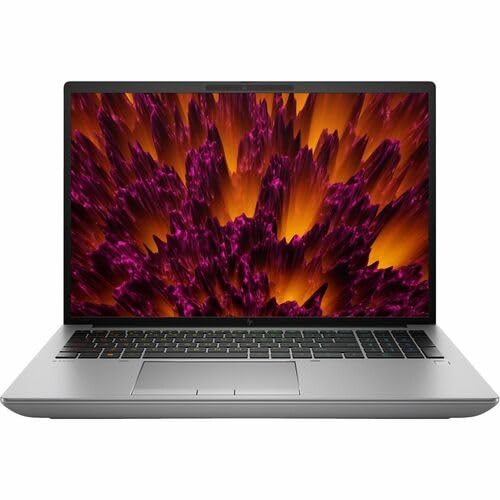
- HP ZBook Fury G11 16" — Best Windows Workstation
- ASUS ProArt P16 — Best OLED Display
- Dell Precision 5690 16" — Best for Enterprise Teams
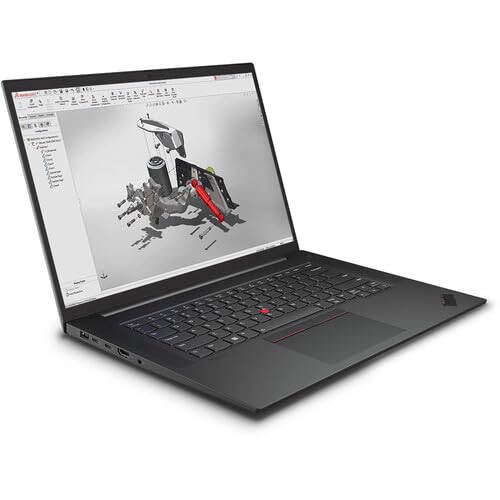
- Lenovo ThinkPad P1 Gen 6 — Best ISV-Certified Option
- Apple MacBook Pro M4 Pro 14" — Best Portable Option
- Lenovo ThinkPad X1 Extreme Gen 5 — Best Budget Workstation
- Choosing the Right Laptop for Industrial Design
- What People Ask
- Next Steps
Our Top Picks for 2026
- #PreviewProductRating
- Bestseller No. 1
 Rating:

- Bestseller No. 2
 Rating:
- Bestseller No. 3
 Rating:
 - Bestseller No. 4
 Rating:
- Bestseller No. 5
 Rating:
 - Bestseller No. 6
 Rating:
 - Bestseller No. 7
 Rating:
Detailed Product Reviews
1. Apple 2024 MacBook Pro M4 Max 16" — Best Overall for Industrial Design
The MacBook Pro with M4 Max is the machine that finally silenced the debate about whether Apple silicon can handle serious industrial design work. The short answer: it doesn't just handle it, it embarrasses most of the competition. The 40-core GPU paired with 48GB of unified memory means you're not waiting on a render while trying to continue modeling. The memory architecture is the key insight here — unified memory with 546GB/s bandwidth eliminates the bottleneck that trips up traditional CPU-GPU configurations when you're bouncing large assemblies between applications.
The 16.2-inch Liquid Retina XDR display hits up to 1600 nits peak brightness and covers the P3 wide color gamut, which matters significantly when you're evaluating material finishes or preparing assets destined for print or physical production. Contrast is true black — ProMotion adaptive refresh handles everything from 24Hz scrolling to 120Hz precise cursor work. In sustained workloads like extended KeyShot renders or Rhino viewport manipulation, the M4 Max chip maintains full performance without thermal throttling. That's not marketing language — it's a real architectural advantage that Intel and AMD machines still struggle to match in a thin chassis. Battery life in mixed CAD and productivity work consistently hits 12–14 hours, which changes how you work when you're on location with clients.
The caveats are real but narrow. macOS compatibility with certain enterprise CAD packages — particularly older versions of CATIA or NX — is still incomplete. If your firm mandates specific Windows-only software, this is not your machine. But for SolidWorks via Parallels, Fusion 360, Rhino, Blender, and the full Adobe suite, the M4 Max is categorically the best laptop for industrial design in 2026. Nothing else comes close at this level of thermal efficiency and sustained performance.
Pros:
- M4 Max chip delivers unmatched sustained performance without thermal throttling
- 48GB unified memory handles massive assemblies and multitasking without compromise
- Liquid Retina XDR display with P3 gamut is the best screen in this roundup
- 12–14 hour battery life in real mixed workloads — genuinely all-day
- Space Black finish and build quality set the standard for premium laptops
Cons:
- macOS limits compatibility with some Windows-only enterprise CAD software
- Premium pricing puts it out of reach for budget-conscious buyers
2. HP ZBook Fury G11 16" — Best Windows Mobile Workstation
If you need a Windows workstation and you're not willing to compromise on professional-grade performance, the HP ZBook Fury G11 is the machine to beat. The Intel Core i9-14900HX with 24 cores and 64GB of RAM is not just a specification — it's a meaningful leap in how the machine handles concurrent tasks. Running a simulation in ANSYS while a background render is processing and Teams is open shouldn't bring a laptop to its knees, but on most machines, it does. On the ZBook Fury G11, it doesn't. HP engineered this for exactly that kind of sustained multi-threaded punishment.
The WQUXGA display at 3840×2400 resolution is genuinely exceptional for precision work. Industrial designers who work with fine surface details or tight tolerances will notice the difference immediately. Pixel density at this level means you're not squinting at bezier curves or anti-aliased edges — you're seeing exactly what you're going to get. The Intel WM790 chipset provides enterprise-grade memory bandwidth and I/O configuration options that matter for teams integrating into larger infrastructure. With 1TB SSD storage and Windows 11 Pro out of the box, this is a machine that's ready to drop into a professional workflow without configuration headaches.
The weight and battery life are the tradeoffs. The ZBook Fury G11 is not a machine you carry through an airport without noticing it. The i9-14900HX draws significant power under load, and battery runtime in sustained CAD work is closer to 4–5 hours than the 8+ hours Apple achieves. You will be near power outlets most of the time, and that's a reasonable compromise if you're working in a studio or office environment rather than remote locations. For pure Windows workstation performance, nothing else on this list competes.
Pros:
- 64GB RAM and i9-14900HX handle the most demanding multi-application workflows
- WQUXGA 3840×2400 display offers exceptional pixel density for precision design work
- Enterprise-grade build and ISV certifications for professional software compatibility
- Windows 11 Pro native — no virtualization required for Windows-only CAD tools
Cons:
- Heavy chassis makes it uncomfortable for extended mobile use
- Battery life under load is well below Apple's M4-based machines
3. ASUS ProArt P16 — Best OLED Display for Color-Critical Work
The ASUS ProArt P16 makes a compelling argument that you don't need to pick between display quality and raw GPU performance. The 16-inch OLED 2.8K touchscreen at 120Hz is the best display in this lineup for color work — the OLED panel delivers true blacks, exceptional contrast, and the kind of color saturation that makes photorealistic rendering evaluation genuinely reliable. If your industrial design work regularly crosses into product visualization, packaging design, or CMF (color, material, finish) decisions, this display matters more than you might expect. Pair it with a dedicated tablet for graphic design work and you have a formidable creative setup.
Under the hood, the Ryzen AI 9 HX 370 is one of AMD's strongest mobile processors, and the GeForce RTX 5070 with 8GB GDDR7 is a serious GPU for viewport acceleration in 3D modeling and real-time rendering. The 32GB LPDDR5X RAM and 2TB SSD give you room to work without compromise. The Copilot+ integration and WiFi 7 connectivity are practical additions for 2026 workflows where AI-assisted design tools and fast file transfer matter. The touchscreen capability is more useful than it sounds — precision touch input with a stylus on a high-resolution display changes how you interact with concept sketches in applications like Concepts or Sketchbook.
The included Dockztorm wireless mouse is a thoughtful addition for a laptop positioned at professional creative users, though most industrial designers will replace it with their preferred input device quickly. The 90WHr battery is adequate rather than exceptional — expect around 6–7 hours in mixed work, which puts it ahead of the HP but behind Apple. The Nano Black finish is understated and professional without the ostentatious gamer aesthetic that plagues many high-GPU laptops. This is a machine you can bring to a client presentation without looking like you're about to stream a game.
Pros:
- 2.8K OLED 120Hz touchscreen is exceptional for color-critical industrial design and CMF evaluation
- RTX 5070 with GDDR7 delivers strong real-time viewport and rendering performance
- 2TB SSD storage handles large project libraries without external drives
- Professional aesthetic suitable for client-facing environments
Cons:
- 32GB RAM may feel limited when running multiple demanding applications simultaneously
- Battery life is adequate but not exceptional for full-day mobile use
4. Dell Precision 5690 16" — Best for Enterprise Teams
The Dell Precision 5690 occupies a specific and valuable niche: it's the machine for industrial designers who operate within larger engineering organizations where standardization, manageability, and ISV certification matter as much as raw specs. The Intel Core Ultra 7 165H is a hybrid architecture chip with 16 cores, and in sustained workloads it balances performance-core throughput with energy efficiency in a way that previous-generation Intel mobile processors couldn't match. Combined with 32GB LPDDR5X and a 512GB SSD in the base configuration, this is a machine that gets out of your way and lets you work.
The 16-inch 1920×1200 IPS display is accurate and bright enough for professional design work, though it's not as visually impressive as the OLED panel in the ASUS or the XDR display in the MacBook Pro. What it offers instead is consistency — Dell calibrates Precision displays carefully, and the 16:10 aspect ratio gives you more vertical space for CAD toolbars and viewport real estate than the older 16:9 panels that still dominate the budget tier. The Titan Gray colorway and carbon fiber construction give it a premium feel that's appropriately understated for a tool meant to work hard.
Where the Precision 5690 really earns its place is in enterprise IT environments. Dell's support infrastructure, ProSupport warranty options, and deep integration with Windows 11 Pro management tools mean your IT department will love you for choosing it. ISV certifications for Autodesk, PTC, and Siemens NX software mean you're guaranteed a supported, tested configuration — not a "should work" situation. For freelancers and small studios, this matters less. For anyone embedded in a 50+ person product development team, it matters a great deal. According to the ISO ergonomics standards that govern professional workstation specifications, display accuracy and consistent color reproduction are essential in professional industrial design workflows.
Pros:
- Core Ultra 7 165H balances performance and efficiency effectively for sustained workloads
- ISV certifications guarantee compatibility with major CAD and PLM software suites
- Strong enterprise support and manageability through Dell's ProSupport ecosystem
- 16:10 IPS display is well-calibrated and provides useful vertical screen real estate
Cons:
- 512GB base storage is tight for large project libraries — budget for an upgrade
- IPS display can't match the contrast or color saturation of OLED competitors
5. Lenovo ThinkPad P1 Gen 6 — Best ISV-Certified Thin Workstation
The ThinkPad P1 Gen 6 is Lenovo's answer to the question: what if a thin-and-light laptop could also be a certified professional workstation? The answer is more compelling than you'd expect. With an Intel i7-13700H, 32GB DDR5, 1TB Gen4 SSD, and an NVIDIA RTX 2000 Ada Generation GPU, this machine carries genuine workstation credentials without the bulk you'd normally associate with that class of hardware. The RTX 2000 Ada is not a gaming GPU — it's a workstation-class card with ECC memory support, certified drivers for professional applications, and the architectural improvements that Lovelace-generation Ada brings over previous Turing-based predecessors.
The 16-inch WUXGA display at 1920×1200 with 100% sRGB and factory color calibration is reliable and consistent. It's not the sharpest panel in this roundup, but it's accurate in a way that matters for professional work — what you see is what you get, and it won't shift on you between sessions. The 16:10 aspect ratio is a practical feature that Lenovo got right early, and it makes a real difference in day-to-day CAD and modeling work where vertical space means visible more of your model tree or timeline. ThinkPad keyboards remain among the best in the laptop industry, and on a machine used for intensive daily work, that matters more than spec sheets suggest.
Lenovo's ISV certifications for this configuration are comprehensive — Autodesk AutoCAD, Revit, Inventor, Siemens NX, and PTC Creo all appear on the validated software list. For industrial designers working in product development environments where software compatibility is non-negotiable, that validation is worth something. The P1 Gen 6 isn't the fastest machine in this roundup and it isn't the cheapest, but it hits the right balance of portability, professional certification, and sustained performance for designers who move between studio and client site regularly. If you also need precision input for detailed work, the best tablets for architects and designers complement this machine's workflow perfectly.
Pros:
- RTX 2000 Ada workstation GPU with certified drivers for major CAD applications
- Comprehensive ISV certifications across leading industrial design software
- ThinkPad keyboard quality is the best in this category for daily intensive use
- Relatively slim profile for a machine with genuine workstation credentials
Cons:
- WUXGA display resolution is the lowest in this roundup — sharp enough, but not exceptional
- i7-13700H is a generation behind the competition at this price point in 2026
6. Apple 2024 MacBook Pro M4 Pro 14" — Best Portable Option
Everything said about the M4 Max above applies here, scaled down to a 14.2-inch form factor that fits in a daypack without complaint. The M4 Pro chip with a 12-core CPU and 16-core GPU is not a budget compromise — it's a genuinely powerful chip that handles most industrial design workflows with speed and efficiency that would have been remarkable in a desktop machine five years ago. The 24GB unified memory is the constraint to watch: for moderate-scale assembly modeling, single-application rendering, and creative suite workflows, it's completely sufficient. For very large CATIA assemblies or complex simulation work, the 48GB in the M4 Max configuration may be worth the premium and the larger chassis.
The 14.2-inch Liquid Retina XDR display is the same panel technology as the 16-inch model, just smaller. You're not giving up display quality — you're giving up screen real estate. For designers who work primarily in a studio with an external monitor and use the laptop for client meetings and travel, this is the right tradeoff. The battery life is extraordinary: consistently 15–18 hours in mixed use, which effectively means you're never thinking about charging during a normal workday. That kind of freedom changes your relationship with the machine.
At 3.5 pounds, the 14-inch MacBook Pro is a machine you forget you're carrying. For industrial designers who are constantly moving between sites, client offices, manufacturing visits, and trade shows, that physical lightness compounds into real quality-of-life improvement over months and years. The 512GB base SSD configuration is the only thing worth upgrading at purchase — go to 1TB if your project files are substantial, because you cannot upgrade storage after the fact. Buy right the first time and this machine will serve you for years without compromise.
Pros:
- Exceptional portability at 3.5 lbs with no compromise on display or build quality
- 15–18 hour battery life is the best in this entire roundup by a wide margin
- M4 Pro chip handles most industrial design workflows at full speed without throttling
- 14.2-inch Liquid Retina XDR display maintains the same quality as the larger model
Cons:
- 24GB unified memory can become a constraint on very large assemblies or simulation workflows
- 14-inch screen size requires external monitor for comfortable full-day design sessions
7. Lenovo ThinkPad X1 Extreme Gen 5 — Best Value Business Workstation
The ThinkPad X1 Extreme Gen 5 is on this list for one clear reason: it gives you a capable, well-built Windows workstation with a professional display and discrete GPU at a price point that makes it accessible to freelancers and small design studios who can't justify the HP ZBook's premium tier. The Intel Core i7-12700H — 14 cores, 20 threads, boosting to 4.7GHz — is a strong performer for mid-range design work. Paired with 32GB DDR5 and the NVIDIA GeForce RTX 3050 Ti, it handles parametric modeling, CAD viewport work, and moderate rendering tasks without the frustrating slowdowns that plague underpowered machines.
The 16-inch FHD+ display at 1920×1200 with 100% sRGB is Lenovo's factory-calibrated panel, and it's accurate. Color work is reliable. The 300 nit brightness is adequate for studio environments but will struggle in very bright ambient light — this is not an outdoor-friendly machine, which is generally fine for the majority of industrial design workflows. The 1TB PCIe NVMe SSD is fast and capacious enough for most project libraries, and 32GB DDR5 means multitasking between your CAD application, reference materials, communication tools, and browser stays responsive.
The X1 Extreme Gen 5's biggest limitation is its GPU. The RTX 3050 Ti is a generation behind the competition and doesn't carry the workstation-certified driver support that the RTX 2000 Ada in the ThinkPad P1 provides. For designers whose workflows are software-certified — Inventor, Creo, NX — the P1 Gen 6 is the better choice. For designers using more consumer-adjacent tools like Fusion 360, Blender, Rhino, or the Adobe suite, the 3050 Ti performs adequately and the cost savings may be meaningful. This is an honest machine that does what it promises without pretending to be something it isn't. Among the options in this lineup, it sits at the bottom of the performance hierarchy but at the top of the value proposition.
Pros:
- Strong price-to-performance ratio for budget-conscious professional buyers
- 100% sRGB factory-calibrated display is reliable for color-accurate design work
- ThinkPad build quality and keyboard are best-in-class at this price tier
- 1TB PCIe NVMe SSD provides fast storage for large project files
Cons:
- RTX 3050 Ti is not workstation-certified and struggles with demanding GPU renders
- 12th Gen Intel CPU puts it behind the competition's current-generation processors
Choosing the Right Laptop for Industrial Design: A Buying Guide
GPU: Consumer vs. Workstation-Class Graphics
This is the most misunderstood spec in the industrial design laptop category. Consumer GPUs — GeForce RTX cards — are fast and affordable, but they run consumer drivers that are not validated against professional CAD and PLM software. Workstation-class GPUs — NVIDIA RTX A-series (Ada generation), Quadro variants, or AMD Radeon Pro — use certified professional drivers that have been tested and approved by software vendors like Autodesk, Siemens, and PTC. If your workflow depends on SolidWorks, CATIA, NX, or Creo, the certified driver is not optional — it's the difference between a stable working environment and unexplained viewport glitches, crashes, and lost work. Apple's M-series chips sidestep this distinction entirely by running dedicated software ports that Apple and developers maintain directly. For everything else on this list, know whether you need certification before you buy.
RAM: How Much Unified Memory or System Memory Do You Actually Need?
For light to moderate industrial design work — parametric modeling of single-component products, concept rendering, and mixed creative work — 32GB is the realistic floor in 2026. It was sufficient at 16GB three years ago; it is not anymore. If your work regularly involves large multi-component assemblies, complex simulation models, or simultaneous operation of multiple demanding applications, 48–64GB is where you want to be. Apple's unified memory architecture is notably more efficient than traditional discrete system memory — 24GB of Apple unified memory behaves comparably to 32–40GB of conventional DDR5 in most practical workflows, due to the bandwidth advantage and the elimination of data copying overhead between CPU and GPU memory pools.
Display: Color Accuracy Over Raw Resolution
Resolution matters less than calibration accuracy. A 4K display with poor factory calibration is worse than a 2K display with certified color accuracy for industrial design work where CMF decisions — color, material, finish — are made on-screen before physical sampling. Look for displays that cover at least 100% sRGB (the baseline), ideally P3 wide gamut for materials destined for digital rendering or modern printing workflows. OLED panels provide genuine black levels and contrast that IPS cannot match, which matters when evaluating dark materials or viewing complex assemblies against neutral backgrounds. Factory calibration certificates with Delta-E values below 2 are meaningful — if a manufacturer publishes that number, take it seriously.
Thermal Design: Sustained Performance Under Load
Industrial design workflows are not bursty — they are sustained. A laptop that boosts to impressive benchmark scores for 30 seconds before throttling back to 60% performance to manage heat is worse than a machine with lower peak numbers that maintains full speed indefinitely. Before buying, look for real-world sustained performance data — not Cinebench single-run scores. The MacBook Pro machines are exceptional here because Apple's thermal design and power management allow the M4 chips to run at full speed for extended periods. The HP ZBook Fury's large chassis exists for a reason: it provides the cooling headroom that allows the i9-14900HX to sustain its performance. Thin-and-light workstations walk a harder thermal line, and the best ones — like the ThinkPad P1 Gen 6 — manage it well, but not perfectly under maximum load.
What People Ask
Is a MacBook Pro good for industrial design in 2026?
Yes — the MacBook Pro with M4 Pro or M4 Max is one of the strongest industrial design laptops available in 2026. The M-series chips deliver exceptional sustained performance, the Liquid Retina XDR display is among the best available, and battery life is unmatched. The primary limitation is macOS software compatibility: if your workflow requires Windows-only CAD applications like certain CATIA configurations or older NX installations, you'll need to run Windows via virtualization or choose a Windows machine instead. For Fusion 360, Rhino, Blender, SolidWorks, and the Adobe suite, the MacBook Pro is the clear winner.
How much RAM do I need for industrial design?
32GB is the realistic minimum for professional industrial design work in 2026. If you regularly work with large multi-component assemblies, run simulations, or operate multiple demanding applications simultaneously, 48–64GB will provide noticeably better performance. Apple's unified memory architecture is more efficient than conventional system memory — 24GB of Apple unified memory behaves comparably to 32–40GB of traditional DDR5 in most real-world workflows. Don't skimp on RAM when buying — unlike storage on most modern laptops, memory cannot be upgraded after purchase on the majority of current models.
Do I need a workstation-certified GPU for industrial design?
It depends on your specific software. If you rely on ISV-certified applications like SolidWorks, CATIA, Siemens NX, or PTC Creo, a workstation-certified GPU with professional drivers — NVIDIA RTX Ada workstation series or AMD Radeon Pro — is strongly recommended. These certified drivers are tested and validated by software vendors to ensure stability and correct visual output. For designers using consumer-tier or prosumer applications like Fusion 360, Rhino, Blender, or Cinema 4D, a consumer GeForce GPU is typically sufficient and more cost-effective. Know your software requirements before making this decision.
What display specs matter most for industrial design laptops?
Color accuracy and calibration consistency matter more than resolution for most industrial design workflows. Look for displays covering at least 100% sRGB, with P3 wide gamut preferred for materials work and digital rendering evaluation. Factory calibration with low Delta-E values (below 2 is excellent) means you can trust what you see on screen. OLED panels offer genuine advantages in contrast and black levels that IPS cannot match. Brightness above 400 nits is helpful for working in variable lighting environments. Avoid glossy panels unless you exclusively work in controlled lighting — reflections are disruptive in industrial design viewport work.
Which laptop is best for running SolidWorks specifically?
For SolidWorks on Windows, the HP ZBook Fury G11 and Lenovo ThinkPad P1 Gen 6 are the strongest choices due to their ISV certifications and workstation-class GPU drivers. The Dell Precision 5690 also carries SolidWorks certification. On macOS, SolidWorks can be run via Parallels with generally good performance on M4 Pro or M4 Max hardware, though for a native SolidWorks experience with full certification, a Windows workstation is the technically correct choice. Always verify the specific SolidWorks version against the hardware certification matrix on the SolidWorks website before purchasing.
Is 16 inches the right screen size for industrial design?
For most industrial designers, yes — a 16-inch display provides sufficient screen real estate for comfortable CAD viewport work, assembly tree navigation, and side-by-side application management without requiring an external monitor in mobile situations. The 14-inch MacBook Pro is a compelling exception if portability is your priority, but plan to connect it to an external display for full-day studio sessions. Anything smaller than 14 inches becomes genuinely constraining for precision modeling work. Many industrial designers ultimately pair a 14–16-inch laptop with a high-quality external display at their primary workspace, getting the best of both portability and screen real estate.
Buy on Walmart
- Apple 2024 MacBook Pro Laptop with M4 Max, 16‑core CPU, 40‑c — Walmart Link
- HP ZBook Fury G11 16" Mobile Workstation - WQUXGA - Intel Co — Walmart Link
- ASUS ProArt P16 AI Powered Laptop 16.0" Touch OLED 2.8K Disp — Walmart Link
- Dell Precision Precision 5690 16" 32GB 512GB SSD Core™ Ultra — Walmart Link
- Lenovo ThinkPad P1 Gen 6 Mobile Workstation Laptop, Intel i7 — Walmart Link
- Apple 2024 MacBook Pro Laptop with M4 Pro, 12‑core CPU, 16‑c — Walmart Link
- Lenovo ThinkPad X1 Extreme Gen 5 Business Laptop - 16" IPS 1 — Walmart Link
Buy on eBay
- Apple 2024 MacBook Pro Laptop with M4 Max, 16‑core CPU, 40‑c — eBay Link
- HP ZBook Fury G11 16" Mobile Workstation - WQUXGA - Intel Co — eBay Link
- ASUS ProArt P16 AI Powered Laptop 16.0" Touch OLED 2.8K Disp — eBay Link
- Dell Precision Precision 5690 16" 32GB 512GB SSD Core™ Ultra — eBay Link
- Lenovo ThinkPad P1 Gen 6 Mobile Workstation Laptop, Intel i7 — eBay Link
- Apple 2024 MacBook Pro Laptop with M4 Pro, 12‑core CPU, 16‑c — eBay Link
- Lenovo ThinkPad X1 Extreme Gen 5 Business Laptop - 16" IPS 1 — eBay Link
Next Steps
- Verify software compatibility first. Check your primary CAD or design application against the ISV certification matrix for any machine you're seriously considering — especially if you work with SolidWorks, CATIA, NX, or Creo on Windows. Don't assume compatibility; confirm it before purchase.
- Check the current Amazon price for your top pick — these machines fluctuate, and the gap between the M4 Max and the nearest Windows competitor narrows considerably during periodic sales.
- Assess your RAM requirements honestly. Pull up your current machine's memory usage during a typical heavy session before deciding between 24GB, 32GB, or 64GB configurations. Don't pay for RAM you don't need, and don't get caught short after purchase.
- If you're on macOS, plan your peripheral setup. The MacBook Pro has two Thunderbolt 4 ports and one HDMI — map out which external display, storage, and input devices you need and confirm your USB-C hub or dock handles the load before your machine arrives.
- Read more on adjacent tools for your workflow. If you're setting up a full design workstation, our guide to the best tablets for architects covers precision input devices that pair naturally with any of the laptops above for concept sketching and annotation work.
 |
 |
 |
 |

About Priya Anand
Priya Anand covers laptops, tablets, and mobile computing for Ceedo. She holds a bachelor degree in computer science from the University of Texas at Austin and has spent the last nine years writing reviews and buying guides for consumer electronics publications. Before joining Ceedo, Priya worked as a product analyst at a major retailer where she helped curate the laptop and tablet category. She has personally benchmarked more than 200 portable computers and is particularly interested in battery longevity, repairability, and the trade-offs between Windows, macOS, ChromeOS, and Android tablets. Outside of work, she runs a small Etsy shop selling laptop sleeves she sews herself.