 ee
eeTablets ›
Best Tablet For OneNote 2026
Over 1.2 billion people use Microsoft OneNote as their primary digital notebook — and the tablet you pair it with determines whether note-taking feels effortless or frustrating. Not every tablet handles the OneNote experience the same way. Stylus latency, display resolution, RAM headroom, and battery life all make a measurable difference when you're sketching diagrams in a meeting or annotating a 40-page PDF at 11 PM. In 2026, the gap between a mediocre tablet and a great one for OneNote has never been wider — and the good news is that every price tier now has a genuinely compelling option.
OneNote's power lies in its flexibility: handwritten ink, typed text, audio recordings, and embedded files all live in the same notebook. But that flexibility puts real demands on hardware. You need a stylus with low latency and pressure sensitivity, a display bright enough to read in daylight, enough RAM to keep multiple notebooks open alongside a browser and email, and enough battery to last a full workday. Whether you're a student annotating lecture slides, a project manager running meetings, or a creative professional organizing research, the right tablet transforms OneNote from a useful app into an indispensable workflow tool. Browse our full tablets roundup for an even broader look at the market.
We tested and reviewed seven leading contenders for 2026 — three Microsoft Surface devices, three Apple iPads, and Samsung's flagship Android option. Each has been evaluated specifically for the OneNote use case: stylus experience, display quality, multitasking performance, and value. If you're also curious about how these devices handle creative workloads, check out our guide to the best tablets for programming and coding. Here's exactly what you need to know before you buy.
Contents
- Top Rated Picks of 2026
- Full Product Breakdowns
- Microsoft Surface Pro 12" (2025) — Best Overall
- Microsoft Surface Pro 9 13" (Renewed) — Best Value Surface
- Microsoft Surface Go 4 — Best Budget/Portable
- Apple iPad Pro 11-inch (M5) — Best for Apple Ecosystem
- Apple iPad Air 13-inch (M4) — Best Large-Screen Apple
- Apple iPad 11-inch (A16) — Best Entry-Level
- Samsung Galaxy Tab S9+ — Best Android Option
- How to Pick the Best Tablet for OneNote
- Questions Answered
- Next Steps
Top Rated Picks of 2026
- #PreviewProductRating
- Bestseller No. 1
 Rating:

- Bestseller No. 2
 Rating:
- Bestseller No. 3
 Rating:
 - Bestseller No. 4
 Rating:
 - Bestseller No. 5
 Rating:
 - Bestseller No. 6
 Rating:
 - Bestseller No. 7
 Rating:
Full Product Breakdowns
1. Microsoft Surface Pro 12" (2025) — Best Overall for OneNote
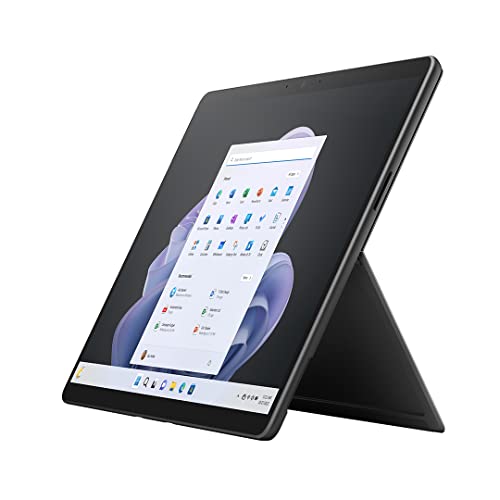
The 2025 Surface Pro is the tablet Microsoft built specifically for people who live in OneNote. Running on the Snapdragon X Plus 8-core processor — a Copilot+ PC chip — it delivers up to 45 TOPS of AI performance. In practical terms, that means OneNote's ink-to-text conversion happens instantly, Copilot summarizes your meeting notes in seconds, and you can have your notebook open alongside a browser with 20 tabs, a PDF reader, and a video call without any perceptible slowdown. The 16GB of RAM gives you genuine multitasking headroom, not the watered-down kind.
The 12-inch touchscreen is sharp and responsive. Pen input — with the Surface Slim Pen 2, sold separately — registers at 4096 levels of pressure sensitivity and sub-10ms latency. Handwriting in OneNote feels closer to writing on paper than any Android-based alternative. The built-in kickstand adjusts to virtually any angle, so you can prop it on a desk, tuck it on your lap, or hold it in portrait mode while standing in a meeting. The 512GB of storage handles years of notebooks, embedded PDFs, and audio recordings without forcing you to think about space.
Is there a catch? The Surface Pro Keyboard is sold separately, which adds cost if you want the full laptop replacement experience. But purely as a OneNote device — something you pick up, ink into, and carry between rooms — the 2025 Surface Pro is the most capable device in this roundup. If you need a tablet that can also replace your laptop entirely, pair it with the keyboard. If you mainly want the best possible stylus-and-notes experience, the base device delivers.
Pros:
- Snapdragon X Plus with 45 TOPS AI for instant Copilot integration in OneNote
- 16GB RAM handles heavy multitasking without throttling
- Built-in kickstand works at any angle — no case needed
- 512GB storage is generous for even heavy note-takers
- Native Windows 11 means zero compatibility compromises
Cons:
- Surface Pro Keyboard sold separately — costs extra
- Surface Slim Pen 2 also sold separately
2. Microsoft Surface Pro 9 13" (Renewed) — Best Value Surface for OneNote
The Surface Pro 9 with Intel 12th Gen i7 is a genuine powerhouse at a price that undercuts new flagship devices. The renewed certification means it's been professionally inspected, cleaned, and tested — you're not buying someone's scratched-up hand-me-down. With 16GB of RAM and 512GB of storage, the spec sheet matches the 2025 model in the areas that matter most for OneNote: you have plenty of memory for complex notebooks and plenty of storage for years of content. The 12th Gen i7 handles everything OneNote demands without breaking a sweat.
The 13-inch touchscreen is a genuine advantage over the 12-inch 2025 model for anyone who annotates documents frequently. More screen real estate means you can view a full A4 page at near-1:1 scale while still having your ink toolbar visible. The display automatically adjusts color balance based on ambient lighting, which matters when you're working in conference rooms, coffee shops, and outdoor settings. OneNote's infinite canvas benefits from every extra inch of screen you give it. Copilot on Windows 11 is baked in, bringing the same AI summarization and content assistance you'd get on a newer device.
The tradeoff is that renewed units vary in cosmetic condition, and the 12th Gen Intel platform doesn't include the dedicated AI hardware of the newer Snapdragon-based Surface. Real-world Copilot performance is slightly slower when processing large documents. But for 90% of OneNote workflows — meeting notes, lecture annotations, project planning — this gap is completely invisible. You get a professional-grade note-taking machine with the larger display at a meaningfully lower price point than a new flagship.
Pros:
- 13-inch display gives more canvas for document annotation
- Intel i7 + 16GB RAM handles demanding OneNote notebooks comfortably
- Renewed pricing delivers flagship performance below flagship cost
- Copilot on Windows 11 for AI-assisted note organization
- Built-in kickstand for flexible positioning
Cons:
- Renewed units may show minor cosmetic wear
- No dedicated AI NPU — Copilot tasks run slightly slower than Copilot+ PCs
3. Microsoft Surface Go 4 — Best Budget/Portable Option
If portability is your primary concern and your OneNote use is focused on quick note capture rather than intensive document annotation, the Surface Go 4 delivers the native Windows OneNote experience in the most compact and affordable Surface package. At 10.5 inches, it slips into a bag alongside a laptop without adding significant weight. The 12.5-hour rated battery life means it genuinely covers a full day of classes or meetings without hunting for an outlet — a claim that holds up in real-world mixed usage.
The 8GB of RAM and 128GB of storage are the honest limits of this device. You're not running 20 browser tabs alongside OneNote and a video call — that path leads to sluggishness. But for OneNote as your primary app, with a few lightweight utilities alongside it, the Surface Go 4 performs reliably. Windows 11 Pro ships natively, which matters for IT-managed environments and enterprise OneNote deployments. The slate design is clean and professional, and the compatible Surface Pen turns the screen into a genuine note-taking surface with pressure sensitivity and palm rejection.
The Surface Go 4 is the right choice if you're a student on a budget, someone who already has a laptop and wants a dedicated note-taking companion, or anyone who needs a lightweight Windows tablet for OneNote capture that doesn't cost as much as a full Surface Pro. What you give up is raw horsepower and screen size. What you get is a genuinely portable, Windows-native OneNote device at a price that's hard to argue with.
Pros:
- Ultra-portable 10.5-inch form factor fits any bag
- 12.5-hour battery easily covers a full school or work day
- Windows 11 Pro for enterprise and education environments
- Surface Pen compatible for ink input
- Most affordable Windows OneNote tablet in the lineup
Cons:
- 8GB RAM limits multitasking headroom significantly
- 128GB storage fills up faster than you expect with audio and PDF attachments
4. Apple iPad Pro 11-inch (M5) — Best for Apple Ecosystem Users
The iPad Pro M5 is the most powerful tablet in this roundup by a significant margin. Apple's M5 chip — with Neural Accelerators delivering next-generation AI performance — paired with 16GB of RAM and 512GB of storage, creates a device that handles any workload you throw at it. For OneNote specifically, the performance headroom is almost academic: the app opens instantly, notebooks sync in real time, and you can have OneNote, Safari, Mail, and a streaming video in split view simultaneously without any performance degradation. The Apple Pencil Pro pairing is exceptional — pressure sensitivity, tilt detection, and hover recognition combine to create the most natural handwriting experience available on a tablet in 2026.
The Ultra Retina XDR display is remarkable. At 2388×1668 resolution with ProMotion adaptive refresh (up to 120Hz), ink strokes render with zero perceptible lag, and text at small sizes is sharper than anything else in this list. The LiDAR scanner and 12MP landscape front camera are genuinely useful for OneNote: you can scan physical documents directly into notebooks with automatic perspective correction, and the front camera is properly positioned for video calls in landscape mode — finally. iPadOS 26 with the Liquid Glass design and flexible windowing brings serious multitasking improvements that matter for power users.
The platform limitation is real and worth naming directly. OneNote on iPadOS is excellent, but it's not the full Windows OneNote experience. Certain features — advanced macro support, deep Outlook integration, some desktop-only formatting options — are either absent or limited on the iPad version. If you use OneNote as a central hub that integrates tightly with the rest of the Microsoft 365 suite on a Windows machine, the iPad is a companion device, not a replacement. But if you're already in the Apple ecosystem and want the best-possible hardware for note-taking, the iPad Pro M5 is unmatched. It's also worth checking our comparison of the best tablets with SIM card if you need cellular connectivity for always-on sync.
Pros:
- M5 chip with 16GB RAM — fastest tablet processor available
- Ultra Retina XDR display at 120Hz makes ink feel like pen on paper
- Apple Pencil Pro delivers industry-leading stylus experience
- Landscape front camera finally solves video call framing
- 512GB storage handles enormous notebooks with embedded media
Cons:
- OneNote for iPadOS lacks some advanced Windows-only features
- Apple Pencil Pro and Magic Keyboard Folio sold separately at premium prices
5. Apple iPad Air 13-inch (M4) — Best Large-Screen Apple Tablet for OneNote
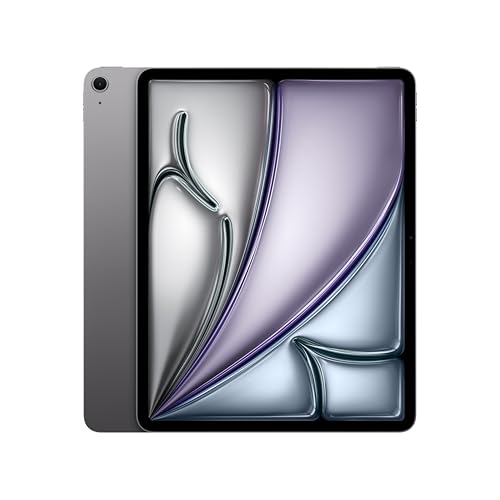
The iPad Air 13-inch with M4 is the sweet spot for Apple users who want a large-canvas OneNote experience without paying for the Pro's premium display technology. The M4 chip handles everything OneNote demands with ease — the performance gap between M4 and M5 is real in benchmark numbers but effectively invisible in daily note-taking, browsing, and multitasking workflows. The 13-inch Liquid Retina display gives you substantially more working area than an 11-inch tablet, which matters when you're using OneNote in a layout where you keep your notebook open on one side and reference material on the other.
Wi-Fi 7 with Apple N1 chip is a genuine differentiator for notebook sync speed. If you work in environments with modern Wi-Fi 7 routers, your OneNote notebooks sync faster and with lower latency — especially relevant when you're collaborating on shared notebooks where conflicts and merge delays can disrupt workflow. Touch ID is fast and convenient, making the frequent lock/unlock cycle of a tablet you set down and pick up feel frictionless. All-day battery life in practice means 10-12 hours of mixed note-taking and web browsing, which covers full school days and long travel days.
The 256GB storage tier is the base here, which is adequate for most users but worth upgrading if you store many large PDFs, audio recordings, or embedded videos in your notebooks. The M4 chip delivers advanced graphics performance that OneNote doesn't particularly need — but that headroom means the device will remain fast and current for at least 5 years of use. For a student or professional who wants a large, beautiful screen for note-taking in the Apple ecosystem without the full Pro price, the iPad Air 13-inch M4 is a compelling buy in 2026.
Pros:
- 13-inch display gives maximum writing and annotation canvas
- M4 chip ensures sustained performance with no thermal throttling
- Wi-Fi 7 for the fastest possible notebook sync speeds
- All-day battery easily covers school or work sessions
- More affordable than iPad Pro while sharing the same chip family
Cons:
- No ProMotion 120Hz display — limited to 60Hz refresh rate
- Apple Pencil Pro sold separately
6. Apple iPad 11-inch (A16) — Best Entry-Level OneNote Tablet
The standard iPad with Apple's A16 chip and an 11-inch Liquid Retina display delivers a genuinely satisfying OneNote experience at the lowest price point in the Apple tablet lineup. The A16 is the same chip powering recent iPhone Pro models — it's fast, efficient, and more than capable of running OneNote alongside a browser, mail client, and music app simultaneously. True Tone display technology adjusts color temperature to ambient light, which reduces eye strain during long note-taking sessions. USB-C connectivity makes file transfers and peripheral connections more versatile than older Lightning-based iPads.
The 12MP front and back cameras contribute practically to the OneNote workflow. The back camera captures physical documents and whiteboards with enough resolution to make the scanned content readable at zoom levels where you'd actually reference it. Starting at 128GB of storage, this is enough for most students and light to moderate professional users — though if you plan to store audio recordings extensively, upgrading to 256GB or 512GB is worth the extra cost. The Liquid Retina display renders OneNote's interface crisply, and with four color options, it's also the most visually distinctive device in this roundup.
The honest limitation is stylus compatibility. The standard iPad supports Apple Pencil (USB-C), not the Pencil Pro — you get pressure sensitivity and palm rejection, but not the advanced tilt detection and hover features of the Pencil Pro. For most OneNote handwriting tasks, the difference is minor. But if you do a lot of detailed sketching or artistic note-taking where tilt shading matters, you'll notice the gap. For straightforward note capture, lecture annotation, and document markup, this is the best value-for-money Apple option in 2026. Combine it with a Bluetooth keyboard and you have a capable note-taking setup for a fraction of the Pro's cost. If you want to understand how tablets like this handle heavier technical workloads, check out our guide to the best tablets for emulation.
Pros:
- A16 chip delivers fast, responsive OneNote performance at entry-level price
- True Tone display reduces eye fatigue in varied lighting conditions
- Excellent cameras for document scanning directly into notebooks
- USB-C connectivity for versatile peripheral support
- Available in four colors — most visually distinctive option here
Cons:
- Supports Apple Pencil (USB-C) only, not the advanced Pencil Pro
- 128GB base storage tier fills up if you record audio frequently in OneNote
7. Samsung Galaxy Tab S9+ (Renewed) — Best Android Option for OneNote
The Samsung Galaxy Tab S9+ is the best Android option for OneNote users, and it makes a compelling case for the platform. The 12.4-inch Dynamic AMOLED 2X display at 120Hz is genuinely stunning — colors are vivid, blacks are true black, and the high refresh rate makes ink rendering in OneNote look exceptionally smooth. The S Pen is included in the box, which is a meaningful advantage: you don't pay extra for the stylus that makes the device worth using for note-taking. At 4096 pressure levels and 2.8ms latency, the S Pen is among the best stylus experiences available outside of the Surface and Apple Pencil ecosystem.
Samsung Galaxy AI brings practical note-taking enhancements that integrate surprisingly well with OneNote. Transcript Assist can transcribe meeting audio and feed it into your notes, Note Assist can format raw notes into structured summaries, and the AI search functionality makes finding content across large notebooks faster. The Snapdragon 8 Gen 2 paired with 12GB RAM handles heavy multitasking — Samsung DeX mode turns the tablet into a desktop replacement when connected to an external display, which gives power users a workflow that no iPad currently matches. Wi-Fi 7 support ensures fast sync even with large, media-rich notebooks.
The platform limitation here is the Android version of OneNote. Microsoft's OneNote for Android is functional and receives regular updates, but it trails the Windows and even iPadOS versions in feature depth. Certain desktop-class features — section group management, some print and export options, advanced formatting — are absent or simplified. If Microsoft 365 integration is central to your workflow, the Android gap is real. But if you already own Samsung devices, love the AMOLED display, and want the best Android hardware available with an included S Pen, the Galaxy Tab S9+ renewed offers exceptional value.
Pros:
- S Pen included — no extra stylus purchase required
- 12.4-inch Dynamic AMOLED 2X at 120Hz is the best display in this roundup
- Snapdragon 8 Gen 2 + 12GB RAM handles demanding multitasking
- Samsung DeX mode for desktop-style productivity
- Galaxy AI features integrate with note-taking workflows
Cons:
- OneNote for Android lacks some advanced features of the Windows version
- Renewed unit — cosmetic condition varies
How to Pick the Best Tablet for OneNote
Stylus Experience: The Most Important Factor
If you're buying a tablet specifically for OneNote, the stylus quality matters more than any other single spec. What you're looking for: pressure sensitivity of at least 4096 levels, latency under 10ms, and palm rejection that actually works. Every device in this roundup meets that baseline — but the experience quality varies. The Surface Pro lineup with the Slim Pen 2, the iPad Pro with Apple Pencil Pro, and the Galaxy Tab S9+ with S Pen all deliver premium stylus experiences. The standard iPad with USB-C Pencil and Surface Go 4 with compatible Surface Pen are a tier below but fully adequate for standard note-taking. Ask yourself whether you do detailed sketching and diagramming or primarily typed and handwritten text — if it's the latter, even mid-tier stylus hardware is fine.
Platform: Windows vs iPadOS vs Android
Platform is the most consequential decision in this purchase, because it determines which version of OneNote you're running. Windows OneNote is the most feature-complete version — if you need deep Microsoft 365 integration, complex section group structures, advanced print/export options, or Copilot+ AI integration, Windows is the only platform that delivers the full experience. The Surface Pro 2025 and Surface Pro 9 give you exactly that. iPadOS OneNote is excellent and feature-rich, with the best stylus hardware ecosystem for Apple users — but it trails the Windows version in some advanced capabilities. Android OneNote is the thinnest of the three; it handles the core use case but is missing features that power users rely on. Choose your platform based on where you spend most of your digital life, not just on the tablet hardware specs.
Display Size and Resolution
Screen size directly affects how much of your OneNote notebook you can see at once. For document annotation — marking up PDFs, reviewing meeting minutes, reading research papers — bigger is meaningfully better. The 13-inch Surface Pro 9 and 13-inch iPad Air show a full A4 page at near-1:1 scale with room to spare. The 12.4-inch Galaxy Tab S9+ and 12-inch Surface Pro 2025 are nearly as generous. The 11-inch iPad options are excellent for note capture but cramped for heavy document review. The 10.5-inch Surface Go 4 is the most portable but the tightest for detailed annotation work. Resolution matters too — all the devices here display text crisply, but the iPad Pro's Ultra Retina XDR and the Galaxy Tab S9+'s Dynamic AMOLED 2X represent the peak of display quality available in a tablet right now.
RAM, Storage, and Battery Life
For OneNote specifically, 8GB of RAM is the floor for acceptable performance — the Surface Go 4's 8GB is adequate for focused note-taking but limits you when multitasking heavily. 16GB is the sweet spot for everything else in this roundup: it gives you genuine headroom to run OneNote alongside a full browser session, video calls, and background sync without slowdown. On storage, think beyond how many notes you'll take. OneNote with embedded audio recordings, large PDFs, and synced notebooks from multiple shared workspaces grows faster than you expect. 128GB is fine for students with focused notebooks; professionals with years of archived meetings and documents need 256GB minimum. Battery life should target at least 8 hours for a full workday — all the devices here meet that bar, with the Surface Go 4's 12.5-hour claim standing out for marathon sessions.
Questions Answered
Is OneNote better on a Windows tablet or iPad?
For most users who need the full feature set — including deep Microsoft 365 integration, advanced formatting, Copilot AI tools, and desktop-class export options — Windows OneNote on a Surface device is the more complete experience. If you're already in the Apple ecosystem and your workflow doesn't depend on Windows-only features, the iPad version of OneNote is excellent and the hardware quality is outstanding. For the majority of note-taking tasks, the practical difference is small. The gap widens at the advanced power-user level.
Do I need a stylus to use OneNote effectively?
You don't need a stylus to use OneNote — typed notes, voice recordings, and pasted content work fine without one. But if you want to write by hand, sketch diagrams, or annotate documents and PDFs, a stylus transforms the experience. For students annotating lecture slides or professionals marking up meeting materials, a compatible stylus is essentially required. The good news is that every device in this roundup either includes a stylus (Galaxy Tab S9+) or is compatible with high-quality first-party options.
Can I use OneNote offline on a tablet?
Yes. OneNote syncs your notebooks to OneDrive when you're connected, but the local cache means your notebooks are fully accessible and editable offline. Changes sync automatically when you reconnect. This works on Windows, iPadOS, and Android versions of OneNote. The size of your local cache depends on your settings and storage capacity, but for typical use, offline access is seamless and reliable across all devices in this roundup.
What's the minimum RAM I need for OneNote on a tablet?
8GB of RAM handles OneNote as a primary app with modest multitasking — the Surface Go 4 proves this. But if you regularly switch between OneNote, a browser with multiple tabs, email, and video calls simultaneously, 16GB is the practical minimum for a smooth experience. All the Surface Pro and iPad Pro/Air models in this roundup ship with 16GB, which gives you comfortable headroom for complex workflows in 2026.
How does the Samsung Galaxy Tab S9+ compare to a Surface for OneNote?
The Galaxy Tab S9+ wins on display quality and includes the S Pen at no extra cost, making it the best hardware value in the Android space. But the Android version of OneNote is less feature-complete than the Windows version. If your OneNote use is straightforward — capturing notes, annotating documents, organizing ideas — the Galaxy Tab S9+ is excellent and meaningfully cheaper than a new Surface Pro. If you rely on advanced Microsoft 365 integrations, Copilot AI, or Windows-only formatting features, a Surface is the more capable choice.
Is the iPad Pro M5 worth the premium over the iPad Air M4 for OneNote?
For OneNote specifically, no — the performance gap between M5 and M4 is invisible in note-taking workflows, and both devices run the same iPadOS version of OneNote. The iPad Pro justifies its premium through the Ultra Retina XDR ProMotion display (120Hz vs 60Hz), which makes ink rendering visibly smoother, the LiDAR scanner for improved document scanning, and the landscape front camera. If display quality and document scanning are priorities, the Pro is worth it. If you want maximum screen size and performance at a lower price, the iPad Air 13-inch M4 is the smarter buy for OneNote.
Buy on Walmart
- Microsoft Surface Pro 2-in-1 Laptop/Tablet (2025), Windows 1 — Walmart Link
- Microsoft Surface Pro 9, 13" 2-in-1 Tablet & Laptop, Thin & — Walmart Link
- Microsoft Surface Go 4 Tablet - 10.5" - 8 GB - 128 GB Storag — Walmart Link
- Apple iPad Pro 11-inch (M5): Ultra Retina XDR Display, 512GB — Walmart Link
- Apple iPad Air 13-inch (M4): Liquid Retina Display, 256GB, 1 — Walmart Link
- Apple iPad 11-inch: A16 chip, 11-inch Model, Liquid Retina D — Walmart Link
- SAMSUNG Galaxy Tab S9+ Plus 12.4” 256GB WiFi 7 Android AI Ta — Walmart Link
Buy on eBay
- Microsoft Surface Pro 2-in-1 Laptop/Tablet (2025), Windows 1 — eBay Link
- Microsoft Surface Pro 9, 13" 2-in-1 Tablet & Laptop, Thin & — eBay Link
- Microsoft Surface Go 4 Tablet - 10.5" - 8 GB - 128 GB Storag — eBay Link
- Apple iPad Pro 11-inch (M5): Ultra Retina XDR Display, 512GB — eBay Link
- Apple iPad Air 13-inch (M4): Liquid Retina Display, 256GB, 1 — eBay Link
- Apple iPad 11-inch: A16 chip, 11-inch Model, Liquid Retina D — eBay Link
- SAMSUNG Galaxy Tab S9+ Plus 12.4” 256GB WiFi 7 Android AI Ta — eBay Link
Next Steps
- Check the current price of your top choice on Amazon — prices on Surface renewed units and iPad models fluctuate frequently, and a deal you see today may not last.
- Confirm stylus compatibility before buying — verify that the specific stylus you plan to use (Surface Slim Pen 2, Apple Pencil Pro, or S Pen) is compatible with the exact model you're purchasing, especially for renewed units.
- Test OneNote on your current device first — download the app and spend a week with it before buying; you'll learn exactly which features and limitations matter to your workflow, making your final decision much clearer.
- Factor in total cost of ownership — add the stylus, keyboard cover (if needed), and any Microsoft 365 subscription costs to your budget before comparing the base device prices side by side.
- Read the full display and battery reviews for your shortlisted device on a dedicated tech review site, then return here to use the affiliate links above to purchase — you'll get the best of detailed third-party testing and current Amazon pricing in one workflow.
 |
 |
 |
 |

About Priya Anand
Priya Anand covers laptops, tablets, and mobile computing for Ceedo. She holds a bachelor degree in computer science from the University of Texas at Austin and has spent the last nine years writing reviews and buying guides for consumer electronics publications. Before joining Ceedo, Priya worked as a product analyst at a major retailer where she helped curate the laptop and tablet category. She has personally benchmarked more than 200 portable computers and is particularly interested in battery longevity, repairability, and the trade-offs between Windows, macOS, ChromeOS, and Android tablets. Outside of work, she runs a small Etsy shop selling laptop sleeves she sews herself.