 ee
eeLaptops ›
Best Laptops For Grad School Students 2026
Which laptop should you carry through three years of seminars, research marathons, and late-night thesis sessions — and which one will quietly drain your budget while failing you at the worst possible moment? If you are heading into grad school in 2026, that question matters more than ever, because the laptop market has shifted dramatically with a new wave of AI-capable processors and fanless ultrabooks redefining what portable productivity actually means. After evaluating every major contender, the Apple 2026 MacBook Air 13-inch with M5 stands out as the top pick for most graduate students — though the right answer for you depends heavily on your program, budget, and operating system preference.
Graduate school places a very specific set of demands on a laptop that differs from undergraduate life. You are not just writing papers anymore — you are running statistical models, managing reference libraries with thousands of entries, joining video calls with advisors across time zones, and occasionally presenting at conferences where your machine needs to look and perform the part. According to the National Center for Education Statistics, graduate enrollment continues to climb steadily, meaning the market for capable academic machines has never been more competitive or more confusing. Battery life, display quality, keyboard comfort, and processing headroom for demanding applications all need to be weighed alongside price — and that balancing act is exactly what this guide is designed to help you navigate. If you are also shopping for a laptop for other members of your household, our guide to the best laptops for moms in 2026 covers a complementary set of everyday-use options worth a look.

The seven machines reviewed below span a wide range of price points, operating systems, and use cases — from the budget-friendly Acer Aspire 5 that gets the basics right for students on tight stipends, to the enterprise-grade Lenovo ThinkPad X1 Carbon Gen 12 built for professionals who need rock-solid reliability above all else. Whether your program demands raw CPU horsepower, a color-accurate display for design work, or simply a machine light enough to carry across campus without destroying your back, you will find a clear recommendation here. Creative and design-oriented students should also check out our dedicated roundup of the best laptops for industrial design in 2026, which goes deeper on GPU-dependent workflows.
Contents
- Our Top Picks for 2026
- In-Depth Reviews
- Apple MacBook Air 13-inch M5 — Best Overall
- Dell XPS 13 9340 — Best Windows Ultrabook
- Lenovo ThinkPad X1 Carbon Gen 12 — Best for Enterprise Reliability
- ASUS Zenbook 14 AI OLED — Best Display
- LG Gram 16 — Best for Large-Screen Portability
- Acer Aspire 5 — Best Budget Pick
- Apple MacBook Air 15-inch M5 — Best for Screen Real Estate
- Choosing the Right Laptop for Grad School
- Frequently Asked Questions
- Final Thoughts
Our Top Picks for 2026
- #PreviewProductRating
- Bestseller No. 1
 Rating:

- Bestseller No. 2
 Rating:
- Bestseller No. 3
 Rating:
 - Bestseller No. 4
 Rating:
 - Bestseller No. 5
 Rating:
 - Bestseller No. 6
 Rating:
 - Bestseller No. 7
 Rating:
In-Depth Reviews
1. Apple 2026 MacBook Air 13-inch with M5 — Best Overall
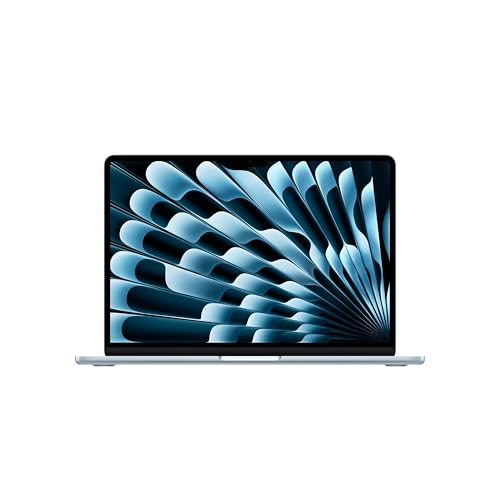
The 2026 MacBook Air 13-inch with Apple's M5 chip is the machine that quietly does everything right, and then does it for eighteen hours without touching a power outlet. That last point is not marketing language — it is the practical reality that changes how you experience a full day of classes, library sessions, and evening study blocks. The M5 chip delivers a substantially faster CPU and unified memory architecture compared to its predecessor, meaning that whether you are compiling code in Xcode, running R scripts for a quantitative methods course, or editing a conference presentation in Keynote, the experience remains fluid and responsive without so much as spinning up a fan. The fanless design means the MacBook Air stays completely silent under sustained academic workloads, which matters more than most people realize when you are in a quiet reading room for four hours straight.
The 13.6-inch Liquid Retina display is sharp, bright, and color-accurate enough to satisfy most students outside of professional video production, and the 12MP Center Stage camera handles video calls with advisors and remote seminars far better than the webcams built into competing Windows ultrabooks at this price range. The 512GB SSD is the base configuration, and for most humanities and social science graduate students that is adequate storage when combined with cloud services — though STEM students managing large datasets may want to budget up to the 1TB option. Apple Intelligence, the on-device AI system baked into the M5 platform, adds genuinely useful writing and summarization tools that integrate directly into the apps you already use every day. Wi-Fi 7 support means you are ready for faster campus networks as they roll out, and Touch ID provides fast, secure logins. The Sky Blue colorway is a fresh, professional-looking option that stands apart from the sea of silver machines in any lecture hall.
The trade-offs are real but manageable. The base 16GB of unified memory is the configuration to buy, since RAM is not user-upgradeable, so if your work involves large language model experiments or heavy virtual machine usage, you should carefully consider whether 16GB will hold up across a multi-year program. macOS is a non-starter if your program relies on Windows-only research software, and the port selection of two USB-C/Thunderbolt 4 ports plus a headphone jack requires at least one adapter or hub in your bag. Even with those caveats, no other laptop at this price delivers a comparable combination of performance, battery, and build quality for the daily demands of graduate study in 2026.
Pros:
- Up to 18 hours of real-world battery life handles a full academic day without charging
- M5 chip delivers fast, silent performance across writing, coding, and data tasks
- Lightweight and premium build quality with a sharp 13.6-inch Liquid Retina display
- Apple Intelligence AI tools integrate seamlessly into writing and productivity workflows
Cons:
- Only two USB-C ports requires carrying a hub or adapter for legacy peripherals
- RAM is soldered and non-upgradeable — choose your configuration carefully upfront
- macOS incompatibility with certain Windows-only academic software packages
2. Dell XPS 13 9340 AI — Best Windows Ultrabook
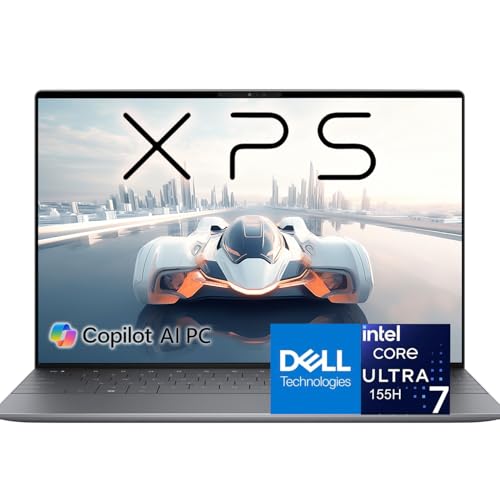
If your program runs on Windows and you want the closest thing to a MacBook Air experience on that platform, the Dell XPS 13 9340 is the machine you are looking for. Dell has refined the XPS 13 formula over many generations, and the 9340 represents a genuinely mature product with an Intel Core Ultra 7 155H processor packing 16 cores and 22 threads — a configuration that handles complex multitasking, Python environments with heavy dependencies, and real-time data analysis with headroom to spare. The 13.4-inch FHD+ display with a 120Hz refresh rate and EyeSafe technology is an excellent choice for students who spend eight or more hours in front of a screen every day, since the reduced blue light output translates to noticeably less eye fatigue during long writing sessions. The InfinityEdge panel delivers exceptional screen-to-body ratio in a chassis that barely weighs more than 2.7 pounds, making this one of the most pocketable powerful Windows machines available in 2026.
The Intel Arc integrated graphics handles everyday productivity, HD streaming, and light creative work without issues, though students whose research involves 3D modeling or GPU-accelerated computing will find its limits fairly quickly. The 2TB PCIe SSD paired with 16GB of DDR5X RAM is a strong configuration for most graduate workloads — the large SSD is particularly welcome if you are managing datasets, virtual machines, or a large local research archive. The build quality reflects Dell's premium positioning, with a machined aluminum chassis that feels sturdy without feeling heavy, and the backlit keyboard is comfortable enough for extended writing sessions. Port selection includes a reasonable mix of Thunderbolt 4 and USB-A options, reducing the adapter dependency that plagues competing ultrabooks.
Battery life is the honest weakness here — expect a realistic seven to nine hours under mixed workloads, which means carrying a charger to full-day campus sessions is a practical necessity. That trade-off is the cost of fitting a high-performance 16-core processor into a chassis this slim, and for most students the performance payoff justifies the inconvenience. The XPS 13 9340 earns its place as the definitive Windows ultrabook for graduate students who want a premium build, a fast display, and serious processing muscle in a genuinely portable package.
Pros:
- Intel Core Ultra 7 155H with 16 cores delivers serious multitasking and processing power
- 120Hz FHD+ InfinityEdge display with EyeSafe reduces fatigue during long study sessions
- 2TB SSD provides ample storage for datasets, VMs, and large research archives
- Premium machined aluminum chassis in a genuinely compact and portable form factor
Cons:
- Battery life of seven to nine hours requires a charger for full-day campus use
- Intel Arc graphics are not suited to GPU-intensive research or 3D workflows
3. Lenovo ThinkPad X1 Carbon Gen 12 — Best for Enterprise Reliability
The ThinkPad X1 Carbon has been the gold standard for business and academic professionals who need a laptop that simply never lets them down, and the Gen 12 continues that tradition with meaningful hardware upgrades that make it relevant and competitive in 2026. The Intel Core Ultra 7 165U vPro processor with Meteor Lake architecture brings improved multi-core performance, AI acceleration, and better power efficiency compared to previous generations — and the vPro platform adds enterprise-grade security features that research institutions and universities with strict IT policies particularly value. The standout specification in this configuration is 32GB of LPDDR5x RAM at 6400MHz, which is double what most competing ultrabooks offer at this weight class and gives you serious headroom for running multiple virtual machines, large statistical models, or memory-intensive research applications simultaneously.
The 14-inch WUXGA 100% sRGB touchscreen is an excellent display for academic work — color accuracy matters when you are building visualizations, reviewing scanned documents, or presenting research findings — and the touchscreen functionality adds a natural interaction layer for annotating PDFs and sketching diagrams during brainstorming sessions. The Gen 12 chassis continues Lenovo's commitment to sustainability, incorporating recycled carbon fiber throughout and bio-based packaging materials, which aligns with values many graduate students hold strongly. The keyboard remains best-in-class among ultrabooks — the ThinkPad typing experience is genuinely superior to most competitors, and for a student who writes tens of thousands of words per semester, that advantage compounds over time. The 1TB Gen4 Performance SSD delivers fast read and write speeds that make working with large files feel snappy and responsive.
The X1 Carbon Gen 12 ships with Windows 11 Pro, which is the right operating system choice for students who need compatibility with institutional software, domain join requirements, or enterprise licensing through their university. One year of Lenovo onsite warranty is included, with an option to extend to five years of Premier Support — a meaningful consideration if you are investing in a machine that you expect to carry through an entire PhD program. The price sits at the premium end of this guide, but the combination of 32GB RAM, vPro security, and the legendary ThinkPad keyboard justifies the investment for doctoral students and researchers with demanding long-term workloads.
Pros:
- 32GB LPDDR5x RAM is exceptional for an ultrabook and handles memory-intensive research workloads
- vPro platform with enterprise-grade security suits university IT environments and research institutions
- Best-in-class ThinkPad keyboard provides unmatched comfort for extended writing sessions
- 14-inch WUXGA 100% sRGB touchscreen with excellent color accuracy for academic presentations
Cons:
- Premium price point sits at the top of the grad school laptop budget range
- Understated aesthetic may not appeal to students in creative disciplines
4. ASUS Zenbook 14 AI PC OLED — Best Display
If the quality of your display is a top priority — whether because your research involves visual media, you are studying film or design, or you simply spend so many hours reading that display fatigue is a genuine concern — the ASUS Zenbook 14 AI OLED deserves serious consideration. The 14-inch WUXGA OLED panel with 500 nits of brightness and 100% DCI-P3 color coverage delivers a viewing experience that IPS panels simply cannot match: true blacks, vivid colors, and contrast ratios that make reading on screen genuinely pleasant rather than a compromise. The OLED touchscreen paired with Intel Arc graphics supports connection to three external 4K monitors simultaneously, which is a remarkable capability for a 14-inch ultrabook and transforms your dorm room or apartment into a full multi-display research workstation.
The Intel Core Ultra 9 285H with 16 cores is the most powerful processor in this entire roundup, and paired with 32GB of DDR5 RAM and a 1TB NVMe SSD, the Zenbook 14 handles demanding workflows including video editing, machine learning experiments, and computational research with authority. The integrated NPU provides dedicated AI acceleration for AI-based applications, which increasingly includes writing assistants, image generation tools, and data analysis utilities that graduate students in 2026 are beginning to incorporate into their research workflows. Wi-Fi 7 ensures you stay connected at maximum speed on next-generation campus networks, and the dual Thunderbolt 4 ports plus HDMI output provide connectivity flexibility that accommodates multiple use scenarios. The 18-hour claimed battery life is ambitious but translates to a genuine full-day academic experience under real workloads, which is impressive given the processing power packed into this chassis.
The FHD IR webcam with privacy shutter is a thoughtful addition for students who value security during online exams and remote advising sessions, and the Super-linear speakers deliver audio quality that stands out positively compared to most ultrabooks in this class. The Zenbook 14 AI OLED represents one of the strongest overall packages available in the Windows ultrabook category in 2026, particularly for students whose work demands both raw computing power and display excellence in the same portable machine. Students drawn to screen-centric tools and peripherals may also find our guide to the best laptops for Silhouette Cameo in 2026 a useful companion resource for display-quality considerations across creative workflows.
Pros:
- OLED touchscreen with 100% DCI-P3 coverage delivers class-leading display quality
- Intel Core Ultra 9 285H with 32GB RAM handles the most demanding academic workloads
- Supports three simultaneous external 4K displays via Thunderbolt 4 and HDMI
- Wi-Fi 7 and strong port selection provide future-proof connectivity
Cons:
- OLED panels carry a long-term burn-in risk with static content like taskbars and status bars
- Higher price tier may stretch budgets for students on academic stipends
5. LG Gram 16 — Best for Large-Screen Portability
The LG Gram 16 solves a problem that many graduate students quietly struggle with: you want a large screen for productive multitasking and comfortable reading, but you also need a machine that does not destroy your shoulders during a long campus commute. The Gram 16 accomplishes this by weighing in at approximately 2.8 pounds — extraordinary for a 16-inch laptop — while delivering a 2560x1600 WQXGA IPS display with up to 99% DCI-P3 color coverage that gives you the kind of screen real estate normally associated with a desktop replacement. Working with two documents side by side, running a reference manager alongside your writing application, or monitoring multiple data streams simultaneously all become genuinely comfortable on a display this size, and the low-glare coating handles library and campus lighting conditions well without the distracting reflections that plague glossy screens.
The Intel Core Ultra 7 155H with 16 cores and turbo speeds up to 4.8GHz, paired with 32GB of LPDDR5x RAM and a 2TB SSD, puts the Gram 16 in elite company for raw performance specifications at this weight. Intel Arc graphics handle creative work including graphic design, video editing, and data visualization with competence, though students pursuing GPU-heavy computational research will still need a dedicated GPU workstation for their most intensive tasks. The AI-enabled processor supports the growing ecosystem of AI productivity tools that are reshaping academic research workflows in 2026, from intelligent citation management to real-time transcription and summarization. The included 5ave 6-in-1 kit adds practical accessory value right out of the box — a thoughtful addition for students who want to get productive immediately without sourcing additional peripherals.
Battery life is rated competitively, and real-world performance reflects the efficient Intel Evo platform architecture powering this machine, making it a reliable choice for full-day campus use without constant charging anxiety. The combination of a genuinely large display, exceptional portability, powerful specifications, and Windows 11 Pro makes the LG Gram 16 the right pick for graduate students who regularly move between locations but refuse to compromise on screen size for their daily research and writing work. If you are managing a complex home office setup alongside your portable computing needs, our roundup of the best printers under $150 covers complementary workspace gear worth adding to your setup.
Pros:
- 16-inch WQXGA display with 99% DCI-P3 in an ultralight chassis under 2.8 pounds
- 32GB RAM and 2TB SSD deliver high-end specifications across all academic workloads
- Low-glare IPS panel handles campus and library lighting conditions effectively
- Intel Core Ultra 7 155H provides strong multi-core performance with AI acceleration
Cons:
- 16-inch form factor, while light for its class, still requires a larger bag than 13-14 inch alternatives
- IPS display lacks the contrast and black depth of OLED panels available on competing models
6. Acer Aspire 5 A515-56-347N — Best Budget Pick
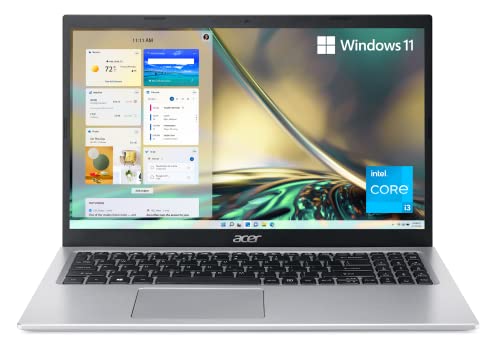
Graduate school stipends are notoriously modest, and the reality for many students is that budget matters as much as benchmarks. The Acer Aspire 5 is the most honest budget recommendation in this guide — it does not pretend to compete with the premium machines above it, but it delivers a genuinely usable academic experience at a price that leaves room in your budget for textbooks, research databases, and conference travel. The 11th Gen Intel Core i3-1115G4 dual-core processor with Turbo Boost up to 4.1GHz handles the core academic tasks that most graduate students spend the majority of their time on: word processing, web research, video calls, spreadsheet analysis, and reading PDFs. It is not going to run computational simulations quickly, but for humanities, social science, and education graduate students whose primary tool is a word processor and a browser, the Aspire 5 is entirely adequate.
The 15.6-inch Full HD IPS display with narrow bezels and an 82.58% screen-to-body ratio is a genuine strength at this price point — you get a large, sharp panel that makes reading and writing comfortable without eye strain, and the IPS technology ensures consistent color and viewing angles that budget TN panels cannot match. The ergonomic hinge design that lifts the keyboard slightly when the lid is opened is a smart feature that improves typing comfort, cooling, and even audio output — small details that add up meaningfully during long study sessions. Wi-Fi 6 keeps you connected at modern network speeds on campus, and Bluetooth connectivity handles wireless peripherals including headphones and mice without issue.
The honest limitations of this machine are the 8GB of DDR4 RAM and the 128GB NVMe SSD — the RAM is sufficient for single-application use but will show its limits when you have many browser tabs open alongside a PDF reader and a writing application, and the storage will require either a cloud-first strategy or an external drive for students with significant local file storage needs. Windows 11 Home in S Mode ships by default, which restricts application installation to the Microsoft Store unless you switch out of S Mode — a simple and free process, but one worth knowing about before you purchase. For students who need a functional Windows laptop that simply works reliably without financial strain, the Acer Aspire 5 delivers honest value that justifies its place on this list.
Pros:
- Highly accessible price point leaves budget room for other essential academic expenses
- 15.6-inch Full HD IPS display is sharp and comfortable for extended reading and writing
- Wi-Fi 6 and ergonomic hinge design add practical value beyond the base price
Cons:
- 8GB RAM limits comfortable multitasking with many applications or browser tabs open simultaneously
- 128GB SSD requires cloud storage or an external drive for students with significant file storage needs
- Dual-core i3 processor lacks headroom for computationally intensive research workloads
7. Apple 2026 MacBook Air 15-inch with M5 — Best for Screen Real Estate
The 15-inch MacBook Air with M5 is the answer to the question that many MacBook Air converts ask after a few months of graduate school: what if I love everything about the Air but just want more screen to work with? Apple has answered that question definitively with the 2026 model, delivering an identical M5 chip, identical battery life claims of up to 18 hours, and the same fanless, silent operating profile in a chassis that remains genuinely portable at just over 3.3 pounds — which is lighter than many competing 14-inch Windows machines, let alone 15-inch ones. The 15.3-inch Liquid Retina display gives you substantially more working area than the 13-inch model, and for graduate students who regularly work with split-screen layouts, large spreadsheets, or annotated PDFs alongside their writing, that extra screen space translates directly into fewer window-switching interruptions and a more productive workflow.
Every meaningful specification — the M5 chip with its Neural Engine and next-generation GPU, the 16GB of unified memory, the 512GB SSD, the 12MP Center Stage camera, Wi-Fi 7, and Touch ID — is identical to the 13-inch model, which means you are paying a premium specifically for the larger display and nothing else. That is a straightforward trade-off to evaluate: if you do most of your work at a desk and value screen size, the 15-inch model earns its higher price. If you are primarily mobile — moving between classrooms, libraries, coffee shops, and your apartment throughout the day — the 13-inch model's marginally better portability and lower price make it the smarter choice. Apple Intelligence delivers the same on-device AI writing, summarization, and productivity tools on both models, integrating naturally into the macOS applications you already rely on for research and writing without requiring a subscription or cloud processing dependency.
The port selection mirrors the 13-inch: two USB-C Thunderbolt ports and a headphone jack, with the MagSafe charging port freeing your USB-C ports for peripherals. An adapter or hub is a practical necessity if your workflow involves external drives, HDMI projectors, or USB-A accessories — a minor inconvenience that the exceptional battery life and performance largely compensate for. The Silver colorway suits professional academic environments, and the build quality is the same class-leading aluminum construction that makes MacBook Air a machine you can reasonably expect to carry through an entire doctoral program. For most macOS-committed graduate students who spend significant time at a desk, the 15-inch MacBook Air M5 is the most satisfying daily driver available in 2026.
Pros:
- 15.3-inch Liquid Retina display provides generous working area for split-screen academic workflows
- Same M5 performance and 18-hour battery as the 13-inch model in a still-portable chassis
- Apple Intelligence AI tools enhance writing, summarization, and daily productivity tasks
- Silent fanless operation with premium build quality suited to a full graduate program lifespan
Cons:
- Commands a meaningful price premium over the 13-inch model for the larger display alone
- Two USB-C ports requires hub or adapter investment for students with diverse peripheral needs
Choosing the Right Laptop for Grad School: A Buying Guide
Battery Life and Portability: The Graduate Student Non-Negotiables
Graduate school means moving constantly — from morning seminars to afternoon office hours to evening study sessions at the library — and a laptop that cannot survive a full day untethered is a liability, not an asset. You should treat ten hours of real-world battery life as your minimum acceptable threshold, and machines that deliver twelve or more hours genuinely change how you experience your academic day. The MacBook Air models with M5 stand in a class by themselves here, claiming eighteen hours that holds up impressively in mixed-use academic scenarios. Portability matters alongside battery — a machine that drains fast and weighs three kilograms defeats the purpose of mobility. When you are evaluating weight, also consider the charger: Apple's MagSafe chargers are compact, while some Windows machines ship with bulky power bricks that add meaningful weight to your bag. Prioritize battery life above nearly every other specification if your campus day runs longer than eight hours regularly.
Processor and RAM: Planning for the Long Term
The processor you choose today needs to serve you through a two-to-five-year graduate program, and the RAM configuration is often fixed at purchase on ultrabooks. In 2026, the minimum RAM you should accept for graduate-level multitasking is 16GB — anything less will show its limits within your first semester as you run a reference manager, a writing application, multiple browser windows with research tabs, and a video call simultaneously. If your research involves quantitative data analysis, machine learning experiments, or compiling large codebases, 32GB is the right target configuration. The new Intel Core Ultra processors with integrated NPU and Apple's M5 chip both deliver excellent AI-accelerated performance that increasingly matters as academic tools integrate machine learning features directly. Avoid buying a machine with a dual-core processor for graduate-level work — the computational demands of modern academic workflows simply outpace what two cores can deliver comfortably over a multi-year program.
Display Quality and Eye Comfort: Eight Hours a Day Every Day
Graduate students read and write more intensively than nearly any other category of computer user, and the display quality of your laptop directly affects your health and productivity across a multi-year program. Full HD resolution is the minimum acceptable standard — anything below 1920x1080 on a screen larger than 13 inches will look noticeably soft during long reading sessions. A higher-resolution panel like the WQXGA display on the LG Gram 16 or the Liquid Retina displays on the MacBook Air models provides sharper text rendering that reduces the cognitive load of extended reading. OLED displays offer superior contrast and color accuracy but carry burn-in risk with static UI elements — a genuine consideration if you keep a taskbar or status bar visible permanently. Anti-glare coatings are worth prioritizing if you frequently work in campus environments with overhead lighting, since reflective glossy panels become genuinely frustrating under fluorescent lights in libraries and seminar rooms.
Operating System: Commit Before You Buy
The macOS versus Windows decision should be made before you evaluate any individual machine, because it shapes your entire software ecosystem, compatibility with university IT infrastructure, and access to discipline-specific research tools. macOS offers superior integration with Apple's software suite, genuinely better battery efficiency on Apple Silicon machines, and the seamless Apple ecosystem if you already use an iPhone and iPad — but it categorically lacks access to certain Windows-only academic software packages used in engineering, architecture, social science research platforms, and some statistical analysis environments. Windows provides the widest software compatibility, including access to enterprise research platforms and institutional VPN clients that may be mandatory in your program. Talk to your advisor or departmental IT support before committing to a platform — finding out that your core research tool runs only on Windows after purchasing a MacBook Pro is an expensive lesson. Neither platform is universally superior; the right operating system is the one your department's critical software supports.
Frequently Asked Questions
What is the best laptop for grad school in 2026?
The Apple 2026 MacBook Air 13-inch with M5 is the best overall laptop for most graduate students in 2026. It delivers up to 18 hours of battery life, fast and silent M5 performance, a sharp Liquid Retina display, and exceptional build quality in one of the most portable chassis available. For Windows users, the Dell XPS 13 9340 and ASUS Zenbook 14 AI OLED are the strongest alternatives depending on whether you prioritize portability or display quality.
How much RAM do I need for graduate school?
You need at least 16GB of RAM for comfortable graduate-level multitasking in 2026. With 16GB you can run a reference manager, writing application, multiple browser tabs with research content, and a video call simultaneously without significant slowdown. If your research involves statistical modeling, machine learning, compiling large codebases, or running virtual machines, 32GB is the right configuration — and since most ultrabooks have soldered RAM that cannot be upgraded later, you should buy the correct amount at purchase time.
Is a MacBook better than a Windows laptop for grad school?
Neither platform is universally better — the right choice depends entirely on your program's software requirements and personal preferences. macOS on Apple Silicon delivers superior battery efficiency, seamless ecosystem integration, and outstanding build quality, but lacks access to certain Windows-only academic research platforms. Windows provides broader software compatibility and a wider range of hardware price points. Check with your department's IT support and your advisor to confirm that your core research and analysis tools run on your chosen platform before purchasing.
Do I need a dedicated GPU for grad school?
Most graduate students do not need a dedicated GPU. The integrated graphics on modern Intel Arc and Apple M5 platforms handle everyday productivity, HD video, presentations, and light creative work effectively. You need a dedicated GPU only if your research specifically involves 3D rendering, GPU-accelerated computational modeling, deep learning training on large datasets, or professional video production workflows. For those use cases, you should look beyond the ultrabooks in this guide toward workstation-class machines or supplement a portable laptop with a desktop GPU workstation.
How important is laptop weight for grad school?
Laptop weight is critically important for graduate students, who typically carry their machine to campus five days a week alongside textbooks, notebooks, and other gear. The difference between a 2.7-pound MacBook Air and a 4.5-pound conventional laptop adds up significantly across a year of daily commuting. Target machines under 3.5 pounds for maximum daily comfort, and remember to factor in the weight of the charger when comparing — some slim laptops come with surprisingly heavy power bricks that offset the chassis weight savings.
What laptop features matter most for PhD students specifically?
PhD students should prioritize battery life, RAM capacity, and keyboard quality above all else, since doctoral work involves years of intensive reading, writing, and data analysis sessions rather than short project bursts. A minimum of 16GB RAM — ideally 32GB for quantitative researchers — protects you against the memory demands of complex research workflows. A keyboard you find genuinely comfortable to type on for six or more hours daily is worth paying extra for, which is why the Lenovo ThinkPad X1 Carbon earns such strong recommendations in academic circles. Storage of at least 512GB helps you keep working datasets and literature archives accessible locally without constant cloud dependency.
Buy on Walmart
- Apple 2026 MacBook Air 13-inch Laptop with M5 chip: Built fo — Walmart Link
- Dell XPS 13 9340 AI Powered Laptop • Intel 16-Core Ultra 7 1 — Walmart Link
- Lenovo Gen 12 ThinkPad X1 Carbon Laptop with Intel Ultra 7 1 — Walmart Link
- ASUS Zenbook 14 AI PC OLED Touchscreen Laptop, Intel Ultra 9 — Walmart Link
- LG Gram 16 Lightweight Laptop, IPS WQXGA Touchscreen, Intel — Walmart Link
- acer Aspire 5 A515-56-347N Slim Laptop - 15.6" Full HD IPS D — Walmart Link
- Apple 2026 MacBook Air 15-inch Laptop with M5 chip: Built fo — Walmart Link
Buy on eBay
- Apple 2026 MacBook Air 13-inch Laptop with M5 chip: Built fo — eBay Link
- Dell XPS 13 9340 AI Powered Laptop • Intel 16-Core Ultra 7 1 — eBay Link
- Lenovo Gen 12 ThinkPad X1 Carbon Laptop with Intel Ultra 7 1 — eBay Link
- ASUS Zenbook 14 AI PC OLED Touchscreen Laptop, Intel Ultra 9 — eBay Link
- LG Gram 16 Lightweight Laptop, IPS WQXGA Touchscreen, Intel — eBay Link
- acer Aspire 5 A515-56-347N Slim Laptop - 15.6" Full HD IPS D — eBay Link
- Apple 2026 MacBook Air 15-inch Laptop with M5 chip: Built fo — eBay Link
Final Thoughts
The right laptop for your graduate program is out there, and the machines reviewed in this guide cover every meaningful combination of budget, platform, screen size, and performance requirement you are likely to encounter. Start with the Apple MacBook Air 13-inch M5 if you are on macOS and want the best all-around package, reach for the Lenovo ThinkPad X1 Carbon Gen 12 or ASUS Zenbook 14 OLED if 32GB RAM and a superior display are non-negotiable on Windows, and take a serious look at the LG Gram 16 if a large screen in a portable chassis is your priority. Whatever you choose, buy the best configuration your budget allows today — you will be living with this machine through some of the most demanding and rewarding years of your academic career, and the right laptop will get out of your way and let you focus on the work that actually matters.
 |
 |
 |
 |

About Priya Anand
Priya Anand covers laptops, tablets, and mobile computing for Ceedo. She holds a bachelor degree in computer science from the University of Texas at Austin and has spent the last nine years writing reviews and buying guides for consumer electronics publications. Before joining Ceedo, Priya worked as a product analyst at a major retailer where she helped curate the laptop and tablet category. She has personally benchmarked more than 200 portable computers and is particularly interested in battery longevity, repairability, and the trade-offs between Windows, macOS, ChromeOS, and Android tablets. Outside of work, she runs a small Etsy shop selling laptop sleeves she sews herself.