 ee
eeLaptops ›
Best Laptop For Photo Editing On A Budget 2026
The Acer Swift 3 SF314-44-R3ZM is our top pick for budget photo editing in 2026 because it packs a certified 100% sRGB display into a chassis that costs a fraction of what professionals typically spend on color-accurate machines. If you shoot RAW files and need your laptop screen to show you what your images actually look like, color gamut coverage is the number you should be hunting for — and the Swift 3 nails it at a price that won't wreck your gear budget.
Finding a capable photo editing laptop under a tight budget used to mean accepting washed-out displays, sluggish processors, or both. That equation has changed dramatically heading into 2026, as AMD's Ryzen 5000 and 7000 series mobile chips, Intel's 13th-gen Core processors, and WUXGA panels with 16:10 aspect ratios have cascaded down into the sub-$700 tier. You no longer have to choose between a screen that renders colors faithfully and a CPU that can process a batch of RAW images without making you wait through your lunch break. The laptops on this list prove that point, and if you want to explore the broader laptops landscape beyond budget photo editing, there is plenty more to consider. Photographers who also do illustration or retouching work will find our guide on the best laptops for digital art a useful companion to this one.
Every machine reviewed here was evaluated on the criteria that matter most to photographers: display color accuracy and brightness, processor throughput for Lightroom and Photoshop workflows, RAM and storage headroom for large file libraries, and build quality that holds up on location. We also considered whether each laptop's screen color calibration can be trusted out of the box, which matters enormously when you are delivering prints or digital files to clients who expect what they see on your screen to match what they receive. Seven laptops made the final list — each one a distinct value proposition for a different kind of shooter or editor.

Contents
- Best Choices for 2026
- Product Reviews
- Acer Swift 3 SF314-44-R3ZM — Best Overall Budget Pick
- Acer Aspire 5 15 — Best Touch Display
- Lenovo IdeaPad Slim 5 16ABR8 — Best Large Screen
- HP Pavilion Plus 14 — Best Display Accuracy
- ASUS VivoBook M1603QA — Best Performance Per Dollar
- Lenovo ThinkBook 16 G6 — Best for Professionals
- Dell Inspiron 14 5440 — Best Compact Option
- Key Features to Consider When Choosing
- Questions Answered
- Key Takeaways
Best Choices for 2026
- #PreviewProductRating
- Bestseller No. 1
 Rating:

- Bestseller No. 2
 Rating:
- Bestseller No. 3
 Rating:
- Bestseller No. 4
 Rating:
- Bestseller No. 5
 Rating:
 - Bestseller No. 6
 Rating:
 - Bestseller No. 7
 Rating:
Product Reviews
1. Acer Swift 3 SF314-44-R3ZM — Best Overall Budget Pick
The Acer Swift 3 is the rare budget laptop that earns its place at the top of a photo editing list without any asterisks. The 100% sRGB panel coverage is not a rounding-up claim — it is the central reason this machine outclasses everything else in its price bracket for photographers. When you are editing in Lightroom and adjusting white balance or pulling shadow detail, you need the screen to show you what is actually in the file, not a washed-out approximation, and the Swift 3 delivers that with a 14-inch FHD IPS display running at 300 nits of brightness. That brightness level is adequate for indoor editing and workable in most café or co-working environments, though you should not plan on editing outside in direct sunlight.
The AMD Ryzen 5 5625U is a six-core processor built on Zen 3 architecture, which means it handles Lightroom's AI-powered Denoise feature and Photoshop's generative tools with genuine speed rather than painful patience-testing. Paired with 16GB of LPDDR4X RAM, this laptop can hold a large Lightroom catalog, a browser session, and a reference image open simultaneously without throttling. The 512GB SSD keeps read speeds high enough that switching between large RAW files feels snappy rather than sluggish. Wi-Fi 6E connectivity means your tethered shooting sessions or cloud backup workflows won't be bottlenecked by a slow wireless card. The backlit keyboard and slim chassis round out a package that is remarkably complete for the money — this is a laptop you can carry to a shoot and use at your editing desk without feeling like you made a compromise.
The one genuine trade-off is the absence of a discrete GPU, which matters if you are running heavy-duty video color grading alongside your still photography. The AMD Radeon integrated graphics handle Lightroom and Photoshop without issue, but if your workflow extends to 4K video work in Premiere Pro or DaVinci Resolve, you will feel the limits. For photographers whose primary tool is still imagery, however, the Swift 3 is the definitive budget pick for 2026 and the machine I would put in your hands first.
Pros:
- Certified 100% sRGB display — rare at this price point
- AMD Ryzen 5 5625U delivers fast, responsive performance for Lightroom and Photoshop
- 16GB RAM handles multi-app workflows without slowdown
- Lightweight and portable for on-location use
Cons:
- No dedicated GPU limits video editing performance
- 300 nits brightness makes outdoor editing difficult
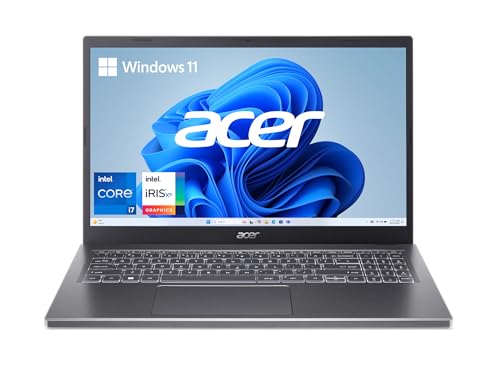
2. Acer Aspire 5 15 — Best Touch Display
The Acer Aspire 5 15 makes a compelling argument for the touchscreen in a photo editing workflow, and it does so on a 15.6-inch FHD IPS display that gives you genuine real estate to work with in Lightroom's develop module or Photoshop's layers panel. The touch interface lets you pinch-zoom into images, drag adjustment sliders with a fingertip, and scroll through large catalogs with a swipe — actions that feel more intuitive once you experience them on a screen of this size. The Intel Core i7-1355U processor is a meaningful step up from entry-level chips, with enough multi-core throughput to handle batch exports and AI masking without making you step away and come back.
The 16GB of LPDDR5 RAM and 512GB PCIe Gen 4 SSD are both class-leading specifications for the price bracket. PCIe Gen 4 storage delivers noticeably faster file transfer speeds than the Gen 3 drives you find in many competing machines, which matters when you are importing thousands of RAW files from a full shoot or copying large layered PSDs. The slim aluminum top cover gives the Aspire 5 a premium aesthetic that defies its price, and the ergonomic hinge that tilts the keyboard upward makes extended editing sessions noticeably more comfortable. Narrow bezels make the 15.6-inch screen feel expansive in a chassis that is more compact than you might expect from a 15-inch machine.
Where the Aspire 5 falls short is color gamut specification — Acer does not publish an sRGB coverage number for this panel the way they do for the Swift 3, which means your color accuracy experience may vary. For photographers who need a guaranteed, precise color space, that ambiguity is a concern. For photographers who prioritize screen size, touch interactivity, and raw processing power — and who plan to use an external calibrated monitor for final output — the Aspire 5 is an outstanding value that earns a strong second-place recommendation.
Pros:
- Touchscreen enables intuitive editing interactions
- PCIe Gen 4 SSD offers best-in-class file transfer speeds
- Intel i7-1355U provides strong multi-core performance
- Aluminum build quality feels premium for the price
Cons:
- Color gamut coverage not officially specified
- Intel Iris Xe graphics limits GPU-intensive tasks
3. Lenovo IdeaPad Slim 5 16ABR8 — Best Large Screen
If you edit at your desk more than you edit on the go, the 16-inch WUXGA touchscreen on the Lenovo IdeaPad Slim 5 16ABR8 gives you more usable editing real estate than anything else on this list. The 1920x1200 resolution at the 16:10 aspect ratio means you get extra vertical pixels compared to a standard 16:9 panel, which is directly useful in Lightroom's develop module where you want to see your full image without scrolling. The AMD Ryzen 7 7730U processor is a powerful eight-core chip that handles Lightroom's AI tools, Photoshop's neural filters, and export batches with authority — it is noticeably faster than the Ryzen 5 chips in several competing machines on this list.
The 16GB of RAM gives you headroom to run your editing suite alongside a browser, cloud storage client, and reference materials without the system paging to disk. Lenovo's build quality on the IdeaPad Slim 5 is solid and consistent — you get a chassis that feels well-assembled and a keyboard with good travel that makes extended editing sessions bearable. The Abyss Blue colorway is a clean professional aesthetic that works in both studio and client-facing environments. If you are comparing Lenovo options and want to see how this model stacks up in a student-focused context, our best Lenovo laptops for college students guide covers the broader lineup in detail.
The IdeaPad Slim 5 does not have a dedicated GPU, so heavy video editing will hit ceilings, but for still photography workflows — including HDR merges and panoramic stitching in Lightroom — the Ryzen 7 iGPU handles the compute load well enough that you will not be left waiting unnecessarily. This is the machine to buy if screen size is your top priority and you are willing to accept a slightly heavier, less portable package in exchange for a more desktop-like editing experience.
Pros:
- 16-inch WUXGA touchscreen offers maximum editing real estate
- AMD Ryzen 7 7730U is the strongest CPU on this list
- 16:10 aspect ratio shows more content vertically
- Solid Lenovo build quality and keyboard feel
Cons:
- Heavier and less portable than 14-inch alternatives
- No discrete GPU
4. HP Pavilion Plus 14 — Best Display Accuracy
The HP Pavilion Plus 14 earns the display accuracy crown on this list with its WUXGA IPS panel at 1920x1200 resolution, and the 16:10 aspect ratio delivers that same expanded vertical canvas that makes photo editing feel less cramped. HP engineered this display specifically for color fidelity and wide viewing angles, which means you can check an image from different positions at your desk without seeing color shift — a detail that matters when you are showing proofs to a client sitting beside you. The AMD Ryzen 5 7540U processor is a modern-generation chip that handles Lightroom and Photoshop with efficiency, and the AMD Radeon 740M integrated graphics gives it a slight edge over the basic integrated units in some competing machines.
The 16GB of RAM and 512GB SSD are competitive specifications that keep the workflow moving without artificial bottlenecks. HP's build on the Pavilion Plus line has improved considerably — the chassis feels solid, the hinge operates smoothly, and the keyboard has enough key travel to make sustained editing annotation comfortable. At 14 inches, this machine offers a meaningful portability advantage over the 15- and 16-inch options on this list, and the combination of compact size with a high-resolution wide-gamut display makes it an excellent choice for photographers who work on location and need reliable color accuracy without carrying a heavy machine.
The Pavilion Plus 14 does not have the highest clock-speed processor on this list, and if your workflow is primarily large-batch RAW processing with frequent AI masking operations, the Ryzen 7 machines will outpace it in pure throughput. But for the photographer who treats color accuracy as non-negotiable and wants a machine that travels easily, the HP Pavilion Plus 14 sits in an excellent position — accurate display, modern processor, correct form factor, manageable price.
Pros:
- WUXGA 1920x1200 display with strong color accuracy
- 16:10 aspect ratio maximizes vertical editing space
- AMD Radeon 740M offers slight GPU advantage over basic iGPUs
- Compact 14-inch chassis excellent for travel
Cons:
- Ryzen 5 7540U trails Ryzen 7 chips in heavy batch workloads
- No dedicated GPU for video editing
5. ASUS VivoBook M1603QA — Best Performance Per Dollar
The ASUS VivoBook M1603QA gives you an AMD Ryzen 7 5800HS — an eight-core processor that originally appeared in gaming laptops — stuffed into a thin, light chassis at a price that undercuts many six-core competitors. The 5800HS boosts to 4.4GHz across eight cores and sixteen threads, which translates to genuinely fast Lightroom AI operations, rapid HDR merge processing, and smooth performance in Photoshop with complex multi-layer documents. If raw processing speed is the metric you care about most, this machine wins on this list for the dollar.
The 16-inch WUXGA display at 1920x1200 gives you the large canvas and 16:10 ratio that photographers appreciate, with a 300-nit panel and anti-glare coating that keeps the screen usable in moderately bright environments. ASUS's 180-degree lay-flat hinge is a practical feature for collaborative editing or showing images to clients in unusual positions. USB-C, HDMI, and Wi-Fi 6 connectivity give you solid options for external monitors, card readers, and fast wireless transfers. The Privacy Shutter on the HD webcam is a thoughtful inclusion for photographers who participate in video client calls. With 16GB of DDR4 RAM and a 512GB NVMe SSD, the storage and memory configuration matches the best options on this list rather than cutting corners.
The panel covers 45% NTSC, which translates to roughly 65-67% sRGB — adequate for general use but meaningfully below the 100% sRGB of the Acer Swift 3. That color gamut limitation is a real consideration if precise color accuracy is non-negotiable for your deliverables. If you shoot for clients who need print-accurate color and you cannot supplement this machine with an external calibrated monitor, the display is a weakness you should weigh carefully before purchasing. For photographers who prioritize processing speed above all and plan to do final color work on an external display, however, the VivoBook M1603QA offers a performance advantage that is hard to argue with at this price.
Pros:
- AMD Ryzen 7 5800HS delivers class-leading processing speed
- 16-inch 16:10 WUXGA display with 180° lay-flat hinge
- 16GB DDR4 RAM handles demanding multi-app workflows
- USB-C and HDMI enable flexible external monitor connectivity
Cons:
- 45% NTSC color gamut is below par for color-critical editing
- No dedicated GPU
6. Lenovo ThinkBook 16 G6 IRL — Best for Professionals
The Lenovo ThinkBook 16 G6 IRL brings a professional-grade build and a business-class chassis to the budget photo editing conversation, and it does so with a 16-inch WUXGA touchscreen that gives you the large, tactile editing surface that serious photographers appreciate. The 13th-generation Intel Core i5-1335U is a capable processor for Lightroom and Photoshop, with good single-core performance that keeps the UI responsive and batch operations moving at a reasonable clip. Intel Iris Xe graphics handle the display and image-rendering tasks efficiently, and the IPS panel delivers reliable color and viewing angles that make extended editing sessions comfortable.
Where the ThinkBook 16 differentiates itself from consumer-tier machines is in build philosophy — Lenovo's ThinkBook line inherits quality standards and keyboard design DNA from the legendary ThinkPad family, which means you get a keyboard with excellent travel and tactile feedback, a chassis that tolerates the stress of daily travel, and a hinge that does not wobble when you tilt the screen. The Artic Gray colorway is understated and professional, appropriate for studio environments or client-facing work. The 1920x1200 resolution and 16:10 aspect ratio make it genuinely useful for editing without the squashed vertical space you get from a 16:9 panel. Photographers who also take on architectural or technical photography work will find the ThinkBook's professional aesthetic and reliable performance match the demands of those assignments — similar considerations arise when choosing gear for architecture students who need precision tools.
The i5-1335U is not the fastest processor on this list, and the ThinkBook's 16GB of RAM is adequate but leaves less headroom than you might want for complex multi-layer Photoshop work with very large files. It sits at the mid-to-upper edge of the budget range, which makes the value calculation tighter than it is for the Acer or HP machines. For photographers who spend time in professional contexts and want a machine that reads as serious and durable, the ThinkBook 16 G6 makes a convincing case.
Pros:
- ThinkBook-grade build quality and keyboard feel
- 16-inch WUXGA touchscreen with 16:10 aspect ratio
- Professional aesthetic suitable for client-facing environments
- 13th-gen Intel i5 delivers responsive single-core performance
Cons:
- i5-1335U trails Ryzen 7 chips in multi-core workloads
- Sits at the top of the budget price range
7. Dell Inspiron 14 5440 — Best Compact Option
The Dell Inspiron 14 5440 rounds out this list as the most portable option, and it brings Dell's attention to build quality and display design into a machine that travels lighter than anything else reviewed here. The 14-inch FHD+ display at 1920x1200 with a 16:10 aspect ratio is a strong panel choice — Dell's ComfortView Plus technology reduces harmful blue light without degrading color accuracy, which matters for photographers who spend long hours in editing sessions and do not want eye fatigue compromising their color judgment. Military-grade testing for reliability is a meaningful credential for a machine that travels to shoots, and the built-in Trusted Platform Module adds data security for photographers working with sensitive client images.
The Intel Core i5-1334U handles Lightroom and Photoshop competently for everyday editing volumes — portrait sessions, landscape photography, street photography archives. The 8GB of DDR5 RAM is the one specification on this machine that feels constrained relative to the 16GB you find in most competing machines on this list, and you will notice the limitation when running Lightroom with a large catalog alongside other applications. The 512GB SSD keeps file access fast, and the range of connectivity options — including the card reader and multiple USB ports — integrates smoothly into a typical photographer's workflow without requiring adapters for basic operations.
Dolby Atmos audio and an HD camera with wide dynamic range make the Inspiron 14 5440 a more complete tool for photographers who also participate in video calls and client presentations, but the RAM limitation is a genuine constraint that you should factor into your decision. If your editing sessions are focused and disciplined — one application at a time, catalog sizes in the reasonable range — the Inspiron 14 delivers everything you need in the most portable package on this list. If you regularly run resource-intensive workflows, upgrade the RAM or choose one of the 16GB machines reviewed above. For photographers who want a broader perspective on editing tools, the comparison of laptops built for digital art offers additional context that applies directly to photo editing decisions.
Pros:
- 14-inch 16:10 FHD+ display with ComfortView Plus for eye comfort
- Military-grade build durability for travel photographers
- DDR5 RAM is a modern-generation choice for the price
- Dell's reliable connectivity suite with no adapter dependency
Cons:
- 8GB RAM is insufficient for demanding multi-app editing workflows
- i5-1334U is the least powerful processor on this list
Key Features to Consider When Choosing a Budget Photo Editing Laptop
Display Color Gamut and Accuracy
The display is the single most important component in a photo editing laptop, and color gamut coverage is the metric that separates a useful editing tool from a machine that will lead you to make bad color decisions. You want a minimum of 95% sRGB coverage for reliable color accuracy in web and print workflows, and 100% sRGB — as found on the Acer Swift 3 — is the gold standard at this price tier. Some manufacturers publish their sRGB or NTSC coverage numbers clearly; others do not, which should make you cautious. When a manufacturer omits color gamut specifications, that is usually not a good sign. Panel brightness matters too — 300 nits is functional for indoor use, but any brighter would extend your usable editing environments, so this is a feature worth checking on any machine you are seriously considering.
Processor and RAM for Editing Workloads
Lightroom's AI masking, Denoise, and HDR merge features are computationally intensive, and the difference between a six-core and an eight-core processor is measurable in real editing time. AMD's Ryzen 7 series and Intel's Core i7 processors both handle these workloads well, while Ryzen 5 and Core i5 chips are adequate for moderate editing volumes but will show their limits in heavy batch processing. RAM is equally important — 16GB is the minimum you should consider for a photo editing machine in 2026, and any machine shipping with 8GB should be skipped or upgraded immediately. Large Lightroom catalogs, smart preview caches, and multi-layer Photoshop documents consume RAM aggressively, and running out of memory during an editing session results in stuttering and crashes that cost you time and patience.
Storage Speed and Capacity
A 512GB SSD is the baseline for a photo editing laptop, giving you enough local storage for an active working set of RAW files while you maintain a larger archive on external drives or cloud storage. PCIe Gen 4 storage — as found in the Acer Aspire 5 — offers meaningfully faster transfer speeds than Gen 3, which compounds across a full day of importing large RAW files, exporting processed images, and accessing smart previews. You should not accept an HDD or a 256GB SSD on a machine intended for photo editing — the performance penalty and storage limitation will frustrate you quickly. An NVMe drive is standard across all the machines reviewed here, and that is the correct baseline for 2026.
Portability and Build Quality
The right screen size depends on how you work — 14-inch machines are easier to carry to shoots and fit better in smaller bags, while 16-inch machines give you a desktop-like editing experience at your desk. Build quality matters more for photographers than for general users because your laptop travels with your camera gear, lives in bags that get bumped and set down hard, and operates in environments that are not always climate-controlled. Military-grade durability testing, solid hinges, and well-constructed keyboards are features worth paying attention to, not marketing fluff. Battery life also enters the equation if you edit on location — a machine that gives you four hours of real editing use is dramatically more useful at a remote location than one that gives you two hours and forces you to find a power outlet.
Questions Answered
Is 8GB RAM enough for photo editing on a budget laptop in 2026?
No, 8GB RAM is not enough for a comfortable photo editing experience in 2026. Lightroom Classic alone can consume 4-6GB of RAM with a moderately sized catalog and smart previews active, leaving very little headroom for the operating system and other applications. You should insist on at least 16GB RAM in any photo editing laptop purchase this year, and every machine on our recommended list except the Dell Inspiron 14 5440 meets that threshold. If the Dell appeals to you for other reasons, consider whether the manufacturer offers a RAM upgrade path before purchasing.
Do I need a dedicated GPU for photo editing on a laptop?
You do not need a dedicated GPU for still photo editing in Lightroom or Photoshop. Both applications use the GPU to accelerate certain operations — display rendering, brush smoothing, some AI features — but the integrated AMD Radeon and Intel Iris Xe graphics in the machines on this list handle these tasks adequately. Where a dedicated GPU becomes genuinely useful is in GPU-accelerated video color grading in DaVinci Resolve or heavy 3D work. If your workflow is primarily still photography, save the money you would spend on a discrete GPU and invest it in a better display or more RAM instead.
What color gamut should a photo editing laptop display have?
For reliable color editing, you want a minimum of 95% sRGB coverage, and 100% sRGB is the ideal target at the budget price point. If you work with clients who need print-accurate color, a display that covers the Adobe RGB or DCI-P3 color spaces is preferable, but machines with that coverage at budget prices are rare. The Acer Swift 3's 100% sRGB certification makes it the clear winner on this metric among the laptops reviewed here. If you purchase a machine with lower color gamut coverage, you should supplement it with an external calibrated monitor for color-critical final output.
Can I use any of these laptops for video editing as well as photo editing?
Yes, with limitations. All seven machines on this list can handle 1080p video editing in basic workflows, and the Ryzen 7-powered machines — the IdeaPad Slim 5 and the VivoBook M1603QA — can manage 4K timelines in Premiere Pro at reduced preview quality. None of them have discrete GPUs, which means GPU-accelerated effects rendering and 4K exports will take longer than on a machine with a dedicated graphics card. If video editing is a significant part of your workflow rather than an occasional task, you should look beyond the budget tier or consider adding an eGPU — our guide on the best laptops for eGPU covers which machines support that expansion path effectively.
Is a 14-inch or 16-inch screen better for photo editing?
The right answer depends on your working style. A 16-inch screen gives you more interface space to work with in Lightroom's develop module and Photoshop's layers panel, reducing the amount of scrolling and panel-switching you do during a session. A 14-inch screen trades that working space for significantly better portability and battery life, which matters if you edit on location or carry your laptop to shoots. The best practical solution is a 14-inch or 15-inch laptop that you pair with a larger external monitor at your primary editing station, giving you portability when you need it and a full editing canvas when you are working at your desk.
How much storage do I need on a photo editing laptop?
A 512GB SSD is a reasonable starting point for an active working set of RAW files — enough to hold a few thousand high-resolution RAW images from recent shoots alongside your applications and operating system. You should not plan to store your entire photo library on the internal drive, however. A well-organized workflow uses the internal SSD for active projects and exports, while a large external USB drive or NAS holds the archive. All seven machines on this list ship with 512GB SSD storage, which is the correct baseline for 2026, and the PCIe Gen 4 drives in some of them offer faster transfer speeds that make large imports and exports meaningfully quicker.
Buy on Walmart
- acer Swift 3 SF314-44-R3ZM Laptop | 14" Full HD IPS | 100% s — Walmart Link
- acer Aspire 5 15 Slim Laptop | 15.6" FHD IPS Touch 1920 x 10 — Walmart Link
- Lenovo IdeaPad Slim 5 16ABR8 16" WUXGA Touchscreen Notebook — Walmart Link
- HP Pavilion Plus 14 inch Laptop, WUXGA Display, AMD Ryzen 5 — Walmart Link
- ASUS M1603QA VivoBook Thin and Light Laptop 16" WUXGA 1920x1 — Walmart Link
- Lenovo ThinkBook 16 G6 IRL 16" WUXGA 1920 x 1200 Touchscreen — Walmart Link
- Dell Inspiron 14 5440 Laptop - 14.0-inch 16:10 FHD+ (1920 x — Walmart Link
Buy on eBay
- acer Swift 3 SF314-44-R3ZM Laptop | 14" Full HD IPS | 100% s — eBay Link
- acer Aspire 5 15 Slim Laptop | 15.6" FHD IPS Touch 1920 x 10 — eBay Link
- Lenovo IdeaPad Slim 5 16ABR8 16" WUXGA Touchscreen Notebook — eBay Link
- HP Pavilion Plus 14 inch Laptop, WUXGA Display, AMD Ryzen 5 — eBay Link
- ASUS M1603QA VivoBook Thin and Light Laptop 16" WUXGA 1920x1 — eBay Link
- Lenovo ThinkBook 16 G6 IRL 16" WUXGA 1920 x 1200 Touchscreen — eBay Link
- Dell Inspiron 14 5440 Laptop - 14.0-inch 16:10 FHD+ (1920 x — eBay Link
Key Takeaways
- The Acer Swift 3 SF314-44-R3ZM is the definitive budget pick for 2026 because its certified 100% sRGB display gives you color accuracy that competing machines at the same price cannot match.
- You should require at least 16GB of RAM and a 512GB SSD from any photo editing laptop you consider — these are non-negotiable baselines for a workflow that won't frustrate you within six months.
- If raw processing speed matters more to you than display color gamut, the ASUS VivoBook M1603QA's Ryzen 7 5800HS offers the strongest multi-core performance on this list for the dollar, and pairs well with an external calibrated monitor for color-critical output.
- Photographers who edit primarily at a desk will benefit most from the 16-inch WUXGA panels on the Lenovo IdeaPad Slim 5 and ThinkBook 16 G6, while those who travel frequently should prioritize the 14-inch HP Pavilion Plus or Acer Swift 3 for their portability advantage.
 |
 |
 |
 |

About Priya Anand
Priya Anand covers laptops, tablets, and mobile computing for Ceedo. She holds a bachelor degree in computer science from the University of Texas at Austin and has spent the last nine years writing reviews and buying guides for consumer electronics publications. Before joining Ceedo, Priya worked as a product analyst at a major retailer where she helped curate the laptop and tablet category. She has personally benchmarked more than 200 portable computers and is particularly interested in battery longevity, repairability, and the trade-offs between Windows, macOS, ChromeOS, and Android tablets. Outside of work, she runs a small Etsy shop selling laptop sleeves she sews herself.