 ee
eeScanners ›
Best Receipt Scanner 2026
The ScanSnap iX2500 is the best receipt scanner you can buy in 2026 — its 45-page-per-minute duplex speed, Wi-Fi 6 connectivity, and intuitive 5-inch touchscreen make it the most capable and versatile option for anyone serious about digitizing financial documents. Whether you are a freelancer chasing tax deductions, a small business owner drowning in invoices, or simply someone who wants to stop losing important receipts, a dedicated receipt scanner turns a tedious monthly chore into a seamless, searchable digital archive that you can access from anywhere.
Smartphone scanning apps have improved dramatically, but they still cannot match the throughput, accuracy, or automation that a purpose-built hardware scanner delivers when you are processing a stack of fifty receipts before tax season. The scanner market has evolved sharply in recent years, with manufacturers embedding AI-powered OCR engines, direct QuickBooks and TurboTax integration, and automatic document feeders into designs that are lighter and more affordable than ever before. For 2026, the landscape divides neatly into desktop workhorses with large-capacity feeders for high-volume offices and ultra-portable mobile scanners that slide into a laptop bag for professionals who are constantly on the move.
Staying organized is not just about convenience — it is also about compliance. The IRS recommends keeping receipts and financial records for a minimum of three years, and a digitized, keyword-searchable archive is far more dependable than a shoebox of fading thermal paper. If you also need to digitize photos alongside your documents, our best photo scanner guide for 2026 covers the top imaging-focused options. This guide reviews the seven best receipt scanners of 2026, from AI-powered desktop units to featherweight battery-powered portables, so you can find the right match for your specific workflow and budget.

Contents
Best Choices for 2026
- #PreviewProductRating
- Bestseller No. 1
 Rating:

- Bestseller No. 2
 Rating:
- Bestseller No. 3
 Rating:
 - Bestseller No. 4
 Rating:
- Bestseller No. 5
 Rating:
 - Bestseller No. 6
 Rating:
 - Bestseller No. 7
 Rating:
In-Depth Reviews
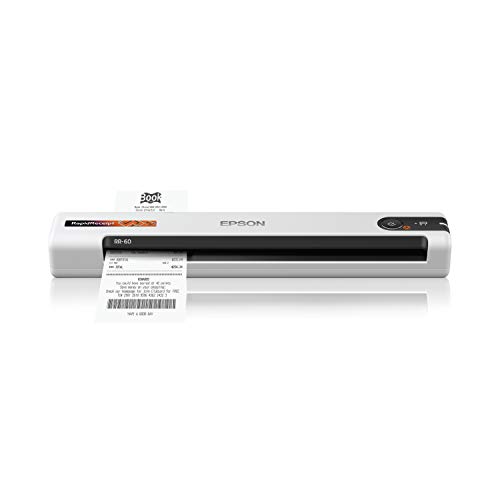
1. Epson RapidReceipt RR-60 — Best Mobile Tax Receipt Scanner
If you are a freelancer, independent contractor, or sole proprietor who needs a receipt scanner built specifically for tax prep, the Epson RapidReceipt RR-60 is your most focused option in 2026. This compact mobile scanner pairs the RR-60's lightweight hardware with Epson's ScanSmart AI PRO software, which goes beyond basic OCR by intelligently extracting merchant names, dates, amounts, and categories from your scanned documents and converting them into structured digital data. The result is a document that is not just a static image but a machine-readable, AI-ready record you can search, sort, and export without any manual data entry.
In practice, the RR-60 handles everything from crumpled cash register receipts to full-size letter invoices, straightening and sharpening each scan with impressive consistency. The ScanSmart software automatically categorizes your receipts — separating restaurant meals from office supplies from travel expenses — which is exactly the kind of pre-sorting that saves you hours at tax time. Direct export pipelines to QuickBooks and TurboTax mean your scanned data flows directly into your accounting workflow without needing a CSV import step or manual re-entry, and that alone justifies the price for anyone who bills by the hour and resents administrative overhead.
The RR-60 is a single-sheet-fed scanner rather than a batch feeder, so you feed receipts one at a time rather than loading a stack. For high-volume office use, that limitation is real, but for the individual who processes twenty to forty receipts per week, the workflow is perfectly practical. It connects via USB and runs from bus power, keeping the design slim and travel-friendly — slide it into your laptop bag next to your power brick and you will barely notice it is there. The color scan quality is accurate enough to capture logos and branding, which helps the software identify merchants it might not recognize by text alone.
Pros:
- ScanSmart AI PRO automatically extracts and categorizes receipt data without manual tagging
- Direct export to QuickBooks and TurboTax eliminates redundant data entry
- Ultra-compact and bus-powered — genuinely portable for traveling professionals
- Handles mixed document sizes including crumpled or uneven receipts
Cons:
- Single-sheet feed only — no batch ADF for high-volume processing
- USB-only connectivity; no Wi-Fi or Bluetooth for cord-free scanning
2. Epson RapidReceipt RR-600W — Best Desktop Receipt Scanner for Small Businesses
The RR-600W is the full desktop evolution of Epson's receipt-focused lineup, and it solves every limitation the portable RR-60 carries. Where the RR-60 feeds one sheet at a time, the RR-600W accepts up to 100 pages in its TrueFeed auto-document feeder — a robust mechanism that uses paper-skew correction and staple detection to handle a realistic office mix of crinkled receipts, standard invoices, and full-size documents without jamming or misfeeding. For a small business that processes high receipt volumes weekly, this capacity difference is transformative and shifts the scanner from a convenience tool into a genuine workflow automation device.
Like its smaller sibling, the RR-600W runs ScanSmart AI PRO software that converts scanned content into structured, AI-ready data and exports directly to QuickBooks, TurboTax, and other financial applications. The added hardware differentiators here are wireless connectivity — you can scan directly from a desktop app over Wi-Fi without a USB cable — and a front-panel touchscreen that lets you initiate scan jobs without needing to touch the connected computer. Two-sided scanning means double-sided invoices and contracts are captured in a single pass, cutting your processing time significantly when you are working through a backlog of mixed paperwork.
The RR-600W sits on your desk as a dedicated appliance rather than a scanner you pack and unpack, which means it earns its footprint only if receipt and invoice volume in your office justifies it. For bookkeepers, accountants, retail operators, or any small business that invoices clients and tracks expenses seriously, the combination of high-capacity feeding, wireless operation, two-sided scanning, and financial software integration makes this the most purpose-built receipt scanner in the 2026 market. It is the scanner you buy when you want to feed a hundred receipts at lunch and return to your inbox to find them already categorized and queued for QuickBooks.
Pros:
- 100-page ADF with TrueFeed technology handles mixed-size receipts and invoices without jams
- Wireless connectivity and touchscreen allow fully untethered scan-and-categorize workflows
- Two-sided color scanning captures double-sided documents in a single pass
- ScanSmart AI PRO exports structured data directly to QuickBooks and TurboTax
Cons:
- Larger desktop footprint makes it impractical for mobile or travel use
- Higher price point than mobile alternatives in the receipt scanner category
3. ScanSnap iX2500 — Best Overall Receipt and Document Scanner
Fujitsu's ScanSnap iX2500 is the most advanced consumer receipt and document scanner available in 2026, and it earns that position with specifications that outclass the competition across nearly every measurable dimension. The 45-page-per-minute duplex scanning engine, 100-sheet automatic document feeder, and 5-inch full-color touchscreen combine into a desktop powerhouse that processes a full month's worth of receipts, invoices, business cards, and contracts in a single morning session. As the upgraded replacement for the highly regarded iX1600, the iX2500 improves on an already excellent foundation with Wi-Fi 6 connectivity — the fastest and most stable wireless standard available — alongside a USB-C port for wired connections when you need maximum reliability.
The iX2500's ScanSnap software ecosystem is the most mature and user-friendly in the dedicated scanner market, offering customizable scan profiles you can launch directly from the touchscreen without ever touching a computer. You can set up personalized destinations — send receipts automatically to one cloud folder, business cards to another, and contracts to a third — and the scanner handles the routing intelligently based on document detection. Cloud service support is broad, covering Dropbox, Google Drive, OneDrive, Evernote, and more, so your scanned documents are accessible from any device the moment the scan completes. The Quick Menu feature lets you drag-and-drop completed scans directly into any open desktop application, making the iX2500 a seamless extension of your existing digital workflow rather than an isolated appliance.
If you are evaluating whether a dedicated scanner is worth buying versus relying on an all-in-one printing solution, our guide to the best all-in-one printers for Mac in 2026 covers that category in detail, but for pure scanning throughput and document intelligence, the iX2500 has no peer at its price point. The build quality is solidly premium — the ADF mechanism feeds cleanly through mixed-size stacks including small receipts and standard letter pages without misfeeding — and the Wi-Fi 6 connection is noticeably more reliable than the Wi-Fi 5 implementations found in competing models. This is the scanner you buy when you want to forget that receipt management is a task.
Pros:
- 45ppm duplex scanning speed with 100-sheet ADF is the fastest in the consumer segment
- Wi-Fi 6 delivers faster and more stable wireless connectivity than any competing scanner
- 5-inch touchscreen with customizable profiles allows fully touchscreen-driven operation
- Broad cloud integration and drag-and-drop Quick Menu for seamless desktop workflow
- USB-C port provides an additional wired connection option for maximum reliability
Cons:
- Premium price is higher than purpose-built receipt-only scanners
- Desktop-only form factor is not suitable for mobile scanning needs
4. Neat Company NeatConnect — Best for Standalone Digital Filing
The Neat Company NeatConnect takes a fundamentally different approach to receipt management than the Epson and ScanSnap offerings on this list — instead of acting as a peripheral that feeds data into your existing software ecosystem, NeatConnect is a self-contained digital filing system that handles scanning, organizing, and cloud storage as an integrated appliance. You load your receipts, business cards, and documents into the feeder, and NeatConnect processes and files them automatically without requiring a connected PC to initiate or manage the scan job. That standalone capability makes it a strong choice for home office users who want a simple, reliable paper-elimination solution without a complex software setup.
The NeatConnect's cloud-based storage model means your scanned files are accessible from any device — your phone, tablet, or any computer — the moment the scan is complete. The Neat software organizes receipts by vendor, date, and amount automatically, creating a searchable archive that makes finding a specific receipt from eighteen months ago a ten-second search rather than a half-hour excavation. For business card scanning specifically, the Neat platform converts contact information into a structured digital contact record rather than just storing a flat image, which adds meaningful utility for professionals who frequently network.
It is worth noting that the NeatConnect was designed in an era when cloud-subscription software was less ubiquitous, and the Neat platform's pricing model has evolved since its original release — verify current subscription terms before purchasing if ongoing software costs are a concern for your budget. As a pure hardware and ecosystem package, however, the NeatConnect remains a genuinely useful tool for home office users who prioritize simplicity and mobile access over raw scanning speed or direct accounting software integration.
Pros:
- Standalone scanning operation requires no connected PC to process and file documents
- Cloud-based storage enables mobile access to scanned files from any device
- Handles receipts, business cards, and standard documents in a single batch
Cons:
- Ongoing Neat platform subscription costs should be verified before purchasing
- Slower processing and lower scan resolution compared to current-generation Epson and ScanSnap models
- No direct export to QuickBooks or TurboTax without additional workflow steps
5. ScanSnap iX100 — Best Battery-Powered Portable Scanner
The ScanSnap iX100 is the best portable receipt scanner for professionals who need to digitize documents in the field without access to a power outlet or a USB port. Its built-in rechargeable battery handles up to 260 documents on a single charge, which is a remarkable figure for a scanner this compact — you can work through a full day of client meetings, conference receipts, and signed contracts without touching a charger. The iX100 connects via Wi-Fi Direct to your phone or tablet without requiring a local network, which means it works in hotel rooms, client offices, and airport lounges with the same reliability as your home setup.
ScanSnap Cloud is the intelligence layer that makes the iX100 genuinely useful rather than just a hardware gimmick — the cloud service detects document types automatically and routes different content to different destinations based on your configuration. Set it up once, and your restaurant receipts go to one folder in Dropbox while your signed contracts land in a separate Google Drive directory and your business card scans populate your contacts app. That automatic sorting happens without any interaction from you beyond pressing the scan button, which is exactly the kind of frictionless capture workflow that makes portable scanning sustainable as a daily habit rather than a periodic catch-up task.
The iX100 handles a wide variety of document sizes and types, including plastic loyalty and credit cards, and you can scan two small items simultaneously to speed up processing when you have a stack of business card-sized receipts. Scan quality is solid for a portable unit — color accuracy is dependable, and the automatic image correction handles curved or slightly bent receipts well. For wireless connectivity beyond the scanner itself, our guide to the best Bluetooth printers of 2026 covers the wireless printing side of a paperless office setup, which pairs naturally with a wireless scanner like the iX100 to complete a fully cable-free document workflow.
Pros:
- Long-life battery scans up to 260 documents per charge — genuinely all-day portable use
- Wi-Fi Direct connectivity works without a local network in any location
- ScanSnap Cloud automatically detects and routes document types to the right destination
- Scans plastic cards and can process two small items simultaneously
Cons:
- Single-sheet feed only — no document feeder for batch processing
- Slower scan speed than desktop models, which adds up when processing large stacks
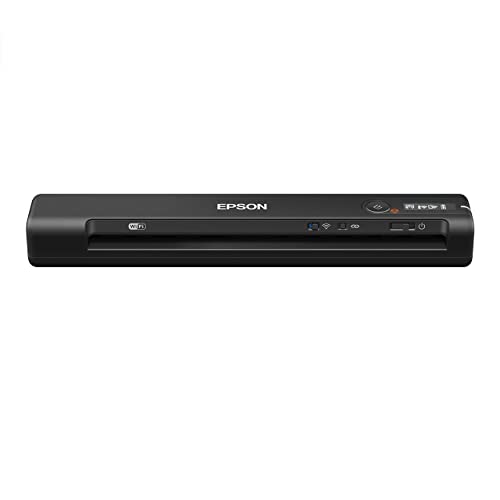
6. Epson Workforce ES-60W — Best Ultra-Slim Wireless Mobile Scanner
The Epson Workforce ES-60W holds a specific and well-earned distinction in the 2026 portable scanner market — it is the fastest, smallest, and lightest wireless mobile sheet-fed scanner in its class, a combination of attributes that no competing product currently matches. At a scan speed of four seconds per page and with wireless connectivity that reaches PC, Mac, iOS, and Android devices, the ES-60W delivers desktop-grade convenience in a form factor that is genuinely pocket-adjacent. If your priority is scanning individual receipts and documents on the go with the least possible hardware bulk, this is the scanner you want in your bag.
The wireless implementation here is notably versatile — you can scan directly to a smartphone or tablet over a local Wi-Fi network without needing a laptop open and ready, which makes the ES-60W practical for scanning receipts at a client site and sending them directly to your accounting app before you even leave the building. The four-second scan speed is real-world fast for a wireless portable, and image quality is accurate enough for receipt OCR and document archiving at the resolutions that financial and legal records require. Operating temperature range of 41° to 95°F covers the full spectrum of typical office and travel environments without concern.
Like the Epson RR-60, the ES-60W feeds documents one at a time rather than from a batch feeder, which positions it as a mobile capture tool rather than a batch-processing machine. For someone who scans five to fifteen receipts per session while traveling for work, however, the one-at-a-time workflow is a non-issue, and the wireless freedom combined with the compact size make this the most practical daily-carry scanner in the 2026 lineup. It runs from USB power when connected to a laptop or power bank, keeping the design dead simple and eliminating battery management as a variable.
Pros:
- Fastest and lightest wireless mobile sheet-fed scanner in its class
- Four-second scan speed is impressively quick for a portable wireless device
- Wireless to PC, Mac, iOS, and Android — no laptop required for mobile scanning
- Minimal footprint makes it the best daily-carry option for traveling professionals
Cons:
- Single-sheet feed only — no batch processing capability
- No built-in battery — requires USB power source at all times
7. Epson WorkForce ES-50 — Best Budget Sheet-Fed Scanner
The Epson WorkForce ES-50 is the straightforward, no-frills entry point into dedicated receipt scanning, and it earns its place on this list by delivering reliable, fast single-sheet scanning at the most accessible price point in the category. It holds the title of fastest and lightest mobile single-sheet-fed scanner in its class — a design priority that Epson has maintained across its portable lineup — and scans a full page in as fast as 5.5 seconds, which is entirely practical for receipts and single-page documents. If you are looking for your first dedicated scanner and want to spend the minimum necessary to get off smartphone apps and onto hardware scanning, the ES-50 is where you start.
Compatibility is a notable strength of the ES-50. It works with both Windows and Mac systems and includes a TWAIN driver, which means it integrates with virtually any scanning software you already use, from industry-standard document management applications to basic scan utilities. The paper handling is more capable than the compact size suggests — the ES-50 scans documents up to 8.5 by 72 inches, which covers everything from wallet-sized receipts to legal-length documents and long paper rolls, and it handles standard ID cards without special adapters or orientation tricks.
What the ES-50 trades away compared to higher-tier options is wireless connectivity — this is a USB-only scanner — and batch processing capability. You feed documents one at a time, which is appropriate for occasional personal use but becomes a real productivity limitation if you are processing more than twenty or thirty receipts per session on a regular basis. For that use case, moving up to the ES-60W for wireless capability or the RR-600W for batch feeding is a worthwhile investment. But for the occasional receipt scanner who processes a modest volume monthly, the ES-50 delivers exactly what the job requires at a price that is difficult to argue against.
Pros:
- Most affordable dedicated receipt scanner on this list — a genuine entry-level value
- 5.5-second scan speed is fast for a USB portable scanner at this price point
- Scans documents up to 8.5 x 72 inches — handles long receipts and legal documents
- TWAIN driver included — compatible with virtually any scanning software on Windows or Mac
Cons:
- USB-only — no wireless or Bluetooth connectivity
- No batch document feeder — single-sheet operation only
- No AI data extraction software — scanning is image capture only without additional apps
What to Look For When Buying a Receipt Scanner
Scanner Form Factor: Mobile vs. Desktop
The single most important decision you make when buying a receipt scanner in 2026 is choosing between a mobile single-sheet scanner and a desktop scanner with an automatic document feeder. Mobile scanners — the Epson ES-50, ES-60W, and ScanSnap iX100 on this list — are compact, lightweight, and designed for capture on the go, feeding one sheet at a time into a thin scanning element. They excel when you need to process a handful of receipts each day or scan documents at a client's office, and the best ones are genuinely light enough to forget you are carrying them. Desktop scanners with ADF mechanisms — the RR-600W and iX2500 — are larger appliances that sit on your desk and process stacks of fifty to one hundred pages in a single unattended run, which transforms a weekly receipt-sorting session from twenty minutes of hand-feeding into a two-minute load-and-go operation.
Your honest assessment of weekly receipt volume is the key variable here. If you process fewer than twenty receipts per week on average, a mobile scanner handles your needs comfortably and saves you desk space and money. If you are running a small business with consistent invoice and receipt flow above fifty documents per week, an ADF desktop scanner pays for the price difference in time saved within a matter of months. Most people overestimate how often they will carry a mobile scanner and underestimate how much friction single-sheet feeding adds when you have a large backlog — think carefully about your real-world scanning patterns before committing to a form factor.
OCR Software and Data Extraction Quality
The hardware scanner is only half the equation — the software that processes your scanned images into usable data determines how much time the scanner actually saves you. Basic scanners produce flat image files that you archive and search manually, while premium receipt scanners include OCR engines that extract the merchant name, transaction date, total amount, and line items from each receipt and convert them into structured, searchable data. Epson's ScanSmart AI PRO — bundled with both the RR-60 and RR-600W — goes further by automatically categorizing extracted data and preparing it for direct export to QuickBooks and TurboTax, eliminating manual bookkeeping entry entirely for standard receipt types.
ScanSnap's software ecosystem takes a different but equally effective approach, using cloud intelligence to route documents automatically to the right destination based on content type, which is particularly valuable when your scanning mix includes receipts, contracts, business cards, and personal documents in the same daily stack. If you are evaluating OCR quality, look specifically at the software's performance on thermal paper receipts — the most common format — which fade quickly and have lower contrast than printed documents, making them the hardest test case for OCR accuracy. Any scanner marketed specifically for receipt and tax use should handle thermal paper reliably; general document scanners may struggle with faded or heat-worn examples.
Scanning Speed and ADF Capacity
Scanning speed is measured in pages per minute (ppm) for single-sided scanning and in images per minute (ipm) for double-sided scanning, and the difference between a 20ppm scanner and a 45ppm scanner becomes very tangible when you are clearing a backlog of several hundred receipts at year-end tax time. The ScanSnap iX2500's 45ppm duplex engine processes a hundred-sheet stack in under five minutes; a mid-range 20ppm scanner takes over ten minutes on the same stack. For routine daily use with small volumes, speed differences are academic — but for anyone who lets receipts accumulate and processes them in batches, the faster scanner is meaningfully less tedious.
ADF capacity matters as much as speed for batch users. A 50-sheet feeder requires you to reload mid-batch for larger stacks, which interrupts the unattended operation that makes batch scanning efficient. Both the RR-600W and iX2500 offer 100-sheet feeders, which handle a full month of typical small business receipts and invoices in a single load for most users. If you find yourself considering whether you really need 100 sheets versus 50, the answer is almost always to choose the larger capacity — a feeder you load once and walk away from is genuinely more useful than one you need to babysit through a refill cycle.
Connectivity and Cloud Integration
Wired USB connectivity is reliable and universal, but wireless scanning has become the expected standard for any scanner purchased in 2026, particularly for mobile and home office use where running USB cables across a desk or workspace is impractical. Wi-Fi scanning lets you initiate jobs from a phone or tablet and receive scanned files directly into cloud apps without involving a computer as an intermediary, which is a meaningful workflow improvement over the older cable-tethered model. The ScanSnap iX2500's Wi-Fi 6 implementation is the fastest and most stable wireless scanning connection currently available in a consumer receipt scanner, and it is noticeably more reliable in congested wireless environments — offices with many devices on the network — than the Wi-Fi 5 radios in competing models.
Cloud integration depth varies significantly between platforms. Scanners that route directly to Dropbox, Google Drive, OneDrive, Evernote, and cloud accounting tools like QuickBooks Online give you a finished workflow without additional configuration steps — scan once, find your data organized and accessible from any device within seconds. Scanners that produce local image files and require you to manually upload them to cloud storage are functional but add friction that compounds over time. Prioritize native cloud destination support when evaluating connectivity, particularly if you work across multiple devices or locations and need your scanned records available everywhere without managing file transfers manually.
FAQs
What is the difference between a receipt scanner and a regular document scanner?
A receipt scanner is optimized specifically for the challenges of processing receipts — handling small paper sizes, thermal paper, crumpled or curved sheets, and extracting structured financial data like merchant names, dates, and amounts. Regular document scanners capture flat images at high resolution and are designed primarily for letter and legal-size documents. Many receipt scanners include specialized OCR software that categorizes financial data and exports it to accounting tools, which standard document scanners do not offer. In practice, a high-quality document scanner like the ScanSnap iX2500 handles receipts effectively alongside general documents, giving you a versatile all-in-one solution.
Can I use scanned receipts as proof for IRS tax deductions in 2026?
Yes, the IRS accepts digital scanned receipts as valid documentation for business expense deductions, provided the scans are legible and include all relevant information — merchant name, date, amount, and nature of the expense. The IRS has accepted electronic records since 1997, and most tax software including TurboTax and QuickBooks handles scanned receipt imports natively. Store your scanned receipts in a cloud backup with a reliable file structure, and keep them accessible for at least three to seven years depending on your tax situation. Scanners with AI data extraction like the Epson RR-60 and RR-600W automatically structure this information, making it easy to produce organized records during an audit.
What is the best receipt scanner for QuickBooks and TurboTax integration?
The Epson RapidReceipt RR-60 and RR-600W are the best options for direct QuickBooks and TurboTax integration, as both include ScanSmart AI PRO software specifically designed to extract receipt data and export it in formats these applications accept natively. The software handles merchant identification, amount extraction, and category assignment automatically, so your receipts arrive in QuickBooks already categorized and ready for review rather than as raw image attachments requiring manual data entry. The RR-60 is the better choice for individual freelancers with moderate volume, while the RR-600W's 100-page ADF makes it the right pick for small businesses with higher receipt throughput.
How do I choose between a mobile scanner and a desktop receipt scanner?
The deciding factor is your average weekly receipt volume and whether you need to scan documents in locations away from your desk. If you process fewer than twenty to thirty receipts per week and occasionally need to scan on the go, a mobile scanner like the Epson ES-60W or ScanSnap iX100 gives you the right combination of portability and capability. If you consistently process fifty or more receipts and invoices per week from a fixed office location, a desktop scanner with an ADF — the RR-600W or iX2500 — saves you enough time to justify the larger footprint and higher price. Mixed users who need both capabilities should consider the iX100's battery-powered wireless design as a versatile compromise.
Do receipt scanners work with Mac computers?
All seven scanners on this list are fully compatible with macOS, with current driver support for recent macOS versions. The ScanSnap iX2500, iX100, and both Epson RapidReceipt models offer the most polished Mac software experiences, with dedicated Mac applications that integrate with macOS's file system and cloud services natively. The Epson ES-50 and ES-60W include TWAIN drivers that work with any compatible scanning software on Mac. If you are specifically looking for Mac-compatible printing and scanning solutions more broadly, our guide to the best all-in-one printers for Mac in 2026 covers multifunction devices that combine printing and scanning in a single unit for users who need both capabilities.
Is a dedicated receipt scanner worth it if I already have a smartphone scanning app?
A dedicated hardware scanner is worth buying if you process receipts consistently rather than occasionally, and if accuracy and throughput matter more than convenience. Smartphone apps like Apple's built-in document scanner or third-party alternatives work well for a few receipts at a time, but they require you to hold your phone steady, manage lighting, and crop each image manually — a workflow that becomes tedious at higher volumes. Hardware scanners feed documents automatically, produce consistent scan quality regardless of ambient lighting, and process each receipt in four to six seconds without any manual alignment. For anyone tracking business expenses seriously, the time savings over a full year make even the most affordable scanner on this list pay for itself within the first quarter.
Buy on Walmart
- Epson RapidReceipt RR-60 Mobile Tax Receipt and Color Docume — Walmart Link
- Epson RapidReceipt RR-600W Wireless Desktop Color 2-Sided Do — Walmart Link
- ScanSnap iX2500 Wireless or USB High-Speed Cloud Enabled Doc — Walmart Link
- The Neat Company NeatConnect Scanner and Digital Filing Syst — Walmart Link
- ScanSnap iX100 Wireless Mobile Portable Scanner for Mac or P — Walmart Link
- Epson Workforce ES-60W Wireless Portable Sheet-fed Document — Walmart Link
- Epson WorkForce ES-50 Portable Sheet-Fed Document Scanner fo — Walmart Link
Buy on eBay
- Epson RapidReceipt RR-60 Mobile Tax Receipt and Color Docume — eBay Link
- Epson RapidReceipt RR-600W Wireless Desktop Color 2-Sided Do — eBay Link
- ScanSnap iX2500 Wireless or USB High-Speed Cloud Enabled Doc — eBay Link
- The Neat Company NeatConnect Scanner and Digital Filing Syst — eBay Link
- ScanSnap iX100 Wireless Mobile Portable Scanner for Mac or P — eBay Link
- Epson Workforce ES-60W Wireless Portable Sheet-fed Document — eBay Link
- Epson WorkForce ES-50 Portable Sheet-Fed Document Scanner fo — eBay Link
Key Takeaways
- The ScanSnap iX2500 is the best overall receipt scanner in 2026, delivering class-leading 45ppm duplex speed, Wi-Fi 6 connectivity, and a 100-sheet ADF in a polished desktop package built for serious home office and small business use.
- The Epson RapidReceipt RR-600W is the top choice for businesses that need direct QuickBooks and TurboTax integration with batch ADF processing, while the portable RR-60 covers the same software ecosystem for individual freelancers who need mobile capture.
- For scanning on the road without a power outlet, the ScanSnap iX100's 260-document battery life and Wi-Fi Direct connectivity make it the most independent and travel-ready portable scanner on the market.
- The Epson WorkForce ES-50 remains the best entry-level option for occasional personal use, delivering reliable hardware scanning at the lowest price point on this list — the right starting point if you are switching from smartphone apps for the first time.
 |
 |
 |
 |

About Rachel Chen
Rachel Chen writes about scanners, laminators, and home office productivity gear. She started her career as an office manager at a midsize law firm, where she was responsible for purchasing and maintaining all of the document handling equipment for a 60-person staff. That experience sparked a deep interest in archival workflows, paperless office setups, and document preservation. Rachel later earned a bachelor degree in information science from Rutgers University and now writes full time. She is a strong advocate for ADF reliability over raw resolution numbers and has tested every major flatbed and document scanner sold in the United States since 2018.