 ee
eeBest Soundbars Without Subwoofers 2026
If you want the best soundbar without a separate subwoofer cluttering your living room, the Sonos Arc Ultra is the one to beat in 2026 — its Sound Motion technology and 9.1.4 spatial audio deliver genuine cinematic bass from a single sleek bar. The idea of a high-performance soundbar that handles everything internally has gone from a compromise to a genuine alternative to full surround setups, and the seven models reviewed here prove exactly that.
Shopping for a soundbar that skips the external subwoofer used to mean sacrificing low-end punch, but the engineering inside today's flagship bars has changed that equation entirely. Built-in passive radiators, dual integrated subwoofer drivers, and advanced Dolby Atmos processing now deliver bass response that genuinely rivals a wired woofer sitting on your floor. Whether you are working with a compact apartment setup or a dedicated media room, there is a self-contained soundbar on this list that fits your space and budget without requiring a second power outlet or an extra cable running across the room.
This guide covers every price tier — from the premium Sonos Arc Ultra down to the dialogue-focused ZVOX AV157 — with honest assessments of what each bar does best and where it falls short. If you are also building out a larger viewing space, our guide to the best soundbar for large rooms in 2026 pairs well with this roundup. Read on for full reviews, a buying guide, and a quick comparison of all seven picks.

Standout Models in 2026
- #PreviewProductRating
- Bestseller No. 1
 Rating:

- Bestseller No. 2
 Rating:
- Bestseller No. 3
 Rating:
 - Bestseller No. 4
 Rating:
 - Bestseller No. 5
 Rating:
 - Bestseller No. 6
 Rating:
 - Bestseller No. 7
 Rating:
Product Reviews
1. Sonos Arc Ultra Soundbar — Best Overall
The Sonos Arc Ultra represents the most significant leap forward in the Arc family since the original launched, and if you are serious about premium audio without a separate subwoofer, this is where the conversation starts and often ends. The new Sound Motion technology is the headline feature here — rather than relying solely on conventional drivers, the Arc Ultra uses a proprietary system that moves more air with less cabinet volume, producing low-frequency output that you feel in your chest during action sequences without a single external component. The result is a 9.1.4 spatial audio configuration that Sonos claims fills every corner of the room with precisely placed sound, and in practice, the height channels created by the upward-firing drivers during Dolby Atmos content are genuinely convincing rather than a marketing abstraction.
Beyond raw audio performance, the Arc Ultra integrates AI-powered Speech Enhancement that continuously monitors dialogue and boosts vocal clarity without affecting the surrounding soundstage — a feature that becomes indispensable once you have watched a mumbled dialogue-heavy drama with it active. Setup is handled entirely through the Sonos app, which walks you through TruePlay room calibration in under five minutes, and the bar connects via HDMI eARC for lossless audio passthrough from any modern TV. Voice control through Amazon Alexa or Google Assistant is built in, and Sonos multiroom support means the Arc Ultra becomes the anchor of a whole-home audio system if you ever want to expand.
The main caveat is the price, which places the Arc Ultra in a tier where you are genuinely deciding between this and a traditional soundbar-plus-sub bundle. For dedicated Dolby Atmos content — streaming in Atmos from Netflix, Disney+, or Apple TV+ — the performance is exceptional and the case for the Arc Ultra over an external woofer setup becomes clear. For listeners who primarily watch stereo content or use the bar mostly for music, the value proposition narrows slightly, though the room-filling stereo performance remains well above average for the category.
Pros:
- Sound Motion technology delivers genuine subwoofer-level bass from a self-contained bar
- True 9.1.4 Dolby Atmos spatial audio with convincing height channel placement
- AI-powered Speech Enhancement clarifies dialogue without degrading the soundstage
- TruePlay room calibration via Sonos app optimizes performance for your specific space
Cons:
- Premium price point is significantly higher than most competitors on this list
- Full Atmos performance requires compatible streaming content to shine
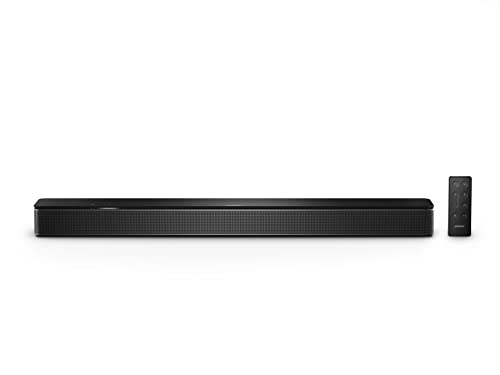
2. Bose Smart Soundbar 600 — Best Mid-Range Pick
Bose built the Smart Soundbar 600 around a deceptively simple premise: squeeze five full speakers, including two upward-firing transducers, into a 27.5-inch bar that sits cleanly under virtually any television without demanding floor space for a separate woofer. The acoustic engineering required to make that work is anything but simple, and the result is one of the most capable mid-range soundbars available in 2026. The two upward-firing drivers handle overhead sound effects in Dolby Atmos content with a clarity and directionality that is noticeably better than bars relying on digital processing alone — explosions overhead, rainfall from above, and aircraft passing over your head all land with spatial accuracy rather than a vague upward smear.
The real differentiator over competing bars at this price is TrueSpace technology, which is Bose's proprietary upmixing engine that analyzes whatever audio signal is coming in — whether stereo, 5.1, or Atmos — and intelligently expands it to fill the room. Most soundbars perform best exclusively with Atmos-encoded content, but the Soundbar 600 sounds genuinely immersive regardless of what you are watching, making it a stronger everyday performer for users whose libraries mix streaming, cable, and broadcast content. Built-in Alexa voice control with a noise-rejecting microphone system makes hands-free operation practical even from across the room, and Bluetooth connectivity allows direct phone pairing for music when the TV is off.
Where the Soundbar 600 concedes to the Arc Ultra above it is in maximum bass extension — the integrated drivers produce full, controlled low-end that works well for most content, but heavy bass users watching explosion-heavy action films will notice the absence of dedicated sub-bass drivers during the lowest octaves. Bose sells a compatible wireless sub module if that becomes a concern, but within the subwoofer-free brief of this review, the Soundbar 600 delivers a well-rounded, premium-sounding result that punches above its form factor.
Pros:
- TrueSpace upmixing makes stereo and 5.1 content sound genuinely immersive
- Two upward-firing drivers produce accurate height channel reproduction
- Compact 27.5-inch profile fits under small and mid-size televisions
- Built-in Alexa with effective noise-rejecting microphone array
Cons:
- Bass extension stops short of what a dedicated subwoofer module provides
- No optical input — HDMI ARC or Bluetooth only
3. Sennheiser AMBEO Soundbar Plus — Best for 3D Immersion
Sennheiser's AMBEO Soundbar Plus takes an engineering approach that is fundamentally different from every other bar on this list: instead of relying purely on driver placement or digital upmixing, it actively analyzes the acoustic properties of your room and adapts its output to replicate a full 7.1.4 home theater system within your actual listening environment. The AMBEO virtualization engine uses built-in microphones to measure how sound reflects off your walls and ceiling during a calibration process, then applies those measurements in real time to place audio objects with precision that passive bars simply cannot match. The resulting virtual 7.1.4 experience is the most convincing room-filling soundstage you will find in a single-bar solution in 2026.
The built-in dual 4-inch subwoofers are a genuine engineering achievement, producing bass extension that comfortably handles movie scores, bass-heavy music, and sound effect rumble without the resonance or distortion artifacts that plague lesser integrated woofer designs. Sennheiser also made the AMBEO Plus exceptional for music streaming, with native support for Apple AirPlay 2, Spotify Connect, Tidal Connect, Chromecast built-in, and Bluetooth — an unusually complete streaming ecosystem for a TV-focused bar. Codec support includes Dolby Atmos, DTS:X, MPEG-H, and 360 Reality Audio, making it compatible with virtually every premium audio format currently in distribution. A Night Mode is included that compresses dynamic range for late-night listening without making dialogue hard to follow.
The physical footprint is larger than the Bose and Sony options reviewed here — the AMBEO Plus is a substantial bar that demands adequate TV stand space, and the price reflects the engineering investment. Users who want the absolute best self-contained immersive audio available and do not want to anchor their media cabinet to a traditional surround setup will find this bar worth every dollar. For rooms under 200 square feet, its spatial calibration system may provide slightly less dramatic gains than in larger spaces, but the baseline audio quality remains exceptional regardless.
Pros:
- AMBEO room calibration creates a genuinely accurate virtual 7.1.4 surround field
- Built-in dual 4-inch subwoofers deliver real bass extension, not just enhanced mid-bass
- Widest streaming ecosystem of any bar reviewed — AirPlay 2, Spotify, Tidal, Chromecast
- Supports Dolby Atmos, DTS:X, MPEG-H, and 360 Reality Audio simultaneously
Cons:
- Large physical footprint requires significant TV stand space
- Premium price competes directly with full soundbar-plus-subwoofer bundles
4. Sony HT-A3000 — Best for Home Theater Enthusiasts
Sony designed the HT-A3000 as a standalone home theater solution, and the 3.1-channel configuration with built-in dual subwoofers makes that ambition clear from the first listening session. Three dedicated front speakers handle dialogue and stereo imaging with a separation and precision that single-driver bars cannot replicate, while the integrated woofers provide the bass foundation that typically requires a separate cabinet in competing setups. The combination means you get clear, defined audio across the full frequency range — dialogue center-locked and distinct, stereo imaging wide and stable, bass deep enough to land with weight during cinematic sequences — without a single additional component in your rack.
What distinguishes the HT-A3000 from the Sonos and Bose options above it is Sony's 360 Spatial Sound Mapping technology, which works in conjunction with optional rear speakers to create a fully optimized surround field that adapts to your room's geometry. With just the bar alone, the spatial processing produces a wide and convincing front soundstage; add Sony's optional rear speakers and the system maps a complete virtual surround environment using Sony's proprietary algorithm. For gaming specifically, the support for Dolby Atmos and DTS:X at the hardware level means competitive titles with positional audio cues are noticeably easier to read — a point that will matter to readers already familiar with our guide to the best PS4 soundbars in 2026.
Wi-Fi, Bluetooth, and AirPlay 2 connectivity means the HT-A3000 integrates cleanly into existing smart home ecosystems, and the dedicated home theater app provides granular EQ control that most consumer soundbars omit. The bar's expandability — with optional rear speakers and a compatible Sony subwoofer available for purchase — means it functions as a genuine starting point for a full surround system if your needs grow, rather than a terminal purchase. For buyers who want the best 3.1 performance available from a single bar in 2026, the HT-A3000 is the definitive recommendation.
Pros:
- Dedicated 3.1-channel layout with built-in dual subwoofers produces genuine surround separation
- 360 Spatial Sound Mapping scales with optional rear speakers for full surround
- Dolby Atmos and DTS:X hardware support benefits movies and gaming equally
- Wi-Fi, Bluetooth, and AirPlay 2 cover all major connectivity scenarios
Cons:
- Full 360 Spatial Sound Mapping requires optional rear speakers to reach its potential
- Slightly larger than compact bars — measure your TV stand clearance before ordering
5. Bose Smart Soundbar 300 (Renewed) — Best Budget Smart Soundbar
The Bose Smart Soundbar 300 occupies the entry point of the premium smart soundbar segment, and in its Renewed configuration — factory-restored by Bose to meet original performance standards — it represents one of the strongest value propositions on this list. Five full-range drivers are arranged to spread sound horizontally, vertically, and forward from a bar that measures under 28 inches, producing a room-filling audio signature that sounds considerably larger than the cabinet dimensions suggest. The matte black finish and seamless metal grille construction look far more expensive than the price indicates, and the bar sits flat and stable under any size television without the visual weight of larger competitors.
Functionally, the Soundbar 300 covers the essentials with precision: built-in Amazon Alexa and Google Assistant enable hands-free voice control through a noise-rejecting microphone array that filters ambient TV audio to hear your commands reliably, and Bluetooth connectivity allows direct pairing for music playback from any phone or tablet. The audio performance across movies, music, and streaming games is consistently clear and spacious, with Bose's signature midrange emphasis keeping vocals and dialogue front and center without requiring manual EQ adjustment. Bass response is solid for a compact bar — the five full-range drivers push the low-end further than you would expect — though the absence of dedicated bass drivers means the bottom octave yields to the premium bars above it in head-to-head listening.
If your priority is a smart, well-built soundbar with voice control and reliable everyday performance in a compact form factor, and you do not need Dolby Atmos height channel reproduction, the Soundbar 300 Renewed delivers the Bose experience at a fraction of the cost of the Soundbar 600. The Renewed certification matters here — Bose's quality control on factory-restored units is stringent, and buyer protection includes a standard warranty. For apartments, bedrooms, or secondary viewing rooms where you want quality audio without premium bar pricing, this is the pick.
Pros:
- Five full-range drivers produce wide, clear sound from a compact 28-inch bar
- Both Amazon Alexa and Google Assistant built in with effective noise-rejecting mics
- Factory Renewed condition brings premium Bose quality at accessible pricing
- Premium matte black finish and metal grille construction look expensive
Cons:
- No Dolby Atmos or upward-firing drivers — height channel audio is not supported
- Bass extension is good but noticeably behind bars with dedicated woofer drivers
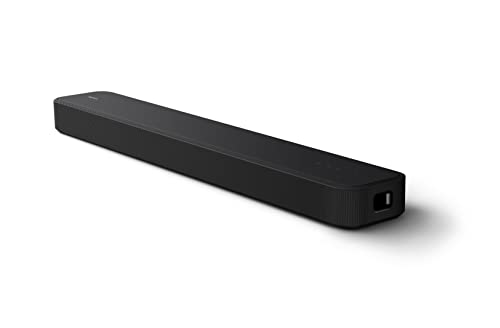
6. Sony HT-S2000 Compact 3.1ch — Best Compact Pick
Sony's HT-S2000 accomplishes something that the larger bars on this list cannot — it delivers a genuine 3.1-channel Dolby Atmos experience in a compact footprint that works under smaller televisions and in media setups where space is a real constraint. The internal architecture includes built-in dual subwoofers for low-frequency extension, three front speakers including a dedicated center channel for dialogue clarity, and Sony's Vertical Surround Engine that uses psychoacoustic processing to replicate height channel effects even without physically upward-firing drivers. For a bar at this size and price, the breadth of that feature set is remarkable in 2026.
The S-Force PRO Front Surround processing handles stereo and 5.1 content with an expansion algorithm that creates a convincing wide soundstage from a narrow bar, and DTS:X support alongside Dolby Atmos means compatibility with essentially every disc and streaming format currently in circulation. The dedicated center channel is the feature that will matter most to users who frequently watch drama or dialogue-heavy content — dialogue localization is precise, voices are anchored clearly in the center of the soundstage, and the Speech Enhance mode provides additional boost when needed. Management through the Sony Home Entertainment Connect app gives you granular control over all processing modes from your phone, and the app integration is clean and reliable.
The HT-S2000 is the right choice when your priority is maximum audio performance within a small physical envelope. It outperforms every bar below it in objective audio fidelity and outclasses its direct-price competitors on features, but it concedes the immersive 3D room-fill of the AMBEO Plus and the spatial accuracy of the Sonos Arc Ultra. If you are pairing a soundbar with a projector-based home theater setup, this compact bar also works well alongside the solutions reviewed in our best soundbar for projector guide.
Pros:
- Compact footprint packs 3.1ch Dolby Atmos and DTS:X into a space-efficient design
- Dedicated center channel produces locked, precise dialogue localization
- Built-in dual subwoofers provide real bass without external components
- Sony Home Entertainment Connect app enables full remote management
Cons:
- No physically upward-firing drivers — Atmos height channels are processed, not literal
- Compact size limits maximum bass output compared to full-size bar competitors
7. ZVOX AV157 Dialogue Clarifying Sound Bar — Best for Dialogue Clarity
The ZVOX AV157 exists in a different category from every other bar reviewed here — it is not competing on spatial audio, Dolby Atmos processing, or smart home integration. It exists to solve one specific problem with more precision than any other product on this list: making voices on your television clear and understandable at any volume. The patented AccuVoice technology provides 12 discrete levels of voice boost, allowing you to dial in exactly as much speech enhancement as you need without the aggressive processing artifacts that appear when you crank built-in TV voice modes to maximum. If you, or someone in your household, regularly turns on subtitles because dialogue gets lost in music and sound effects, the AV157 addresses that problem directly and effectively.
Setup is refreshingly simple — ZVOX includes all necessary cables in the box, and the bar connects via Toslink optical or analog outputs (3.5mm or RCA) from any television that has those connections. The 17-inch form factor sits cleanly under virtually any screen size, and the physical control buttons on the unit operate without a remote if needed. The audio quality beyond the dialogue processing is clean and natural — the AV157 does not color the soundstage aggressively, which means voices stand out because they are enhanced, not because the rest of the audio is degraded. For users who primarily watch broadcast television, news, and drama series rather than blockbuster action films, the sonic priorities here are exactly right.
The important compatibility note that ZVOX highlights deserves your attention before purchasing: the AV157 requires a TV with Toslink optical or analog audio outputs, and some Samsung and Glass smart TVs that provide only HDMI ARC/eARC connections require an additional HDMI ARC Audio Extractor to use this bar. If your television is confirmed compatible, the AV157 is the single best solution available in 2026 for listeners who prioritize speech intelligibility above all else — a concern explored in depth in our guide to the best TV soundbars for hearing-impaired users.
Pros:
- AccuVoice with 12 discrete boost levels is the best dialogue clarification system available
- All necessary connection cables included — genuinely plug-and-play setup
- Compact 17-inch design fits under any screen without obstructing the display
- Natural, uncolored audio signature lets voice enhancement stand out cleanly
Cons:
- Requires Toslink optical or analog output — HDMI-only TVs need an additional adapter
- No Dolby Atmos, DTS:X, smart features, or wireless connectivity
Buying Guide: How to Choose the Best Soundbar Without a Subwoofer
Understand What "Without a Subwoofer" Actually Means
Every bar on this list is technically a soundbar without a separate external subwoofer — but several of them include built-in subwoofer drivers inside the cabinet itself. The Sennheiser AMBEO Plus, Sony HT-A3000, and Sony HT-S2000 all contain dual integrated woofer drivers that produce genuine low-frequency extension. When you shop in this category, you are choosing a self-contained bar that handles all audio frequencies internally, eliminating the need for a second cabinet, a second power outlet, and a wireless transmission link that can introduce latency or dropouts. The question is not whether you are sacrificing bass — with modern built-in drivers, you are often not — but whether the integrated solution matches the output of a dedicated external cabinet at your listening volume and room size.
Match the Bar to Your Room Size and Listening Distance
Room acoustics determine how well any soundbar performs more than the spec sheet does, and this is especially true for self-contained bars without external woofers. The Sennheiser AMBEO Plus with its room calibration technology is the most adaptive option for rooms with irregular geometry or hard reflective surfaces, while the Sonos Arc Ultra's TruePlay calibration optimizes specifically for your room's acoustic fingerprint. For smaller rooms under 150 square feet, the Sony HT-S2000 and Bose Soundbar 300 deliver performance that fills the space without the overkill of a flagship bar. Larger living rooms — especially those above 300 square feet with high ceilings — benefit from the physical output headroom of the AMBEO Plus or the Arc Ultra, both of which sustain volume and spatial accuracy at distances that smaller bars begin to thin out.
Decide Whether Dolby Atmos Hardware Matters for Your Use Case
Dolby Atmos content is increasingly widespread in 2026 — Netflix, Disney+, Apple TV+, and physical Blu-ray all deliver native Atmos tracks — but deriving real benefit from height channel audio requires a bar with physically upward-firing drivers, not just Atmos decoding. The Sonos Arc Ultra, Bose Soundbar 600, and Sennheiser AMBEO Plus all include genuine upward-firing drivers that bounce sound off your ceiling for overhead audio object placement. The Sony HT-S2000 and Sony HT-A3000 process Atmos content through Sony's Vertical Surround Engine, which uses psychoacoustic processing to simulate height without literal reflection — the result is convincing but not identical to physical driver placement. If the majority of your viewing is non-Atmos content like cable TV, gaming, or older streaming titles, the Bose Soundbar 300 and ZVOX AV157 omit Atmos hardware without penalty, since those bars are optimized for the content type you will actually be playing most.
Factor In Connectivity, Smart Features, and Expandability
Modern soundbars differ significantly in their wireless ecosystem support, and choosing a bar that matches your existing devices and streaming services avoids friction later. The Sennheiser AMBEO Plus covers the widest ground — AirPlay 2, Spotify Connect, Tidal Connect, Chromecast built-in, and Bluetooth — and is the best choice if you stream music from multiple services across multiple devices. Sonos ecosystem integration through the Arc Ultra is the right choice if you already own or plan to purchase Sonos speakers for other rooms, since multiroom audio management through the Sonos app is genuinely excellent. For smart home integration with Alexa or Google, both Bose options include reliable built-in voice assistants with noise-rejecting microphone arrays. The Sony bars rely on the Home Entertainment Connect app rather than built-in voice assistants, which is a meaningful difference if hands-free control is part of your workflow. Finally, if you anticipate wanting to expand to full surround sound in the future, the Sony HT-A3000 accepts optional rear speakers and a subwoofer module as a modular upgrade path — no other bar on this list offers that specific scalability.
Common Questions
Do soundbars without separate subwoofers actually produce good bass?
The best modern soundbars produce surprisingly capable bass from built-in drivers — the Sennheiser AMBEO Plus, Sony HT-A3000, and Sony HT-S2000 all contain dual integrated subwoofer drivers that deliver deep, controlled bass during movies and music. The Sonos Arc Ultra's Sound Motion technology goes further, producing bass output that rivals external woofer modules in most listening comparisons. For casual viewers and music listeners, built-in bass is fully adequate. For listeners who regularly push volume levels during action films or bass-heavy music at high output, a dedicated external subwoofer still produces marginally deeper extension in the lowest octave — but the gap has narrowed significantly in 2026.
What is the difference between Dolby Atmos decoding and actual Atmos hardware?
Decoding means the soundbar can receive and process an Atmos bitstream signal — virtually every bar at mid-range pricing and above does this. Actual Atmos hardware means the bar includes physically upward-firing drivers that bounce sound off your ceiling to create genuine overhead audio object placement, which is what produces the convincing height channel reproduction in action films and music. Bars like the Sonos Arc Ultra, Bose Soundbar 600, and Sennheiser AMBEO Plus include both — decoding plus physical hardware. Bars like the Sony HT-S2000 decode Atmos but process the height channels through psychoacoustic simulation rather than literal ceiling reflection, producing a solid but slightly different result.
Can you use a soundbar with a projector instead of a TV?
Yes — any soundbar on this list with HDMI ARC, optical, or Bluetooth connectivity works with a home theater projector setup, provided your projector or AV receiver passes audio to the bar via those connections. The HDMI eARC connection on the Sonos Arc Ultra, Bose Soundbar 600, and Sony bars delivers the cleanest audio path for lossless Dolby Atmos when paired with a receiver that supports eARC passthrough. For projector-based setups without HDMI ARC, the optical input on the ZVOX AV157 and the Bluetooth on Bose bars provide flexible alternatives. The choice of bar remains the same regardless of whether you are using a TV or projector as your video source.
Which soundbar is best for someone with hearing difficulties?
The ZVOX AV157 is the definitive choice for listeners whose primary concern is speech intelligibility — its AccuVoice system with 12 levels of voice boost is purpose-built for exactly this need and outperforms every built-in TV voice enhancement mode available. Among the premium bars, the Sonos Arc Ultra's AI-powered Speech Enhancement provides excellent automated dialogue clarification that works well for listeners who want improved clarity without manually adjusting a dedicated boost setting. The Bose Soundbar 300 also performs well for dialogue due to its focused midrange tuning. For a dedicated deep dive into this topic, the guide to TV soundbars for hearing-impaired users covers the subject comprehensively.
Is a Renewed or refurbished soundbar worth buying?
Factory-renewed soundbars from manufacturers like Bose — such as the Bose Smart Soundbar 300 Renewed reviewed here — are restored to original performance specifications using the same quality control processes as new units, and typically include a manufacturer warranty. The primary reason to consider a Renewed unit is cost savings, which can be substantial at the premium end of the market. The risk profile is low when purchasing directly through Amazon's Renewed program or from the manufacturer, since both provide buyer protection and clear return policies. Audio electronics are particularly well-suited to the Renewed category because the wear patterns that reduce value in mechanical products — like motors or physical buttons — are minimal in passive soundbar hardware.
How important is room calibration for soundbar performance in 2026?
Room calibration has moved from a premium differentiator to a near-standard feature at the upper end of the market, and its impact on real-world listening quality is significant. Without calibration, a soundbar applies the same processing regardless of your room's reflective properties, furniture arrangement, and listening position — meaning the bar is tuned for an average room that may not match yours at all. The Sennheiser AMBEO Plus and Sonos Arc Ultra both use microphone-based room measurement to adapt their output specifically to your space, and the difference between calibrated and uncalibrated output in irregular rooms is audible and meaningful. If you are investing in a premium bar, prioritize models with automated room calibration to ensure you hear the performance the hardware is actually capable of delivering.
Buy on Walmart
- Sonos Arc Ultra Soundbar with Dolby Atmos and Voice Control — Walmart Link
- Bose Smart Soundbar 600 with Dolby Atmos, Bluetooth Wireless — Walmart Link
- Sennheiser AMBEO Soundbar Plus for TV and Music with Immersi — Walmart Link
- Sony HT-A3000 3.1ch Dolby Atmos TV Sound Bar with DTS:X, 360 — Walmart Link
- Bose Smart Soundbar 300 Bluetooth Connectivity with Alexa Vo — Walmart Link
- Sony HT-S2000 Compact 3.1 Ch Dolby Atmos Sound Bar. — Walmart Link
- ZVOX Dialogue Clarifying Sound Bar - Patented Hearing Techno — Walmart Link
Buy on eBay
- Sonos Arc Ultra Soundbar with Dolby Atmos and Voice Control — eBay Link
- Bose Smart Soundbar 600 with Dolby Atmos, Bluetooth Wireless — eBay Link
- Sennheiser AMBEO Soundbar Plus for TV and Music with Immersi — eBay Link
- Sony HT-A3000 3.1ch Dolby Atmos TV Sound Bar with DTS:X, 360 — eBay Link
- Bose Smart Soundbar 300 Bluetooth Connectivity with Alexa Vo — eBay Link
- Sony HT-S2000 Compact 3.1 Ch Dolby Atmos Sound Bar. — eBay Link
- ZVOX Dialogue Clarifying Sound Bar - Patented Hearing Techno — eBay Link
Key Takeaways
- The Sonos Arc Ultra is the best all-around soundbar without a subwoofer in 2026, delivering genuine 9.1.4 spatial audio and bass you can feel through its proprietary Sound Motion technology in a single self-contained bar.
- The Sennheiser AMBEO Soundbar Plus is the top choice if 3D room immersion is your priority — its acoustic room calibration and built-in dual 4-inch subwoofers produce the most convincing virtual surround sound available from a solo bar.
- The ZVOX AV157 is the definitive pick for dialogue clarity, with 12 levels of AccuVoice speech boost that no competing bar or built-in TV mode can match for intelligibility.
- The Sony HT-S2000 delivers the best value in the compact tier, packing a dedicated center channel, built-in dual subwoofers, and full Dolby Atmos support into a space-efficient footprint at an accessible price point.
 |
 |
 |
 |

About Liam O'Sullivan
Liam O'Sullivan covers home audio, soundbars, and surround sound systems for Ceedo. He holds a degree in audio engineering from Full Sail University and worked for five years as a sound mixer for a regional theater company in Boston before moving into product reviews. Liam owns calibrated measurement equipment including a UMIK-1 microphone and Room EQ Wizard software, which he uses to objectively test the frequency response and imaging of every soundbar that crosses his desk. He has a soft spot for budget audio gear that punches above its price tag and is on a lifelong mission to talk people out of using their TV built-in speakers.