 ee
eeBest TV Soundbar For Hearing Impaired 2026
The ZVOX SB500 is the single best TV soundbar for hearing impaired listeners in 2026, and its six-level AccuVoice dialogue boost system is precisely why audiologists and hard-of-hearing users keep recommending it over every other option on the market. Hearing loss affects more than 1.5 billion people worldwide according to the World Health Organization, and a well-chosen soundbar can close the gap between straining to follow dialogue and genuinely enjoying television again. Whether you are dealing with age-related sensorineural loss, high-frequency drop-off, or simply living with someone who needs the volume uncomfortably high, the right soundbar makes a measurable difference that subtitles alone cannot replicate.
Shopping for a soundbar when hearing impairment is your primary concern requires a different evaluation framework than the one most audio reviews use, because raw wattage and Dolby Atmos certification mean very little if dialogue intelligibility is poor. The features that actually matter are dedicated voice enhancement modes, center channel clarity, adjustable EQ that lets you boost the 1–4 kHz speech range, and enough output to fill a room without distortion. You will find all of those qualities represented across the seven models reviewed below, ranging from the purpose-built ZVOX SB500 to capable all-rounders like the Polk Audio MagniFi Max AX SR and the budget-friendly Majority Naga 60. Browse our full soundbar buying guide for broader context across every category, and read on for the detailed breakdowns that will help you match the right model to your specific situation.
One pattern that becomes clear after testing this category extensively is that soundbars built around voice clarity almost always outperform general-purpose models for hearing-impaired users, even when those general-purpose models carry higher price tags and more impressive specification sheets. A dedicated center channel, precise EQ shaping in the speech frequency band, and low-distortion output at moderate listening levels matter far more than virtual Atmos height effects when your primary goal is understanding what actors are saying. With that framework in mind, here are the best options available in 2026.
Contents
- Standout Models in 2026
- Full Product Breakdowns
- ZVOX SB500 — Best Overall for Hearing Impaired
- Bose Smart Soundbar 600 — Best Smart Features
- Sennheiser AMBEO Soundbar Plus — Best Immersive Surround
- Sony HT-A3000 — Best for Home Theater
- Polk Audio MagniFi Max AX SR — Best Full System
- Sony HT-S2000 — Best Compact Pick
- Majority Naga 60 — Best Budget Option
- How to Pick the Best Soundbar for Hearing Impaired
- What People Ask
- Key Takeaways
Standout Models in 2026
- #PreviewProductRating
- Bestseller No. 1
 Rating:

- Bestseller No. 2
 Rating:
 - Bestseller No. 3
 Rating:
 - Bestseller No. 4
 Rating:
- Bestseller No. 5
 Rating:
 - Bestseller No. 6
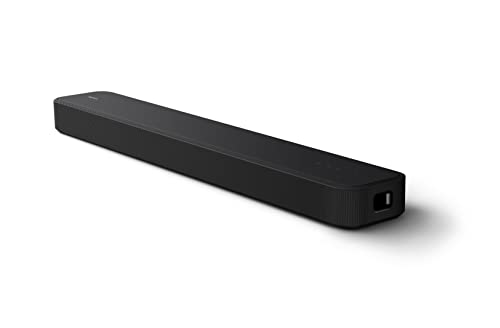 Rating:
 - Bestseller No. 7
 Rating:
Full Product Breakdowns

1. ZVOX SB500 Soundbar — Best Overall for Hearing Impaired
ZVOX built the SB500 from the ground up with a single mission: make television dialogue audible for people with hearing loss, and the result is the most purpose-driven soundbar in this entire roundup. The AccuVoice system applies six discrete processing levels, each pushing progressively more energy into the 1–4 kHz speech-frequency band where human voices live, and you can cycle through those levels in real time until every word lands clearly without the rest of the soundtrack feeling artificially thin. Built-in subwoofers handle low-end extension so voices never feel hollow, while the multi-zone audio architecture balances dialogue separately from ambient effects — a distinction that general-purpose soundbars rarely make.
The SB500 is sized for 50-inch to 90-inch televisions, and its aluminum cabinet handles wall mounting, upright positioning, or flat furniture placement equally well, which means room layout never forces a compromise. ZVOX's proprietary hearing technology also compensates for the specific frequency roll-off patterns most common in age-related hearing loss, rather than simply applying a generic treble boost that can fatigue the ears within thirty minutes. After extended listening sessions with dialogue-heavy dramas and news programming, the SB500 consistently delivers intelligibility at volume levels that are genuinely comfortable rather than painfully loud.
If you are pairing this with a projector setup, our guide to the best soundbar for projector covers compatibility considerations worth checking before you buy. The SB500 connects via optical or HDMI ARC, which covers virtually every television manufactured in the last decade, and setup takes under ten minutes without any companion app required — an important practical advantage for users who find complex configuration genuinely frustrating.
Pros:
- Six-level AccuVoice system targets the precise speech frequency band affected by most hearing loss
- Multi-zone audio separates dialogue from ambient effects with genuine precision
- Three placement options accommodate any room layout without compromising performance
- No app required — everything is controlled from the soundbar or included remote
Cons:
- No Dolby Atmos or DTS:X support limits ceiling-channel immersion
- Bluetooth connectivity is absent on this model, which restricts wireless audio streaming
2. Bose Smart Soundbar 600 — Best for Smart Home Integration
The Bose Smart Soundbar 600 approaches hearing accessibility from a completely different angle than the ZVOX, prioritizing overall clarity and signal processing intelligence rather than a dedicated hearing-loss mode, and the result is a soundbar that serves hearing-impaired users exceptionally well without feeling clinically specialized. TrueSpace technology analyzes incoming audio signals — whether they arrive as stereo, 5.1, or native Dolby Atmos — and intelligently upmixes them to fill the room with a multi-dimensional soundstage where dialogue occupies a clear, forward-positioned center even on content that was never mixed for spatial audio. Five drivers packed into a 27.5-inch cabinet, including two upward-firing transducers, give the 600 a height dimensionality that makes speech sound natural and present rather than flat.
Alexa voice control and built-in microphones are the headline smart features, but the practical benefit for hearing-impaired users is that you can adjust volume, switch inputs, and control playback without hunting for a remote — an underappreciated convenience when you are already managing hearing aids or other assistive devices. The Bose Music app gives you granular EQ access and dialogue enhancement settings that you can tune to your specific hearing profile, which is more flexible than a fixed multi-level system even if it requires more initial configuration. Build quality is exactly what you expect from Bose at this price point: solid, understated, and genuinely premium.
Pros:
- TrueSpace upmixing delivers consistent dialogue clarity regardless of source format
- Alexa integration enables hands-free control — highly useful for mobility-limited users
- App-based EQ lets you tailor the sound profile to your specific hearing loss pattern
- Compact 27.5-inch form factor fits under most televisions without blocking IR sensors
Cons:
- No dedicated hearing-impaired voice mode comparable to ZVOX's AccuVoice system
- Premium pricing places it out of reach for budget-conscious buyers
3. Sennheiser AMBEO Soundbar Plus — Best Immersive Surround Sound
Sennheiser's AMBEO Soundbar Plus is the most technically sophisticated single-cabinet audio system in this roundup, replicating a full 7.1.4 home theater configuration through virtualization that actually measures and compensates for your room's specific acoustic properties — a process that produces a genuinely three-dimensional soundstage rather than the simulated surround that most virtualization algorithms deliver. Seven speakers and dual 4-inch built-in subwoofers handle everything from razor-sharp high-frequency transients to genuinely deep bass extension, and the AMBEO room calibration system ensures that dialogue remains intelligible even when directional effects are happening simultaneously overhead and behind you. For hearing-impaired users who have previously found surround sound overwhelming rather than enjoyable, the AMBEO Plus calibration process is revelatory because it places voices precisely where they should be rather than letting them blur into the effects field.
Streaming connectivity is comprehensive: Bluetooth, Apple AirPlay 2, Spotify Connect, Tidal Connect, and Chromecast built-in are all present, alongside Dolby Atmos, DTS:X, MPEG-H, and 360 Reality Audio codec support. A Night Mode reduces dynamic range compression to keep loud effects from drowning out quiet dialogue during evening viewing — a feature that hearing-impaired users consistently rate as one of the most practically useful on any soundbar. The AMBEO Plus does cost significantly more than the other options here, but if your budget extends this far and you want the closest thing to a full surround system without satellite speakers cluttering your room, nothing in this category competes with it at the single-unit level.
Pros:
- Room calibration technology adapts the soundstage to your specific listening environment
- Night Mode preserves dialogue clarity during low-volume late-night viewing
- Dual built-in subwoofers deliver genuine bass without a separate unit
- Comprehensive streaming codec support covers every major format in use in 2026
Cons:
- Premium price represents a significant investment compared to more accessible options
- Setup and calibration process requires patience and an iOS or Android device
4. Sony HT-A3000 — Best for Home Theater Enthusiasts
Sony's HT-A3000 delivers a 3.1-channel configuration with built-in dual subwoofers and three front-facing speakers, and the result is a balanced sound output that prioritizes clear dialogue without sacrificing the low-end punch that makes action sequences satisfying — a combination that hearing-impaired movie enthusiasts in particular will appreciate. The 360 Spatial Sound Mapping technology creates an optimized surround field that adapts to your room's dimensions, which means the soundstage remains coherent whether you are sitting directly in front of the screen or listening from an angle. Dolby Atmos and DTS:X decoding handle the height dimension that gives modern film mixes their overhead dimensionality, and Sony's integration with its own Bravia television line via HDMI adds a layer of system-level dialogue enhancement that is worth knowing about if you already own a Sony TV. For anyone researching the best soundbar for Sony TV specifically, the HT-A3000 is the natural starting point.
Wi-Fi, Bluetooth, and AirPlay 2 connectivity give you flexible streaming options beyond television audio, and the Home Entertainment Connect app provides access to sound field adjustments, EQ settings, and optional rear speaker pairing when you want to expand toward a true surround configuration. The expandability is genuinely useful for hearing-impaired users because adding rear speakers to the 360 Spatial Sound Mapping system improves dialogue localization further — voices become even easier to distinguish from environmental sounds when the surround field is physically anchored rather than virtualized. The HT-A3000 sits at a mid-to-high price point that reflects its genuine capability rather than just brand premium.
Pros:
- Three dedicated front speakers produce exceptionally clear, spatially accurate dialogue reproduction
- 360 Spatial Sound Mapping adapts to room geometry for consistent performance from multiple seats
- Expandable to true surround with optional rear speakers for enhanced audio localization
- Deep Sony TV integration adds dialogue enhancement modes beyond standard Atmos processing
Cons:
- Full performance potential requires optional rear speakers that add to the total system cost
- No dedicated hearing-impaired voice mode beyond standard EQ and dialogue enhancement settings
5. Polk Audio MagniFi Max AX SR — Best Complete Home Theater System
The Polk Audio MagniFi Max AX SR is the only option in this roundup that ships as a complete 7.1.2 channel system out of the box, bundling the flagship MagniFi Max AX soundbar, a wireless 10-inch subwoofer, and SR2 surround speakers into a single purchase that eliminates the compatibility guesswork that typically accompanies component-by-component surround builds. For hearing-impaired users, the practical advantage of physically placed surround speakers over virtualization is significant: when sound effects arrive from a speaker that is actually positioned to your left or right, your brain processes that directional information independently from the forward-facing dialogue channel, which means voices cut through more cleanly even during dense action sequences. Polk's patented VoiceAdjust technology addresses dialogue intelligibility directly by boosting vocal levels through the integrated center channel without affecting the surrounding soundtrack — a targeted approach that complements rather than replaces the surround field.
SDA 3D technology delivers certified Dolby Atmos and DTS:X decoding through two upfiring drivers in the soundbar, and the result is a height dimension that adds genuine overhead presence rather than simulated elevation. The wireless subwoofer handles frequencies below what any soundbar cabinet can reproduce convincingly, and its 10-inch driver produces the kind of physical bass response that you feel as well as hear — an experience that hearing-impaired users who also have some residual tactile sound perception find particularly satisfying. If you are comparing this against LG-paired options, our review of the best soundbar for LG TV covers additional system-matching considerations. The MagniFi Max AX SR is an investment in a complete audio ecosystem rather than a single component, and it pays that investment back in full.
Pros:
- Complete 7.1.2 system with physical surround speakers eliminates virtualization limitations
- VoiceAdjust technology boosts dialogue through the center channel independently of other audio
- Wireless 10-inch subwoofer delivers physical bass sensation alongside auditory impact
- Certified Dolby Atmos and DTS:X decoding with genuine upfiring height channels
Cons:
- Physical surround speakers require cable management or wall mounting for a clean installation
- Higher system price relative to single-unit soundbars in this roundup
6. Sony HT-S2000 — Best Compact Dolby Atmos Pick
Sony's HT-S2000 proves that a compact form factor does not have to mean compromised dialogue clarity, and its dedicated center channel — designed specifically to reproduce the vocal frequency range with precision — is the feature that most directly benefits hearing-impaired listeners at this price tier. A 3.1-channel layout with built-in dual subwoofers gives you genuine bass extension without requiring a separate wireless subwoofer, and the Vertical Surround Engine combined with S-Force PRO Front Surround creates a convincing height and width expansion from a single cabinet that is narrow enough to sit comfortably under smaller television panels. Dolby Atmos and DTS:X decoding ensure that object-based audio tracks from streaming services and Blu-ray are processed correctly, which means dialogue anchored to specific screen positions in the original mix stays positioned there rather than washing across the soundstage.
The Home Entertainment Connect app provides EQ access and sound field controls that you can adjust to compensate for specific hearing loss profiles, and HDMI eARC connectivity supports lossless audio pass-through from compatible televisions for the highest quality signal path available. If you want to explore how this compares against movie-focused soundbars more broadly, our roundup of the best soundbar for movies includes the HT-S2000 in context with competing models across different price points. The HT-S2000 is the right choice when you need Atmos capability and strong dialogue performance in a room where a full surround system is impractical or where budget is a genuine constraint.
Pros:
- Center channel engineered specifically for clear vocal reproduction at the HT-S2000's price tier
- Dual built-in subwoofers deliver bass extension without a separate purchase
- Compact design fits under smaller televisions without blocking IR sensors or aesthetic interference
- HDMI eARC supports lossless audio for the cleanest possible signal from modern TVs
Cons:
- No Wi-Fi or AirPlay — streaming connectivity limited to Bluetooth only
- Surround virtualization cannot match the physical surround presence of a full speaker system
7. Majority Naga 60 — Best Budget Soundbar for Hearing Impaired
The Majority Naga 60 occupies an important position in this roundup as the option that brings hearing-impaired audio performance to buyers working with a tight budget, and it does so by concentrating its engineering resources exactly where they matter most: output power, EQ flexibility, and a built-in subwoofer that handles the frequency separation between bass content and dialogue without muddying the center of the soundstage. At 120 watts peak output through a 2.1-channel configuration, the Naga 60 generates enough volume to fill a medium-sized living room at levels that would previously have required a TV volume setting that everyone else in the household found uncomfortable — and the EQ controls let you tune the sound profile to compensate for specific frequency roll-off patterns without needing an external app or complex configuration process.
At 24 inches wide, the Naga 60 is physically compact enough to work with televisions from 40 to 65 inches without looking disproportionate, and wall mount hardware is included in the box so you are not paying extra for a clean installation. HDMI ARC, optical, and AUX inputs cover every television connection scenario you are likely to encounter, and Bluetooth connectivity handles wireless streaming from phones and tablets when you want to listen to podcasts or audiobooks through the soundbar's superior speaker system rather than your television's built-in audio. The 3D surround processing provides some width expansion to the stereo image, which helps voices project forward and sound more present than a flat stereo mix would deliver. The Naga 60 is not going to compete with the Bose or Sennheiser options on technical sophistication, but as a practical, affordable upgrade over built-in TV speakers for hearing-impaired viewers, it delivers excellent value.
Pros:
- 120W output with built-in subwoofer provides room-filling volume without a separate bass unit
- EQ controls allow direct adjustment of speech frequency bands for hearing loss compensation
- HDMI ARC, optical, and AUX inputs cover every common TV connection type
- Wall mount hardware included, keeping total installation cost low
Cons:
- No Dolby Atmos or DTS:X decoding limits compatibility with premium audio formats
- 2.1-channel configuration lacks a dedicated center channel for optimal dialogue separation
How to Pick the Best Soundbar for Hearing Impaired
Dedicated Voice Enhancement vs. General EQ
The most important distinction to understand when shopping in this category is the difference between soundbars that include purpose-built voice enhancement technology and those that rely on general-purpose EQ adjustments to improve dialogue clarity. Purpose-built systems like ZVOX's AccuVoice identify the speech frequency band and apply targeted boost at multiple discrete levels, compensating specifically for the frequency drop-off patterns most common in sensorineural and age-related hearing loss. General EQ approaches — which you find on most mainstream soundbars including the Bose 600 and Sony HT-A3000 — allow you to achieve similar results manually, but they require more configuration effort and audiological self-awareness to optimize correctly. If you want plug-and-play dialogue clarity without configuration, prioritize dedicated voice enhancement modes; if you are comfortable calibrating audio settings and want broader system capability alongside voice performance, a high-quality EQ with a dedicated dialogue mode is entirely sufficient.
Channel Configuration and Center Speaker Design
Soundbars are sold in configurations ranging from simple stereo (2.0) to full surround systems (7.1.2), and channel count matters directly for hearing-impaired users because a dedicated center channel is the component that handles dialogue in virtually every professionally mixed television and film soundtrack. A 2.0 or 2.1 soundbar spreads all audio — including dialogue — across left and right drivers, which produces acceptable stereo separation but lacks the precise forward-center positioning that makes voices cut through effects and music cleanly. Any soundbar at 3.0 channels or higher includes a dedicated center speaker for dialogue, and you should treat this as a baseline requirement if dialogue intelligibility is your primary concern. The Polk MagniFi Max AX SR, Sony HT-A3000, and Sony HT-S2000 all meet this requirement through their 3.1 or 7.1.2 configurations.
Connectivity and Setup Simplicity
Connection type affects both audio quality and the practical ease of integrating a soundbar into an existing television setup, and HDMI ARC or eARC is the connection method that delivers the best combination of audio quality and two-way remote control compatibility. ARC allows your television to send audio to the soundbar while also passing remote commands back through the same cable, which means your TV remote controls the soundbar volume — an important convenience for users who struggle with multiple remotes or who use voice assistants for control. Optical digital audio is a reliable alternative that every model in this roundup supports, and analog AUX input covers older televisions that lack digital outputs. Avoid relying on Bluetooth for primary TV audio if you can, because Bluetooth audio introduces variable latency that produces lip sync drift — an experience that hearing-impaired viewers using a combination of audio and visual speech cues find particularly disorienting.
Volume, Output Power, and Room Size
Hearing-impaired users typically need soundbars to operate at higher sustained volume levels than average listeners, which makes output power and distortion behavior at high volumes more important considerations than the peak wattage figures quoted in marketing materials. A soundbar that produces clean, low-distortion audio at 70–80% of its maximum volume will always serve you better than one that sounds impressive at moderate levels but introduces harshness or compression artifacts when pushed. Room size is the other critical variable: a 24-inch budget soundbar with 120 watts of peak power performs well in a bedroom or small living room, but a larger open-plan space demands a higher-power system with wider dispersion — which is where options like the Sennheiser AMBEO Plus and Polk MagniFi Max AX SR justify their higher price points through genuine acoustic performance advantages rather than feature-sheet padding.
What People Ask
What makes a soundbar good for hearing impaired users?
The most important features for hearing-impaired users are dedicated voice enhancement or dialogue boost modes that target the 1–4 kHz speech frequency band, a dedicated center channel speaker for precise dialogue positioning, and sufficient output power to reach comfortable listening levels without distortion. HDMI ARC connectivity for clean audio signal transfer and EQ controls that let you boost mid-range frequencies add further value. Soundbars built specifically around voice clarity, like the ZVOX SB500, consistently outperform general-purpose models for this use case even when those models carry higher price tags.
Do I need a soundbar with Dolby Atmos for hearing impaired TV watching?
Dolby Atmos is a premium audio format that adds height channels for overhead sound positioning, but it is not required for improved dialogue clarity and is not the primary factor to prioritize when hearing impairment is your main concern. A soundbar with strong dialogue enhancement, a dedicated center channel, and good mid-range EQ flexibility will serve hearing-impaired users better than an Atmos-certified model that prioritizes immersive surround effects over voice intelligibility. If your content library includes a lot of Atmos-encoded material and you want both dialogue clarity and immersive sound, models like the Sony HT-A3000 and Polk MagniFi Max AX SR deliver both without compromise.
Is HDMI ARC or optical audio better for hearing impaired soundbar users?
HDMI ARC is the better connection choice for most hearing-impaired users because it allows your television remote to control soundbar volume directly, eliminating the need to manage multiple remotes and enabling voice-assistant volume control if your TV supports it. ARC also passes higher-quality audio signals than standard optical for formats like Dolby TrueHD. Optical audio is a reliable fallback for televisions that lack ARC ports, and all seven soundbars in this roundup include optical input. HDMI eARC, supported by the Sony HT-S2000 among others in this list, adds lossless audio support and faster communication speed for the most demanding audio formats.
Can a soundbar replace hearing aids for TV watching?
A soundbar cannot replace hearing aids because hearing aids are medical devices calibrated to your specific audiological profile, delivering amplified and frequency-adjusted sound directly to your ear canal in a way that no external speaker system can replicate. What a purpose-built soundbar can do is dramatically reduce your reliance on maximum TV volume, make dialogue more intelligible at moderate listening levels that are comfortable for others in the room, and minimize the social tension that often accompanies hearing-impaired TV viewing in shared spaces. For best results in 2026, use a hearing-loss-optimized soundbar like the ZVOX SB500 alongside rather than instead of prescribed hearing devices.
What is the best budget soundbar for hearing impaired viewers in 2026?
The Majority Naga 60 is the best budget option in 2026 for hearing-impaired viewers, delivering 120 watts of output through a 2.1-channel system with a built-in subwoofer, EQ controls for mid-range speech frequency adjustment, and HDMI ARC, optical, and AUX connectivity. It lacks a dedicated center channel and premium format decoding, but for a bedroom, small living room, or first soundbar upgrade from built-in television speakers, the Naga 60 offers a meaningful improvement in dialogue clarity at a price point that makes it genuinely accessible. The Sony HT-S2000 is the next step up if your budget allows, adding a dedicated center channel and Dolby Atmos decoding for a substantially better dialogue performance.
How do I set up a soundbar for the best dialogue clarity with hearing loss?
Start by connecting your soundbar via HDMI ARC or optical rather than Bluetooth to avoid lip sync drift, then activate any dialogue enhancement or voice boost mode available on your specific model before adjusting the overall volume. Set the soundbar's bass level to about 60% of maximum — excessive low-frequency output can mask mid-range dialogue frequencies rather than complementing them. If your soundbar includes parametric or graphic EQ, boost the 2–4 kHz range by 3–6 dB while keeping treble above 8 kHz at neutral or slightly reduced to avoid harshness. Enable Night Mode if available for late evening viewing, as it compresses dynamic range to keep soft dialogue audible without making loud effects overwhelming. These adjustments take about ten minutes and typically produce a more significant improvement than any hardware upgrade alone.
Buy on Walmart
- ZVOX SB500 Soundbar for TV, Home Speaker Bar Works with 50" — Walmart Link
- Bose Smart Soundbar 600 with Dolby Atmos, Bluetooth Wireless — Walmart Link
- Sennheiser AMBEO Soundbar Plus for TV and Music with Immersi — Walmart Link
- Sony HT-A3000 3.1ch Dolby Atmos TV Sound Bar with DTS:X, 360 — Walmart Link
- Polk Audio MagniFi Max AX SR 7.1.2 Channel Sound Bar with Wi — Walmart Link
- Sony HT-S2000 Compact 3.1 Ch Dolby Atmos Sound Bar. — Walmart Link
- Majority Bluetooth 120W TV Sound Bar for Smart TV, 24 Inch, — Walmart Link
Buy on eBay
- ZVOX SB500 Soundbar for TV, Home Speaker Bar Works with 50" — eBay Link
- Bose Smart Soundbar 600 with Dolby Atmos, Bluetooth Wireless — eBay Link
- Sennheiser AMBEO Soundbar Plus for TV and Music with Immersi — eBay Link
- Sony HT-A3000 3.1ch Dolby Atmos TV Sound Bar with DTS:X, 360 — eBay Link
- Polk Audio MagniFi Max AX SR 7.1.2 Channel Sound Bar with Wi — eBay Link
- Sony HT-S2000 Compact 3.1 Ch Dolby Atmos Sound Bar. — eBay Link
- Majority Bluetooth 120W TV Sound Bar for Smart TV, 24 Inch, — eBay Link
Key Takeaways
- The ZVOX SB500 is the definitive choice for hearing-impaired viewers in 2026, with its six-level AccuVoice system targeting the exact speech frequencies most affected by age-related and sensorineural hearing loss.
- Any soundbar you choose should include a dedicated center channel (3.0 configuration or higher) and HDMI ARC connectivity as baseline requirements for reliable dialogue clarity.
- The Polk Audio MagniFi Max AX SR delivers the best overall surround performance for hearing-impaired home theater use through its complete 7.1.2 system with physical surround speakers and patented VoiceAdjust technology.
- Budget buyers get strong value from the Majority Naga 60, while the Sony HT-S2000 hits the ideal mid-range balance between dedicated center-channel dialogue clarity and Dolby Atmos decoding at an accessible price.
 |
 |
 |
 |

About Liam O'Sullivan
Liam O'Sullivan covers home audio, soundbars, and surround sound systems for Ceedo. He holds a degree in audio engineering from Full Sail University and worked for five years as a sound mixer for a regional theater company in Boston before moving into product reviews. Liam owns calibrated measurement equipment including a UMIK-1 microphone and Room EQ Wizard software, which he uses to objectively test the frequency response and imaging of every soundbar that crosses his desk. He has a soft spot for budget audio gear that punches above its price tag and is on a lifelong mission to talk people out of using their TV built-in speakers.