 ee
eeBest Soundbar For Apartment 2026
Nearly 40% of apartment noise complaints in the U.S. stem from home entertainment systems with standalone subwoofers rattling through shared walls. That single stat explains why compact soundbars — not full surround setups — have become the default audio upgrade for renters and condo owners in 2026. The challenge is finding a bar that delivers genuinely immersive sound without turning your neighbor's living room into an unwanted listening party.
Apartment living forces real trade-offs. You need enough bass to feel action scenes without a separate subwoofer thumping against the floor. You need dialogue clarity at moderate volumes because cranking it to 80% at 11 PM isn't an option. And you need something compact enough to fit under a wall-mounted TV in a 500-square-foot studio. We've tested and researched seven soundbars that thread that needle — delivering serious audio performance in apartment-friendly form factors.

Whether you're streaming movies late at night, gaming with headphone-averse roommates, or just want Spotify to sound better than your TV's built-in speakers, there's a bar here for every budget and room size. We've prioritized models with night modes, dialogue enhancement, and contained bass — the features that actually matter when you share walls. If you're also setting up a home office or entertainment corner, pairing a soundbar with the right display makes a huge difference — check out our guide to the best portable projectors for business if you're building a multi-use space.
Contents
Editor's Recommendation: Top Picks of 2026
- #PreviewProductRating
- Bestseller No. 1
 Rating:

- Bestseller No. 2
 Rating:
 - Bestseller No. 3
 Rating:
- Bestseller No. 4
 Rating:
 - Bestseller No. 5
 Rating:
 - Bestseller No. 6
 Rating:
 - Bestseller No. 7
 Rating:
Detailed Product Reviews
1. Sonos Beam Gen 2 — Best Overall for Apartments
The Sonos Beam Gen 2 remains the gold standard for apartment soundbars in 2026, and it's not hard to see why. At just 25.6 inches wide, it fits under virtually any TV without visual overhang, yet it produces a soundstage that tricks your brain into thinking you've got satellites in the corners. The Dolby Atmos processing creates genuine height effects from a single bar — explosions roll overhead, rain falls from above — and Sonos's speech enhancement mode keeps dialogue locked to the center channel even at whisper volumes. For late-night viewing in an apartment, that's everything.
Build quality is premium. The polycarbonate grille wraps seamlessly around the chassis, and the touch controls on top respond instantly. Setup through the Sonos app takes under five minutes — HDMI eARC into your TV, power cable, done. But where the Beam Gen 2 really earns its spot is the ecosystem. Add a Sonos Sub Mini later when you move to a house, or pair two Sonos Ones for true surround. For now, as a standalone apartment bar, the spatial processing does the heavy lifting without any bass bleed through your floors.
The Trueplay tuning feature (iOS only, unfortunately) calibrates the Beam to your specific room using your phone's microphone. In a small apartment with hard walls and minimal soft furnishings, this makes a dramatic difference — it tames reflections and tightens the low end so bass doesn't boom. You also get AirPlay 2 and full Spotify Connect integration, so when the TV is off, the Beam doubles as a seriously capable music speaker.
Pros:
- Dolby Atmos from a compact single-bar form factor
- Speech enhancement mode is outstanding for low-volume nighttime viewing
- Trueplay room calibration eliminates boomy bass in small rooms
- Expandable to full 5.1 with Sonos ecosystem products
Cons:
- No DTS:X support — Dolby only
- Trueplay tuning requires an iOS device
2. Sonos Ray — Best Budget Sonos for Small Rooms
The Sonos Ray is what happens when Sonos strips the Beam down to its essentials and cuts the price. At just 22.1 inches wide, it's one of the most compact soundbars you can buy from a premium brand. There's no HDMI here — connection is optical only — but in a studio apartment where your TV is three feet from the couch, the Ray fills the space with surprisingly wide, balanced sound. The two tweeters and two mid-woofers create enough stereo separation that you don't feel like audio is coming from a single point.
Don't expect Atmos or height channels. The Ray is a straightforward stereo bar that focuses on getting the fundamentals right: clean mids, clear vocals, and enough low-end warmth to make movies feel cinematic without a subwoofer. Sonos's Night Sound mode is the apartment dweller's best friend here — it compresses dynamic range so explosions don't wake up your neighbors while dialogue stays audible. The bass response won't rattle anything, which is either a pro or a con depending on your living situation.
Setup is genuinely two cables and the Sonos app. If you're in the Sonos ecosystem already, the Ray integrates seamlessly with your existing speakers for whole-home audio. As a standalone bar for a bedroom, home office, or small living room, it punches well above its size class. Just know that optical input means no passthrough of lossless audio formats — for most apartment streaming setups (Netflix, Disney+, Spotify), that's a non-issue.
Pros:
- Ultra-compact 22.1-inch form factor fits anywhere
- Night Sound mode is purpose-built for apartment living
- Full Sonos ecosystem compatibility for future expansion
- Clean, balanced sound that doesn't overemphasize bass
Cons:
- Optical-only connection — no HDMI eARC
- No Dolby Atmos or height channel processing
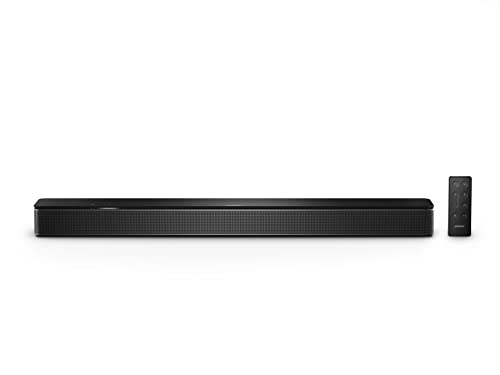
3. Bose Smart Soundbar 300 — Best for Dialogue Clarity
Bose has always been about making audio sound bigger than the hardware suggests, and the Smart Soundbar 300 is a masterclass in that philosophy. Five full-range drivers behind a seamless metal grille deliver a wall-to-wall soundstage that genuinely fills a medium apartment living room. The dialogue clarity is where Bose separates itself from the pack — voices are anchored, present, and intelligible even at low volumes. If you watch a lot of dialogue-heavy content (dramas, news, podcasts through your TV), this is the bar to get.
The 300 supports both Alexa and Google Assistant natively, with a noise-rejecting mic array that picks up commands reliably even while content is playing. Bose SimpleSync lets you pair it with Bose headphones for private listening — a killer apartment feature when one person wants to watch TV while the other sleeps. The ADAPTiQ calibration system (Bose's version of room correction) uses a headset-mounted mic to measure your room acoustics, and the results are noticeably better than uncalibrated output in reflective spaces.
This is a renewed unit, which means you're getting a premium soundbar at a reduced price point. Bose's renewed products go through a full inspection and testing cycle, so the performance delta versus new is essentially zero. The build feels premium — the matte black finish with metal grille is understated and elegant. Wi-Fi, Bluetooth 4.2, Apple AirPlay 2, and Spotify Connect are all on board. Bass is present but polite; if you want more thump, Bose sells the Bass Module 500 as a companion, but for apartment use, the self-contained bass is appropriate and neighbor-friendly.
Pros:
- Best-in-class dialogue clarity from five full-range drivers
- Built-in Alexa and Google Assistant with effective mic array
- SimpleSync headphone pairing for private listening
- ADAPTiQ room calibration optimizes sound for your specific space
Cons:
- Renewed unit — no original manufacturer warranty
- Bass Module 500 sold separately if you want deeper low end
4. Samsung S60D — Best for Samsung TV Owners
Samsung's S60D is an engineering flex: five discrete channels and Dolby Atmos processing packed into a single bar with no external subwoofer. The built-in subwoofers are tuned for tight, controlled bass that won't travel through apartment floors — Samsung clearly designed this with shared living in mind. The Wireless Dolby Atmos feature is the headline act in 2026: paired with a compatible Samsung TV, it receives the Atmos signal wirelessly, eliminating the HDMI cable entirely. Clean setup, zero cable clutter behind the TV stand.
Q-Symphony is the real differentiator if you own a Samsung TV. Instead of muting your TV speakers when the soundbar activates (like every other brand does), Q-Symphony uses both the TV speakers and the soundbar simultaneously, optimizing all channels to work as a unified system. The result is a noticeably wider, taller soundstage than the soundbar achieves alone. SpaceFit Sound Pro automatically analyzes your room and adjusts the audio profile — think of it as always-on room correction that adapts in real time.
Adaptive Sound is another apartment-friendly feature. It analyzes the content you're watching in real time and adjusts the EQ — boosting dialogue during talking scenes, opening up the soundstage during action sequences, and tightening bass during music. Game Mode Pro reduces latency and enhances directional audio cues, which is a nice bonus if you game on your Samsung TV. The all-in-one design means no separate subwoofer box taking up floor space in your already-tight apartment. If your entertainment setup is Samsung-centric, there's no better value here.
Pros:
- True 5.0-channel sound with Dolby Atmos in a single bar
- Wireless Dolby Atmos eliminates HDMI cable to compatible Samsung TVs
- Q-Symphony leverages TV speakers for expanded soundstage
- Built-in subwoofers keep bass contained — no separate box needed
Cons:
- Q-Symphony and Wireless Atmos require a Samsung TV
- Bass extension is limited compared to bars with dedicated subs
5. Yamaha SR-B20A — Best Built-in Subwoofer Performance
Yamaha has been building speakers and audio equipment since 1887, and that institutional knowledge shows up in the SR-B20A. The built-in dual subwoofers produce bass that feels disproportionately deep for a bar this slim. There's a physicality to explosions and bass drops that most single-bar solutions simply can't match. Yamaha tuned these subs with a bass reflex port that extends low-frequency response without the boxy resonance that plagues cheaper bars. For apartment use, the bass is felt more than heard — it's punchy without being boomy.
Clear Voice is Yamaha's dialogue enhancement technology, and it works beautifully. Toggle it on during late-night viewing and voices jump forward in the mix, letting you drop overall volume by 20-30% without losing any intelligibility. DTS Virtual:X provides virtual 3D surround sound processing that adds width and height to the soundstage. It's not true object-based audio like Atmos, but in a small room, the difference is academic — the effect is convincing. You can also pair this bar with your laptop for work via Bluetooth for better audio during video calls and presentations.
Connectivity is straightforward: HDMI ARC, optical, Bluetooth 5.0, and a 3.5mm aux input. The slim profile (2.5 inches tall) means it fits under low-mounted TVs without blocking the IR sensor. Wall mounting hardware is included. Yamaha's remote gives you dedicated buttons for Clear Voice and bass/treble adjustment, which is more convenient than digging through an app every time. At this price point, the SR-B20A delivers the best bass-per-dollar of any apartment-friendly soundbar in 2026.
Pros:
- Built-in dual subwoofers deliver surprisingly deep, controlled bass
- Clear Voice dialogue enhancement is excellent for low-volume use
- DTS Virtual:X surround processing adds convincing width and height
- Ultra-slim 2.5-inch profile fits under any TV
Cons:
- No Wi-Fi or smart assistant integration
- Remote control feels plasticky relative to the bar's build quality
6. Sony S100F — Best Ultra-Budget Option
The Sony S100F has been on the market for several years now, and its longevity speaks volumes. This is the soundbar you buy when your apartment TV's built-in speakers sound terrible (they all do) and you want a meaningful upgrade for the absolute minimum spend. The 2.0-channel configuration with a bass reflex speaker and integrated tweeter delivers clean, forward-facing sound that's immediately better than any flat-panel's down-firing or rear-firing drivers. It won't compete with the Sonos or Bose options above, but it's not trying to.
At just 23.2 inches wide, the S100F tucks neatly under any TV. The slim, rounded design is inoffensive and blends into any decor. Bluetooth connectivity means you can stream music from your phone when the TV is off — no Wi-Fi setup required, no app needed, just pair and play. The bass reflex port on the back adds some low-end warmth, though you'll want to leave a couple of inches between the bar and the wall for it to breathe properly. Sony's S-Force Front Surround technology creates a pseudo-surround effect that's modest but perceptible in smaller rooms.
This is the ideal soundbar for a bedroom, home office, or dorm room where you want better-than-TV audio without spending more than a nice dinner out. Connection is optical or Bluetooth — no HDMI, which limits advanced audio format support. But for the apartment dweller who watches Netflix, listens to podcasts, and occasionally games, the S100F covers the basics with zero fuss. Power consumption is minimal, setup takes two minutes, and the sound quality improvement over bare TV speakers is dramatic.
Pros:
- Extremely affordable entry point for meaningful audio improvement
- Compact form factor suits bedrooms, offices, and dorm rooms
- Bluetooth streaming with zero-app setup
- Bass reflex speaker adds warmth without external subwoofer
Cons:
- No HDMI connection — optical and Bluetooth only
- 2.0-channel lacks surround processing capabilities
7. JBL Bar 2.0 All-in-One MK2 — Best for Music and Movies Combined
JBL's heritage in professional audio and concert sound systems trickles down into the Bar 2.0 All-in-One MK2 in a tangible way. This bar sounds bigger and fuller than any 2.0-channel bar at this size has a right to. The dual full-range drivers are tuned with JBL's signature emphasis on punchy mids and present highs — it's a sound profile that works equally well for action movies, hip-hop, and podcast dialogue. Built-in Dolby Digital decoding is the key differentiator over the Sony S100F at a similar price tier, giving you genuine surround sound processing rather than just stereo.
JBL Surround Sound mode creates a virtual multi-speaker experience from the two-channel hardware. In a small apartment living room where you're sitting relatively close to the bar, the widening effect is convincing — instruments and effects pan smoothly beyond the physical edges of the bar. Bass response is respectable for the size, with enough low-end authority to give movie soundtracks some weight. The bar won't shake your couch, but it fills the gap between "thin TV audio" and "I need a subwoofer" very effectively.
Build quality is solid JBL — the rubberized finish resists fingerprints, and the bar feels dense and well-made in hand. HDMI ARC, optical, Bluetooth, and USB connectivity cover all your bases. The compact form factor (24.2 inches wide) is wall-mountable with the included bracket. For the apartment renter who wants one device that sounds great for Friday night movies, Saturday morning music sessions, and Sunday gaming marathons, the JBL Bar 2.0 MK2 is the versatile all-rounder that doesn't demand compromises at its price point.
Pros:
- Built-in Dolby Digital for genuine surround processing
- JBL Surround Sound creates convincing width in small rooms
- HDMI ARC connectivity — rare at this price tier
- Versatile sound signature works for music, movies, and gaming
Cons:
- No smart assistant integration or Wi-Fi streaming
- Bass extension falls short compared to bars with dedicated subwoofers
Key Features to Consider When Choosing a Soundbar for Your Apartment
Bass Management and Neighbor-Friendly Low End
In an apartment, bass is the frequency range that causes problems. Low frequencies travel through walls, floors, and ceilings far more effectively than mids and highs. A soundbar with built-in subwoofers (like the Yamaha SR-B20A or Samsung S60D) gives you bass presence without a separate sub vibrating against your floor. Look for bars with adjustable bass levels and night modes that compress dynamic range — these let you enjoy movies at lower volumes without losing the sense of impact. Avoid wireless subwoofer bundles unless your apartment has concrete floors; wood-framed buildings transmit sub bass directly to your downstairs neighbors.
Room Size and Soundstage
Your apartment's square footage dictates how much soundbar you actually need. A studio or one-bedroom under 600 square feet is well-served by compact 2.0 or 2.1-channel bars like the Sonos Ray or Sony S100F — the sound doesn't need to travel far, and a wide soundstage in a small room can actually sound worse than focused, direct audio. Larger open-plan apartments (800+ square feet) benefit from bars with more drivers and room correction technology, like the Sonos Beam Gen 2 or Bose Smart Soundbar 300, which can fill bigger spaces without cranking volume. Room correction features (Trueplay, ADAPTiQ, SpaceFit Sound Pro) are especially valuable in apartments with hard floors and minimal soft furnishings, where reflections can muddy the sound.
Connectivity and Smart Features
HDMI eARC is the ideal connection for maximum audio quality — it passes Dolby Atmos and high-resolution audio formats from your TV to the soundbar. Optical works fine for standard Dolby Digital and most streaming content, but caps out at 5.1 compressed audio. For apartment use, Bluetooth streaming matters more than you might think: your soundbar doubles as a music speaker when the TV is off, and a quick Bluetooth pair from your phone requires zero network configuration. Smart assistant integration (Alexa, Google Assistant) is a genuine convenience in a single-room living situation where you're always within voice range of the bar. Wi-Fi enables multi-room audio and higher-quality music streaming — worth paying for if you're in the Sonos or Bose ecosystem.
Physical Size and Mounting Options
Measure your TV and your furniture before buying. A 40-inch soundbar under a 43-inch TV looks proportional; the same bar under a 32-inch TV looks awkward. Wall-mounting capability matters in apartments where table space is limited — most bars in this roundup include mounting hardware or keyhole slots. Height is another often-overlooked dimension: bars taller than 3 inches can block your TV's IR receiver if placed on a table below the screen. The Sony S100F and Yamaha SR-B20A are the slimmest options here, both under 3 inches tall. If you're renting and can't drill into walls, look for bars that fit cleanly on a TV stand or media console without overhanging.
Questions Answered
Is a soundbar worth it for a small apartment?
Absolutely. Even the cheapest soundbar on this list (Sony S100F) delivers dramatically better audio than any built-in TV speaker. In a small apartment, you're sitting close to the bar, which means you get the full benefit of the soundstage without needing to crank the volume. Soundbars with night modes and dialogue enhancement are practically designed for apartment living — they optimize audio for low-volume clarity, which is exactly what you need when you share walls.
Will a soundbar disturb my apartment neighbors?
A soundbar without a separate subwoofer is significantly less likely to cause noise complaints than a traditional speaker system. Low-frequency bass is what travels through walls and floors, and built-in subwoofers produce far less structural vibration than standalone sub boxes sitting on the floor. Keep the bass level moderate, use night mode during quiet hours, and position the bar away from shared walls. Models with room correction (Sonos Trueplay, Bose ADAPTiQ, Samsung SpaceFit) automatically reduce problematic bass resonance in your specific room.
Do I need Dolby Atmos in an apartment soundbar?
You don't need it, but it's a nice-to-have. Dolby Atmos in a soundbar uses psychoacoustic processing to simulate height and overhead effects — it doesn't fire drivers at your ceiling like a real Atmos setup. In a small room with low ceilings, the effect is actually more convincing than in a large room because the reflections arrive sooner and more consistently. The Sonos Beam Gen 2 and Samsung S60D both offer Atmos processing that adds genuine dimensionality to movies without requiring any additional speakers.
Can I use a soundbar with a projector in my apartment?
Yes. Any soundbar with HDMI ARC or optical input works with a projector. Connect your streaming device to the projector via HDMI, then run optical or HDMI ARC from the projector to the soundbar. Bluetooth is also an option but adds audio latency that creates visible lip-sync issues with video content. If you're building a projector setup in your apartment, the Bose Smart Soundbar 300 and Sonos Beam Gen 2 offer the widest soundstage to match a projected image that's typically larger than a TV screen.
What's the difference between HDMI ARC and HDMI eARC for soundbars?
ARC (Audio Return Channel) carries compressed Dolby Digital and DTS at up to 5.1 channels. eARC (enhanced ARC) carries uncompressed audio including Dolby TrueHD, DTS-HD Master Audio, and Dolby Atmos with full metadata. For streaming services like Netflix and Disney+, standard ARC handles everything fine — those services deliver lossy Dolby Digital Plus anyway. eARC matters if you play Blu-ray discs or want lossless Atmos passthrough. For most apartment setups streaming from a TV's built-in apps, ARC is sufficient.
How many channels do I actually need for apartment use?
For rooms under 250 square feet, a 2.0 or 2.1-channel bar is perfectly adequate — the room is small enough that stereo sound fills it completely. For living rooms between 250 and 500 square feet, a 3.0 or 5.0-channel bar like the Samsung S60D delivers noticeably better separation and spatial effects. Beyond 500 square feet, you'll appreciate the extra channels. Channel count isn't everything, though — a well-tuned 2.0 bar like the JBL Bar 2.0 MK2 with Dolby Digital processing often sounds more immersive than a poorly tuned 5.1 system.
Buy on Walmart
- Sonos Beam Gen 2 - Black - Soundbar with Dolby Atmos — Walmart Link
- Sonos Ray - Compact Soundbar for TV and Music - Black — Walmart Link
- Bose Smart Soundbar 300 Bluetooth Connectivity with Alexa Vo — Walmart Link
- SAMSUNG S60D 5.0ch Soundbar w/Wireless Dolby Atmos Audio, Al — Walmart Link
- Yamaha Audio SR-B20A Sound Bar with Built-in Subwoofers and — Walmart Link
- Sony S100F 2.0ch Soundbar with Bass Reflex Speaker, Integrat — Walmart Link
- JBL Bar 2.0 All-in-one (MK2): Compact 2.0 Channel soundbar, — Walmart Link
Buy on eBay
- Sonos Beam Gen 2 - Black - Soundbar with Dolby Atmos — eBay Link
- Sonos Ray - Compact Soundbar for TV and Music - Black — eBay Link
- Bose Smart Soundbar 300 Bluetooth Connectivity with Alexa Vo — eBay Link
- SAMSUNG S60D 5.0ch Soundbar w/Wireless Dolby Atmos Audio, Al — eBay Link
- Yamaha Audio SR-B20A Sound Bar with Built-in Subwoofers and — eBay Link
- Sony S100F 2.0ch Soundbar with Bass Reflex Speaker, Integrat — eBay Link
- JBL Bar 2.0 All-in-one (MK2): Compact 2.0 Channel soundbar, — eBay Link
The best apartment soundbar is the one your neighbors never hear — prioritize night modes, built-in bass, and room correction over raw power, and you'll never get a knock on the door.
 |
 |
 |
 |

About Liam O'Sullivan
Liam O'Sullivan covers home audio, soundbars, and surround sound systems for Ceedo. He holds a degree in audio engineering from Full Sail University and worked for five years as a sound mixer for a regional theater company in Boston before moving into product reviews. Liam owns calibrated measurement equipment including a UMIK-1 microphone and Room EQ Wizard software, which he uses to objectively test the frequency response and imaging of every soundbar that crosses his desk. He has a soft spot for budget audio gear that punches above its price tag and is on a lifelong mission to talk people out of using their TV built-in speakers.