 ee
eePrinters ›
Best Duplex Printer 2026
The average office worker prints around 10,000 pages per year — and without automatic duplex printing, that's 10,000 extra sheets of paper wasted on single-sided output. If you're still manually flipping pages to print both sides, you're losing time, money, and desk space every single day. In 2026, duplex printing isn't a premium feature — it's the baseline for any printer worth buying.
Choosing the right duplex printer for your home office, small business, or workgroup comes down to more than just a checkbox. You need to think about ink versus laser technology, color versus monochrome output, print speed, paper capacity, and total cost of ownership over time. A printer that costs $150 upfront but charges you $40 per ink cartridge will drain your budget fast. The options on this list were selected with all of that in mind — speed, reliability, running costs, and real-world usability.
Whether you're printing contracts, school projects, marketing brochures, or invoices, there's a duplex printer here that fits your workflow. These are the best duplex printers available right now, tested against what actually matters to everyday users. If you're also looking for budget-friendly options, check out our Best Cheap Printer guide for more entry-level picks.

Contents
- Best Choices for 2026
- Detailed Product Reviews
- HP OfficeJet Pro 9125e — Best for Office Color Printing
- Epson EcoTank ET-4850 — Best for Low Running Costs
- HP LaserJet Pro M404dw — Best Fast Monochrome Laser
- Brother HL-L2460DW — Best Compact Home Office Laser
- Canon imageCLASS MF743Cdw — Best Color Laser All-in-One
- Epson WorkForce Pro WF-7840 — Best Wide-Format Duplex
- Brother MFC-L8900CDW — Best High-Volume Workgroup Laser
- Buying Guide
- What People Ask
- Key Takeaways
Best Choices for 2026
- #PreviewProductRating
- Bestseller No. 1
 Rating:

- Bestseller No. 2
 Rating:
- Bestseller No. 3
 Rating:
- Bestseller No. 4
 Rating:
 - Bestseller No. 5
 Rating:
 - Bestseller No. 6
 Rating:
 - Bestseller No. 7
 Rating:
Detailed Product Reviews
1. HP OfficeJet Pro 9125e — Best for Office Color Printing
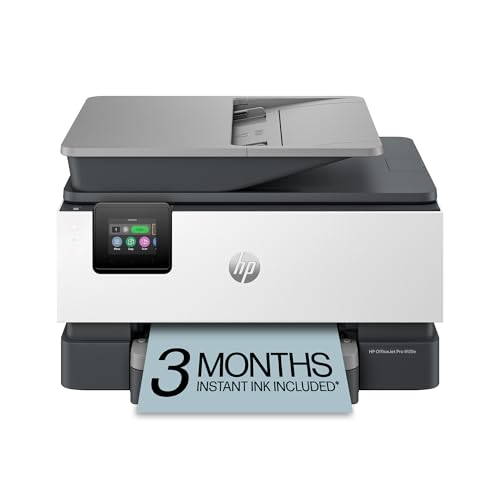
The HP OfficeJet Pro 9125e is one of the most capable color inkjet printers you can put in a professional office environment in 2026. Hitting up to 22 pages per minute in black and 18 ppm in color, it handles real workloads without bogging down mid-job. The 250-sheet input tray means you're not constantly refilling paper, and the auto document feeder speeds up multi-page scan, copy, and fax jobs significantly. This is a machine built for volume without requiring a laser-level budget.
What sets the 9125e apart from older OfficeJet models is HP's AI-powered print intelligence. When you print a web page or email, the AI layer strips out clutter — banners, navigation menus, irrelevant sidebars — and reformats the output so you don't waste pages on garbage. That sounds like a minor feature until you've watched a 3-page recipe print as 9 pages of ads. The auto 2-sided printing and scanning come standard, and HP's Instant Ink subscription (3-month trial included) can dramatically cut per-page costs if you print consistently. Connectivity covers Wi-Fi, Ethernet, USB, and mobile printing via the HP Smart app.
The ink cost without a subscription plan is the main thing to watch. HP's cartridge pricing can sting if you print heavy volumes month-to-month without an ink plan. But for offices that print moderate to high volumes of color documents — presentations, proposals, client-facing brochures — the 9125e is a standout performer. The print quality on glossy paper is genuinely impressive for an inkjet at this price point.
Pros:
- Fast print speeds: 22 ppm black, 18 ppm color
- HP AI trims web and email prints to eliminate wasted pages
- Auto duplex print and scan, ADF, fax all included
- 3-month Instant Ink trial significantly reduces ink costs
Cons:
- Ink costs can be high without a subscription plan
- Color printing quality slightly below dedicated photo printers
2. Epson EcoTank ET-4850 — Best for Low Running Costs
If running costs are your primary concern, the Epson EcoTank ET-4850 is the printer that changes the math entirely. Instead of expensive cartridges, it uses large refillable ink tanks that come pre-filled with enough ink for thousands of pages. According to Epson, the included ink bottles cover up to 7,500 pages in black and 6,000 pages in color. That's a massive upfront-value proposition — you pay more for the printer itself, but your per-page cost drops dramatically compared to cartridge-based machines over the long run.
Print quality tops out at 4800 x 1200 dpi, which delivers sharp text and vivid color output for documents, school projects, and light photo printing. Speeds land at 15.5 ppm black and 8.5 ppm color — not the fastest on this list, but more than adequate for a home office or small team. The ET-4850 handles print, scan, copy, and fax, includes an ADF for multi-page documents, and connects via Wi-Fi, Ethernet, USB, and mobile apps including the Epson Smart Panel. The Scan to Cloud feature is particularly useful if your workflow involves cloud document management.
Where the ET-4850 makes total sense is for families, home offices, and small businesses that print frequently enough to justify the hardware cost but want to stop paying cartridge prices every month. The ink tanks are mess-free to refill, and Epson's cartridge-free system has proven reliable across millions of installs. If you also handle large document scanning, take a look at our Best Cheap Document Scanners 2026 guide for dedicated scanner alternatives.
Pros:
- Extremely low per-page ink costs with refillable supertanks
- Included ink covers thousands of pages right out of the box
- 4800 x 1200 dpi for sharp, vivid output
- Full all-in-one: print, scan, copy, fax with ADF and Ethernet
Cons:
- Higher upfront purchase price than cartridge printers
- Color print speed (8.5 ppm) is slower than laser competitors
3. HP LaserJet Pro M404dw — Best Fast Monochrome Laser
When you need to print fast and print a lot, monochrome laser is still the gold standard — and the HP LaserJet Pro M404dw is one of the best in class. At up to 40 pages per minute, it outpaces virtually every inkjet on this list by a significant margin. The 250-sheet input tray keeps paper flowing, automatic 2-sided printing reduces paper costs, and the first-page-out time is fast enough that you don't sit waiting after sending a job. This is a workhorse built for business environments where the printer needs to keep up with demand without babysitting.
Security is a genuine differentiator here. HP Wolf Pro Security is baked into the hardware, firmware, and operating system — not just a software add-on. For businesses handling sensitive documents, contracts, or client data, that matters. The printer actively detects and prevents firmware attacks, which is a real concern that most people overlook when buying office equipment. Printer security vulnerabilities are a documented attack vector in corporate environments, and HP's approach here is among the most rigorous in the consumer-business segment.
Connectivity covers built-in Wi-Fi, Ethernet, and USB. The M404dw works with HP Smart app, Apple AirPrint, Google Cloud Print alternatives, and direct wireless printing. It's a printer-only unit — no scanner or copier — so if you need those functions, look at the OfficeJet Pro 9125e or the Brother MFC options further down. But for pure high-speed monochrome printing with rock-solid security, this is the pick.
Pros:
- Blazing 40 ppm print speed for fast-paced office environments
- HP Wolf Pro Security protects hardware and firmware from attacks
- Built-in Wi-Fi and Ethernet for flexible network deployment
- Low per-page cost with high-yield toner cartridge options
Cons:
- Monochrome only — no color printing capability
- No scanner, copier, or fax — printer only
4. Brother HL-L2460DW — Best Compact Home Office Laser
The Brother HL-L2460DW is the compact laser printer that home offices and small teams have been waiting for. It fits on a desk without dominating the room, prints at up to 36 pages per minute, and includes automatic duplex printing as a standard feature — not an optional add-on. The dual-band wireless support (both 2.4GHz and 5GHz) is a genuinely useful specification: connecting to a 5GHz network reduces wireless interference in busy office environments, which translates directly to fewer dropped print jobs and faster wireless transfer speeds.
The Brother Mobile Connect app gives you remote management from your phone — track toner levels, order supplies, and print from anywhere without needing to be at your desk. The printer also works with Alexa for voice-command control, which is either a nice convenience or an irrelevant novelty depending on your setup. What's not irrelevant is the Refresh Subscription trial included with purchase: Brother's automatic toner replenishment service ships new cartridges before you run out, eliminating that frustrating moment when the toner dies mid-print job.
This isn't an all-in-one — the HL-L2460DW is a dedicated printer without scanning or copying. That's the right trade-off for users who already have a flatbed scanner or dedicated scanning solution and just need reliable, fast, affordable black-and-white printing. Brother's laser printers consistently rank among the most dependable on the market for long-term reliability. If you need a full all-in-one at a similar compact footprint, consider the Brother MFC-L8900CDW reviewed below for color capability.
Pros:
- Compact footprint fits easily on a home office desk
- 36 ppm print speed with automatic duplex printing standard
- Dual-band Wi-Fi (2.4GHz/5GHz) reduces wireless interference
- Works with Alexa and includes Brother's Refresh Subscription trial
Cons:
- Monochrome only — no color output
- No scan, copy, or fax functions
5. Canon imageCLASS MF743Cdw — Best Color Laser All-in-One
Canon's imageCLASS MF743Cdw brings color laser quality to a compact all-in-one chassis with a 3-year warranty that most competitors can't match. The 5-inch touchscreen is genuinely intuitive — it responds like a smartphone rather than a traditional printer menu system, which makes navigating settings, scanning options, and app features fast and frustration-free. First-print time comes in at just 10.3 seconds from a cold start, so you're not watching a loading indicator every time you send a single-page job.
The MF743Cdw supports Wi-Fi Direct, meaning you can create a hotspot directly from the printer and connect mobile devices without needing your router at all. That's exceptionally useful in conference rooms, job sites, or any environment where the main network isn't always accessible. The one-pass duplex document feeder scans both sides of a sheet simultaneously — cutting scan time on double-sided documents in half compared to single-pass ADF systems. Canon's Application Library lets you customize the touchscreen interface with the functions your team actually uses, keeping the workflow clean.
Print quality is where Canon's color laser technology earns its reputation. Text is sharp at standard and small font sizes, and color documents like charts, graphs, and presentations reproduce with consistent accuracy across large print runs. The 3-year warranty provides real peace of mind for a business investment, especially compared to the 1-year warranties that most competitors offer. If you need exceptional color photo output specifically, check out our Best Color Laser Printer For Photos guide for photo-optimized alternatives.
Pros:
- 3-year warranty — significantly better than most competitors
- 5-inch color touchscreen with smartphone-like responsiveness
- Wi-Fi Direct creates a printer hotspot without a router
- One-pass duplex ADF cuts double-sided scan time in half
Cons:
- Toner cartridges are pricier than Brother equivalents
- Bulkier footprint than compact-class laser printers
6. Epson WorkForce Pro WF-7840 — Best Wide-Format Duplex Printer
Most duplex printers top out at standard 8.5 x 11-inch output. The Epson WorkForce Pro WF-7840 goes significantly further — all the way up to 13 x 19-inch wide-format printing with full auto 2-sided capability on those larger sheets. If your work involves architectural layouts, marketing banners, tabloid-size presentations, or oversized technical documents, this is the only printer on this list that handles them without sending you to a print shop. For anyone who regularly needs wide-format output, this capability alone justifies the purchase. You can read more about large-format printing needs in our Best Large Format Printers for CAD, Photography, and Wide-Format guide.
Epson's PrecisionCore Heat-Free technology powers the print engine, delivering fast output without the warm-up time that heat-based systems require. DURABrite Ultra ink dries instantly on contact with the page, which means virtually zero smearing even when you pull pages straight out of the tray. The 500-sheet paper capacity is among the highest on this list — a significant advantage for offices that run continuous high-volume print jobs without wanting to babysit the paper tray. The 50-page ADF handles multi-page copy and scan jobs efficiently.
Connectivity is comprehensive: 802.11a/b/g/n/ac Wi-Fi, Ethernet, USB, and the full Epson Connect suite including Email Print, Remote Print, and the Smart Panel and iPrint apps for iOS and Android. The WF-7840 is a true all-in-one with print, copy, scan, and fax, and it performs all four functions reliably at scale. The trade-off is size — this is a large printer that needs dedicated desk or cart space. But if wide-format duplex output is part of your workflow, nothing else on this list comes close.
Pros:
- Auto 2-sided printing up to 13 x 19 inches — unique in this price range
- 500-sheet paper capacity for high-volume continuous printing
- DURABrite Ultra ink dries instantly, no smearing
- Full all-in-one: print, copy, scan, fax with 50-page ADF
Cons:
- Large physical footprint requires dedicated space
- Ink cartridge costs add up without a subscription plan
7. Brother MFC-L8900CDW — Best High-Volume Workgroup Laser
The Brother MFC-L8900CDW is built for teams that print at volume and can't afford downtime. At 33 pages per minute with 2400 x 600 dpi resolution, it delivers consistently sharp color output across extended print runs — the kind of output quality that matters when you're producing client-ready documents, internal reports, or marketing collateral in-house. The 70-sheet ADF and 8.5 x 14-inch flatbed scanner cover legal-size documents, which most smaller all-in-ones miss entirely. Duplex capability extends to every function: print, scan, copy, and fax all support double-sided operation.
The media handling on the MFC-L8900CDW is genuinely flexible. The 50-sheet multipurpose tray accepts media from 3 x 5 inches up to 8.5 x 14 inches, while the standard 250-sheet input tray handles your everyday paper load. For workgroups sharing a single device, that combination means fewer paper jams and less interruption from media-type switching. Connectivity includes Wi-Fi, Ethernet, USB, and NFC for tap-to-print from compatible mobile devices — a convenience feature that gets used more than most people expect in shared office environments.
At 7 double-sided pages per minute for duplex output, the MFC-L8900CDW is fast enough to keep a workgroup moving without a queue building up. The 5-inch color touchscreen makes navigation straightforward for all users on the floor, not just the IT administrator. Brother's laser reliability record is long and consistent, and the MFC-L8900CDW represents the upper tier of what Brother's color laser line offers for professional environments. If your team prints daily at moderate to high volumes and needs color all-in-one capability, this is the machine to put in the office.
Pros:
- Full duplex across all four functions: print, scan, copy, fax
- 70-sheet ADF and legal-size flatbed for oversized document handling
- NFC tap-to-print for quick mobile connection
- 33 ppm with 2400 x 600 dpi for sharp, high-volume color output
Cons:
- Higher price point suits workgroups more than individual users
- Larger footprint than compact all-in-ones
Buying Guide: How to Choose the Best Duplex Printer
Inkjet vs. Laser: Know What You're Actually Buying
This is the first decision that shapes everything else. Inkjet printers like the HP OfficeJet Pro 9125e and Epson EcoTank ET-4850 excel at color accuracy, photo-quality output, and wide-format printing. They're the right choice when color fidelity matters more than raw speed. Laser printers — the HP LaserJet M404dw, Brother HL-L2460DW, Canon MF743Cdw, and Brother MFC-L8900CDW — win on speed, per-page cost for text-heavy documents, and long-term toner economics. If you're printing mostly black-and-white text documents, a monochrome laser printer will almost always cost you less per page over time and outlast an inkjet in a high-volume environment.
The EcoTank system sits in an interesting middle ground: inkjet quality with laser-like running costs. If you print in color frequently but hate paying cartridge prices, it's worth the higher upfront cost.
Print Speed and Paper Capacity
Print speed matters more than people think when you're running a shared office printer. A 15 ppm machine printing a 30-page report makes everyone wait twice as long as a 30 ppm machine. For individual home office use, anything above 20 ppm is usually sufficient. For shared workgroup use, 30 ppm or higher is where you want to be. Paper capacity follows the same logic — a 250-sheet tray works for one person; a 500-sheet tray (like the WF-7840) or expandable capacity (available on many laser models) keeps a team printing without constant interruption.
First-page-out time is underrated. If you frequently print single pages or short jobs, a machine that takes 15 seconds to warm up and print is genuinely slower in real-world use than its rated ppm suggests.
Total Cost of Ownership: Don't Just Look at the Sticker Price
A $150 printer that costs $35 per ink cartridge and yields 200 pages will cost you more over two years than a $400 EcoTank that runs on $15 refill bottles covering 6,000 pages. Run the math before you buy. Calculate your average monthly page volume, look up the cartridge or toner yield for the model you're considering, and work out what you'll spend on consumables over 24 months. Laser toner almost always wins for text-heavy, high-volume environments. Supertank inkjets win for frequent moderate-volume color printing. Standard cartridge inkjets are best for infrequent, occasional use where the upfront cost matters most.
Connectivity and Mobile Printing
Every printer on this list supports Wi-Fi, but the details matter. Dual-band Wi-Fi (2.4GHz and 5GHz, as on the Brother HL-L2460DW) reduces interference in crowded wireless environments. Ethernet is essential if your office requires wired network connections for security or reliability reasons — most of these printers include it. NFC tap-to-print (Brother MFC-L8900CDW, Canon MF743Cdw) makes ad-hoc mobile printing fast and seamless. Wi-Fi Direct (Canon MF743Cdw) lets you print from a device without being on the same network. Decide which of these matters for your environment before settling on a model.
What People Ask
What is duplex printing and why does it matter?
Duplex printing means the printer automatically prints on both sides of a sheet of paper without you needing to flip it manually. It matters because it cuts your paper consumption in half for double-sided documents, reduces paper costs over time, and produces professional-looking reports and booklets that single-sided printing can't match. In 2026, automatic duplex is standard on any quality printer — if a model charges extra for it, look elsewhere.
Is a laser or inkjet duplex printer better for a home office?
For a home office that prints mostly text documents — reports, invoices, contracts — a monochrome laser printer like the Brother HL-L2460DW or HP LaserJet M404dw is almost always the better choice. Laser printers are faster, have lower per-page costs, and require less maintenance. If you also print color documents, photos, or school projects, an inkjet like the HP OfficeJet Pro 9125e or the Epson EcoTank ET-4850 gives you color flexibility. The EcoTank is specifically worth considering if you print in color frequently enough to hate paying cartridge prices.
How much does duplex printing save on paper?
Duplex printing cuts paper use by up to 50% on documents that work well double-sided. For an office printing 10,000 pages per year, that's 5,000 sheets — roughly 10 reams of paper — saved annually. At $5–$8 per ream, the savings aren't enormous on their own, but reducing paper waste also means less time spent loading trays, less storage space for paper supplies, and a smaller environmental footprint. For high-volume environments, the savings scale significantly.
Can a duplex printer also scan and copy double-sided documents?
Yes, but only if it includes an auto document feeder (ADF) with duplex scanning capability. The HP OfficeJet Pro 9125e, Epson EcoTank ET-4850, Canon imageCLASS MF743Cdw, Epson WF-7840, and Brother MFC-L8900CDW all include ADFs that handle duplex scan and copy. The HP LaserJet M404dw and Brother HL-L2460DW are printer-only units with no scanning capability at all. Always check the ADF specifications if duplex scanning is part of your workflow.
What print speed do I need for a shared office printer?
For a shared printer serving 3–5 people, 30 pages per minute is a practical minimum. At that speed, a 30-page document prints in one minute, keeping wait times reasonable. For larger teams of 5–10 people or high-volume environments, look for 35–40 ppm or higher. The HP LaserJet M404dw at 40 ppm and the Brother MFC-L8900CDW at 33 ppm both handle workgroup demands without building a queue. For a single person or a home office, anything above 20 ppm is more than sufficient.
Are wide-format duplex printers worth the cost?
Wide-format duplex printers like the Epson WorkForce Pro WF-7840 are absolutely worth it if you regularly need output larger than 8.5 x 11 inches. Printing tabloid-size layouts, architectural drawings, or oversized marketing materials at a print shop costs $1–$5 per page depending on volume. If you print even 50 wide-format pages per month, the printer pays for itself in print shop savings within a year. If you only occasionally need wide-format output, using a service bureau is more cost-effective than purchasing dedicated hardware.
Buy on Walmart
- HP OfficeJet Pro 9125e Wireless All-in-One Color Inkjet Prin — Walmart Link
- Epson EcoTank ET-4850 Wireless All-in-One Cartridge-Free Sup — Walmart Link
- HP LaserJet Pro M404dw Wireless Monochrome Printer with Buil — Walmart Link
- Brother HL-L2460DW Wireless Compact Monochrome Laser Printer — Walmart Link
- Color imageCLASS MF743Cdw - All-in-One, Wireless, Mobile-Rea — Walmart Link
- Epson Workforce Pro WF-7840 Wireless All-in-One Wide-Format — Walmart Link
- Brother MFC-L8900CDW Color Wireless All-in-One Laser Printer — Walmart Link
Buy on eBay
- HP OfficeJet Pro 9125e Wireless All-in-One Color Inkjet Prin — eBay Link
- Epson EcoTank ET-4850 Wireless All-in-One Cartridge-Free Sup — eBay Link
- HP LaserJet Pro M404dw Wireless Monochrome Printer with Buil — eBay Link
- Brother HL-L2460DW Wireless Compact Monochrome Laser Printer — eBay Link
- Color imageCLASS MF743Cdw - All-in-One, Wireless, Mobile-Rea — eBay Link
- Epson Workforce Pro WF-7840 Wireless All-in-One Wide-Format — eBay Link
- Brother MFC-L8900CDW Color Wireless All-in-One Laser Printer — eBay Link
Key Takeaways
- The HP OfficeJet Pro 9125e is the top pick for offices that need fast, high-quality color inkjet printing with AI-enhanced output and duplex scanning.
- The Epson EcoTank ET-4850 delivers the lowest long-term running costs of any inkjet on this list thanks to its cartridge-free refillable supertank system.
- The HP LaserJet Pro M404dw at 40 ppm with HP Wolf Pro Security is the right choice for businesses prioritizing speed and document security above all else.
- The Epson WorkForce Pro WF-7840 is the only printer on this list that handles auto duplex printing up to 13 x 19 inches, making it indispensable for wide-format workflows.
 |
 |
 |
 |

About Marcus Reeves
Marcus Reeves is a printing technology specialist with over 12 years of hands-on experience in the industry. Before turning to technical writing, he spent eight years as a service technician for HP and Brother enterprise printer lines, where he diagnosed and repaired thousands of inkjet and laser machines. Marcus holds an associate degree in electronic engineering technology from DeVry University and a CompTIA A+ certification. He is passionate about helping home users and small offices get the most out of their printers without paying ink subscription fees. When he is not testing the latest cartridge refill kits, he tinkers with vintage dot-matrix printers and 3D printers in his garage workshop.