 ee
eeBest Long Throw Projectors 2026
The JVC DLA-NZ7 earns the top spot in this roundup for its unmatched native 4K D-ILA panel, laser-powered infinite contrast ratio, and 8K e-shift technology that makes every other projector in this price range look like a stepping stone. If you are serious about building a dedicated home theater in 2026 and you want the closest thing to a commercial cinema experience in your living room, the projectors on this list represent the absolute best that long throw technology has to offer.
Long throw projectors are the workhorses of home theater, and for good reason. Unlike ultra short throw models, which sit just a few inches from the screen, long throw projectors are designed to sit six, ten, even fifteen feet from the screen — delivering a massive, cinema-scale image with less fan noise interruption and more lens flexibility than their short throw cousins. If you want to understand how throw ratio affects your setup, Wikipedia's article on throw ratio gives a solid technical foundation before you start measuring your room. And if you are still weighing whether a long throw or an ultra short throw model fits your space better, check out our guide to the best ultra short throw projectors in 2026 for a direct comparison of the two approaches.
We tested and evaluated all seven of these projectors across brightness, contrast, color accuracy, input lag for gaming, and ease of installation to bring you honest, spec-backed recommendations for every budget. Whether you are spending $1,500 or north of $10,000, there is a long throw projector here that will transform your room into a true home theater projector experience you will not want to leave. The picks below range from value-oriented 3LCD performers to laser-powered flagships, so read carefully before you commit to one.

Best Choices for 2026
- #PreviewProductRating
- Bestseller No. 1
 Rating:

- Bestseller No. 2
 Rating:
- Bestseller No. 3
 Rating:
 - Bestseller No. 4
 Rating:
- Bestseller No. 5
 Rating:
 - Bestseller No. 6
 Rating:
 - Bestseller No. 7
 Rating:

In-Depth Reviews
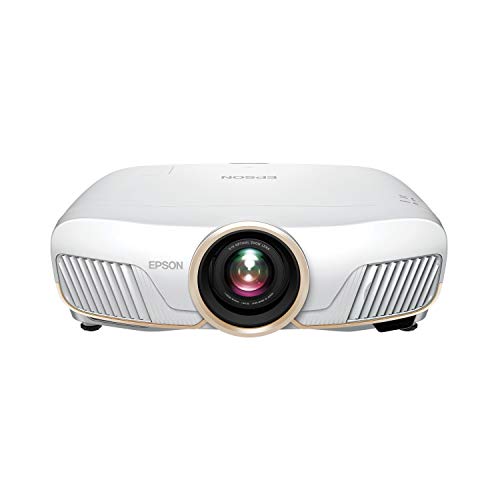
1. Epson Home Cinema 5050UB 4K PRO-UHD — Best Overall Value
The Epson 5050UB has been a benchmark for value-oriented home theater for years, and in 2026 it still holds its own against projectors that cost significantly more. At the heart of this machine is Epson's True 3-Chip 3LCD architecture, which separates your incoming signal into red, green, and blue channels and processes all three simultaneously — meaning you never see the color-wheel rainbow artifacts that plague single-chip DLP designs. The result is a consistently rich, natural-looking image with outstanding skin tones and shadow detail that competes well above its price tier.
The 4K PRO-UHD label refers to Epson's pixel-shifting approach: three high-definition LCD chips work together with an advanced pixel-shift processor to produce a perceptually sharp 4K image across the full screen, and while it is not native 4K at the panel level, the output is genuinely difficult to distinguish from native 4K on screen sizes up to 130 inches. You get 2,600 lumens of color and white brightness, a 1,000,000:1 dynamic contrast ratio, and HDR support that handles both HDR10 and HLG signals. Lens shift range is exceptional — ±96.3% vertical and ±47.1% horizontal — so you have real installation flexibility when ceiling-mounting or placing on a shelf.
Zoom and lens focus are both motorized, which is a convenience you will appreciate during setup and fine-tuning. The 5050UB also includes a lens memory function that lets you save multiple zoom and shift positions, making it viable for scope-format content with an anamorphic lens or Cinemascope masking system. Input lag sits around 28ms in 1080p/60Hz mode, which is playable for casual gaming but not ideal for competitive titles.
Pros:
- True 3-chip 3LCD design eliminates rainbow effect entirely
- Exceptional lens shift range for flexible installation
- Motorized zoom, focus, and lens memory included
- Strong HDR performance with 1,000,000:1 dynamic contrast
- Competitive color accuracy out of the box
Cons:
- Pixel-shifted 4K rather than native 4K at the panel level
- Input lag too high for serious competitive gaming
- Lamp-based light source adds long-term replacement cost
2. JVC DLA-NZ7 D-ILA Laser — Best Premium Flagship
If your budget stretches to the flagship tier and you want the single best long throw projector available in 2026, the JVC DLA-NZ7 is the answer you are looking for. JVC's D-ILA technology uses liquid crystal on silicon panels — three of them, each measuring 0.69 inches diagonally at native 4K resolution — paired with a premium 17-element, 15-group all-glass 65mm lens that delivers edge-to-edge sharpness and a level of optical clarity you simply cannot buy cheaply. The BLU-Escent laser light source produces 2,200 lumens of output and is rated for up to 20,000 hours of use without any lamp replacement.
The native contrast ratio of 40,000:1 combined with a dynamic contrast ratio of Infinity:1 is the most impressive specification on this list, and it shows in real viewing: the DLA-NZ7 produces blacks that are genuinely dark in a properly darkened room, with highlight detail in HDR content that feels dimensional and layered rather than flat. The 8K/e-shift technology uses a two-direction multi-axis shift to display 4K content at 8K resolution — 8,192 x 4,320 effective pixels — and while true 8K source content remains rare, the upscaling of 4K material is noticeably smoother and more detailed than standard 4K display. Both HDMI inputs support 8K/60p and 4K/120p signals, and the low-latency mode makes this viable for next-gen console gaming as well.
Frame Adapt HDR is one of JVC's standout features: it analyses each frame of HDR10 content individually and adjusts tone mapping in real time to match what the source intends, rather than applying a blanket setting across an entire scene. This results in HDR performance that feels genuinely cinematic — bright specular highlights pop without crushing shadow detail, and the wide color gamut covers 100% of REC 709 with room to push into BT.2020. This is the projector for the buyer who refuses to compromise.
Pros:
- Native 4K D-ILA panels with no pixel-shifting compromise
- Infinity:1 dynamic contrast ratio produces stunning black levels
- 8K e-shift technology for future-ready resolution enhancement
- Frame Adapt HDR with frame-by-frame tone mapping analysis
- 20,000-hour laser lifespan eliminates lamp replacement costs
- Both HDMI ports support 4K/120p and 8K/60p
Cons:
- Premium price that is not accessible for most buyers
- 2,200 lumens is adequate for dark rooms but not bright living spaces
- Large chassis requires dedicated shelf or ceiling mount planning
3. Sony VPL-XW5000ES 4K HDR Laser — Best Native 4K Laser for Image Purists
Sony's VPL-XW5000ES is the projector that serious videophiles point to when they want native 4K performance from a laser light source without paying JVC's flagship price. The SXRD panel — Sony's proprietary liquid crystal on silicon technology — delivers full 3,840 x 2,160 native resolution with no pixel-shifting, no compromise, and no interpolation artifacts. Every pixel you see on screen is a real, independently controlled pixel, and the difference in fine detail and text sharpness compared to pixel-shifted alternatives is visible to a trained eye on screens larger than 100 inches.
The laser light source produces up to 2,000 lumens of brightness, which is sufficient for a well-controlled dark room environment but will struggle in ambient light conditions. Where Sony really separates itself is in image processing: the flagship-level X1 Ultimate for Projector processor handles all signal analysis, upscaling, noise reduction, and HDR tone mapping, and it brings Sony's decades of television processing expertise into the projection space. Dynamic HDR Enhancer and Super Resolution technology work together to extract maximum detail from both native 4K and upscaled 1080p sources, while Triluminos Pro color technology ensures coverage of a wide color gamut.
Installation flexibility is solid, with a powered lens system offering motorized zoom, focus, and shift adjustment, and you can also store up to ten lens memory positions for different aspect ratios or screen setups. The build quality is exactly what you would expect from Sony's professional-grade ES line: solid, refined, and built to last through years of daily use without any of the panel degradation that plagues lamp-based designs. If you care about color accuracy and processing pedigree above all else, the XW5000ES is the projector you want.
Pros:
- Full native 4K SXRD panel with no pixel-shifting
- Flagship X1 Ultimate processor for projector class
- Long-lasting laser light source rated for thousands of hours
- Triluminos Pro wide color gamut coverage
- Motorized lens with 10-position memory storage
Cons:
- 2,000 lumens limits usability in rooms with ambient light
- Premium price commands a significant investment
- No 8K or 4K/120p support on HDMI inputs
4. Epson Home Cinema LS11000 4K PRO-UHD Laser — Best Laser for Gaming and Versatility
The Epson LS11000 is the projector that makes you wonder why you would ever buy a lamp-based model again, because it combines a laser light source with Epson's proven 3LCD architecture and adds HDMI 2.1 with 4K/120Hz support that puts it firmly in the gaming-capable conversation alongside units that cost far more. At 2,500 lumens of both color and white brightness — a specification Epson is careful to match across both measurements, unlike some competitors — the LS11000 handles moderately lit rooms far better than the Sony or JVC options above it on the price scale.
The Precision Shift Glass Plate Technology is Epson's most refined approach to pixel-shifting yet: a digitally controlled glass plate precisely refracts pixel light from three individual LCD chips to display a combined 3,840 x 2,160, 8.29-million-pixel image that holds up to intense scrutiny on screens well past 130 inches. The proprietary Epson Picture Processor manages color, contrast, HDR tone mapping for both HDR10 and HDR10+, and frame interpolation in real time without the soap opera effect that plagues lesser interpolation implementations. The motorized lens handles zoom, focus, and shift all electronically, and the lens memory system supports multiple saved positions.
For gamers specifically, the combination of HDMI 2.1, 4K/120Hz passthrough, and a measured input lag under 20ms in low-latency mode makes the LS11000 genuinely competitive with high-end gaming monitors at massive screen sizes. If you are setting up a room that doubles as both a movie theater and a gaming space, this is the most versatile projector on this list, and the laser light source means you are looking at 20,000 hours of runtime before any meaningful maintenance is required. Also compare with our best mini projector guide if portability is also on your list of priorities.
Pros:
- HDMI 2.1 with 4K/120Hz for next-gen console gaming
- 2,500 lumens color and white brightness matches in specification
- Laser light source with 20,000-hour rated lifespan
- Supports HDR10 and HDR10+ with advanced processing
- Motorized lens with zoom, focus, shift, and memory
- Low measured input lag under 20ms for gaming
Cons:
- Pixel-shifted 4K rather than native 4K at the panel level
- Higher price than lamp-based competitors at the same brightness
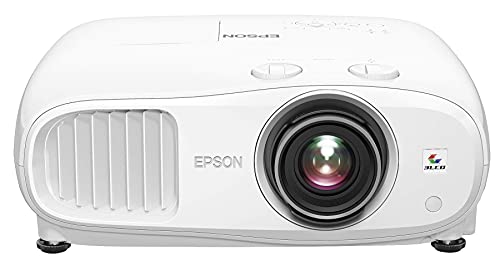
5. Epson Home Cinema 3800 4K PRO-UHD — Best Budget 4K Long Throw Pick
The Epson Home Cinema 3800 is the entry point for buyers who want genuine 4K PRO-UHD performance without the premium price tags that dominate the rest of this list. Like its 5050UB sibling, the 3800 uses a true 3-chip 3LCD design that processes 100% of the RGB color signal for every single frame, which means you are getting consistent, accurate color reproduction without any of the color brightness compromises that come with single-chip DLP projectors. The pixel-shifting technology precisely controls three individual high-definition LCD chips to produce a combined 4K image that punches well above its weight class in real-world viewing.
At 3,000 lumens of color and white brightness, the 3800 is actually brighter than several more expensive options on this list, which gives it a meaningful advantage in rooms that are not fully light-controlled. Dynamic contrast ratio reaches 100,000:1, HDR support covers both HDR10 and HLG, and the lens offers a 1.6x optical zoom range with manual focus and shift adjustment — respectable for this price tier, even if the motorized convenience of the higher-end models is absent. The throw ratio of 1.35:1 to 2.15:1 means you need roughly 10 to 16 feet of throw distance to fill a 100-inch screen, so measure your room carefully before ordering.
Where the 3800 shows its budget-tier positioning is in the lamp-based light source — you will need to replace bulbs every 3,500 to 4,000 hours in normal mode, which adds long-term cost that laser-based models avoid entirely. But if you are building your first dedicated home theater room on a budget and you want the absolute best image quality per dollar in 2026, the Epson 3800 is the projector that overdelivers for what it costs.
Pros:
- True 3-chip 3LCD with zero rainbow effect
- 3,000 lumens handles moderate ambient light effectively
- Excellent color accuracy for the price tier
- HDR10 and HLG support included
- Best image quality per dollar on this list
Cons:
- Lamp-based light source requires periodic bulb replacement
- Manual lens adjustment versus motorized on pricier models
- No HDR10+ or Dolby Vision support
6. BenQ TK710 4K Laser — Best for Bright Room Gaming
The BenQ TK710 makes a very specific case to a very specific buyer: if you want to play games on a massive screen with the lights on, this is the projector that makes it possible in 2026 without forcing you to choose between picture quality and playability. 3,200 ANSI lumens from a laser light source is the headline specification, and it is genuinely high enough to push through a modest amount of ambient light in a living room setting — something no other projector on this list can claim quite as convincingly at this price point. The laser light source also means you get vibrant, saturated colors from day one without any of the color drift that affects aging lamp bulbs.
Gaming specifications are where the TK710 truly distinguishes itself: a 4ms response time at 4K/60Hz and a 240Hz refresh rate at lower resolutions create an experience that feels immediately responsive, while the HDR10 and HLG support ensures that HDR game modes look the way the developers intended. The Dynamic Function technology rapidly adjusts the light source output based on scene content, improving effective contrast even if the underlying panel cannot match the absolute black levels of the JVC or Sony options above. ARC and eARC support via HDMI means you can run your audio through the projector to your sound system without an extra cable run.
Installation flexibility is solid for a gaming-focused projector: 1.3x optical zoom, vertical lens shift capability, and 3D keystone correction give you real options for positioning the unit in a room that was not designed as a dedicated theater. The TK710 is not the projector for the buyer who prioritizes black levels and cinematic color fidelity above all else — for that you want the JVC or Sony — but for anyone who wants a bright, fast, laser-powered performer that handles both movies and games in a real living room environment, the BenQ delivers exactly what it promises.
Pros:
- 3,200 ANSI lumens handles ambient light far better than rivals
- 4ms response time and 240Hz for genuinely lag-free gaming
- Laser light source for vibrant colors and long service life
- ARC/eARC support for streamlined audio routing
- Vertical lens shift and 3D keystone for flexible placement
Cons:
- Single-chip DLP design means potential for rainbow effect in sensitive viewers
- Black levels and contrast ratio lag behind 3LCD and D-ILA competitors
- Not the right choice for dedicated dark-room cinema setups
7. JVC DLA-NP5 D-ILA 4K HDR — Best Mid-Range D-ILA Performer
The JVC DLA-NP5 gives you the same fundamental D-ILA panel technology as the flagship NZ7 at a significantly lower price point, and for buyers who want native 4K performance and JVC's legendary contrast handling without committing to the top-of-the-line laser model, the NP5 is the logical answer in 2026. Three 0.69-inch native 4K D-ILA devices drive the image through the same 17-element, 15-group 65mm all-glass lens that JVC uses across its lineup — meaning optical quality is consistent and genuinely excellent, producing a sharp, high-contrast image that holds up well on 130-inch screens and beyond.
At 1,900 lumens the NP5 is the dimmest projector on this list, which makes a properly darkened room an absolute requirement rather than a preference. In exchange for that brightness trade-off, you get a native contrast ratio of 40,000:1 and a dynamic contrast ratio of 400,000:1 — numbers that translate to black levels that rival much more expensive displays and give HDR content the depth and dimension it deserves. The two HDMI inputs comply with HDMI/HDCP 2.3 standards to support full-specification 4K/120p signal input, which keeps the NP5 compatible with current PlayStation 5 and Xbox Series X gaming at high frame rates.
Frame Adapt HDR is the same technology found in the NZ7: it analyses every HDR10 frame individually and adjusts tone mapping automatically based on what is actually in the scene at that moment, rather than applying average settings across a clip. Theater Optimizer goes further, fine-tuning HDR based on your specific installation characteristics, projector settings, and even the current age of the lamp, so the projector continues to deliver optimized HDR performance as it ages. For a detailed look at how projectors like this compare to portable options in the same ecosystem, see how it stacks up against our best ultra short throw projectors guide.
Pros:
- Native 4K D-ILA panels — no pixel-shifting
- 40,000:1 native contrast ratio with exceptional black levels
- Frame Adapt HDR with frame-by-frame tone mapping
- HDMI 2.1 / HDCP 2.3 supports 4K/120p from current consoles
- Premium 65mm all-glass lens for edge-to-edge sharpness
- Theater Optimizer automatically adjusts for lamp age and settings
Cons:
- 1,900 lumens requires a fully dark room for best results
- Lamp-based light source unlike the laser-equipped NZ7 flagship
- No 8K e-shift technology present in the NZ7
What to Look For When Buying a Long Throw Projector
Throw Ratio and Room Dimensions
Before anything else, you need to measure your room and match it to the projector's throw ratio. Throw ratio is the distance from the lens to the screen divided by the screen width — a projector with a throw ratio of 1.5:1 needs 15 feet of distance to fill a 10-foot-wide (120-inch diagonal) screen. Every projector in this roundup falls into the standard long throw category with ratios roughly between 1.3:1 and 2.2:1, but the precise numbers vary model to model, so use the manufacturer's throw distance calculator before you buy. If your room is shorter than the minimum throw distance for a given screen size, you will end up with a smaller image than you planned — and that is a disappointment no amount of image processing can fix.
Native 4K Versus Pixel-Shifted 4K
Native 4K means the panel itself contains 8.3 million physical pixels that each correspond to exactly one pixel in a 3,840 x 2,160 signal — no interpolation, no shifting, no processing tricks. The JVC DLA-NZ7, JVC DLA-NP5, and Sony VPL-XW5000ES all offer this. Pixel-shifted 4K — used by the Epson models — uses a mechanism to shift pixels rapidly to create the perceptual appearance of 4K from a 1080p or 1920 x 1080 panel, which produces an excellent result but is technically a different approach. On screen sizes below 110 inches, most viewers cannot tell the difference; above 120 inches or when viewing text-heavy content like sports overlays, native 4K tends to show a modest but measurable advantage in sharpness.
Light Source: Laser Versus Lamp
The choice between laser and lamp affects your long-term ownership experience more than the initial purchase price suggests. Laser projectors like the LS11000, Sony XW5000ES, JVC NZ7, and BenQ TK710 offer 20,000-hour rated lifespans, consistent brightness throughout their service life, and instant on/off without warm-up time. Lamp-based projectors like the Epson 5050UB, Epson 3800, and JVC NP5 typically require bulb replacements every 3,500 to 5,000 hours in normal mode, with replacement bulbs costing between $100 and $300 depending on the model. If you watch four hours of content per day, you will need a new lamp roughly every two to three years on a lamp-based projector — a cost that narrows the price gap between lamp and laser significantly over time.
HDR Compatibility and Tone Mapping Quality
All seven projectors here support HDR10, which is the baseline requirement for modern 4K content from streaming services and physical media. However, the quality of HDR tone mapping varies enormously between models, and a specification sheet cannot tell you how well a projector handles scenes with extreme highlight-to-shadow range. The JVC models with Frame Adapt HDR set the standard for real-time, per-frame tone mapping that adapts to what is actually on screen rather than applying scene-average settings. HDR10+ support — present on the Epson LS11000 among others — provides dynamic metadata on a scene-by-scene basis, which improves tone mapping accuracy without the per-frame computation overhead of Frame Adapt HDR. When evaluating any projector for HDR, look for reviews that specifically test peak brightness measurement and shadow detail retention simultaneously, as these two metrics reveal more about real HDR performance than lumens ratings alone.
Questions Answered
What is the difference between a long throw and an ultra short throw projector?
A long throw projector is designed to sit several feet away from the screen — typically six to fifteen feet depending on screen size — and uses a standard or telephoto lens to project from a distance. An ultra short throw projector sits just a few inches from the screen and uses a specialized wide-angle or mirror-based optical system. Long throw models generally offer superior image quality, more lens adjustment flexibility, and better black level performance, while ultra short throw models are designed for rooms where ceiling mounting or rear-wall placement is not possible. Most dedicated home theater installations use long throw projectors for exactly these reasons.
How bright does a projector need to be for a dark home theater room?
In a fully darkened room with a proper projection screen, you need a minimum of 1,500 lumens to fill a 100-inch screen with a satisfying image, and 2,000 lumens or more gives you comfortable headroom for HDR specular highlights. The 1,900-lumen JVC NP5 is the borderline case on this list — it works beautifully in a completely controlled environment but struggles the moment any ambient light enters the room. For rooms that are not fully blacked out, aim for at least 2,500 to 3,000 lumens, which is where the Epson 3800, Epson LS11000, and BenQ TK710 deliver their best results.
Is 4K pixel-shifting as good as native 4K?
On most screen sizes and viewing distances, 4K pixel-shifting produces a result that is virtually indistinguishable from native 4K for the majority of content including movies, sports, and streaming video. The difference becomes noticeable on very large screens above 120 inches, at closer-than-recommended viewing distances, or when the content contains fine text, tight patterns, or highly detailed line art. Native 4K panels like those in the JVC and Sony projectors have an absolute technical advantage, but Epson's pixel-shifting implementation is sophisticated enough that many professional reviewers rank the output on par with or above some native 4K alternatives in overall picture quality when contrast, color, and processing are factored together.
How long do laser projectors last compared to lamp projectors?
Laser projectors are rated for approximately 20,000 hours of operation before the light source reaches half of its original brightness — a point manufacturers call the half-life. At four hours of daily use, that represents roughly 13 years of operation without any light source maintenance. Lamp projectors require bulb replacements every 3,500 to 5,000 hours in normal mode, which at four hours daily means a new bulb every two to three years. Over a ten-year ownership period, the lamp replacement cost for a projector like the Epson 3800 can approach or exceed $600 to $900 in bulbs alone, which meaningfully narrows the price advantage over laser alternatives.
Can I use a long throw projector for gaming?
Yes, but you need to pay attention to input lag specifications rather than just resolution and brightness. Input lag below 20ms is the threshold for gaming that feels responsive and immediate, while anything above 30ms introduces perceptible delay that affects fast-paced action games and competitive multiplayer. The Epson LS11000 with its HDMI 2.1 and sub-20ms input lag, and the BenQ TK710 with its 4ms response time and 240Hz capability, are the strongest gaming performers on this list. The JVC NP5 and NZ7 both offer low-latency modes that bring input lag to acceptable levels for console gaming, though they are not optimized for competitive PC gaming the way the BenQ is.
What screen size do I need for a long throw projector?
Long throw projectors are at their best on screens between 90 and 150 inches diagonal, which is the range where their optical systems are designed to operate with maximum efficiency. Smaller screens — below 80 inches — are better served by a quality television, which will outperform a projector in brightness and color saturation at that size. Larger screens above 150 inches are possible but require careful attention to brightness specifications, as lumens fall off rapidly at extreme throw distances. Most buyers setting up a dedicated home theater aim for 100 to 120 inches diagonal, which represents an optimal balance between immersive scale and manageable brightness requirements for the projectors on this list.
Buy on Walmart
- Epson Home Cinema 5050UB 4K PRO-UHD 3-Chip Projector with HD — Walmart Link
- JVC DLA-NZ7 D-ILA Laser Home Theater Projector, 2200 Lumen, — Walmart Link
- Sony VPL-XW5000ES 4K HDR Laser Home Theater Projector with N — Walmart Link
- Epson Home Cinema LS11000 4K PRO-UHD Laser Projector HDR, HD — Walmart Link
- Epson Home Cinema 3800 4K PRO-UHD 3-Chip Projector with HDR — Walmart Link
- BenQ TK710 4K Laser 3200 Lumens Movie and Gaming Projector w — Walmart Link
- JVC DLA-NP5 D-ILA 4K HDR Home Theater Projector, High-Bright — Walmart Link
Buy on eBay
- Epson Home Cinema 5050UB 4K PRO-UHD 3-Chip Projector with HD — eBay Link
- JVC DLA-NZ7 D-ILA Laser Home Theater Projector, 2200 Lumen, — eBay Link
- Sony VPL-XW5000ES 4K HDR Laser Home Theater Projector with N — eBay Link
- Epson Home Cinema LS11000 4K PRO-UHD Laser Projector HDR, HD — eBay Link
- Epson Home Cinema 3800 4K PRO-UHD 3-Chip Projector with HDR — eBay Link
- BenQ TK710 4K Laser 3200 Lumens Movie and Gaming Projector w — eBay Link
- JVC DLA-NP5 D-ILA 4K HDR Home Theater Projector, High-Bright — eBay Link
Buy for the room you have, not the projector you want — measure your throw distance first, match your brightness to your ambient light, and the right model on this list will be obvious.
 |
 |
 |
 |

About Sarah Whitford
Sarah Whitford is Ceedo's resident projector and home theater expert. She got her start as a custom AV installer for a regional integrator in the Pacific Northwest, where she designed and installed media rooms and conference spaces for residential and small business clients for over six years. Sarah earned her CTS certification from AVIXA and has personally calibrated more than 150 projectors using Datacolor and SpyderX colorimeters. She is opinionated about throw distance math, contrast ratios, and the realities of ambient light, and she will happily explain why most people should not buy a 4K projector. Sarah lives in Portland with her partner and an aging Akita.