 ee
eeTablets ›
Best Cheap Drawing Tablet With Screen 2026
The HUION Kamvas 13 (Gen 3) is the top pick for 2026 — its PenTech 4.0 engine and Canvas Glass 2.0 deliver a professional drawing experience at a fraction of flagship prices. Budget-conscious artists no longer have to choose between quality and cost.
Cheap drawing tablets with screens have improved dramatically. The options available in 2026 rival what cost twice as much just a few years ago. Full lamination, high pressure sensitivity, and accurate color reproduction are now standard features even at entry-level price points.

This guide covers the six best affordable pen displays on the market right now. Each product has been evaluated on screen quality, pen performance, build, and value. Whether buyers are digital illustrators, photo editors, or beginners just starting out — there is a solid option here for every need and budget.
Contents
Best Choices for 2026
- #PreviewProductRating
- Bestseller No. 1
 Rating:

- Bestseller No. 2
 Rating:
 - Bestseller No. 3
 Rating:
 - Bestseller No. 4
 Rating:
 - Bestseller No. 5
 Rating:
- Bestseller No. 6
 Rating:
Detailed Product Reviews
1. HUION Kamvas 13 (Gen 3) — Best Overall
HUION's Kamvas 13 (Gen 3) sets the benchmark for affordable pen displays in 2026. The 13.3-inch fully laminated screen removes the air gap between the glass and display panel, which eliminates the parallax issue that plagued cheaper tablets for years. Artists draw exactly where they look — no offset, no guessing.
The Canvas Glass 2.0 surface uses nano-etching technology to diffuse light without degrading image clarity. Glare is reduced noticeably without the muddy, grainy look that cheaper anti-glare coatings produce. The 99% sRGB color accuracy means colors look consistent across design workflows, which matters for illustrators and graphic designers working across multiple screens.
PenTech 4.0 is HUION's most advanced stylus system to date. The 16,384 levels of pressure sensitivity respond to the lightest touch with zero lag. Initial Activation Force (IAF) sits at just 2g — comparable to a ballpoint pen resting on paper. The dual dial interface on the tablet body adds a professional layer of control for zooming, rotating canvas, and adjusting brush size without lifting the pen. Note: this requires a connected computer or laptop to operate.
Pros:
- Full lamination eliminates parallax completely
- Canvas Glass 2.0 delivers natural paper-like texture
- 16,384 pressure levels with 2g IAF for feather-light precision
- 99% sRGB color accuracy suits professional workflows
- Dual physical dials for canvas control
- Compatible with PC, Mac, and Android
Cons:
- Requires a computer to function — not standalone
- No built-in stand at this price point
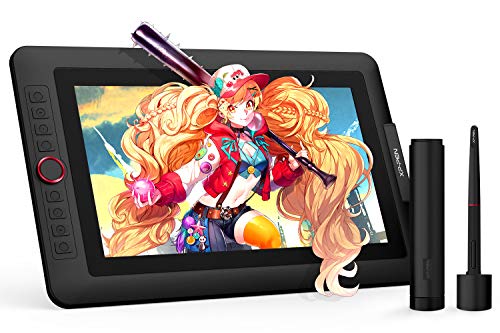
2. XPPen Artist12 Pro — Best Budget Pick
The XPPen Artist12 Pro punches well above its price class. At 11.6 inches, the screen is compact enough for a desk-constrained workspace. The full-laminated display keeps visual alignment tight, and the stylus delivers 8,192 levels of pressure — half of the top picks, but still more than sufficient for illustration, photo editing, and casual digital art.
Tilt support is a standout feature at this price. The Artist12 Pro supports up to 60 degrees of tilt recognition, which allows artists to use natural brush angles when shading or hatching. Most entry-level displays skip tilt entirely. That omission shows up fast when doing linework at an angle — this tablet avoids that frustration entirely.
The red dial interface and eight shortcut keys are genuinely useful. Workflow customization at the hardware level saves time that would otherwise go to keyboard shortcuts. The battery-free stylus never needs charging, which removes one persistent annoyance from daily creative sessions. Buyers connecting via the included cable should note that a computer or laptop connection is required.
Pros:
- Full lamination for accurate pen tracking
- 60-degree tilt support for natural shading and brushwork
- Battery-free stylus — no charging ever needed
- 8 customizable shortcut keys plus a red dial
- 8,192 pressure levels — more than enough for most users
Cons:
- Lower pressure sensitivity than newer-generation pens
- Smaller 11.6-inch screen may feel cramped for detailed work
- 72% NTSC color gamut is adequate but not color-accurate for print work
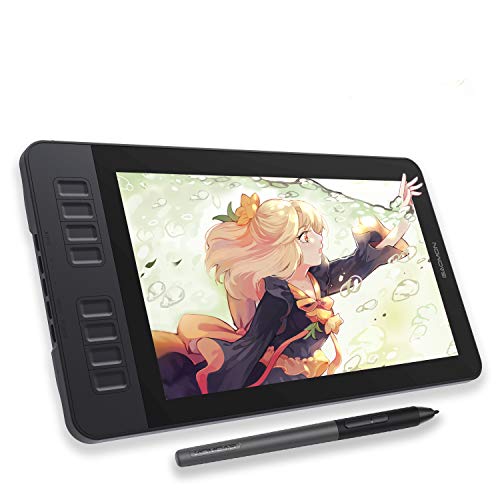
3. GAOMON PD1161 — Best for Beginners
GAOMON's PD1161 is the entry point that beginners should consider before spending more. The 11.6-inch Full HD IPS screen delivers crisp visuals at a price that won't scare off first-time buyers. The pre-installed matte film on the display mimics the drag of paper on pen — a subtle feature that makes a real difference for artists transitioning from traditional media.
Color performance is strong for this tier. A 72% NTSC color gamut (equivalent to 100% sRGB) combined with 16.7 million displayable colors produces smooth gradients and lifelike rendering. Artists working in Procreate alternatives on Windows or Mac will find the color output reliable for most digital illustration tasks. Print-focused designers may want a wider gamut, but for screen-focused work, the PD1161 is more than adequate.
Eight shortcut keys sit along the left edge. They are fully remappable and allow quick access to undo, brush size, zoom, and other common commands. The battery-free stylus supports tilt recognition. That combination — tilt plus remappable keys plus matte screen — is hard to beat at this price. Note: the tablet requires a computer connection and does not operate standalone.
Pros:
- Pre-installed matte film gives a paper-like drawing feel
- 72% NTSC (100% sRGB) color accuracy for vivid illustrations
- Battery-free stylus with tilt support included
- 8 customizable shortcut keys
- Full HD IPS panel for sharp screen clarity
- Low price makes it an easy first investment
Cons:
- Smaller active area limits workspace for detailed compositions
- Build quality feels less premium than HUION or XPPen equivalents
- Pen pressure sensitivity lower than top-tier options
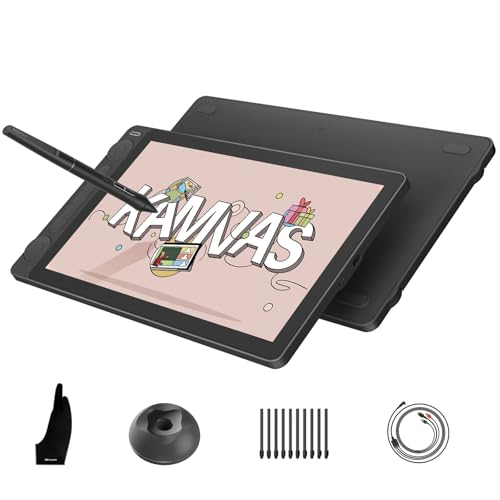
4. HUION Kamvas 13 (Gen 3) Digital Art Edition — Best Dual-Dial Setup
This variant of the Kamvas 13 (Gen 3) carries the same core hardware as the flagship model — PenTech 4.0, Canvas Glass 2.0, 16,384 pressure levels — but is positioned as the digital art workhorse configuration. The dual-dial layout is specifically tuned for artists who rely heavily on canvas navigation shortcuts during long drawing sessions.
The upgraded anti-glare coating deserves attention. Nano-etching technology reduces glare, sparkle, and image noise simultaneously. Most anti-glare screens sacrifice one of those three to achieve the others. Canvas Glass 2.0 manages all three without reducing perceived sharpness — a real engineering achievement at this price tier. The paper-textured surface adds friction that stylus users find immediately natural.
Pen parallax is effectively eliminated through full lamination and thin nib design. HUION's tilt auto-alignment system adjusts the cursor position automatically when the pen is held at an angle — a feature that directly reduces the learning curve for new pen display users. The dust-proof grip on the pen itself is a practical improvement over slippery stylus designs from previous generations.
Pros:
- PenTech 4.0 with 2g IAF for precise, featherlight strokes
- Canvas Glass 2.0 tackles glare, sparkle, and noise together
- Tilt auto-alignment reduces cursor parallax at any pen angle
- Dust-proof grip pen for extended drawing sessions
- 99% sRGB color output for accurate color work
- Dual dials for hands-on canvas control
Cons:
- Requires a computer — not a standalone device
- Near-identical to the B0D813G71Q variant — buyers should compare current pricing before choosing
5. Wacom One 12 — Best for New Artists
Wacom's reputation carries real weight — and the Wacom One 12 delivers the brand's hallmark reliability in an accessible package. The 11.6-inch HD display uses a paper-like anti-glare surface that mimics the texture of drawing on physical media. For artists new to pen displays, this tactile feedback dramatically shortens the adjustment period.
The included Wacom One Pen features natural tilt recognition and virtually lag-free tracking. Pressure sensitivity tops out at 4,096 levels — lower than the HUION offerings but consistent and predictable in use. Consistency matters more to beginners than raw spec numbers. The two customizable pen switches handle undo and copy-paste functions reliably without requiring menu-diving.
Wacom includes creative software and training resources with the Wacom One 12. That bundle has genuine value for artists who are just building a workflow. The tablet is compatible with Mac, Windows, and Chromebook. Wacom's driver support is industry-leading — updates come regularly and compatibility issues are rare. For buyers who value long-term reliability over bleeding-edge specs, the Wacom One 12 is a smart choice in 2026.
Pros:
- Paper-like anti-glare surface for natural drawing feel
- Wacom's legendary driver reliability and long-term support
- Bundled creative software adds real value for new artists
- Natural tilt recognition for brush angle variation
- Compatible with Mac, Windows, and Chromebook
Cons:
- 4,096 pressure levels — lowest sensitivity in this group
- Higher price-per-spec compared to HUION and XPPen competitors
- No physical shortcut keys on the tablet body
6. XPPen Artist 13.3 Pro — Best Large Screen Budget
The XPPen Artist 13.3 Pro brings a 13.3-inch fully laminated FHD display to the budget segment. The larger canvas gives illustrators more room to work without constantly zooming in — a real productivity advantage over 11.6-inch screens. The included adjustable stand is a welcome addition that most competitors sell separately or don't include at all.
Color accuracy is a strong selling point here. The 88% NTSC color gamut (Adobe RGB ≥ 91%, sRGB ≥ 123%) produces richer, more saturated images than most tablets at this price. The 178-degree viewing angle is genuinely wide — colors don't shift dramatically when viewing from the side, which matters for artists who move around their workspace or share the screen with clients.
The tilt support extends to 60 degrees — same as the Artist12 Pro — and the eight shortcut keys are fully customizable. The battery-free stylus delivers 8,192 pressure levels. One practical note: the included 3-in-1 cable handles power, data, and HDMI in a single connector, which reduces desk cable clutter. This tablet requires a computer connection to operate. For buyers who want a larger working area without crossing into premium pricing territory, the Artist 13.3 Pro is hard to beat in 2026.
Pros:
- 13.3-inch screen — more working room than most budget competitors
- 123% sRGB color gamut for vivid, accurate output
- Adjustable stand included — no separate purchase needed
- 60-degree tilt support for natural shading angles
- 178-degree wide viewing angle
- 3-in-1 cable reduces desk clutter
Cons:
- 8,192 pressure levels — not up to HUION's Gen 3 standard
- Older product generation — hardware design is not the latest
- Requires computer connection to function
Choosing the Right Drawing Tablet with Screen: A Buying Guide
Screen Size and Active Area
Screen size determines how much canvas is available without constant zooming. Larger screens reduce the need to zoom in for fine detail work, which speeds up illustration and design workflows. Here is how size maps to use case in 2026:
- 11.6 inches — Portable, desk-friendly. Works well for photo editing, casual illustration, and users with limited desk space.
- 13.3 inches — The sweet spot. Enough room for detailed linework and composition planning without occupying a full desk.
- Larger than 13 inches — Better for professional illustrators and concept artists who work at 1:1 zoom frequently.
Buyers should also consider the active drawing area — the portion of the screen that registers stylus input. Always check the actual dimensions, not just the screen diagonal.
Pen Pressure Sensitivity and Initial Activation Force
Pressure sensitivity levels directly affect how naturally lines taper and how subtle gradients feel in practice. The progression from 4,096 to 8,192 to 16,384 levels is noticeable in daily use:
- 4,096 levels — Sufficient for beginners and general illustration. Wacom's implementation at this level is reliable and consistent.
- 8,192 levels — The current standard for mid-range tablets. XPPen and GAOMON deliver solid results here.
- 16,384 levels — HUION's Gen 3 territory. The difference becomes apparent in fine linework and very light pressure strokes.
Initial Activation Force (IAF) matters as much as the raw level count. A 2g IAF — as found in HUION's PenTech 4.0 — means the pen registers ink from the lightest possible touch. Lower IAF produces a more natural, responsive feel.
Display Quality: Lamination, Color Gamut, and Anti-Glare
Three display factors separate good tablets from great ones:
- Full lamination — Bonds the screen glass directly to the display panel. Eliminates the air gap that causes the cursor to appear offset from the pen tip. All six tablets in this guide are fully laminated.
- Color gamut — 72% NTSC (100% sRGB) suits most digital art. Artists doing print work or color-critical design should look for wider Adobe RGB or higher NTSC coverage.
- Anti-glare treatment — Matte coatings reduce reflections but can soften image clarity. HUION's Canvas Glass 2.0 uses nano-etching to reduce glare without degrading sharpness — this is the current best solution in the budget segment.
Tilt Recognition and Shortcut Keys
Tilt recognition allows the pen to register the angle at which it is held. Artists who shade with the side of a brush nib — a common traditional technique — will find tilt support essential. Tablets without tilt force constant manual brush angle adjustments in software.
Physical shortcut keys on the tablet body reduce keyboard dependence. Layouts with six to eight remappable keys cover the most common commands: undo, zoom, brush size, and layer navigation. A hardware dial — as seen on both Kamvas 13 Gen 3 models — adds an extra dimension of control that flat buttons cannot replicate. Buyers who work primarily in Photoshop, Clip Studio Paint, or Procreate for Windows will use these keys constantly.
Buy on Walmart
- HUION Kamvas 13 (Gen 3) Drawing Tablet with Screen,13.3" Ful — Walmart Link
- XPPen Artist12 Pro 11.6" Drawing Tablet with Screen Pen Disp — Walmart Link
- GAOMON PD1161 Drawing Tablet with Screen, Digital Art Tablet — Walmart Link
- HUION Kamvas 13 (Gen 3) Drawing Tablet with Screen, 13.3-inc — Walmart Link
- Wacom One 12 Drawing Tablet with Screen, 11.6" HD Full-Lamin — Walmart Link
- XPPen Drawing Tablet with Screen Full-Laminated Graphics Dra — Walmart Link
Buy on eBay
- HUION Kamvas 13 (Gen 3) Drawing Tablet with Screen,13.3" Ful — eBay Link
- XPPen Artist12 Pro 11.6" Drawing Tablet with Screen Pen Disp — eBay Link
- GAOMON PD1161 Drawing Tablet with Screen, Digital Art Tablet — eBay Link
- HUION Kamvas 13 (Gen 3) Drawing Tablet with Screen, 13.3-inc — eBay Link
- Wacom One 12 Drawing Tablet with Screen, 11.6" HD Full-Lamin — eBay Link
- XPPen Drawing Tablet with Screen Full-Laminated Graphics Dra — eBay Link
Questions Answered
Do cheap drawing tablets with screens require a separate computer?
Yes — every tablet in this guide is a pen display, not a standalone device. They connect to a computer or laptop via USB-C or HDMI and function as a secondary monitor with stylus input. None of them have their own operating system or apps. Buyers looking for a standalone device should research Android-based drawing tablets separately.
What is the difference between 8,192 and 16,384 pressure levels?
In practical terms, 16,384 levels produce smoother pressure transitions — particularly noticeable at very light or very heavy touch extremes. For most users doing illustration, photo editing, or design work, 8,192 levels is fully sufficient. The jump to 16,384 levels matters most for professional illustrators who rely on precise pressure variation for linework quality.
Is the HUION Kamvas 13 Gen 3 worth the price over cheaper alternatives?
For buyers who plan to use the tablet regularly for creative work, yes. The combination of Canvas Glass 2.0, PenTech 4.0 at 16,384 pressure levels, and 99% sRGB color accuracy represents a meaningful upgrade over 8,192-level tablets. The difference shows up in linework quality and color accuracy during daily use. Casual users may find the GAOMON PD1161 sufficient, but serious illustrators will appreciate the investment.
Why does the Wacom One 12 cost more despite lower pen pressure specs?
Wacom charges a premium for brand reliability, driver stability, and long-term software support. The Wacom One 12's 4,096-level pen is consistent and lag-free — it does not deliver the highest raw specs but offers some of the most dependable performance in the industry. Buyers who have had driver problems with off-brand tablets in the past often find that Wacom's stability justifies the cost difference.
Can these tablets connect to an Android phone or iPad?
The HUION Kamvas 13 (Gen 3) explicitly lists Android compatibility. Other tablets in this guide are primarily designed for Windows and Mac. iPad connectivity depends on the specific model and whether the app supports external display input. Buyers planning to use a tablet with a mobile device should verify compatibility with their specific device and software combination before purchasing.
What software works best with these drawing tablets in 2026?
All six tablets in this guide are compatible with the major professional applications: Adobe Photoshop, Illustrator, Clip Studio Paint, Krita, and Corel Painter. Krita and Medibang Paint are strong free options for buyers who want to avoid subscription costs. The Wacom One 12 includes bundled software with the purchase. HUION and XPPen tablets work well with all these apps out of the box using the manufacturers' standard drivers.
The best cheap drawing tablet with a screen is the one with full lamination, solid pressure sensitivity, and a pen that feels natural — and in 2026, the HUION Kamvas 13 Gen 3 delivers all three without breaking the budget.
 |
 |
 |
 |

About Dror Wettenstein
Dror Wettenstein is the founder and editor-in-chief of Ceedo. He launched the site in 2012 to help everyday consumers cut through marketing fluff and pick the right tech for their actual needs. Dror has spent more than 15 years in the technology industry, with a background that spans software engineering, e-commerce, and consumer electronics retail. He earned his bachelor degree from UC Irvine and went on to work at several Silicon Valley startups before turning his attention to product reviews full time. Today he leads a small editorial team of category specialists, edits and approves every published article, and still personally writes guides on the topics he is most passionate about. When he is not testing gear, Dror enjoys playing guitar, hiking the trails near his home in San Diego, and spending time with his wife and two kids.