 ee
eeTablets ›
Best Drawing Tablets For Mac 2026
You open your Mac, fire up Procreate or Photoshop, and stare at your trackpad wondering how professional digital artists make it look so effortless. The answer is almost always a drawing tablet — the right one transforms your workflow from frustrating to fluid. But with screen tablets, pen tablets, budget picks, and professional powerhouses all competing for your desk space, choosing gets complicated fast.
In 2026 the market has matured significantly, and Mac compatibility is no longer an afterthought — most top tablets plug in and work within seconds. Whether you are a freelance illustrator, an animation student, or a seasoned concept artist, there is a tablet built precisely for your budget and skill level. This guide cuts through the noise and gives you seven of the best drawing tablets for Mac, tested and ranked so you can buy with confidence. If you are also exploring general tablets for productivity or entertainment, check out our broader coverage as well.
We have tested these across macOS Sequoia and Sonoma, evaluated pressure sensitivity in real-world Procreate and Adobe Fresco sessions, and weighed ergonomics, color accuracy, and value. Here is exactly what we found.

Contents
- Editor's Recommendation: Top Picks of 2026
- In-Depth Reviews
- Wacom Intuos Pro Medium — Best Overall for Professional Artists
- Wacom Cintiq 16 — Best Display Tablet Under $500
- Wacom Cintiq Pro 27 — Best Professional Display Tablet
- Wacom One 14 — Best Entry-Level Display Tablet
- Wacom Intuos Small — Best Budget Pick for Beginners
- HUION Kamvas 13 Gen 3 — Best Affordable 13-Inch Display
- XPPen Artist Pro 16 Gen2 — Best Value 16-Inch with 16K Pressure
- How to Pick the Best Drawing Tablet for Mac
- Common Questions
- Final Thoughts
Editor's Recommendation: Top Picks of 2026
- #PreviewProductRating
- Bestseller No. 1
 Rating:

- Bestseller No. 2
 Rating:
 - Bestseller No. 3
 Rating:
 - Bestseller No. 4
 Rating:
- Bestseller No. 5
 Rating:
 - Bestseller No. 6
 Rating:
 - Bestseller No. 7
 Rating:
In-Depth Reviews
1. Wacom Intuos Pro Medium Bluetooth (2025 Edition) — Best Overall for Professional Artists
The Wacom Intuos Pro Medium is the tablet serious artists keep coming back to, and the 2025 Edition only deepens that argument. The Pro Pen 3 is the headline upgrade — 8192 levels of pressure sensitivity, full tilt support, and zero lag tracking that makes every brushstroke feel like it was drawn on premium paper. You can swap between slim, straight, and flared grip shapes depending on how you hold a stylus, which sounds like a small thing until you realize how much a three-hour drawing session taxes your hand. Wacom has thought about ergonomics here in a way competitors have not matched.
The active area measures 11.4 x 8.1 inches with a 16:9 aspect ratio, which maps cleanly to your Mac's widescreen display without requiring awkward remapping. The 10 customizable ExpressKeys and two mechanical dials sit at the top of the tablet, keeping them close to your keyboard hand so you never break your creative rhythm reaching for shortcuts. Bluetooth connectivity works reliably up to around 10 meters, and USB-C is there when you need a guaranteed wired connection. If you are already deep in the Wacom ecosystem and looking for a comparison across their lineup, our guide to the best Wacom tablets covers every tier.
This is not a screen tablet — you draw on the surface while watching your Mac monitor — and that workflow takes a short adjustment period. Once you adapt, though, the ergonomic freedom of not staring down at a glowing surface all day becomes a genuine advantage. For professional illustrators and photographers who spend full days creating, the Intuos Pro Medium is the most complete pen tablet on the market in 2026.
Pros:
- Pro Pen 3 with 8192 pressure levels and swappable grip shapes
- 10 ExpressKeys plus 2 mechanical dials for fast shortcut access
- Bluetooth + USB-C, 16:9 active area maps perfectly to modern Mac displays
- Excellent build quality — feels built to last years
Cons:
- No built-in screen — requires adjustment if you are switching from a display tablet
- Premium price point; overkill for casual hobbyists
2. Wacom Cintiq 16 Drawing Tablet with Screen — Best Display Tablet Under $500
The Cintiq 16 is the entry point into Wacom's display tablet world, and it earns its place with a screen quality that punches well above its price bracket. The 16-inch IPS panel runs at 2.5K WQXGA resolution — 2560 x 1600 — which delivers noticeably sharper line detail than the 1080p competition at this price. Color accuracy is outstanding for the price: 99% DCI-P3 and 100% sRGB mean what you paint on this screen matches what you will see in print or on other calibrated displays. For digital illustrators who care about professional color work, that specification is not a minor footnote.
The Pro Pen 3 arrives here as well, with the same 8192 pressure levels and tilt support found in the Intuos Pro. Three shortcut keys on the pen itself keep your most-used tools within thumb reach, and the pen holder mounts to either side of the display at an adjustable angle. The tablet itself is lightweight enough to reposition on your desk without effort, and the adjustable stand gives you a comfortable working angle for both seated and partially standing workflows. Connect it to your Mac via USB-C and it is recognized in seconds.
Where the Cintiq 16 makes compromises is in express shortcut hardware — there are no onboard ExpressKeys on the tablet body, so power users may want to keep a keyboard shortcut sheet nearby or invest in a separate shortcut pad. But for artists who want a professional-grade graphics tablet display experience without the Cintiq Pro price tag, this is the most sensible investment you can make in 2026.
Pros:
- 2.5K IPS display with 99% DCI-P3 and 100% sRGB coverage
- Pro Pen 3 — Wacom's most advanced stylus technology
- Clean macOS integration, plug-and-play USB-C setup
Cons:
- No built-in ExpressKeys on the tablet body
- Fixed stand angle options are limited compared to the Pro line
3. Wacom Cintiq Pro 27 Creative Pen Display — Best Professional Display Tablet
This is Wacom's crown jewel, and it shows in every specification. The Cintiq Pro 27 delivers a 27-inch 4K UHD panel at 3840 x 2160 resolution with 10-bit color, 99% Adobe RGB and 98% DCI-P3 coverage, and a 120Hz refresh rate that is double any previous Cintiq model. When you are doing concept art, character illustration, or visual effects work that demands absolute color fidelity, the difference between 8-bit and 10-bit color reproduction becomes immediately visible. This display is built for artists whose work ends up on screens, in print, and in broadcast — environments where color precision is non-negotiable.
The Pro Pen 3 on the Cintiq Pro 27 offers the same 8192 pressure levels but adds the ability to swap grips and adjust weight distribution to match exactly how you hold a pen. Three side switches on the barrel give you quick access to tool modifiers without reaching for the keyboard. Eight customizable ExpressKeys sit right on the display body, and Wacom's on-screen menus are accessed through a touch dial that lets you scroll through settings without interrupting your creative flow. Multi-touch gestures work smoothly on macOS, making pan and zoom feel as natural as on an iPad Pro.
You are paying professional-tier pricing for this tablet, and there is no point softening that. But if you are a working professional — studio artist, senior game developer, broadcast designer — the Cintiq Pro 27 pays for itself in hours saved and client-ready accuracy gained. For Photoshop-heavy workflows specifically, our best tablets for Photoshop guide explores how this fits into the broader ecosystem.
Pros:
- 27-inch 4K display with 10-bit color, 120Hz refresh rate
- 99% Adobe RGB — professional print and broadcast accuracy
- 8 ExpressKeys, Pro Pen 3, and precise multi-touch on macOS
- Adjustable arm compatibility for studio setups
Cons:
- Very high price — a significant investment for any budget
- Large footprint requires a spacious desk setup
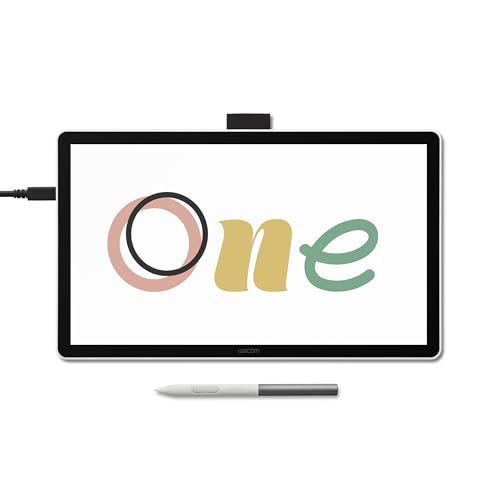
4. Wacom One 14 Drawing Tablet with Screen — Best Entry-Level Display Tablet
The Wacom One 14 is the most accessible display tablet Wacom makes, and the redesigned 2026 version earns a serious recommendation for students and artists making their first move to pen displays. The 14-inch full-laminated IPS screen with a paper-like texture coating eliminates the parallax gap between stylus tip and cursor that makes older or cheaper display tablets frustrating to learn on. 98% sRGB color accuracy is genuinely good for this price tier, and the anti-glare finish keeps reflections from disrupting your workflow in bright rooms.
The battery-free stylus handles light sketching lines to bold, pressure-loaded strokes without hesitation. Wacom does not publish the full pressure level spec for the One line the way they do for Pro Pen 3 products, but in practical use the responsiveness is smooth and natural — more than capable for illustration, design, and photo retouching. The tablet ships with trials of Clip Studio Paint Pro, Magma, Concepts, and Foxit software alongside Skillshare training access, which gives complete beginners a credible path to actually learning digital art rather than just owning hardware.
The Wacom One 14 connects to Mac via USB-C and is recognized immediately without driver conflicts. The 14-inch canvas feels generous enough for most creative work — not cramped like a 12-inch budget display but not so large it dominates a small desk. If you are ready to step into animation work after learning the fundamentals here, our best drawing tablets for animation guide will show you where to go next.
Pros:
- Full-laminated 14-inch IPS display with paper-texture anti-glare coating
- Includes substantial creative software bundle and training courses
- Plug-and-play USB-C for Mac, excellent beginner ergonomics
Cons:
- Pressure spec is less transparent than Wacom Pro line
- No ExpressKeys or programmable shortcut hardware on the body
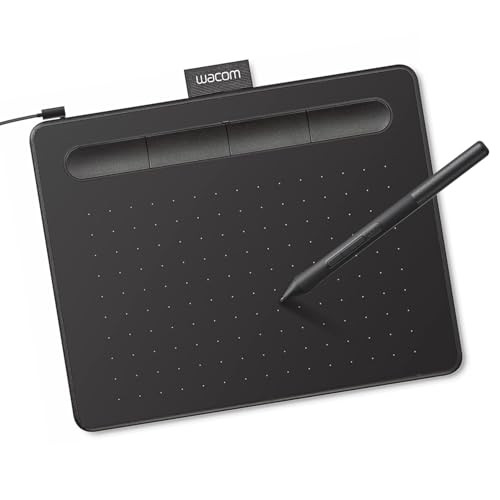
5. Wacom Intuos Small Graphics Drawing Tablet — Best Budget Pick for Beginners

Not everyone needs a screen tablet to get serious work done. The Wacom Intuos Small proves that point with a compact, affordable package that delivers Wacom's proven EMR technology — the same battery-free pen-to-surface accuracy that professionals rely on — at a price that removes the financial barrier to entry. Four customizable ExpressKeys give you fast access to undo, zoom, and your most-used tools without reaching for the keyboard, which feels surprisingly professional for a beginner-tier product.
The active drawing surface is smaller than the Medium, which means tighter wrist movements translate to cursor travel across your Mac screen. Some users find this intuitive; others prefer more surface area. If you are primarily doing photo editing, light illustration, or document markup, the Small's footprint is actually an advantage — it fits easily on a crowded desk and slides into a bag without thought. The stylus tracks smoothly across the surface with a satisfying resistance, and the battery-free design means you never deal with a dead pen mid-session.
Compatibility is broad: Mac, Windows, Android, and Chromebook all work without issue, making this a tablet you can carry across setups. The Intuos Small does not replace a display tablet for serious artists who need parallax-free drawing, but as a first tablet or a portable secondary input device, it is the most reliable budget option Wacom offers in 2026.
Pros:
- Genuine Wacom EMR technology at an accessible price
- 4 customizable ExpressKeys included
- Compact and portable — works across Mac, Windows, Android, Chromebook
Cons:
- Small active area can feel cramped for larger gestures and illustrations
- No screen — drawing on surface while watching monitor requires adaptation
6. HUION Kamvas 13 Gen 3 Drawing Tablet with Screen — Best Affordable 13-Inch Display
HUION has spent years closing the gap with Wacom on pen technology, and the Kamvas 13 Gen 3 is the most convincing evidence yet. The headline specification is the PenTech 4.0 stylus — 16,384 levels of pressure sensitivity, which is double what most Wacom display tablets at this price offer. In practice, that means finer gradations in pressure response when you are working in the light-touch zone of a sketch, building up tone with hatching, or blending digitally painted textures. Artists who pay close attention to their line quality notice the difference immediately.
The 13.3-inch fully laminated display uses HUION's Canvas Glass 2.0, a revised anti-sparkle coating that reduces glare better than previous generations while keeping the surface feel smooth under the stylus. Color coverage sits at 99% sRGB, which is competitive in this price range. Two physical dials on the tablet body let you adjust brush size and canvas zoom without a keyboard, and three customizable side buttons on the pen itself handle your most-used modifier shortcuts. The Kamvas 13 Gen 3 is not a standalone device — you need a connected Mac or PC to use it — but that is true of every display tablet in this guide.
Mac compatibility is clean. HUION has invested in macOS driver development and the current software is stable on both Sequoia and Sonoma. If you are weighing this against similar-sized screen options at lower price points, our best cheap drawing tablet with screen guide has the full breakdown of the budget category.
Pros:
- 16,384 pressure levels — double the industry-standard spec at this price
- Canvas Glass 2.0 with improved anti-sparkle and accurate lamination
- Dual dials on the body for hands-on brush/zoom control
- Solid macOS driver support across recent versions
Cons:
- 13.3-inch screen is compact — larger artists may want more canvas
- Brand and software ecosystem less mature than Wacom for advanced workflows
7. XPPen Artist Pro 16 Gen2 2.5K Drawing Tablet — Best Value 16-Inch with 16K Pressure
XPPen has made a bold claim with the Artist Pro 16 Gen2 — and backs it up. The X3 Pro smart chip stylus delivers 16,384 levels of pressure sensitivity, which XPPen describes as an industry first for this price tier. The difference between 8K and 16K pressure sensitivity is tangible when you are doing expressive, pressure-sensitive linework: the response curve in the ultra-light-touch range is noticeably more nuanced, giving you subtler control over weight transitions in sketches and ink work. TÜV SÜD certification for reduced blue light emission is a practical benefit for long creative sessions.
The 16-inch display runs at 2560 x 1600 QHD resolution on a fully laminated, anti-glare etched glass panel with a 16:10 aspect ratio and 178-degree viewing angles. Full lamination eliminates the air gap between the glass and the screen panel, which is the single biggest ergonomic upgrade any display tablet can offer — your stylus tip lands exactly where the cursor appears, not a few millimeters offset. Color coverage reaches 159% sRGB, which is wide enough for HDR-aware creative work. The included Mini Keydial adds a physical dial and shortcut keys that clip onto your setup, partially compensating for the lack of built-in ExpressKeys on the tablet body itself.
Setup on Mac requires a 3-in-1 cable included in the box, and driver installation through XPPen's software is straightforward. The Artist Pro 16 Gen2 is the pick for artists who want a large, high-resolution drawing surface with next-generation pen technology without paying Wacom Cintiq prices. For value per square inch of drawing surface in 2026, nothing else in this list comes close.
Pros:
- 16,384 pressure levels via X3 Pro smart chip stylus
- 2.5K QHD fully laminated, anti-glare etched glass panel
- 159% sRGB color coverage — exceptionally wide gamut for the price
- Includes Mini Keydial for programmable shortcut access
Cons:
- No built-in ExpressKeys on the tablet — Keydial is a separate accessory
- 3-in-1 cable setup is less elegant than single-cable USB-C solutions
How to Pick the Best Drawing Tablet for Mac
Screen Tablet vs. Pen Tablet: Which Type Is Right for You?
This is the first decision to make, and it shapes everything else. A pen tablet (like the Wacom Intuos line) has no screen — you draw on a flat surface while watching your Mac monitor. A display tablet (like the Cintiq or Kamvas line) has a built-in screen so you draw directly on the image. Beginners often assume display tablets are superior, but many professional illustrators and retouchers prefer the posture-friendly ergonomics of a screenless tablet. Display tablets are the obvious choice if you do detailed character illustration or if the hand-eye coordination disconnect of pen tablets feels too foreign after weeks of practice.
Pressure Sensitivity: What the Numbers Actually Mean
You will see pressure levels listed as 4096, 8192, or 16,384 across these tablets. More levels mean finer gradations between a feather-light touch and full pen pressure. In practical terms, the difference between 4096 and 8192 is visible in sensitive line work — very light, delicate strokes resolve more cleanly with higher sensitivity. The jump from 8192 to 16,384 is real but more subtle; you will notice it primarily in expressive gesture drawing and precision ink work. For photo editing and design tasks, 4096 levels is genuinely sufficient. For dedicated illustration and character art, aim for 8192 or above.
Display Size and Resolution
Bigger is not always better. A 27-inch display tablet commands significant desk real estate and requires wider arm movements that not everyone finds comfortable. Most professional illustrators land on 16 inches as the sweet spot — enough canvas for detailed work without requiring you to reposition your arm constantly. Resolution matters as much as size: a 2.5K panel on a 16-inch screen is noticeably sharper than 1080p at the same size, and you will see the difference when painting fine texture detail. If you are working across multiple large displays, also check our guide to the best large tablets for context on how these fit into wider multi-screen setups.
Mac Compatibility and Driver Quality
Every tablet on this list supports macOS, but driver quality varies. Wacom's drivers are the most mature and stable, with consistent updates that track new macOS releases. HUION and XPPen have improved substantially in recent years but occasionally lag a version behind major macOS updates. Before buying, check the manufacturer's website for confirmed compatibility with your current macOS version. Driver conflicts with macOS security settings are the single most common setup problem — both HUION and XPPen require an accessibility permission grant in System Settings that is easy to miss. Wacom's installer handles this more gracefully.
Common Questions
Do drawing tablets work with all Mac software?
Yes. All tablets on this list work as standard input devices recognized by macOS, which means they function in any software that accepts pen pressure — Procreate (via Sidecar or directly on display tablets), Adobe Photoshop, Illustrator, Fresco, Clip Studio Paint, Affinity Designer, and others. Some software-specific pressure curve settings may need adjustment in the tablet's driver software, but basic functionality is universal.
Is Wacom worth the price premium over HUION or XPPen?
For professional workflows where driver stability and long-term support matter, yes. Wacom's ecosystem is more mature, their drivers receive consistent updates, and their hardware has a longer proven track record. HUION and XPPen have closed the hardware gap significantly in 2025-2026, particularly on raw pen sensitivity specs, but Wacom still leads on software reliability and overall feel. If budget is tight, HUION Kamvas and XPPen Artist Pro are excellent alternatives — just verify driver compatibility with your macOS version before purchasing.
Can I use a drawing tablet with an M1, M2, or M3 Mac?
Yes. All tablets in this guide are compatible with Apple Silicon Macs running M1, M2, and M3 chips. Driver developers have updated their software for the ARM architecture. Wacom, HUION, and XPPen all publish Apple Silicon-native driver versions. A small number of older tablet models had early compatibility issues after the M1 launch, but current-generation tablets and updated drivers resolve those completely.
What is the difference between a drawing tablet and an iPad for digital art?
An iPad with Apple Pencil is a standalone device — it runs apps and does not require a connected computer. Drawing tablets in this guide are computer peripherals — they extend your Mac's input capability. Display tablets give you a dedicated drawing surface with professional-grade color accuracy and pen technology that typically surpasses Apple Pencil in pressure sensitivity and tilt support. For studio work tied to desktop software like Photoshop or Clip Studio Paint, a dedicated drawing tablet is the professional choice. For portable, standalone creative work, the iPad is more flexible.
Do I need a large drawing tablet or will a small one do?
It depends on your drawing style. Artists who use large arm movements for gesture drawing and character illustration benefit from medium to large active areas. Designers and photo retouchers who primarily work with precise, controlled strokes can work effectively on smaller tablets. A general rule: if you are a beginner, start with a medium-size tablet and adjust from there. Going too small can create cramped wrist movements that build bad habits early.
Which drawing tablet is best for beginners on Mac in 2026?
The Wacom One 14 is the best entry-level display tablet for beginners — it includes a generous software bundle, has a paper-like screen texture that eases the learning curve, and pairs cleanly with any Mac. If you prefer a screenless option at a lower price, the Wacom Intuos Small delivers proven Wacom pen technology at an accessible entry point. Both are solid starting places that leave room to grow into more advanced hardware as your skills develop.
Buy on Walmart
- Wacom Intuos Pro Medium Bluetooth Professional Graphic Drawi — Walmart Link
- Wacom Cintiq 16 Drawing Tablet with Screen, 16 inch Display, — Walmart Link
- Wacom Cintiq Pro 27 Creative Pen Display (4K Graphic Drawing — Walmart Link
- Wacom One 14 Drawing Tablet with Screen, 14” HD Full-Laminat — Walmart Link
- Wacom Intuos Small Graphics Drawing Tablet, Includes Trainin — Walmart Link
- HUION Kamvas 13 (Gen 3) Drawing Tablet with Screen,13.3" Ful — Walmart Link
- XPPen Artist Pro 16 Gen2 2.5K 16 inch QHD Drawing Tablet wit — Walmart Link
Buy on eBay
- Wacom Intuos Pro Medium Bluetooth Professional Graphic Drawi — eBay Link
- Wacom Cintiq 16 Drawing Tablet with Screen, 16 inch Display, — eBay Link
- Wacom Cintiq Pro 27 Creative Pen Display (4K Graphic Drawing — eBay Link
- Wacom One 14 Drawing Tablet with Screen, 14” HD Full-Laminat — eBay Link
- Wacom Intuos Small Graphics Drawing Tablet, Includes Trainin — eBay Link
- HUION Kamvas 13 (Gen 3) Drawing Tablet with Screen,13.3" Ful — eBay Link
- XPPen Artist Pro 16 Gen2 2.5K 16 inch QHD Drawing Tablet wit — eBay Link
Final Thoughts
The best drawing tablet for your Mac is the one that matches your actual workflow — not the most expensive one on the shelf. Start by deciding between a screen and screenless tablet, then match your budget to the pressure sensitivity and display size that your creative work genuinely demands. Whether you go with the professional precision of the Wacom Intuos Pro Medium, the stunning display of the Cintiq Pro 27, or the extraordinary value of the XPPen Artist Pro 16 Gen2, each pick in this list will immediately elevate your digital art on Mac in 2026 — click through to Amazon to check current pricing and pick the one that fits your setup today.
 |
 |
 |
 |

About Priya Anand
Priya Anand covers laptops, tablets, and mobile computing for Ceedo. She holds a bachelor degree in computer science from the University of Texas at Austin and has spent the last nine years writing reviews and buying guides for consumer electronics publications. Before joining Ceedo, Priya worked as a product analyst at a major retailer where she helped curate the laptop and tablet category. She has personally benchmarked more than 200 portable computers and is particularly interested in battery longevity, repairability, and the trade-offs between Windows, macOS, ChromeOS, and Android tablets. Outside of work, she runs a small Etsy shop selling laptop sleeves she sews herself.