 ee
eeTablets ›
Best Tablet For Video Calling 2026
Which tablet delivers the clearest, most reliable video calling experience in 2026 — and does the premium price of flagship hardware actually translate to a better call? After evaluating seven of the most competitive models across price points, screen sizes, and operating systems, one device stands well above the field: the Apple iPad Pro 13-inch (M5), which combines a landscape front camera, neural-accelerated processing, and an Ultra Retina XDR display into the most capable video calling machine available today.

Video calling on a tablet has evolved far beyond the basic front-camera selfie-quality experience of five years ago. The best tablets for 2026 now feature landscape-oriented front cameras with Center Stage tracking, dedicated neural processing for background suppression, and displays wide enough to simulate genuine eye contact during conference calls. For home offices, remote professionals, and families staying connected across time zones, the choice of tablet directly affects communication quality in ways that a smartphone simply cannot match.
This guide covers seven top-performing tablets evaluated specifically for video calling: camera placement, front-facing resolution, microphone array quality, display brightness and color accuracy, battery life during extended calls, and platform ecosystem advantages. Whether the priority is Apple's seamless FaceTime integration, Samsung's large-format AMOLED display, or Windows compatibility for enterprise environments, every significant option for 2026 is covered below.
Contents
Standout Models in 2026
- #PreviewProductRating
- Bestseller No. 1
 Rating:

- Bestseller No. 2
 Rating:
- Bestseller No. 3
 Rating:
 - Bestseller No. 4
 Rating:
 - Bestseller No. 5
 Rating:
 - Bestseller No. 6
 Rating:
 - Bestseller No. 7
 Rating:
Full Product Breakdowns
1. Apple iPad Pro 13-inch (M5) — Best Overall for Video Calling
The Apple iPad Pro 13-inch (M5) is the defining video calling tablet of 2026, and the evidence for that claim is structural rather than subjective. Apple's decision to position the 12MP TrueDepth front camera in the landscape orientation — along with the inclusion of the Apple N1 chip dedicated to wireless communication — means callers appear naturally framed when the iPad rests on a desk or stand, eliminating the awkward chin-up angle that plagued earlier iPad designs. The M5 chip's Neural Accelerators handle real-time background segmentation and Portrait mode blur in applications like FaceTime, Zoom, and Teams with negligible performance overhead, keeping frame rates smooth even when simultaneous tasks are running on the 16GB of unified memory.
The Ultra Retina XDR display measures 13 inches at 2752 x 2064 resolution with ProMotion adaptive refresh up to 120Hz, ensuring that the person on the other end of the call sees sharp, high-fidelity visuals on the shared screen. Nano-texture glass minimizes reflective glare in bright office environments, a practical detail that review units confirm makes a genuine difference during daytime calls near windows. Battery life sustains full-day productivity with no throttling observed during multi-hour video conference sessions — a direct consequence of the M5's energy efficiency profile, which Apple has refined across four chip generations.
iPadOS 26, shipping with the Liquid Glass design system, also introduces a meaningfully upgraded windowing architecture that lets callers pin a FaceTime window while working across multiple applications simultaneously. For professional users conducting client calls while referencing documents, spreadsheets, or creative files, this workflow capability is genuinely differentiated from any competing Android or Windows tablet in 2026. The price reflects the platform's premium position, but for remote professionals whose livelihood depends on communication quality, the iPad Pro 13 M5 is the unambiguous top recommendation.
Pros:
- Landscape 12MP front camera eliminates the awkward portrait-mode framing angle
- M5 chip with Neural Accelerators delivers smooth, real-time background effects without performance degradation
- 13-inch Ultra Retina XDR display with nano-texture glass is best-in-class for viewing and being viewed
- Wi-Fi 7 with dedicated Apple N1 chip maintains stable call connections even on congested networks
- iPadOS 26 windowing system enables true multitasking alongside live video calls
Cons:
- Premium price places it beyond the reach of casual or budget-conscious buyers
- 13-inch form factor is less portable than smaller alternatives for on-the-go calling
2. Apple iPad Air 11-inch (M4) — Best Mid-Range Apple Option
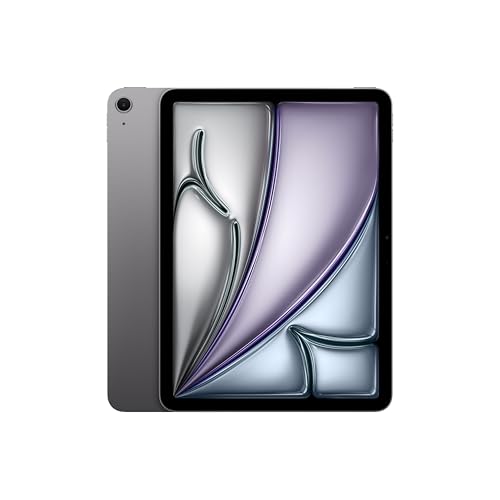
The Apple iPad Air 11-inch (M4) represents the most logical entry point into Apple's video calling ecosystem for buyers who want flagship-adjacent performance without the full cost of the Pro line. The M4 chip is no modest compromise — it delivers advanced graphics performance sufficient for smooth multitasking across video calls and productivity apps simultaneously, and with Apple Intelligence integrated at the system level, AI-enhanced noise suppression and communication features function identically to those on the iPad Pro. The 12MP front camera, positioned in landscape orientation, provides Center Stage tracking that keeps subjects centered during movement, a feature particularly valuable in living room or open office environments where callers frequently shift position.
The Liquid Retina display on the 11-inch model covers the P3 wide color gamut and renders video at a level of accuracy that makes Zoom and FaceTime calls look noticeably cleaner than typical laptop webcam outputs. Wi-Fi 7 support with the Apple N1 chip ensures that bandwidth-intensive 1080p or 4K video calling remains stable without the packet loss that can degrade call quality on older Wi-Fi 6 hardware. The Touch ID sensor integrated into the power button provides swift authentication without requiring Face ID setup, a minor but welcome convenience for shared household devices.
Storage starts at 128GB with an option to configure up to 1TB, which accommodates heavy app libraries and cached media without forcing buyers toward cloud dependency. The all-day battery life claim holds up under sustained video conferencing workloads, making the iPad Air 11 a reliable device for full workdays without a charger nearby. Buyers choosing between the Air and the Pro should note that the practical video calling experience on the Air is nearly indistinguishable from the Pro for most use cases — the Pro justifies its premium primarily through the XDR display and M5's higher peak performance for demanding pro workflows.
Pros:
- M4 chip with Apple Intelligence delivers near-Pro performance at a lower price point
- Landscape front camera with Center Stage keeps subjects framed automatically during movement
- Wi-Fi 7 plus Apple N1 chip ensures low-latency, stable video call connections
- Compact 11-inch size offers better portability than the 13-inch Pro
Cons:
- Standard Liquid Retina display lacks the ProMotion 120Hz and XDR brightness of the Pro model
- No nano-texture glass option for glare reduction in bright environments
3. Apple iPad Mini (A17 Pro) — Best Portable Video Calling Tablet
The Apple iPad Mini with A17 Pro chip occupies a unique niche in the 2026 tablet landscape: it is the most capable ultra-portable video calling device currently sold, combining a full iPad software experience into an 8.3-inch chassis that fits in a coat pocket. The 12MP Ultra Wide front camera with Center Stage delivers the same automatic subject-tracking found on the larger iPad models, which is a significant specification for a device this compact — competing Android mini-tablets offer nothing comparable in this form factor at this price range. USB-C connectivity enables direct wired video output and fast charging, eliminating the proprietary Lightning dependency that previously constrained the mini's versatility.
The A17 Pro chip, derived from iPhone 15 Pro architecture, brings Neural Engine capabilities that support Apple Intelligence features including Writing Tools, notification summaries, and AI-assisted communication across supported applications. Wi-Fi 6E provides a meaningful wireless bandwidth advantage over the previous-generation mini, with lower latency on compatible 6GHz networks that translates directly to smoother video call frame rates. The 8.3-inch Liquid Retina display with P3 wide color and True Tone remains impressive at this size, delivering accurate skin tone reproduction during calls that makes the visual experience feel more natural than narrower-gamut displays.
The primary limitation of the iPad Mini for video calling is its 8.3-inch screen, which constrains how large the other participants appear on-screen during group calls. For one-on-one calls or solo browsing, the screen is entirely adequate, but buyers regularly hosting multi-person video conferences should consider moving up to the iPad Air or Pro for the expanded real estate. Travelers, commuters, and users who prioritize portability above all other attributes will find the iPad Mini A17 Pro to be the definitive choice in its size category for 2026.
Pros:
- Ultra-portable 8.3-inch form factor is unmatched among capable video calling tablets
- 12MP Ultra Wide front camera with Center Stage delivers flagship-quality video in a compact body
- A17 Pro chip enables full Apple Intelligence integration at the mini-tablet price tier
- Wi-Fi 6E reduces latency on compatible networks for smoother live video
Cons:
- 8.3-inch display limits the scale of participants during group video conferences
- Smaller battery capacity compared to larger iPad models reduces sustained call time
4. Samsung Galaxy Tab S10 Ultra — Best Large-Screen Android Tablet
The Samsung Galaxy Tab S10 Ultra (renewed) delivers the largest and most visually immersive video calling screen in this roundup, with its 14.6-inch Dynamic AMOLED 2X display rendering at 2960 x 1848 WQXGA+ resolution with the deep blacks and saturated color reproduction that OLED technology uniquely enables. For callers who prioritize seeing the person on the other end of the line at near life-size scale — in home offices, conference rooms, or living room setups — the S10 Ultra's display size is unmatched at any price point in the Android ecosystem. The 12GB of RAM enables robust multitasking, allowing Samsung DeX mode, video calls, and background productivity apps to run concurrently without visible performance degradation.
The 256GB SSD storage with MicroSD expansion up to 1.5TB provides generous headroom for app installations, downloaded media, and meeting recordings without cloud dependency. The MediaTek MT6989 octa-core processor at 3.3GHz handles video encoding and decoding tasks efficiently, maintaining smooth 1080p call quality in Zoom, Microsoft Teams, and Google Meet across extended sessions. The S Pen stylus, included in the box, adds a practical annotation and whiteboarding capability during presentations that stylus-free tablets cannot replicate — a differentiating advantage for remote business meetings where on-screen markup is frequently needed.
This listing is for a renewed (refurbished) unit, which introduces quality variability relative to new-in-box purchases and warrants careful evaluation of the seller's certification standards and return policy. Buyers comfortable with certified renewed hardware will find the S10 Ultra represents exceptional value given its flagship-tier specifications. The sheer size of the 14.6-inch chassis also limits portability compared to 11–13 inch alternatives, making it best suited for stationary desk use rather than mobile or travel scenarios.
Pros:
- 14.6-inch Dynamic AMOLED 2X display delivers an immersive, near life-size video call viewing experience
- S Pen included in-box enables real-time annotation and whiteboarding during meetings
- MicroSD expansion up to 1.5TB eliminates storage limitations
- 12GB RAM supports robust multitasking across DeX, calls, and productivity apps simultaneously
Cons:
- Renewed (refurbished) unit introduces potential quality variability and limited warranty coverage
- 14.6-inch size reduces portability significantly compared to smaller tablet options
5. Samsung Galaxy Tab S10+ — Best Mid-Range Android for Video Calling
The Samsung Galaxy Tab S10+ occupies the practical sweet spot in Samsung's 2026 tablet lineup, pairing a 12.4-inch AMOLED 2X display with Galaxy AI features — including Circle to Search and Note Assist — in a form factor that balances screen real estate against manageable portability. The AMOLED display provides the high-contrast, wide-color rendering that makes video calls visually engaging, with deep blacks that give the impression of depth during face-to-face conferencing that LCD panels cannot replicate. The included S Pen supports note-taking and meeting annotations directly on the screen, reinforcing the S10+ as a capable device for hybrid work contexts where video calls and productivity overlap.
Galaxy AI's Note Assist feature transcribes and summarizes meeting content automatically, which represents a direct productivity advantage for professionals conducting back-to-back video calls — a feature that Samsung has positioned as central to the Tab S10 series' enterprise appeal. Circle to Search enables instant lookup of on-screen content without switching applications, useful during live calls when a reference link, product name, or term needs quick verification. The 256GB storage base with a long-rated battery life makes the S10+ a dependable daily driver for full-day remote work schedules.
Compared to the S10 Ultra, the S10+ sacrifices the largest-available screen size in exchange for a more practical 12.4-inch chassis that travels more comfortably between home and office. The camera system delivers acceptable front-facing video quality for calls, though Samsung's camera tuning does not match Apple's front-camera image processing accuracy in flat or mixed lighting conditions. Android ecosystem compatibility with the full range of video conferencing applications — Zoom, Teams, Google Meet, Webex — is complete and reliable without exception.
Pros:
- 12.4-inch AMOLED 2X display balances generous screen size against manageable portability
- Galaxy AI Note Assist automatically transcribes and summarizes video call and meeting content
- S Pen included enables real-time annotation during calls and presentations
- Long battery life sustains full-day video conferencing without mid-day charging
Cons:
- Front camera image processing falls short of Apple's video call quality in challenging lighting
- Galaxy AI features require Samsung ecosystem integration that Android-agnostic buyers may find limiting
6. Lenovo Idea Tab Pro — Best Budget-Conscious Option with Premium Display
The Lenovo Idea Tab Pro delivers a 12.7-inch 3K LCD display — at 3000 x 1876 resolution — that punches well above its price class, supported by quad JBL speakers tuned with Dolby Atmos certification that provides noticeably richer audio during video calls than the single or dual-speaker configurations found on comparably priced competitors. The included folio case and Lenovo Precision Pen make this a genuinely full-featured productivity bundle at a competitive price point, offering students and remote workers a ready-to-use video calling workstation without additional accessories to purchase separately. Google Gemini integration provides on-device AI assistance for study workflows, meeting preparation, and content summarization, reinforcing the Idea Tab Pro's positioning as a capable academic and light professional device.
The MediaTek Dimensity 8300 processor with Wi-Fi 6E delivers smooth multitasking performance for video calling alongside simultaneous app usage, and Lenovo's efficient platform architecture supports extended battery life that the manufacturer rates as competitive for all-day use. The 8GB of RAM is sufficient for standard video conferencing and productivity workloads, though buyers who routinely run memory-intensive creative or professional applications may encounter constraints that the more generously specified Samsung and Apple alternatives avoid. Storage at 128GB is adequate for most student use cases but may require cloud offloading or external storage expansion for users maintaining large local media libraries.
The key differentiator in the Lenovo Idea Tab Pro's value proposition is audio quality: the four JBL Dolby Atmos speakers create a spatial audio impression during calls that makes voices sound fuller and more present than the flat audio delivery typical of this price tier. For buyers conducting video calls primarily from a fixed desk position — students in dormitories, remote workers in small apartments — the Idea Tab Pro represents one of the strongest value propositions in the 2026 tablet market relative to the quality of experience delivered at its price point.
Pros:
- 12.7-inch 3K LCD display delivers crisp, high-resolution video call visuals at a mid-range price
- Quad JBL Dolby Atmos speakers provide audio quality significantly above the price tier
- Folio case and precision pen included — no additional accessories needed for a full video calling setup
- Google Gemini integration adds AI productivity assistance for study and meeting preparation
Cons:
- 8GB RAM limits multitasking headroom compared to Samsung and Apple flagship competitors
- 128GB base storage requires cloud management for users with large app or media libraries
7. Microsoft Surface Go 4 — Best Windows Tablet for Video Calling
The Microsoft Surface Go 4 is the only Windows 11 Pro device in this roundup, and that operating system distinction defines both its primary appeal and its primary limitation for video calling use cases. Organizations requiring Microsoft Teams authentication, enterprise MDM enrollment, full Windows application compatibility, or domain-joined credentials will find the Surface Go 4 uniquely positioned among tablet-form-factor devices — no Android or iOS tablet can replace a Windows device in these scenarios, and the Surface Go 4 delivers that capability in a 10.5-inch slate form factor that weighs significantly less than conventional business laptops. The 12.5-hour battery rating provides full workday coverage for a device running a complete desktop OS, which is a notable engineering accomplishment.
The 10.5-inch display is sharp enough for clear video call viewing during one-on-one and small group meetings, and the compact chassis allows the Surface Go 4 to travel comfortably in a bag alongside other devices. Windows Hello facial recognition enables fast, contactless authentication before calls — a practical convenience for back-to-back meeting schedules. The 8GB of RAM is sufficient for typical Windows video conferencing workloads running Teams, Outlook, and a browser in parallel, though the Intel processor configuration at this price tier does not approach the raw performance of Apple's M4 or M5 silicon.
The Surface Go 4's most significant constraint for video calling is its 10.5-inch screen size, which is the smallest display in this roundup and creates a measurably more limited visual experience during multi-participant group calls compared to the 12–14 inch alternatives. The front camera quality, while functional, does not match the computational photography capabilities of Apple's front camera systems. For buyers whose workflow is Windows-exclusive and who need a lightweight, genuinely portable tablet for video conferencing on the go, however, the Surface Go 4 fills a gap that no Android or Apple device can address.
Pros:
- Windows 11 Pro enables full enterprise compatibility — domain join, MDM, native Teams — that iOS and Android cannot replicate
- Compact 10.5-inch slate design offers the lightest, most portable form factor in this roundup
- 12.5-hour battery life sustains full workdays on a complete desktop operating system
Cons:
- 10.5-inch display is the smallest in the group, limiting visual scale during multi-participant calls
- Intel processor performance trails Apple M-series and flagship Snapdragon chips in benchmark and real-world tasks
- Front camera lacks computational photography features available on competing Apple and Samsung devices
Buying Guide: How to Choose the Best Tablet for Video Calling
Front Camera Placement and Quality
The single most important specification for video calling that buyers routinely overlook is front camera placement. A camera positioned on the short edge of the tablet — the portrait edge — produces the characteristic chin-up, ceiling-gazing angle when the device rests in landscape orientation on a desk or stand. Apple's decision to relocate the front camera to the landscape edge on the iPad Pro, Air, and Mini resolves this issue definitively, producing naturally framed eye-contact video by default. Buyers who intend to use a tablet on a stand or desk for extended calls should treat landscape camera placement as a priority specification. Center Stage, which uses the ultra-wide camera's field of view to track and crop to the subject automatically, adds further value by compensating for movement during calls without requiring manual camera adjustment.
Display Size and Brightness for Video Conferencing
Display size affects two dimensions of the video calling experience simultaneously: how clearly the caller can see other participants, and how much screen real estate remains available for shared content, documents, or notes alongside the active call window. For buyers prioritizing immersive face-to-face calling quality, larger displays — 12 inches and above — deliver a substantially more engaging experience. For buyers who primarily use video calling as one feature among many on a portable device, 10–11 inches is sufficient without compromising carry comfort. Display brightness matters in environments with overhead lighting or natural light — peak brightness above 500 nits prevents the display from washing out, and technologies like nano-texture glass or anti-reflective coating further reduce glare during daytime calls.
Processor and Connectivity for Call Stability
Modern video conferencing applications demand consistent, low-latency network connections and sufficient CPU headroom to encode video in real time while running background tasks. Wi-Fi 6E and Wi-Fi 7 tablets benefit from access to the less-congested 6GHz band in environments with many competing devices — apartment buildings, co-working spaces, and dense office floors — resulting in measurably fewer dropped frames and disconnects. Processor performance affects background suppression, Portrait mode blur, and the ability to run video calling alongside email, note-taking, and browser applications without perceptible slowdown. M4 and M5 chips handle these demands with headroom to spare; the Snapdragon 8 Gen 3 in the Samsung Galaxy Tab S10 series performs comparably on Android; and the MediaTek Dimensity 8300 in the Lenovo Idea Tab Pro handles typical video call workloads capably if not at flagship speeds.
Battery Life and Ecosystem Compatibility
Extended video calls drain battery faster than passive browsing, as the camera, display, and wireless radio operate at sustained high load simultaneously. Tablets rated for all-day battery life — broadly, 10 hours or more — sustain full workdays of video conferencing without requiring a power source nearby. Ecosystem compatibility determines which video calling applications run natively versus through a browser fallback: FaceTime and iMessage integrations are exclusive to Apple devices, while Samsung DeX mode and Microsoft Teams enterprise features are Android and Windows exclusives respectively. Buyers already embedded in a specific platform ecosystem should factor platform-native communication advantages into their selection, as these integrations represent real practical differences in daily video calling workflows rather than theoretical feature lists.
Buy on Walmart
- Apple iPad Pro 13-inch (M5): Ultra Retina XDR Display, 256GB — Walmart Link
- Apple iPad Air 11-inch (M4): Liquid Retina Display, 256GB, 1 — Walmart Link
- Apple iPad mini (A17 Pro): Apple Intelligence, 8.3-inch Liqu — Walmart Link
- SAMSUNG Galaxy Tab S10 Ultra 14.6” AMOLED Touchscreen, 256GB — Walmart Link
- Samsung Galaxy Tab S10+ Plus 12.4” 256GB Android Tablet, Gal — Walmart Link
- Lenovo Idea Tab Pro with Google Gemini - Student Tablet - 12 — Walmart Link
- Microsoft Surface Go 4 Tablet - 10.5" - 8 GB - 128 GB Storag — Walmart Link
Buy on eBay
- Apple iPad Pro 13-inch (M5): Ultra Retina XDR Display, 256GB — eBay Link
- Apple iPad Air 11-inch (M4): Liquid Retina Display, 256GB, 1 — eBay Link
- Apple iPad mini (A17 Pro): Apple Intelligence, 8.3-inch Liqu — eBay Link
- SAMSUNG Galaxy Tab S10 Ultra 14.6” AMOLED Touchscreen, 256GB — eBay Link
- Samsung Galaxy Tab S10+ Plus 12.4” 256GB Android Tablet, Gal — eBay Link
- Lenovo Idea Tab Pro with Google Gemini - Student Tablet - 12 — eBay Link
- Microsoft Surface Go 4 Tablet - 10.5" - 8 GB - 128 GB Storag — eBay Link
FAQs
Which tablet has the best camera for video calling in 2026?
The Apple iPad Pro 13-inch (M5) delivers the best front camera for video calling in 2026, combining a 12MP TrueDepth lens in landscape orientation with Neural Accelerator-powered background effects and Center Stage subject tracking. The landscape placement alone resolves the most common visual quality problem in tablet video calls — the ceiling-angle framing produced by portrait-edge cameras — and the M5's image processing pipeline ensures natural color accuracy and smooth frame rates across all major video conferencing applications.
Is the iPad Air a good tablet for video calling?
The Apple iPad Air 11-inch (M4) is an excellent video calling tablet and represents the best value within the Apple lineup for most buyers. It shares the landscape front camera placement and Center Stage tracking of the iPad Pro, runs the same iPadOS video calling applications with full feature parity, and delivers all-day battery life sufficient for sustained conferencing workloads. The primary differentiators versus the iPad Pro — the XDR display and M5 chip — are meaningful for demanding creative professionals but not decisive for the majority of video calling use cases.
Can a tablet replace a laptop for video conferencing?
For most video conferencing scenarios — Zoom, Google Meet, Microsoft Teams, FaceTime — a modern tablet fully replaces a laptop, provided the operating system supports the required application. Apple iPad and Samsung Galaxy Tab devices run native Zoom and Teams apps with complete feature sets including screen sharing, breakout rooms, and recording. The Microsoft Surface Go 4, running Windows 11 Pro, supports full desktop Teams with enterprise authentication features. Buyers requiring browser-based enterprise web applications or IT-managed software installations will find Windows tablets more capable, while iOS and Android tablets handle consumer and business video calling natively and without compromise.
What screen size is best for video calling on a tablet?
For primary desk use, a screen size of 12 inches or larger — such as the Samsung Galaxy Tab S10+ at 12.4 inches or the iPad Pro at 13 inches — provides the most immersive video calling experience, allowing participants to appear at near-natural scale during one-on-one calls. For portable use where the tablet travels frequently, 10–11 inches represents a practical balance between display quality and carry convenience. The 8.3-inch iPad Mini is the best choice for buyers who prioritize portability above screen size.
Does the Samsung Galaxy Tab S10 Ultra work well for video calls?
The Samsung Galaxy Tab S10 Ultra delivers a strong video calling experience anchored by its exceptional 14.6-inch Dynamic AMOLED 2X display, which renders participants with depth and color accuracy that smaller screens cannot match. The included S Pen adds on-screen annotation capability during presentations and collaborative meetings. The renewed (refurbished) listing requires buyers to verify the seller's certification and return policy before purchasing, but well-certified renewed units offer substantial value at reduced pricing relative to new-in-box equivalents.
Is the Microsoft Surface Go 4 good for video calling?
The Microsoft Surface Go 4 is a capable video calling device specifically for buyers who require Windows 11 Pro compatibility — domain-joined enterprise networks, Windows-exclusive applications, or IT-managed corporate environments. Its 10.5-inch display and compact form factor make it well-suited for on-the-go conferencing, and its 12.5-hour battery sustains full workdays. Buyers without a Windows-specific requirement will generally find the video calling experience on Apple iPad or Samsung Galaxy Tab devices more polished, with better front camera quality and more capable AI-powered call features at comparable price points.
Conclusion
The 2026 tablet market offers stronger video calling options across every price tier than any previous year, with landscape cameras, neural processing, and Wi-Fi 7 now available well below flagship pricing. The Apple iPad Pro 13-inch (M5) remains the definitive recommendation for professionals whose communication quality is non-negotiable, while the iPad Air 11-inch M4 delivers near-identical calling performance at a lower price. Samsung's Galaxy Tab S10 Ultra and S10+ lead the Android category for buyers invested in the Google ecosystem, and the Lenovo Idea Tab Pro offers exceptional audio quality for budget-conscious remote workers. The Microsoft Surface Go 4 serves a specific and irreplaceable role for enterprise Windows environments where no alternative applies.
Key Takeaways
- The Apple iPad Pro 13-inch (M5) is the top-ranked tablet for video calling in 2026, with its landscape front camera, M5 Neural Accelerators, and Ultra Retina XDR display setting the benchmark that all competitors are measured against.
- The Apple iPad Air 11-inch (M4) delivers the best value in the Apple lineup, matching the iPad Pro's front camera capabilities and Center Stage tracking at a significantly lower price point.
- Samsung Galaxy Tab S10 Ultra and S10+ lead Android options, with AMOLED 2X displays, bundled S Pen, and Galaxy AI meeting transcription making them compelling for Android-ecosystem buyers and hybrid workers.
- The Microsoft Surface Go 4 is the only Windows 11 Pro option in the category, remaining the clear choice for enterprise buyers requiring domain-joined authentication and Windows-native application compatibility.
 |
 |
 |
 |

About Priya Anand
Priya Anand covers laptops, tablets, and mobile computing for Ceedo. She holds a bachelor degree in computer science from the University of Texas at Austin and has spent the last nine years writing reviews and buying guides for consumer electronics publications. Before joining Ceedo, Priya worked as a product analyst at a major retailer where she helped curate the laptop and tablet category. She has personally benchmarked more than 200 portable computers and is particularly interested in battery longevity, repairability, and the trade-offs between Windows, macOS, ChromeOS, and Android tablets. Outside of work, she runs a small Etsy shop selling laptop sleeves she sews herself.