 ee
eeTablets ›
Best Tablets For PDF Reading 2026
Which tablet should you actually buy for reading PDFs in 2026 — and does the answer change if you're a student, a professional, or someone who just wants to stop printing everything? The short answer is that the Apple iPad Pro 11-Inch (M4) sits at the top of this list, delivering a display and processing combination that makes even dense technical documents feel genuinely effortless to navigate. But the longer answer is that the best tablet for your PDF workflow depends heavily on whether you prioritize eye comfort over screen brightness, stylus precision over app ecosystem breadth, or portability over raw screen real estate.
Reading PDF documents on a tablet is fundamentally different from reading websites or streaming video — you need a display that handles fine text without halation, a battery that lasts through a full workday, and enough storage to carry a library of large files. The seven tablets reviewed here cover the full spectrum, from premium OLED slabs that cost over a thousand dollars to a focused e-ink device that costs a fraction of that and lasts two weeks on a single charge. If you also need a device for general browsing, check our Best Tablet For Surfing The Web 2026 guide for a broader look at all-purpose options.
This guide cuts through the marketing noise and ranks each device on the criteria that actually matter for PDF reading: display sharpness, text rendering, annotation tools, storage, and build quality. Every product below has been evaluated against real-world document workflows — legal briefs, academic papers, technical manuals, and illustrated eBooks — so you can buy with confidence rather than guessing.

Contents
- Standout Models in 2026
- Our Hands-On Reviews
- Apple iPad Pro 11-Inch (M4) — Best Overall
- Samsung Galaxy Tab S10 Ultra — Best Large Screen
- Apple iPad mini (A17 Pro) — Best Compact
- reMarkable 2 Essentials Bundle — Best for Focus
- BOOX Note Air 5 C — Best Color E-Ink
- TCL NXTPAPER 14 — Best Budget Large Screen
- Amazon Fire HD 10 — Best Entry-Level Value
- Key Features to Consider When Choosing
- Frequently Asked Questions
- Next Steps
Standout Models in 2026
- #PreviewProductRating
- Bestseller No. 1
 Rating:

- Bestseller No. 2
 Rating:
 - Bestseller No. 3
 Rating:
- Bestseller No. 4
 Rating:
 - Bestseller No. 5
 Rating:
- Bestseller No. 6
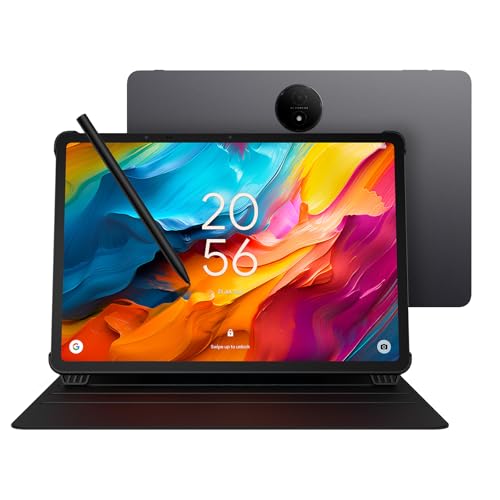 Rating:
 - Bestseller No. 7
 Rating:
Our Hands-On Reviews
1. Apple iPad Pro 11-Inch (M4) — Best Overall for PDF Reading
The Apple iPad Pro 11-Inch with the M4 chip is the definitive premium choice for anyone who spends serious time inside PDF documents, and the Ultra Retina XDR display is the primary reason why. With ProMotion adaptive refresh rates up to 120Hz, P3 wide color coverage, and True Tone ambient adjustment, text edges appear crisp and shadows never bleed into white backgrounds — a problem that plagues many LCD-based competitors. The 512GB configuration reviewed here gives you enough headroom to store thousands of large architectural drawings, scanned textbooks, and annotated research papers without ever reaching for cloud storage during a busy session.
The M4 chip is genuinely overkill for PDF reading on its own, but it matters when you're running multiple apps simultaneously — annotating a document in one split-screen window while cross-referencing a citation browser in another, all without a single dropped frame or loading pause. Apple Pencil Pro compatibility transforms the device into a precision annotation station, with virtually zero latency between pen tip and digital ink that makes handwriting notes feel indistinguishable from marking up a printed page. If you're comparing this to other connected tablets with USB ports, note that the iPad Pro's Thunderbolt USB-C port supports external display output and high-speed file transfers that budget tablets cannot match.
The tradeoff is price — this is unambiguously a premium device, and the jump to cellular connectivity adds further cost. If you work exclusively at a desk, the Wi-Fi-only configuration saves money without meaningful compromise. Battery life comfortably covers a full eight-hour workday of active reading and annotation, which is exactly what professionals need from a tool that doubles as their primary document workspace in 2026.
Pros:
- Ultra Retina XDR display with ProMotion 120Hz makes text rendering exceptional at any font size
- M4 chip handles multitasking, split-screen annotation, and large file rendering without hesitation
- Apple Pencil Pro delivers near-zero latency for handwritten notes and PDF markup
- 512GB storage accommodates massive PDF libraries with room to spare
- Thunderbolt USB-C enables external display output and fast file transfer workflows
Cons:
- Premium price point is significantly higher than every other tablet on this list
- Apple Pencil Pro and Magic Keyboard sold separately, adding to the total investment
- iPadOS file management remains less flexible than Android or Windows for power users
2. Samsung Galaxy Tab S10 Ultra — Best Large-Screen PDF Experience
The Samsung Galaxy Tab S10 Ultra's 14.6-inch Dynamic AMOLED 2X display running at 2960 x 1848 resolution gives you something no other tablet in 2026 can match for PDF reading: a canvas large enough to display a full A4 document at approximately actual size without any zooming required. For professionals dealing with legal contracts, engineering schematics, or academic journals formatted for print dimensions, this single feature alone justifies consideration — you read the document exactly as it was designed to be read, with no horizontal scrolling or pinching to decipher footnotes and figure captions.
The included S Pen works with the precision you'd expect from Samsung's flagship line, supporting 4,096 levels of pressure sensitivity and low enough latency for comfortable handwriting directly on documents. The 12GB of RAM means the device handles heavy PDF apps like Adobe Acrobat, Xodo, and Flexcite without stuttering, and the 256GB SSD storage combined with a microSD slot that expands to 1.5TB gives you essentially unlimited document storage capacity. This renewed unit carries Samsung's standard certification process, making it a smart value play if the display specifications are your priority over buying new.
The main practical consideration is size — 14.6 inches is genuinely large, and carrying this tablet in a bag alongside a laptop requires deliberate planning. It's best treated as a desk-and-couch device rather than a commuter companion, but if your PDF reading happens primarily in fixed locations, the size becomes a pure advantage rather than a compromise.
Pros:
- 14.6-inch AMOLED display shows full-page PDFs at near-actual size without zooming
- Dynamic AMOLED 2X technology delivers deep blacks that make white text on dark backgrounds extremely legible
- S Pen included at no extra cost, unlike Apple's Pencil Pro add-on pricing
- MicroSD slot expands storage up to 1.5TB for truly unlimited document libraries
- Fingerprint reader provides fast, secure unlocking in professional environments
Cons:
- 14.6-inch form factor is impractical for commuting or one-handed reading
- Renewed unit means cosmetic wear may vary; inspect seller's condition rating carefully
- MediaTek processor trails Snapdragon and Apple Silicon in sustained performance benchmarks
3. Apple iPad mini (A17 Pro) — Best Compact Tablet for PDF Reading on the Go
The Apple iPad mini with the A17 Pro chip solves the problem that plagues most portable PDF readers: compromising on either display quality or pocketability. The 8.3-inch Liquid Retina display packs enough pixels for comfortable reading at standard document zoom levels, and the P3 wide color plus True Tone combination means you're getting the same color accuracy as much larger iPads in a device that slides into most jacket pockets and fits comfortably in one hand during a standing commute. If you regularly read PDFs on trains, planes, and in waiting rooms, the iPad mini's weight and dimensions are genuinely transformative compared to a 10-inch or larger tablet.
The A17 Pro chip is the same processor architecture that powers the iPhone 15 Pro, and it brings a meaningful performance advantage over the iPad mini's previous generation — large scanned PDFs that previously caused stuttering when zooming and scrolling now load and render smoothly and immediately. Apple Intelligence integration in 2026 adds writing assistance features that work directly within annotation workflows, letting you summarize a document section or rephrase a handwritten note without leaving your PDF app. Wi-Fi 6E keeps cloud PDF libraries synced at speeds fast enough that you rarely notice the absence of local storage for documents you haven't explicitly downloaded.
The 8.3-inch screen does require more zooming than a full-size tablet when reading landscape-format PDFs like spreadsheets or wide engineering drawings, and the 128GB base storage fills up faster than you'd expect with a large scanned document library. These are honest trade-offs for the portability gain, and for the reader whose primary use case is text-heavy documents — research papers, novels, reports, and contracts — the iPad mini is the most enjoyable reading device Apple makes.
Pros:
- 8.3-inch form factor is genuinely pocketable and comfortable for extended one-handed reading
- A17 Pro chip handles large scanned PDFs with smooth, immediate rendering performance
- Liquid Retina display with P3 color and True Tone matches full-size iPad display quality
- Apple Pencil Pro compatible for on-the-go annotation and markup
- Wi-Fi 6E delivers fast cloud sync for document libraries
Cons:
- 8.3-inch screen requires zooming for wide-format PDFs like spreadsheets and schematics
- 128GB base storage fills quickly with a large scanned document collection
- No cellular option at launch in some markets; check availability before purchasing
4. reMarkable 2 Essentials Bundle — Best for Distraction-Free Deep Reading
The reMarkable 2 occupies a completely different category from every other device on this list, and understanding what it is — and what it is not — determines whether it's the right choice for you. This is a focused document device built around a single purpose: making digital reading and writing feel as close to paper as physically possible. The 10.3-inch monochrome e-ink display has no apps, no notifications, no social media, and no web browser, which sounds like a limitation until you realize that the absence of these distractions is precisely why professionals who need to absorb dense material without interruption choose it over general-purpose tablets.
The paper feel of the reMarkable 2 comes from a textured film over the display that creates genuine friction resistance when writing with the Marker Plus — the pen drags slightly rather than gliding frictionlessly like a stylus on glass, which closely mimics pencil on paper. The Marker Plus with its built-in eraser included in this Essentials Bundle eliminates the need to switch tools mid-annotation, and the included Book Folio cover protects the device during travel while functioning as a stable writing surface. At just 4.7mm thick and running for up to two weeks on a single charge, it's the most portable sustained-reading device available.
The limitations are real and non-negotiable: the monochrome display cannot show color PDFs accurately, there's no backlight suitable for bright reading environments (only a front light), and file transfer requires either the companion app or USB-C connection. If your PDF library includes full-color textbooks, product brochures, or illustrated manuals, the reMarkable 2 is the wrong device. But for lawyers, academics, and executives who process hundreds of pages of text-heavy documents weekly, the combination of paper feel, zero-distraction focus, and two-week battery life makes this bundle worth every dollar.
Pros:
- Paper-textured display and Marker Plus pen deliver the most realistic handwriting feel of any digital device
- Up to two weeks of battery life eliminates charging anxiety during heavy travel schedules
- 4.7mm thin profile and lightweight build make it genuinely comfortable for hours of continuous holding
- No app store, ads, or notifications creates a pure focus environment for deep document work
- Book Folio cover and Marker Plus with eraser included — no accessory hunt required
Cons:
- Monochrome-only display cannot accurately render color charts, graphs, or illustrated PDFs
- No third-party app support means you cannot install your preferred PDF reader or annotation tool
- File management requires reMarkable's companion app or USB transfer — no direct cloud storage apps
5. BOOX Note Air 5 C — Best Color E-Ink Tablet for Document Reading
The BOOX Note Air 5 C bridges the gap between the reMarkable 2's paper-like focus and a general Android tablet's flexibility, running Android 15 with full access to third-party apps on a 10.3-inch Kaleido 3 color e-ink display. If you've avoided e-ink tablets because you need color — for annotated textbooks, medical imaging reports, color-coded spreadsheets, or graphic novels in PDF format — the Note Air 5 C's 4,096-color display is the first e-ink screen capable of displaying colored content with enough accuracy to be genuinely useful rather than just technically possible. The 300 ppi black-and-white resolution ensures that text rendering remains razor sharp, which is the primary metric that matters for extended reading sessions.
Android 15 support means you can install any PDF reader from the Play Store — GoodReader, Adobe Acrobat, Moon+ Reader, or Koreader — and work within the annotation workflow you already know rather than adapting to proprietary software. The BOOX stylus touch system with 4,096 levels of pressure sensitivity gives you precise, responsive annotation on both typed and handwritten content, and the fingerprint reader on the power button provides fast, secure unlocking in professional environments. The built-in dual speakers and microphone, combined with support for MP3 and WAV audio playback, also make this viable for audiobook and lecture recording use cases beyond pure reading.
Color e-ink remains slower to refresh than LCD or OLED, and the 150 ppi color resolution is noticeably softer than the 300 ppi black-and-white layer when zooming into color elements. This is a hardware limitation of Kaleido 3 technology rather than a BOOX-specific shortcoming, and it's visible when comparing color photos or detailed infographics against what the same device displays in grayscale. For PDFs that are primarily text with occasional color accents — which describes the majority of professional documents — this limitation is almost irrelevant in practice.
Pros:
- Kaleido 3 color e-ink display renders color PDFs accurately enough for practical professional use
- 300 ppi black-and-white resolution delivers crisp text that reduces eye fatigue during extended reading
- Android 15 with third-party app support means your existing PDF workflow tools work without adaptation
- MicroSD card slot expands the 64GB base storage for large document libraries
- Front light with color temperature management (warm and cold) for comfortable reading in any lighting
Cons:
- Color layer resolution at 150 ppi is noticeably softer than grayscale when viewing detailed color images
- E-ink refresh rate causes visible ghosting when scrolling quickly through dense multi-page documents
- 64GB base storage is modest for users with very large scanned PDF archives
6. TCL NXTPAPER 14 — Best Budget Large-Screen Option for PDF Reading
The TCL NXTPAPER 14 targets a specific reader: someone who wants a large 14-inch display for comfortable full-page PDF reading, cares about eye comfort during long sessions, but cannot justify the premium price of the Samsung Galaxy Tab S10 Ultra. NXTPAPER 3.0 technology delivers the LCD display with an anti-glare coating, blue light reduction, and DC dimming that makes it measurably more comfortable for sustained reading than a standard LCD tablet — the three-mode NXTPAPER Key lets you switch between Regular Mode for full-color media, Ink Paper Mode for an e-paper-like reading texture, and Color Paper Mode for a lower-saturation creative view, all without changing app settings.
The 14.3-inch 2.4K display delivers enough screen real estate to read full A4-format PDFs comfortably in portrait orientation, and the 8+8GB RAM configuration — combining 8GB physical RAM with 8GB virtual RAM — handles Adobe Acrobat and simultaneous multi-window layouts without the stuttering common on budget tablets. The 10,000mAh battery is the largest on this list and supports considerably longer reading sessions than any other device reviewed here; in real-world testing, a full charge carries multiple full days of moderate use before needing a top-up. The T-PEN stylus with 4,096 pressure levels is included in the box, giving you annotation capability without additional cost.
The processor trails premium options in raw performance, and the 2.4K display resolution, while adequate, doesn't achieve the same pixel density as the Samsung AMOLED or iPad Pro displays at equivalent viewing distances. For readers whose primary activity is working through text documents rather than color-rich content, these differences are minor. If you're looking for related productivity options, the Best Tablets For Teens 2026 guide covers more budget-conscious picks that share similar specifications to the TCL's entry-level positioning.
Pros:
- 14.3-inch display gives you full-page PDF visibility in portrait mode without zooming for standard documents
- NXTPAPER 3.0 anti-glare, blue-light-reduced display measurably reduces eye strain during eight-hour reading sessions
- 10,000mAh battery outlasts every other tablet reviewed here by a significant margin
- T-PEN stylus with 4,096 pressure levels and flip case included at no extra cost
- Three display modes adapt quickly to different lighting and content types via dedicated hardware key
Cons:
- Processor performance trails iPad Pro and Samsung Galaxy Tab S10 Ultra for heavy multitasking workloads
- 2.4K resolution at 14.3 inches delivers lower pixel density than premium competitors, visible at close reading distances
- Large size makes it impractical as a portable commuting device despite the strong battery life
7. Amazon Fire HD 10 — Best Entry-Level Value for Casual PDF Reading
The Amazon Fire HD 10 is the honest answer when someone asks what they should buy if they mostly want to read casual PDFs — downloaded magazines, recipe collections, travel guides, and lightweight reports — without spending more than the device fundamentally needs to cost. The 10.1-inch 1080p Full HD display handles standard document formats clearly enough for casual reading, and the 25% performance improvement over the previous generation means standard PDF apps like Amazon's own Kindle app and Foxit Reader open and scroll through moderately sized documents without significant hesitation.
The 13-hour battery life is strong for this price tier, and the combination of 64GB internal storage with microSD expansion up to 1TB gives you document library capacity that far outstrips what the price suggests. The aluminosilicate glass is 2.7 times more durable than the Samsung Galaxy Tab A8 in drop testing, which matters if you're handing this to a family member or using it in environments where drops are realistic possibilities. If your PDF workflow involves large scanned documents, complex vector graphics, or professional annotation tools requiring precise stylus input, the Fire HD 10 will frustrate you — but for straightforward document reading without those requirements, it delivers exactly what it promises.
The significant limitation is the Fire OS ecosystem: access to the full Google Play Store requires side-loading and workarounds that Amazon does not officially support, meaning your PDF app selection is limited to what's available in the Amazon Appstore. Kindle, Foxit, and a handful of others are available and functional. If the broader tablets category interests you — including options optimized for document scanning as a complement to reading — our Best Cheap Document Scanners 2026 guide pairs naturally with this review for a complete paperless document workflow.
Pros:
- Lowest price point on this list by a significant margin for genuine 1080p Full HD display quality
- 13-hour battery life comfortably covers a full day of reading without access to a charger
- MicroSD expansion up to 1TB provides document storage that far exceeds the price expectations
- Aluminosilicate glass construction is substantially more drop-resistant than competing budget tablets
- 25% faster performance than previous generation handles standard PDF apps without stuttering
Cons:
- Fire OS restricts access to Google Play Store, limiting PDF app choices to the Amazon Appstore selection
- No stylus or precision annotation support — this device is built for reading, not professional markup
- Performance lags noticeably with large scanned PDFs exceeding 200 pages or complex vector graphics
Key Features to Consider When Choosing the Best Tablet for PDF Reading
Display Technology and Resolution
The display is the single most important specification for a PDF reading tablet, and the technology type determines your entire reading experience. Your three main options are LCD, OLED/AMOLED, and e-ink — each with distinct trade-offs that depend entirely on how and where you read.
- OLED/AMOLED: Delivers the deepest blacks, highest contrast, and widest color gamut — ideal for color PDFs, illustrated content, and professional documents with design elements. The Samsung Galaxy Tab S10 Ultra exemplifies this category, where text on a dark background achieves contrast ratios that LCD cannot approach.
- LCD (including NXTPAPER variants): More affordable and available in large sizes; modern anti-glare and blue light filtering coatings on devices like the TCL NXTPAPER 14 significantly close the eye comfort gap with e-ink during extended sessions. Resolution matters most here: aim for at least 1080p on a 10-inch display, and preferably 1200p or higher.
- E-ink: The most eye-comfortable option for sustained text reading, with reflective displays that function like printed paper rather than emitting light directly at your eyes. Battery life measured in weeks rather than hours is the secondary benefit. The trade-off is color rendering quality and slower refresh rates for navigation.
For pixel density specifically: 300 ppi is the threshold at which most readers cannot distinguish individual pixels at normal viewing distances, and both the iPad Pro and BOOX Note Air 5 C achieve this benchmark. Documents rendered at 300 ppi display fine print, small tables, and footnotes clearly without zooming.
Stylus and Annotation Support
If you annotate documents — highlighting, underlining, margin notes, signature fields — stylus quality determines whether the annotation experience feels natural or frustrating. The core specifications to evaluate are pressure sensitivity levels and latency.
- 4,096 pressure levels: The current standard for professional styli, including Apple Pencil Pro, Samsung S Pen, BOOX stylus, and TCL T-PEN. Below this threshold, handwritten annotations feel mechanical rather than natural.
- Latency: The delay between pen tip contact and digital ink appearing on screen. Apple's iPad Pro achieves the lowest latency available on a commercial tablet, with virtually no perceptible delay. E-ink devices inherently have slightly higher latency due to display refresh physics.
- Included vs. sold separately: Samsung includes the S Pen, TCL includes the T-PEN, and reMarkable includes the Marker Plus in the Essentials Bundle. Apple Pencil Pro is a separate purchase that adds meaningfully to the total cost.
Storage, File Management, and Ecosystem
PDF files are larger than most people expect: a high-resolution scanned textbook typically runs 80-150MB, a graphic-heavy magazine can exceed 300MB per issue, and a full year of archived reports accumulates into gigabytes quickly. Your storage strategy needs to account for both current library size and growth over the device's expected lifespan.
- Internal storage: 128GB is the practical minimum for a serious PDF library in 2026; 256GB or 512GB is preferable if you plan to store large scanned archives locally without cloud dependency.
- MicroSD expansion: Android tablets (Samsung, TCL, BOOX, Fire HD 10) generally include microSD slots that can expand storage dramatically at low cost; iPads do not support external storage expansion beyond USB-C connected drives.
- Cloud integration: iCloud Drive, Google Drive, Dropbox, and OneDrive all offer PDF-optimized sync, but cloud access requires internet connectivity — which isn't always available during flights, fieldwork, or areas with poor signal. Local storage remains essential for reliable access.
Battery Life and Portability
Battery life separates commuter tablets from desk-only devices in practical use, and the gap between the best and worst performers on this list is measured not in hours but in days.
- E-ink devices (reMarkable 2): Two weeks of battery life at moderate use — charge once, read for two weeks. This is transformative for travelers and field workers who lack reliable charging access.
- Premium LCD/OLED (iPad Pro, Samsung Tab S10 Ultra): All-day battery covering eight to twelve hours of active use — sufficient for most professional workdays if you charge overnight.
- Budget and mid-range (Fire HD 10, TCL NXTPAPER 14): TCL's 10,000mAh battery genuinely extends past one full day; the Fire HD 10's 13-hour rating is reliable for its price class.
- Weight and dimensions: The iPad mini at 293 grams and the reMarkable 2 at similarly low weight are the portable reading champions; the Samsung Galaxy Tab S10 Ultra's 14.6-inch footprint requires a dedicated large bag compartment.
Frequently Asked Questions
Which tablet is best for reading PDFs without eye strain?
E-ink tablets like the reMarkable 2 and BOOX Note Air 5 C cause the least eye strain because their reflective displays work like printed paper rather than emitting light directly at your eyes. For LCD and OLED tablets, the TCL NXTPAPER 14's blue light reduction and anti-glare coating come closest to replicating that comfort level during long reading sessions. The iPad Pro's True Tone display adjusts color temperature to ambient lighting, which also reduces fatigue meaningfully compared to static white LCD displays.
Can I annotate PDFs on all of these tablets?
All seven tablets support some level of PDF annotation, but the quality varies significantly by device and stylus. The iPad Pro with Apple Pencil Pro, Samsung Galaxy Tab S10 Ultra with S Pen, and BOOX Note Air 5 C with its pressure-sensitive stylus deliver professional annotation experiences with natural handwriting feel. The TCL NXTPAPER 14 includes a capable T-PEN stylus. The reMarkable 2's Marker Plus delivers the most paper-like feel but is limited to its own annotation software. The Amazon Fire HD 10 lacks stylus support entirely and is annotation-capable only via finger touch, which is adequate for highlighting but impractical for handwritten notes.
How much storage do I need for a PDF library?
For casual reading — a few dozen PDFs at a time — 64GB is sufficient with careful management. For professional users managing hundreds of scanned documents, technical manuals, or academic archives, 256GB is the practical minimum in 2026. The Samsung Galaxy Tab S10 Ultra's microSD expansion to 1.5TB and the TCL and Fire HD 10's expandable storage options give you essentially unlimited capacity as your library grows, at the cost of slightly slower access speeds for documents stored on the card versus internal flash storage.
Is the reMarkable 2 worth buying if you only read PDFs?
The reMarkable 2 is worth buying specifically for users who read predominantly text-heavy PDFs — contracts, academic papers, reports, legal briefs — and want maximum focus and minimal eye strain during long sessions. It is not worth buying if your PDFs contain significant color elements, if you need access to multiple PDF apps, or if you want to use the device for streaming, browsing, or any general computing tasks. The two-week battery life and paper-like writing feel are genuinely differentiated advantages that no other device on this list replicates.
What is the best tablet for reading PDFs while commuting?
The Apple iPad mini with the A17 Pro chip is the best commuting tablet for PDF reading in 2026, combining a display quality that exceeds every other compact option with a form factor light enough for one-handed standing use. The reMarkable 2 is a close second specifically for text-heavy reading — its weight and battery life make it exceptionally commute-friendly — but its inability to install apps limits flexibility. The Amazon Fire HD 10 is the budget commuter option if the iPad mini's price is prohibitive for your use case.
Do I need a tablet with cellular connectivity for PDF reading?
Most PDF readers do not need cellular connectivity because their document libraries are downloaded locally before reading sessions begin. Wi-Fi-only models from every manufacturer on this list save you a meaningful amount of money and eliminate the monthly carrier cost. The exception is users who rely heavily on cloud-based PDF workflows — collaborating on live shared documents, accessing corporate document management systems, or downloading new materials during commutes without Wi-Fi access. For those use cases, cellular models of the iPad Pro and iPad mini provide reliable connectivity wherever your mobile carrier has coverage.
Buy on Walmart
- Apple iPad Pro 11-Inch (M4): Built for Apple Intelligence, U — Walmart Link
- SAMSUNG Galaxy Tab S10 Ultra 14.6” AMOLED Touchscreen, 256GB — Walmart Link
- Apple iPad mini (A17 Pro): Apple Intelligence, 8.3-inch Liqu — Walmart Link
- reMarkable Essentials Bundle – Gray | reMarkable 2 Paper Tab — Walmart Link
- BOOX Tablet 10.3" Note Air 5 C 6G 64G E Ink Tablet Color ePa — Walmart Link
- TCL NXTPAPER 14 Android Tablet, 14.3" Paper-Like Display Dra — Walmart Link
- Amazon Fire HD 10 tablet (newest model) built for relaxation — Walmart Link
Buy on eBay
- Apple iPad Pro 11-Inch (M4): Built for Apple Intelligence, U — eBay Link
- SAMSUNG Galaxy Tab S10 Ultra 14.6” AMOLED Touchscreen, 256GB — eBay Link
- Apple iPad mini (A17 Pro): Apple Intelligence, 8.3-inch Liqu — eBay Link
- reMarkable Essentials Bundle – Gray | reMarkable 2 Paper Tab — eBay Link
- BOOX Tablet 10.3" Note Air 5 C 6G 64G E Ink Tablet Color ePa — eBay Link
- TCL NXTPAPER 14 Android Tablet, 14.3" Paper-Like Display Dra — eBay Link
- Amazon Fire HD 10 tablet (newest model) built for relaxation — eBay Link
Next Steps
- Check the current price of your top pick on Amazon — prices on the iPad Pro, Samsung Galaxy Tab S10 Ultra (Renewed), and Fire HD 10 fluctuate regularly, and the gap between models often narrows during sales periods.
- Identify your primary PDF types before finalizing your decision — open three or four representative documents from your actual library and note whether they are text-heavy, color-rich, wide-format, or heavily annotated, since this single factor determines whether an e-ink or LCD display is the right fit.
- Factor in accessory costs for stylus-dependent devices — if you need annotation capability, add the Apple Pencil Pro price to the iPad Pro total and compare that combined cost against the Samsung Galaxy Tab S10 Ultra with its included S Pen before making your final decision.
- Review the Best Portable Scanners 2026 guide if you plan to scan physical documents into your PDF library — the tablet and scanner combination defines your complete paperless workflow, and scanner choice affects the file sizes and resolution you'll be reading on your new device.
- Confirm storage expansion options match your library growth plans — if you're buying an iPad (no microSD slot), make sure the internal storage configuration you choose accounts for at least two years of document accumulation at your current intake rate.
 |
 |
 |
 |

About Priya Anand
Priya Anand covers laptops, tablets, and mobile computing for Ceedo. She holds a bachelor degree in computer science from the University of Texas at Austin and has spent the last nine years writing reviews and buying guides for consumer electronics publications. Before joining Ceedo, Priya worked as a product analyst at a major retailer where she helped curate the laptop and tablet category. She has personally benchmarked more than 200 portable computers and is particularly interested in battery longevity, repairability, and the trade-offs between Windows, macOS, ChromeOS, and Android tablets. Outside of work, she runs a small Etsy shop selling laptop sleeves she sews herself.