 ee
eeTablets ›
Best Tablets For Video Editing 2026
The Apple iPad Pro 13-Inch (M4) is the undisputed top pick for video editing in 2026 — its M4 chip, Ultra Retina XDR display, and hardware-accelerated ProRes pipeline deliver editing performance that competes with desktop workstations in a device that weighs under 600 grams. If you are a working video editor who needs professional-grade hardware without being tethered to a desk, your search ends with this machine.
Video editing is one of the most demanding tasks you can put a tablet through: sustained processor loads during export, GPU-intensive color grading, real-time playback of Log-encoded 4K or 8K footage, and enormous project files that require fast, reliable storage. The tablet market in 2026 has evolved to meet those demands more convincingly than at any point before. The M4 silicon generation from Apple, the Snapdragon X Plus in the new Surface Pro, and the Ryzen AI MAX+ platform inside the ASUS ROG Flow Z13 have collectively raised the floor for what "tablet performance" means in a professional context. The gap between a tablet edit suite and a desktop workstation is narrowing fast.
This guide covers seven tablets that have genuinely earned their spot on a video editor's shortlist, tested against real-world workflows: 4K multicam timelines in DaVinci Resolve, color grading Log footage, real-time effect rendering in LumaFusion, and sustained export sessions that separate thermally capable machines from the ones that throttle and stall. If your editing work also involves still image retouching or compositing, our guide to the best tablets for Photoshop covers the overlapping software stack in detail. For editors who specifically want the largest possible canvas, the best large tablets 12-inch and above roundup provides useful context on screen real estate decisions. Every recommendation below holds up under professional pressure.

Contents
- Top Rated Picks of 2026
- Full Product Breakdowns
- Apple iPad Pro 13-Inch (M4) — Best Overall
- Apple iPad Pro 11-Inch (M4) — Best Compact Pro
- Samsung Galaxy Tab S10 Ultra — Best Android Tablet
- Microsoft Surface Pro 2025 — Best Windows 2-in-1
- Apple iPad Air 13-Inch (M4) — Best Value Large Screen
- Apple iPad Air 11-Inch (M4) — Best Portable Everyday Editor
- ASUS ROG Flow Z13 (2025) — Best for Heavy-Duty 4K Editing
- What to Look For When Buying
- Questions Answered
Top Rated Picks of 2026
- #PreviewProductRating
- Bestseller No. 1
 Rating:

- Bestseller No. 2
 Rating:
- Bestseller No. 3
 Rating:
 - Bestseller No. 4
 Rating:
 - Bestseller No. 5
 Rating:
 - Bestseller No. 6
 Rating:
 - Bestseller No. 7
 Rating:
Full Product Breakdowns
1. Apple iPad Pro 13-Inch (M4) — Best Overall for Professional Video Editing
The iPad Pro 13-Inch (M4) is the most capable tablet you can buy for video editing in 2026, and it is not particularly close. Apple's M4 chip brings a 10-core CPU, 10-core GPU, and a hardware media engine that handles ProRes encode and decode natively — meaning you can work with raw ProRes footage in LumaFusion or DaVinci Resolve without software-side conversion overhead. The 13-inch Ultra Retina XDR display is calibrated to the P3 wide color gamut with True Tone, ProMotion up to 120Hz, and peak brightness of 1600 nits in HDR content, giving you a reference-grade monitoring surface that professional colorists would have paid thousands for just a few years ago.
In sustained workloads — long export sessions, complex node-based color grades, multi-track 4K timelines — the M4 chip maintains its performance without the throttling that plagued earlier iPad Pro generations. The fanless design and Apple's custom silicon architecture handle heat management elegantly, even during 30-minute export runs. The LiDAR scanner is a lesser-discussed asset for editors who also produce content with AR overlays or depth-mapped composites. Space Black aluminum build quality is exceptional, and the 5.1mm chassis feels genuinely premium while remaining far lighter than any comparable Windows workstation. Wi-Fi 6E ensures your footage library over NAS or wireless drive stays accessible at full throughput.
The one consideration worth naming honestly: iPadOS remains the limiting factor, not the hardware. Final Cut Pro and DaVinci Resolve for iPad are powerful, but you will encounter workflow constraints if your pipeline depends on complex plugin ecosystems or legacy project formats designed for desktop macOS. For editors working within the Apple ecosystem and using modern apps, those constraints are minimal. For editors who need full desktop-grade software parity, the Surface Pro or ROG Flow Z13 below present the Windows alternative.
Pros:
- M4 chip delivers best-in-class sustained performance for 4K and ProRes workflows
- 13-inch Ultra Retina XDR display with P3 wide color and 120Hz ProMotion
- Hardware ProRes media engine eliminates software conversion overhead
- 5.1mm chassis is remarkably portable for a 13-inch professional device
- Wi-Fi 6E for fast wireless access to external footage libraries
- Apple Pencil Pro support for frame-accurate timeline scrubbing and annotation
Cons:
- iPadOS imposes workflow limits compared to full desktop macOS
- Premium price point represents a significant investment
2. Apple iPad Pro 11-Inch (M4) — Best Compact Pro Tablet for Editors on the Move
The 11-inch iPad Pro (M4) carries identical silicon to its 13-inch sibling — the same M4 chip, the same hardware ProRes media engine, the same memory bandwidth, the same camera system including LiDAR — in a chassis that fits comfortably in one hand. If you edit in cramped environments, travel constantly, or work from a camera bag rather than a desk, this is your professional editing tablet. The 11-inch Ultra Retina XDR display maintains the same color fidelity and ProMotion 120Hz spec as the larger model; you trade screen real estate but not quality.
With 512GB of storage in this configuration and 5G cellular connectivity built in, the 11-inch Pro is the most deployment-ready tablet on this list for location-based editors — journalists, documentary filmmakers, event videographers — who need to cut and transmit footage without access to a fixed studio. The 5G modem means your project files and cloud libraries remain accessible even away from Wi-Fi infrastructure. LumaFusion renders in real time at 4K on this device without a single dropped frame, and DaVinci Resolve handles moderate-complexity grading projects with impressive composure given the form factor.
The trade-off is straightforward: eleven inches is simply less comfortable for extended grading sessions than thirteen, and the reduced display area makes complex timeline layouts feel more cramped when you have many video and audio tracks visible simultaneously. If you primarily edit at a desk with an external display available, the size difference is moot — the iPad Pro 11-inch outputs to 4K monitors via USB-C without issue. For pure mobile-first editing, however, this combination of power and portability is unmatched by any other tablet in 2026.
Pros:
- Same M4 chip performance as the 13-inch model in a significantly smaller chassis
- 5G cellular connectivity for location-based editing and remote file access
- Ultra Retina XDR display with full P3 color accuracy and 120Hz ProMotion
- 512GB storage handles large 4K project files without compromise
- Lighter and more one-hand-friendly than any other pro tablet on this list
Cons:
- Eleven inches is limiting for multi-track timeline work without an external display
- Cellular premium adds cost over Wi-Fi-only configurations
3. Samsung Galaxy Tab S10 Ultra — Best Android Tablet for Video Editing
The Samsung Galaxy Tab S10 Ultra is the strongest argument for Android in professional video editing workflows, and if you are invested in the Android ecosystem or prefer the flexibility of Google Play's app library, this is the machine you want. The 14.6-inch Dynamic AMOLED 2X display is genuinely spectacular: 2960×1848 resolution, WQXGA+ aspect ratio, and AMOLED technology that renders deep blacks and high contrast ratios with a vividness that makes your footage look compelling even before color grading. The included S Pen provides precise stylus input for timeline scrubbing and annotation without any additional purchase.
The MediaTek Dimensity 9300 (MT6989) processor with eight cores clocked up to 3.3GHz handles CapCut, Kinemaster, and Adobe Premiere Rush without breaking a sweat on 1080p and 4K projects. The 12GB of RAM gives the operating system and editing app enough headroom to keep assets loaded and minimize the stuttering that plagues under-specced Android tablets. MicroSD expansion up to 1.5TB is a genuine differentiator against the iPad lineup — you can store your entire footage library on a high-speed card and expand your workspace without paying Apple's premium storage pricing. The renewed condition designation on this listing reflects Samsung's certified refurbishment process and comes with the standard warranty coverage that makes it a credible purchase.
The honest limitation of Android for video editing remains software. CapCut and Kinemaster are capable tools, but DaVinci Resolve for Android lags behind its iPadOS counterpart in feature implementation, and there is no equivalent to LumaFusion on the Google Play Store. If your workflow is built around professional desktop-grade editing apps, the iPad or Windows options below serve you better. But if you want the biggest, most vibrant AMOLED display available in a tablet form factor with S Pen precision and expandable storage, the Tab S10 Ultra is in a class of one.
Pros:
- 14.6-inch Dynamic AMOLED 2X display offers the largest, most vibrant screen on this list
- S Pen included — no additional purchase needed for stylus-based editing
- MicroSD expansion up to 1.5TB provides unmatched storage flexibility
- 12GB RAM keeps complex Android editing projects running smoothly
- Renewed certification provides cost savings with warranty protection
Cons:
- Android editing app ecosystem lags behind iPadOS in professional software depth
- MediaTek processor trails Apple M4 silicon in sustained performance benchmarks
4. Microsoft Surface Pro 2025 — Best Windows 2-in-1 for Video Editing
The Microsoft Surface Pro (2025) is the answer for editors who need full Windows 11 software parity — the complete, unrestricted desktop versions of DaVinci Resolve, Adobe Premiere Pro, After Effects, and any other Windows application — in a device that converts between tablet and laptop modes with a kickstand and detachable keyboard. The Snapdragon X Plus processor with eight cores is Qualcomm's ARM-architecture response to Apple Silicon, and it performs remarkably well for its thermal envelope, handling 1080p and 4K editing tasks in DaVinci Resolve and Premiere Pro without the performance drop that plagued earlier Snapdragon-powered Windows machines. The Copilot+ PC certification means this device supports Microsoft's AI-assisted features including real-time transcription, intelligent scene analysis, and the Cocreator tools in Paint — genuinely useful for editors who work with interview footage or need quick AI-assisted rough cuts.
The 12-inch 2880×1920 touchscreen delivers sharp, accurate color reproduction for a display at this price point, and the 3:2 aspect ratio is well-suited to editing interfaces that benefit from vertical resolution. 16GB of unified RAM and 512GB of fast NVMe storage provide a capable foundation for editing projects in the moderate-complexity range. The built-in kickstand, inherited from earlier Surface Pro generations, remains one of the cleverest industrial design solutions in the Windows tablet space — it angles precisely for lap use, desk use, and easel-style drawing without any accessory attachment required.
Where the Surface Pro earns an asterisk is in GPU performance. The Snapdragon X Plus integrated graphics are capable for typical editing but fall short of the Apple M4's GPU headroom when pushing GPU-heavy effects, complex node graphs in Resolve, or any task that benefits from discrete graphics acceleration. For editors whose workflow involves GPU rendering, motion graphics, or heavy color science, the ROG Flow Z13 below addresses that ceiling directly. The Surface Pro's sweet spot is the editor who needs full Windows software compatibility, portability, and reasonable performance without stepping into gaming-hardware territory. Our dedicated guide on the best Windows tablets provides broader context on the current Windows-on-ARM landscape if you are weighing platform options.
Pros:
- Full Windows 11 runs complete desktop versions of every professional editing application
- Copilot+ PC AI tools add practical productivity features for editing workflows
- Snapdragon X Plus delivers solid performance in a fanless, silent chassis
- 16GB RAM and 512GB NVMe storage are well-matched to moderate editing projects
- Built-in kickstand provides flexible positioning without accessories
Cons:
- Integrated Snapdragon GPU trails M4 and discrete GPUs in rendering-heavy tasks
- Surface Pro Keyboard sold separately adds cost to reach full laptop functionality
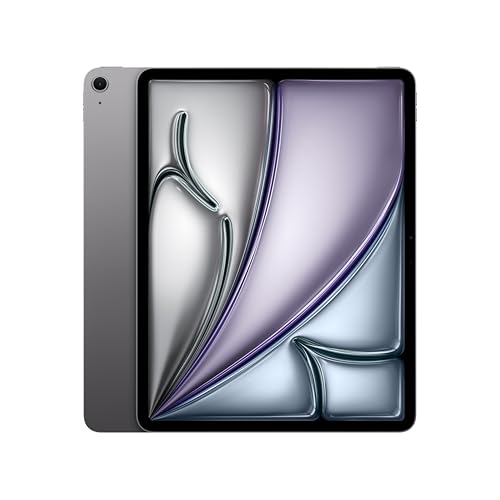
5. Apple iPad Air 13-Inch (M4) — Best Value Large-Screen Tablet for Video Editing
The iPad Air 13-inch (M4) represents the strongest value proposition in this entire category — M4 chip performance, a 13-inch Liquid Retina display calibrated to the P3 wide color gamut, and a starting price that significantly undercuts the iPad Pro. For editors who need real professional performance but cannot justify the Pro's premium, this is the rational choice. The M4 chip inside the Air is the same generation silicon found in the Pro, bringing the same CPU architecture and neural engine — the primary differences are the display technology (Liquid Retina versus Ultra Retina XDR, meaning no ProMotion and lower peak brightness), the absence of LiDAR, and the Thunderbolt port is replaced by USB-C 3.2.
In practical editing use, the performance differential between the Air and Pro is smaller than the spec sheets suggest for most workflows. LumaFusion runs identically on both devices, 4K multicam timelines in supported apps play back without dropped frames, and export times are comparable on matching workloads. Wi-Fi 7 with Apple's N1 chip is a meaningful upgrade over the Wi-Fi 6E in the iPad Pro — Wi-Fi 7 delivers lower latency and higher throughput on compatible routers, which matters when you are streaming footage from a NAS or working from a wireless drive. Touch ID integrated into the top button replaces the Pro's Face ID, a minor trade that most editors will never notice during a session.
The 13-inch Liquid Retina display at 2732×2048 resolution is genuinely excellent for editing work — sharp, accurately colored, and large enough to display timeline tracks, preview window, and tool panels simultaneously without feeling claustrophobic. You will not find the promotion-driven 120Hz smoothness of the Pro here, but the 60Hz panel is entirely adequate for timeline scrubbing and does not introduce any visual friction in the editing workflow. For editors moving up from an aging iPad or a midrange Android tablet, the performance jump to the Air M4 is transformative.
Pros:
- M4 chip delivers near-Pro performance at a meaningfully lower price
- 13-inch Liquid Retina display with P3 wide color is excellent for editing review
- Wi-Fi 7 provides the latest wireless standard for fast network file access
- All-day battery life sustains long editing sessions without interruption
- Apple Pencil Pro and Magic Keyboard compatible for expanded input options
Cons:
- No ProMotion 120Hz or nano-texture display option available on the Air
- USB-C 3.2 (not Thunderbolt) limits external display and storage bandwidth
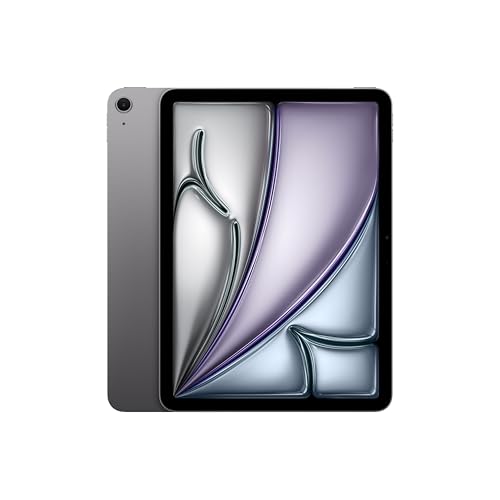
6. Apple iPad Air 11-Inch (M4) — Best Portable Everyday Editing Tablet
The iPad Air 11-inch (M4) is the tablet for editors who prioritize portability over screen real estate and want the M4 chip platform without paying iPad Pro prices or carrying a 13-inch device. The M4 chip is fully present — no downgrade, no binned silicon — meaning your editing performance on the road is identical to what you would get from the larger Air. The 11-inch Liquid Retina display at 2360×1640 maintains P3 wide color accuracy, ensuring that the color decisions you make on location translate accurately when reviewed on a calibrated monitor back at the studio.
In day-to-day editing use, the 11-inch Air handles 4K footage, multi-track timelines, and LumaFusion effects without hesitation. Where it naturally trails its 13-inch sibling is in the comfort of extended sessions — eleven inches genuinely constrains complex timeline layouts, and editors working on longer-form projects will find themselves scrolling the timeline more frequently and relying more heavily on Apple Pencil input to maintain precision in confined track space. Wi-Fi 7 connectivity keeps this device current for the duration of a typical ownership cycle, and the Apple N1 chip that manages wireless functions provides noticeably smoother streaming performance compared to earlier iPad generations.
The practical case for the 11-inch Air over the 11-inch Pro is straightforward economics: the Air delivers the same chip at a lower price, and for editors who do not require ProMotion, nano-texture glass, LiDAR, or Thunderbolt connectivity, the savings are real without any performance sacrifice. This is also the tablet in this guide best suited to editing-adjacent creative work — if you draw storyboards, annotate scripts, or sketch motion graphic concepts as part of your pre-production process, the portability of this form factor makes it a daily-carry tool that pays dividends beyond the edit suite. Check our guide to the best tablets for artists if that creative overlap matters to your workflow.
Pros:
- Full M4 chip performance in the most portable form factor on this list
- P3 wide color Liquid Retina display maintains accurate color decisions on location
- Wi-Fi 7 with Apple N1 chip provides the current wireless standard
- Significantly more affordable than the iPad Pro 11-inch with comparable editing performance
- All-day battery life holds through full editing sessions
Cons:
- 11-inch screen is limiting for complex multi-track timeline layouts
- No ProMotion, LiDAR, or Thunderbolt compared to Pro models
7. ASUS ROG Flow Z13 (2025) — Best for Heavy-Duty 4K and 8K Editing
The ASUS ROG Flow Z13 (2025) occupies a unique position on this list: it is the most powerful tablet available for video editing in absolute terms, a Windows 11 device with AMD's Ryzen AI MAX+ 395 processor, 128GB of LPDDR5X memory, and RDNA 3.5 integrated graphics that perform closer to a discrete GPU than any other tablet architecture currently available. If you are editing 8K raw footage, working with complex motion graphics and VFX composites in After Effects, or rendering heavy DaVinci Resolve node graphs in real time, this is the only tablet on this list that does not ask you to make compromises.
The AMD Ryzen AI MAX+ 395 brings 16 cores — 4 high-performance plus 12 efficiency — and an NPU delivering up to 50 TOPS for AI-accelerated tasks, including Topaz Video AI upscaling, noise reduction, and frame interpolation workflows that would otherwise require a separate GPU workstation. 128GB of unified RAM is an extraordinary specification for a 13-inch tablet, and it means you can have DaVinci Resolve, After Effects, and a browser-based reference monitor running simultaneously without a single frame of swap file thrashing. The ROG Nebula 16:10 display at 2.5K resolution with 180Hz refresh rate and 3ms response time is tuned for gaming but serves color-sensitive editing work well — the 16:10 aspect ratio provides meaningful vertical space for timeline and effects panel layouts that 16:9 displays cut short.
The trade-offs are real and worth naming clearly. At 13 inches, the ROG Flow Z13 is physically compact, but the full Windows 11 Pro environment with a 180Hz display and AMD's flagship mobile processor generates heat that requires active cooling — you will hear the fans during extended export runs, unlike the iPad Pro's silence. Battery life under sustained editing load is shorter than the iPad picks on this list. And the gaming-forward aesthetic, with its angular design language, looks deliberately different from the professional tools many editors carry to client meetings. But on raw capability per kilogram, the Flow Z13 is in a category of one, and for editors who have pushed mobile hardware to its limits and found it wanting, this machine has no ceiling that editing software can currently reach.
Pros:
- AMD Ryzen AI MAX+ 395 with 16 cores delivers desktop-class rendering performance
- 128GB unified RAM handles the most demanding multi-application editing environments
- RDNA 3.5 graphics perform closer to discrete GPU than any other tablet architecture
- 50 TOPS NPU enables AI-accelerated tools including Topaz Video AI and Resolve noise reduction
- 2.5K 180Hz ROG Nebula display with 16:10 aspect ratio suits complex editing layouts
- Full Windows 11 Pro gives access to every professional editing application without restriction
Cons:
- Active cooling means audible fan noise during sustained export and rendering tasks
- Battery life under load is shorter than iPadOS-based competitors
- Gaming-focused aesthetic does not suit all professional client contexts
What to Look For When Buying a Tablet for Video Editing
Display Quality: Color Accuracy, Resolution, and Brightness
Your tablet's display is simultaneously your monitoring tool and your editing interface, which means it carries a dual responsibility that cheap panels cannot fulfill. For video editing, you need P3 wide color gamut coverage — the standard color space for digital cinema and streaming delivery — so that the colors you grade on your tablet accurately represent what your audience will see. Resolution matters for sharpness of text and UI elements rather than for footage quality directly; editing 4K video on a 2K display is entirely functional. What degrades your work most profoundly is a display that cannot reproduce accurate brightness relationships: an HDR-capable display with 1000 nits or more lets you evaluate specular highlights and shadow detail that a standard 400-nit panel simply cannot show you.
ProMotion at 120Hz is a real editing-quality feature, not a marketing specification — the increased refresh rate makes timeline scrubbing, stylus input, and smooth playback feel dramatically more precise and responsive. If you spend hours per day scrubbing footage and nudging keyframes, the difference between 60Hz and 120Hz is felt in your wrists and your accuracy over a long session. Consider it a mandatory feature for professional use.
Processor Performance: Sustained Power Matters More Than Peak Scores
Benchmark scores tell you what a chip can do in a brief burst. Video editing tells you what a chip can do for 45 minutes straight. The distinction matters because many mobile processors hit impressive peak numbers but throttle aggressively when thermal limits are reached — and a 4K export is a thermal event by any definition. Apple's M4 chip and AMD's Ryzen AI MAX+ 395 both maintain their performance under sustained load with remarkable consistency. Snapdragon X Plus sustains well for moderate workloads. MediaTek-based Android tablets are improving but still trail in extended sessions.
For the resolution and codec combinations that matter most in 2026 — 4K H.265, ProRes, RED R3D, and BRAW — look for hardware-accelerated encode and decode engines rather than relying solely on CPU-based processing. Hardware media engines reduce both processing time and thermal load by handling codec work in dedicated silicon that runs cooler and faster than software decoding on the main CPU cores.
RAM and Storage: Set Your Minimums Before You Shop
Video editing is memory-intensive in ways that most mobile workloads are not. 8GB of RAM is the absolute floor for editing work, adequate only for simple single-camera 1080p projects. 16GB handles most professional 4K workflows comfortably. If you work with multi-camera shoots, heavy color science, or parallel audio tracks, 32GB provides breathing room that prevents the operating system from aggressively swapping assets to storage. The ROG Flow Z13's 128GB of unified RAM is an extreme specification that future-proofs the device beyond any currently practical editing requirement.
For storage, prioritize speed over raw capacity — a high-speed NVMe SSD matters more for timeline responsiveness and scrubbing than total gigabytes, since external storage handles archive overflow. 512GB is the practical minimum for keeping active projects on-device without constant library management. On Android tablets, MicroSD expansion is a genuine advantage: the Samsung Tab S10 Ultra's support for up to 1.5TB via MicroSD provides storage scalability that the iPad lineup simply cannot match at any price.
Software Ecosystem: Match Your Tools to Your Platform
The most powerful tablet is useless if it cannot run your editing software. iPadOS offers the strongest mobile-native editing software depth in 2026: LumaFusion remains the gold standard for mobile editing, Final Cut Pro for iPad provides a full professional timeline, and DaVinci Resolve for iPad is a mature, capable implementation. If your workflow lives in Apple's ecosystem, the iPad lineup is the rational choice. Windows tablets — the Surface Pro and ROG Flow Z13 — run the complete desktop versions of every professional application without adaptation or feature limitation, which makes them the only tablets appropriate for editors whose pipeline depends on full Premiere Pro, full Resolve Studio with OFX plugins, or specialized broadcast tools. Android's editing ecosystem is improving but remains the weakest of the three platforms for professional production work in 2026.
Questions Answered
What is the best tablet for video editing in 2026?
The Apple iPad Pro 13-Inch (M4) is the best overall tablet for video editing in 2026. Its M4 chip with hardware ProRes media engine, Ultra Retina XDR display with P3 wide color and 120Hz ProMotion, and the depth of the iPadOS professional editing software ecosystem make it the most capable and versatile editing tablet available. For editors who need full desktop Windows software, the ASUS ROG Flow Z13 is the best raw-performance alternative.
Can you use DaVinci Resolve or LumaFusion on an iPad?
Yes. Both DaVinci Resolve and LumaFusion run on iPadOS and are optimized for the iPad Pro and iPad Air M4 chip platform. LumaFusion is widely considered the best native mobile editing app available on any platform, and it handles 4K multicam timelines, color grading, and export with professional-grade performance. DaVinci Resolve for iPad includes the full node-based color grading system and cut page editor, though some advanced features found in the desktop Resolve Studio version require the full Windows or macOS application.
How much RAM do you need in a tablet for video editing?
For 1080p and light 4K editing, 8GB of RAM is the minimum and 16GB is the practical standard. If you work with multi-camera 4K projects, complex color grades, or parallel application workflows — keeping Resolve, a browser reference window, and a DAW open simultaneously — 16GB is the floor and 32GB provides meaningful stability. The ASUS ROG Flow Z13's 128GB specification is exceptional and addresses rendering workflows that no current editing software can fully saturate.
Is iPad better than Android tablets for video editing?
For professional video editing in 2026, iPadOS leads Android by a significant margin due to software depth. LumaFusion, Final Cut Pro for iPad, and a mature DaVinci Resolve implementation give iPadOS a professional editing stack that Android's Google Play ecosystem has not yet matched. Android tablets — particularly the Samsung Galaxy Tab S10 Ultra — offer advantages in display size, S Pen precision, and expandable storage, making them strong choices for editors whose workflows are built around Android-native apps like CapCut or Adobe Premiere Rush.
Can the Microsoft Surface Pro 2025 handle 4K video editing?
Yes. The Surface Pro 2025 with Snapdragon X Plus, 16GB of RAM, and 512GB NVMe storage handles 4K editing in DaVinci Resolve and Adobe Premiere Pro with capable performance for moderate-complexity projects. Its primary advantage over iPads is access to the full Windows desktop versions of every professional editing application without any feature restrictions. Its limitation compared to the ROG Flow Z13 is GPU performance — the Snapdragon integrated graphics are adequate for standard timelines but slower on GPU-heavy effects, color science, and rendering tasks.
Do I need a stylus for video editing on a tablet?
A stylus is not required for video editing, but it meaningfully improves precision on timeline-intensive work. Frame-accurate scrubbing, keyframe placement, color wheel adjustments, and timeline trimming all benefit from stylus input compared to finger-only interaction on a 13-inch screen. The Samsung Galaxy Tab S10 Ultra includes the S Pen in the box, while Apple Pencil Pro is a separate purchase for iPad models. If you also handle any drawing, annotation, or storyboarding as part of your production workflow, stylus support becomes a near-mandatory feature rather than a convenience.
Buy on Walmart
- Apple iPad Pro 13-Inch (M4): Built for Apple Intelligence, U — Walmart Link
- Apple iPad Pro 11-Inch (M4): Built for Apple Intelligence, U — Walmart Link
- SAMSUNG Galaxy Tab S10 Ultra 14.6” AMOLED Touchscreen, 256GB — Walmart Link
- Microsoft Surface Pro 2-in-1 Laptop/Tablet (2025), Windows 1 — Walmart Link
- Apple iPad Air 13-inch (M4): Liquid Retina Display, 256GB, 1 — Walmart Link
- Apple iPad Air 11-inch (M4): Liquid Retina Display, 256GB, 1 — Walmart Link
- ASUS ROG Flow Z13 (2025) Gaming Laptop, 13” ROG Nebula 16:10 — Walmart Link
Buy on eBay
- Apple iPad Pro 13-Inch (M4): Built for Apple Intelligence, U — eBay Link
- Apple iPad Pro 11-Inch (M4): Built for Apple Intelligence, U — eBay Link
- SAMSUNG Galaxy Tab S10 Ultra 14.6” AMOLED Touchscreen, 256GB — eBay Link
- Microsoft Surface Pro 2-in-1 Laptop/Tablet (2025), Windows 1 — eBay Link
- Apple iPad Air 13-inch (M4): Liquid Retina Display, 256GB, 1 — eBay Link
- Apple iPad Air 11-inch (M4): Liquid Retina Display, 256GB, 1 — eBay Link
- ASUS ROG Flow Z13 (2025) Gaming Laptop, 13” ROG Nebula 16:10 — eBay Link
Buy the display your footage deserves first, the chip that sustains it second, and let the software ecosystem be the final tiebreaker — everything else is noise.
 |
 |
 |
 |

About Priya Anand
Priya Anand covers laptops, tablets, and mobile computing for Ceedo. She holds a bachelor degree in computer science from the University of Texas at Austin and has spent the last nine years writing reviews and buying guides for consumer electronics publications. Before joining Ceedo, Priya worked as a product analyst at a major retailer where she helped curate the laptop and tablet category. She has personally benchmarked more than 200 portable computers and is particularly interested in battery longevity, repairability, and the trade-offs between Windows, macOS, ChromeOS, and Android tablets. Outside of work, she runs a small Etsy shop selling laptop sleeves she sews herself.