 ee
eeTablets ›
Best Drawing Tablets For Animation
You've spent the past hour scrolling through spec sheets, forum threads, and YouTube comparison videos, and you still aren't sure whether you need a screen tablet or a screenless one, what pressure levels actually matter for animation, or whether the budget picks are worth the trade-off. That indecision is completely understandable — the drawing tablet market in 2026 is packed with genuinely competitive options across every price tier. This guide cuts through the noise and gives you a clear, ranked list of the best drawing tablets for animation, so you can stop researching and start creating.
Whether you're a hobbyist building your first frame-by-frame animated short or a professional animator working on client deliverables, the right tablet changes how fast and how naturally your ideas flow from brain to screen. The products on this list were selected for their pen accuracy, display quality, driver stability, and real-world usability during long animation sessions. We cover everything from compact 13-inch displays to large 24-inch professional workstations, so there's a fit for every desk and every budget. If you're also shopping for a general digital art setup, our roundup of the best tablets for Photoshop covers overlapping options worth considering.
A quick note before diving in: every tablet below requires a connection to a computer or laptop to function — none of these are standalone Android or iPad devices. They plug into your existing workstation and extend it with a precise pen input surface. Now, here are the top picks for animators in 2026, ranked by overall value for animation workflows specifically.

Contents
- Top Rated Picks of 2026
- Full Product Breakdowns
- Wacom Cintiq 16 — Best Overall for Animators
- Wacom Intuos Pro Medium 2025 — Best Screenless Professional Tablet
- HUION Kamvas 13 Gen 3 — Best Budget Display Tablet
- Wacom One 14 — Best Beginner Display Tablet
- XPPen Artist Pro 16 Gen2 — Best for Hyper-Detailed Line Work
- HUION Kamvas Pro 24 4K — Best Large-Format Professional Tablet
- HUION KAMVAS 16 Gen 3 — Best Mid-Range 2.5K Display
- Choosing the Right Drawing Tablet for Animation
- Frequently Asked Questions
- Next Steps
Top Rated Picks of 2026
- #PreviewProductRating
- Bestseller No. 1
 Rating:

- Bestseller No. 2
 Rating:
 - Bestseller No. 3
 Rating:
 - Bestseller No. 4
 Rating:
- Bestseller No. 5
 Rating:
 - Bestseller No. 6
 Rating:
 - Bestseller No. 7
 Rating:
Full Product Breakdowns
1. Wacom Cintiq 16 Drawing Tablet with Screen — Best Overall for Animators
The Wacom Cintiq 16 is the gold standard for animators who want a display tablet without spending pro-workstation money. Its 16-inch IPS display delivers 2560×1600 WQXGA resolution, which gives you sharp, crisp linework even when you zoom deep into frame-by-frame sequences. The 99% DCI-P3 and 100% sRGB color coverage means what you see on the Cintiq is what your audience sees when your animation exports — no nasty color surprises at final render. The display isn't just accurate; it's vibrant and high-contrast, which makes it easier to distinguish subtle tonal differences during shading passes.
Wacom's Pro Pen 3 is the headlining hardware upgrade here, offering 8192 levels of pressure sensitivity with true tilt support and virtually no detectable lag, which is critical when you're doing quick gestural strokes in Clip Studio Paint or Toon Boom Harmony. The pen is battery-free, so you'll never be interrupted mid-scene by a dead stylus, and the three programmable shortcut keys on the pen barrel let you map undo, eraser, and color picker without lifting your drawing hand from the surface. The pen holder mounts to either side of the display at an adjustable angle, which is a small but genuinely useful ergonomic detail for long animation sessions. If you want more Wacom options compared side-by-side, check out our dedicated guide to the best Wacom tablets for a broader look at the lineup.
The Cintiq 16 works with both Mac and PC, and Wacom's driver ecosystem is the most mature and stable in the industry — a real advantage when you're running professional animation software that depends on reliable tablet input. The stand angle is adjustable, the surface texture provides appropriate pen feedback without wearing nibs down excessively fast, and the overall build quality is premium without being fragile. For most animators who want a display tablet under the professional flagship tier, this is the one to get in 2026.
Pros:
- 2.5K WQXGA resolution with 99% DCI-P3 and 100% sRGB color accuracy
- Pro Pen 3 with 8192 pressure levels, tilt support, and zero battery required
- Three programmable pen shortcut keys plus adjustable pen holder
- Best-in-class driver stability across Mac and Windows
- Large 16-inch drawing surface with comfortable ergonomic angles
Cons:
- Higher price point than competing display tablets at this size
- No built-in ExpressKeys on the tablet body — requires keyboard for shortcuts
2. Wacom Intuos Pro Medium Bluetooth (2025 Edition) — Best Screenless Professional Tablet
If you've been animating long enough to develop your hand-eye coordination on a screenless tablet, the Wacom Intuos Pro Medium 2025 Edition is the finest professional screenless tablet available. It skips the display entirely and instead delivers a precision drawing surface that you use while looking at your monitor — a workflow that many professional animators actually prefer because it keeps your eyes at the correct ergonomic distance from the screen. The active area measures 11.4×8.1 inches, which maps well to a wide 16:9 monitor and gives you adequate stroke room for large, sweeping animation curves.
The 2025 edition ships with the latest Pro Pen 3, which delivers 8192 pressure levels alongside true tilt support and lag-free tracking — the same pen technology found in the Cintiq 16 above. What sets the Intuos Pro apart is its customization depth: you get 10 programmable ExpressKeys arranged conveniently close to your keyboard hand, plus two mechanical dials positioned at the top of the tablet that you can map to brush size, zoom, timeline scrubbing, or any other parameter-heavy shortcut your animation workflow demands. The pen itself supports three different grip profiles — slim, straight, or flared — and you can adjust the balance and button layout to match your exact hand posture. Bluetooth connectivity means a cleaner desk when you want it, though USB is also available for zero-latency wired sessions during complex frame work.
The Intuos Pro's 16:9 format is explicitly designed for modern widescreen monitor setups, and the medium footprint keeps your desk organized without sacrificing active drawing area. Driver support is Wacom's full professional suite, which means deep integration with every major animation application. If your budget is tight but you still want a professional-grade tool, a screenless tablet like this combined with a good monitor is often a smarter investment than a low-end display tablet.
Pros:
- Pro Pen 3 with 8192 pressure levels and fully customizable grip options
- 10 programmable ExpressKeys and 2 mechanical dials for shortcut-heavy workflows
- Bluetooth + USB connectivity with 16:9 active area for widescreen monitors
- Compact desktop footprint with a large 11.4×8.1 inch active drawing area
- Wacom's most stable professional driver suite included
Cons:
- No built-in display — requires a separate monitor for visual feedback
- Learning curve for animators transitioning from display tablets
3. HUION Kamvas 13 Gen 3 — Best Budget Display Tablet for Animators
The HUION Kamvas 13 Gen 3 makes a compelling argument that you don't need to spend Wacom money to get a genuinely capable display tablet for animation. At 13.3 inches, the display is compact enough to fit comfortably on a laptop desk while still providing enough drawing real estate for frame-by-frame character work and background illustration. The new Canvas Glass 2.0 anti-sparkle coating is the standout hardware upgrade in this generation — it reduces glare significantly compared to the previous model while simultaneously improving pen-to-cursor accuracy by minimizing the optical distance between the surface glass and the actual display panel, which is a real parallax issue that lower-cost laminated screens sometimes struggle with.
HUION's PenTech 4.0 technology pushes pen pressure sensitivity to 16,384 levels — double the 8192 standard you see on Wacom's consumer and mid-range offerings — with a 2g initial activation force (IAF) that lets the pen register the lightest possible contact before you even consciously apply pressure. For animation specifically, this means your thin-line tapers and hair-thin speed lines are captured with more nuance than the pressure curve alone can deliver. The pen includes three customizable side buttons, giving you enough mapped shortcuts to handle most animation app workflows without constantly reaching for the keyboard. The tablet also supports Android connectivity, so you can use it with a phone or Android tablet if your workflow ever calls for it.
Color accuracy sits at 99% sRGB, which is appropriate for web-distributed animation and adequate for most professional deliverables. The dual dials on the tablet body are a practical addition for brush size and zoom control during animation sessions. This is the display tablet we'd recommend to any animator who's still deciding whether they'll stick with the form factor before committing to a higher-end investment. For more options in this tier, see our guide to the best cheap drawing tablets with screen.
Pros:
- Canvas Glass 2.0 anti-sparkle coating reduces glare and parallax simultaneously
- PenTech 4.0 with 16,384 pressure levels and 2g IAF for ultra-light line detection
- Full lamination with 99% sRGB at a significantly lower price than Wacom equivalents
- Dual dials for on-tablet shortcut access without reaching for the keyboard
- Android compatible for flexible setup options
Cons:
- 13.3-inch display is smaller than most animators prefer for long sessions
- HUION's driver software is less mature than Wacom's across all animation apps
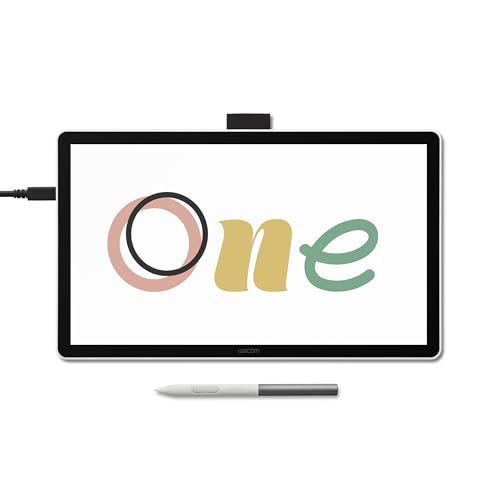
4. Wacom One 14 Drawing Tablet with Screen — Best Entry-Level Display Tablet
The redesigned Wacom One 14 fills the gap between budget HUION alternatives and the premium Cintiq line, and it does so with a noticeably larger 14-inch display than the previous generation — a meaningful size increase that gives you more working canvas for animation keyframe drawing and in-betweening. The fully laminated IPS Full HD display hits 98% sRGB color accuracy and features a paper-like matte texture that provides genuine pen resistance without the plastic-slick feel that cheaper tablets sometimes deliver. The paper-like texture makes long drawing sessions feel significantly more natural for animators accustomed to working on physical paper, which is exactly the feedback loop you want when you're grinding through a 24-frame walk cycle.
Wacom's battery-free pen technology is present here, too — the stylus captures everything from the lightest contact to bold pressure strokes without you ever needing to charge it. The pressure sensitivity is reliable and consistent, and Wacom's driver stability means the pen response curve you set in Clip Studio Paint or Adobe Animate is the one you actually get, every time, without recalibration surprises mid-project. What makes the Wacom One 14 particularly attractive for beginner and intermediate animators is the bundled software package: you get trials of Clip Studio Paint Pro, Magma, Concepts, and Foxit, plus Skillshare training courses, which gives you a full creative ecosystem to explore without additional cost on day one.
The Wacom One 14 is explicitly positioned as a starter display tablet, which means it lacks the ExpressKeys and advanced customization of the Intuos Pro or the resolution and color depth of the Cintiq 16. But for an animator who's stepping up from a screenless tablet for the first time, or who's just starting their first serious animation project, the Wacom One 14 delivers Wacom quality at an accessible price point, and that driver reliability alone is worth the premium over no-name alternatives.
Pros:
- Redesigned 14-inch laminated display with paper-like texture for natural pen feel
- 98% sRGB accuracy with anti-glare coating that prevents smudging
- Battery-free pen with reliable Wacom pressure sensitivity
- Bundled software suite including Clip Studio Paint Pro trial
- Wacom's industry-leading driver support across Mac and Windows
Cons:
- Full HD resolution is lower than the 2.5K displays at similar or slightly higher prices
- No physical ExpressKeys on the tablet body
5. XPPen Artist Pro 16 Gen2 2.5K — Best for Hyper-Detailed Line Work
XPPen makes a bold claim with the Artist Pro 16 Gen2 — its X3 Pro stylus packs an industry-first 16,384 pressure levels, which is double the 8192 standard used across Wacom's lineup and double again the already-impressive HUION PenTech 4.0. Whether those additional pressure levels translate to a meaningful real-world difference for animation linework is debated among professionals, but the evidence in practice is that the X3 Pro stylus delivers uncommonly smooth pressure transitions at the very beginning and end of each stroke, which is precisely where thin tapers on character outlines and speed lines demand the most nuance. The full-laminated 16-inch 2.5K QHD display at 2560×1600 resolution gives you sharp, detailed visuals, and the 16:10 aspect ratio combined with a 178° viewing angle keeps edge distortion minimal even when you're drawing with the tablet tilted.
The display covers 159% sRGB, which is an unusually wide color gamut that goes well beyond standard sRGB content creation needs — a useful advantage if your animation work includes vivid color sequences or HDR deliverables. Anti-glare etched glass handles reflections effectively, and TÜV SÜD blue light certification means extended sessions in front of this display are easier on your eyes than less certified alternatives. The included Mini Keydial gives you a physical dial and several programmable buttons that you can position near your non-dominant hand, acting as an external shortcut controller for timeline navigation, brush size adjustment, and zoom — a genuine workflow accelerator for animation sessions that require frequent parameter changes. Note that XPPen's software and driver ecosystem, while continuously improving, is not yet at the maturity level of Wacom's suite, so verify compatibility with your specific animation application before purchasing.
The three-in-one cable included in the box handles power, data, and video in a single connection, which simplifies the desk setup compared to multi-cable display tablet solutions. At its price point, the Artist Pro 16 Gen2 competes directly with the Cintiq 16 and often wins on raw display specs — the trade-off is in driver polish and long-term software support. If specs matter more to you than ecosystem maturity, this tablet earns its place on this list.
Pros:
- Industry-first 16,384 pressure levels for the smoothest taper control available
- 2.5K QHD 16-inch display with 159% sRGB and full lamination plus anti-glare etched glass
- Included Mini Keydial for physical shortcut control during long animation sessions
- TÜV SÜD blue light certification for extended comfortable viewing
- Three-in-one cable simplifies desk setup
Cons:
- XPPen drivers are less stable than Wacom's across all professional animation applications
- 159% sRGB gamut requires proper color calibration to avoid oversaturation in final outputs
6. HUION Kamvas Pro 24 4K UHD — Best Large-Format Professional Tablet
When you're ready to make a serious investment in your animation workstation, the HUION Kamvas Pro 24 4K UHD gives you a 23.8-inch canvas that transforms how you work with complex multi-character scenes and detailed background art. At 3840×2160 resolution on a fully laminated display with a 178° viewing angle, the Kamvas Pro 24 eliminates the constant zoom-in-zoom-out workflow that smaller displays impose during frame-by-frame animation — you can see your entire composition at full detail simultaneously, which speeds up your decision-making and reduces the mental overhead of tracking spatial relationships between elements. The Quantum Dot technology behind this display produces a 140% sRGB color gamut with 1.07 billion colors and HDR support, delivering a color depth that you genuinely need when you're creating animation with nuanced color grading or cinematic lighting work.
The integrated 20-degree metal stand is included in the box, providing a comfortable drawing angle straight out of packaging without requiring an aftermarket solution. There's also a VESA mount point on the back for monitor arm compatibility, which is useful if you want to position the tablet precisely at your ideal height and angle. The wireless Express Key remote gives you programmable shortcut access without cluttering the tablet surface with extra hardware connections. New felt nibs deliver more friction against the display surface than standard plastic nibs, resulting in a drawing feel that more closely approximates actual pencil on paper — a meaningful ergonomic difference during the multi-hour sessions that professional animation demands. HUION's 8192-level stylus is the one area where the spec sheet shows its age compared to newer PenTech 4.0 products, though in practice the pen performance is smooth and responsive throughout the full pressure range.
This tablet is a significant desk footprint commitment and a significant financial commitment — but for professional animators who are billing clients and need a reliable, large-format display that won't create bottlenecks in their pipeline, the Kamvas Pro 24 4K is a serious professional tool at a price that still undercuts comparable Wacom Cintiq Pro options. Browse our tablets category for more options if you're still comparing form factors before committing.
Pros:
- 23.8-inch 4K UHD display with Quantum Dot technology and 140% sRGB color gamut
- Full lamination with 178° viewing angle and 1.07 billion color depth
- Included 20° metal stand and VESA mount compatibility
- Wireless Express Key remote for uncluttered desk shortcut access
- Felt nibs provide superior pen-on-surface friction for natural drawing feel
Cons:
- 8192 pressure level stylus is behind newer PenTech 4.0 offerings in the HUION lineup
- Large physical footprint requires a dedicated workstation desk setup
7. HUION KAMVAS 16 Gen 3 — Best Mid-Range 2.5K Display Tablet
The HUION KAMVAS 16 Gen 3 lands in the exact middle of HUION's 2026 display tablet lineup — larger than the Kamvas 13 without the price jump of the Kamvas Pro series — and it's the strongest case for a 2.5K mid-range display tablet available this year. The 15.8-inch display delivers 2560×1440 QHD resolution at a pixel density of 186 PPI, which produces noticeably sharper linework than Full HD panels at the same size, and the 90% Adobe RGB gamut coverage is the specification that separates this tablet from most competitors at its price point — Adobe RGB coverage matters when your animation work includes print deliverables or when you're color-grading alongside still photography work. The ΔE<1.5 color accuracy rating ensures the colors you paint are the colors that render out, without the color drift that cheaper uncalibrated displays introduce.
PenTech 4.0 technology is onboard here as well, with 16,384 pressure levels, a 2g initial activation force, and ±60° tilt support, plus a smaller nib geometry and tilt auto-alignment feature that reduces the parallax gap between where your pen tip physically touches and where the cursor registers on screen. This parallax reduction is particularly valuable during precision animation work where you're placing anchor points or adjusting bezier curves at the pixel level. The dual dials on the tablet body handle brush size and zoom naturally, and the full anti-sparkle glass coating manages reflections effectively in bright environments. Android compatibility is included, though most professional animators will use this tablet connected to a desktop or laptop workstation running their primary animation suite.
If the Cintiq 16 is out of budget but you need more screen than the Kamvas 13 provides, the KAMVAS 16 Gen 3 hits the sweet spot. The combination of 2.5K resolution, 90% Adobe RGB, PenTech 4.0, and dual physical dials at its current price makes it one of the most specification-competitive display tablets in the mid-range category heading into 2026.
Pros:
- 2.5K QHD at 186 PPI with 90% Adobe RGB and ΔE<1.5 color accuracy
- PenTech 4.0 with 16,384 pressure levels and tilt auto-alignment to reduce parallax
- Dual physical dials for brush size and zoom without leaving the drawing surface
- Anti-sparkle full-laminated glass with 99% sRGB and 99% Rec.709 coverage
- Android compatible for flexible multi-device workflows
Cons:
- No built-in stand — requires separate purchase or propping for comfortable drawing angle
- HUION driver support lags behind Wacom in some professional animation applications
Choosing the Right Drawing Tablet for Animation: A Buying Guide
Display Tablet vs. Screenless Tablet: Which Is Right for You?
The first decision you need to make as an animator shopping for a new tablet in 2026 is whether you want a display tablet — one where you draw directly on a screen — or a screenless tablet where you draw on a surface while looking at your monitor. Both are legitimate professional tools used by working animators, and the choice comes down to your workflow, budget, and personal drawing style. Graphics tablets without screens are typically less expensive, more portable, and force you to develop the hand-eye coordination that many industry veterans actually prefer once mastered. Display tablets are more intuitive for beginners and for animators who frequently draw complex character poses where visual reference on the drawing surface matters. If you're transitioning from traditional paper animation, a display tablet generally has a shorter learning curve.
Pen Pressure Levels and What They Actually Mean for Animation
You'll see pressure sensitivity numbers ranging from 8192 to 16,384 levels across the tablets on this list, and it's worth understanding what this specification actually delivers for animation work specifically:
- 8192 levels is the industry standard and is fully adequate for professional animation at all levels
- 16,384 levels provides more granular pressure detection at the very beginning and end of strokes, which improves thin-line taper quality in character outline work
- Initial Activation Force (IAF) — the minimum pressure required to register — matters more for light touch work than raw pressure level count; lower IAF (2g) is better
- Tilt support is essential for animators who use brush tools that respond to stylus angle, particularly for shading and painterly texture work
- Lag and tracking speed affect the naturalness of fast gesture strokes more than pressure levels alone
The practical difference between 8192 and 16,384 pressure levels is subtle for most animators — driver quality and pen calibration often matter more than the raw number on the spec sheet.
Display Resolution and Color Accuracy for Animation Work
If you're choosing a display tablet, the screen specifications directly affect the quality of your animation work and your ability to evaluate your output accurately:
- Full HD (1920×1080): adequate for beginners but shows pixel edges at common zoom levels on 15-inch+ displays
- 2.5K QHD (2560×1440 or 2560×1600): the sweet spot for animation — sharp linework, comfortable pixel density, no significant performance penalty
- 4K UHD (3840×2160): ideal for large-format tablets (22-inch+) where pixel density would otherwise be too low; requires more GPU power
- sRGB coverage: 99–100% sRGB is the minimum for professional animation destined for web, streaming, or broadcast delivery
- DCI-P3 or Adobe RGB: valuable if your animation work targets theatrical display or print deliverables
- ΔE value: ΔE<2 is considered accurate enough for color-critical work; ΔE<1.5 is excellent
Physical Controls, Size, and Ergonomics for Long Animation Sessions
Animation is one of the most repetitive digital art disciplines — you may execute the same stroke hundreds of times across a 90-second scene — and the physical ergonomics of your tablet setup determine your long-term comfort and injury risk:
- Physical shortcut keys (ExpressKeys, dials) reduce hand travel to the keyboard during drawing sessions, which matters enormously over an eight-hour animation day
- Tablet size should match your animation style: character animators doing tight, gesture-heavy work often prefer 13–16 inch displays; background artists and layout animators benefit from 20-inch+ surfaces
- An adjustable or included stand is important — drawing on a flat horizontal surface causes wrist strain faster than a slightly elevated, angled surface
- Surface texture (the anti-sparkle or paper-like coatings) affects pen feedback; too slippery reduces control, too rough wears nibs fast and fatigues your drawing arm
- Battery-free pens eliminate the anxiety of a dead stylus mid-session — all tablets on this list use passive electromagnetic resonance stylus technology
Frequently Asked Questions
Do I need a display tablet or a screenless tablet for animation?
Both work professionally, and many studio animators use screenless tablets by choice once they've developed the hand-eye coordination. Display tablets are more intuitive to start with and reduce the learning curve significantly for beginners. If your budget is tight, a high-quality screenless tablet like the Wacom Intuos Pro paired with a good monitor often outperforms a low-end display tablet at the same total price.
What drawing software works best with these tablets for animation?
Clip Studio Paint is the most popular choice among frame-by-frame animators in 2026, offering dedicated animation timelines, onion skinning, and deep stylus pressure support. Toon Boom Harmony dominates professional studio pipelines. Adobe Animate works well for web animation. All tablets on this list are compatible with these applications, though Wacom tablets have the deepest driver integration across all three.
Is 8192 pressure levels enough for professional animation, or do I need 16384?
8192 pressure levels is completely sufficient for professional animation at any level. The difference between 8192 and 16,384 levels is most noticeable in ultra-fine taper control at the start and end of strokes — a real but subtle improvement. If you're doing highly detailed character outline work with thin-line tapers, 16,384 levels provides a marginal quality advantage. For most animators, driver quality and initial activation force matter more than raw pressure level count.
Can I use these drawing tablets with animation software on a Mac?
Yes — every tablet on this list explicitly supports macOS alongside Windows. Wacom's driver support on Mac is the most stable and comprehensive, with consistent updates through major macOS versions. HUION and XPPen have improved their Mac driver support significantly in recent years, though occasional compatibility delays after major macOS updates have been reported. Check each manufacturer's driver page for your specific macOS version before purchasing.
What size drawing tablet is best for animation?
For frame-by-frame character animation, 13–16 inches is the most practical size — large enough for detailed work, small enough to keep your arm movement efficient during repetitive stroke sequences. For background art, layout, and storyboard work, 20-inch+ tablets reduce the need to zoom and pan constantly. Beginners should start in the 13–16 inch range and scale up when the workflow demand justifies the investment and desk space.
Are HUION and XPPen tablets as good as Wacom for professional animation work?
HUION and XPPen have closed the hardware gap with Wacom substantially in 2025 and 2026 — their pen technology, display quality, and color accuracy are genuinely competitive on paper. The remaining advantage Wacom holds is driver stability, software ecosystem maturity, and long-term support consistency across all major professional animation applications. For freelancers and independent animators, HUION and XPPen represent excellent value. For studio environments running standardized software pipelines, Wacom's driver reliability often justifies the premium.
Buy on Walmart
- Wacom Cintiq 16 Drawing Tablet with Screen, 16 inch Display, — Walmart Link
- Wacom Intuos Pro Medium Bluetooth Professional Graphic Drawi — Walmart Link
- HUION Kamvas 13 (Gen 3) Drawing Tablet with Screen,13.3" Ful — Walmart Link
- Wacom One 14 Drawing Tablet with Screen, 14” HD Full-Laminat — Walmart Link
- XPPen Artist Pro 16 Gen2 2.5K 16 inch QHD Drawing Tablet wit — Walmart Link
- HUION Kamvas Pro 24 4K UHD Graphics Drawing Tablet with Full — Walmart Link
- HUION KAMVAS 16 (Gen 3) Drawing Tablet with Screen, 15.8 inc — Walmart Link
Buy on eBay
- Wacom Cintiq 16 Drawing Tablet with Screen, 16 inch Display, — eBay Link
- Wacom Intuos Pro Medium Bluetooth Professional Graphic Drawi — eBay Link
- HUION Kamvas 13 (Gen 3) Drawing Tablet with Screen,13.3" Ful — eBay Link
- Wacom One 14 Drawing Tablet with Screen, 14” HD Full-Laminat — eBay Link
- XPPen Artist Pro 16 Gen2 2.5K 16 inch QHD Drawing Tablet wit — eBay Link
- HUION Kamvas Pro 24 4K UHD Graphics Drawing Tablet with Full — eBay Link
- HUION KAMVAS 16 (Gen 3) Drawing Tablet with Screen, 15.8 inc — eBay Link
Next Steps
- Check the current price on Amazon for your top pick — prices on drawing tablets shift frequently, and the gap between the Wacom Cintiq 16 and HUION competitors narrows during sales events.
- Download a free trial of Clip Studio Paint and test it with your current input device before buying — confirming your software works well with your chosen tablet's driver prevents returns.
- Read the detailed comparison of Wacom-specific options in our best Wacom tablet guide if you're leaning toward the Cintiq or Intuos Pro and want to compare the full lineup before committing.
- If budget is your primary constraint, browse our best cheap drawing tablets with screen roundup for options under $200 that still deliver usable display tablet performance for animation beginners.
- Verify that your computer's GPU and USB-C or HDMI ports can drive the resolution of your chosen tablet — 4K display tablets in particular require more graphics output capability than Full HD alternatives.
 |
 |
 |
 |

About Priya Anand
Priya Anand covers laptops, tablets, and mobile computing for Ceedo. She holds a bachelor degree in computer science from the University of Texas at Austin and has spent the last nine years writing reviews and buying guides for consumer electronics publications. Before joining Ceedo, Priya worked as a product analyst at a major retailer where she helped curate the laptop and tablet category. She has personally benchmarked more than 200 portable computers and is particularly interested in battery longevity, repairability, and the trade-offs between Windows, macOS, ChromeOS, and Android tablets. Outside of work, she runs a small Etsy shop selling laptop sleeves she sews herself.