 ee
eeTablets ›
Best Drawing Tablets For Kids
If you want one device that handles everything from doodling to full creative projects without frustration, the Amazon Fire HD 8 Kids Pro tablet is the strongest all-around choice for most families in 2026 — it bundles parental controls, a durable case, and six months of curated content into a single affordable package. That said, your child's age, skill level, and whether they prefer digital screens or hands-on art tools will shape which option genuinely fits your situation, and this guide walks through every contender honestly.
Drawing tablets for kids span a surprisingly wide range in 2026, from simple LCD doodle boards that need no batteries to professional-grade graphics tablets with pressure-sensitive styluses. Younger children often thrive with physical, tactile tools like light-up tracing pads or reusable writing boards, while older kids who are getting serious about digital art will want something with real pressure sensitivity and software compatibility. Understanding where your child falls on that spectrum saves you from buying a tool they'll outgrow in three months — or one that overwhelms them before they develop confidence. You can also browse our broader tablets guide if you want context on the full landscape before diving into kid-specific picks.
This roundup covers seven products tested across different age groups and use cases, from the 3-year-old who just wants to scribble freely to the 12-year-old who is already watching tutorials and asking about Photoshop. Each review includes honest trade-offs so you can make a confident decision rather than guessing. If your child is already showing serious artistic ambitions, you might also want to check our guide to the best tablet for artists to see how these kid-focused options compare to more advanced tools.

Contents
Best Choices for 2026
- #PreviewProductRating
- Bestseller No. 1
 Rating:

- Bestseller No. 2
 Rating:
 - Bestseller No. 3
 Rating:
 - Bestseller No. 4
 Rating:
 - Bestseller No. 5
 Rating:
- Bestseller No. 6
 Rating:
 - Bestseller No. 7
 Rating:
Full Product Breakdowns
1. Amazon Fire HD 8 Kids Pro Tablet — Best All-Around for Ages 6–12
The Amazon Fire HD 8 Kids Pro is positioned specifically for kids in the 6–12 age range who have grown past the chunky bumper-case phase and want a device that feels a bit more grown-up. The 8-inch HD display delivers sharp, bright visuals that hold up well outdoors and in brightly lit rooms, which matters when your child is drawing or watching reference videos. The slim Kid-Friendly Case adds drop protection without the bulk of toddler-oriented covers, and the 13-hour battery life means it genuinely lasts through a full school day and an evening of creative work before needing a charge. Amazon includes a six-month Amazon Kids+ subscription that gives access to thousands of age-appropriate books, apps, videos, and games — all ad-free — which is a meaningful bonus when you factor it into the total cost.
For drawing specifically, the Fire HD 8 Kids Pro supports compatible styluses, and its responsive touchscreen handles finger-drawing apps with enough accuracy to make digital art feel rewarding rather than frustrating. The parental controls through the Amazon Kids Parent Dashboard are genuinely comprehensive, letting you set screen-time limits, filter content by age, and review usage without needing to dig through complex menus. The 32GB of internal storage gives your child enough room to save dozens of art projects and download drawing apps without running out of space. After the included six-month Kids+ period, the subscription renews at $5.99 per month, which you can cancel at any time through the Parent Dashboard — worth keeping in mind when budgeting. The two-year worry-free guarantee is straightforward: if it breaks for any reason, Amazon replaces it, which is a genuinely useful safety net for a device that travels to school, car trips, and friend's houses.
Where the Fire HD 8 Kids Pro falls short is on the stylus side — it does not include a dedicated drawing stylus in the box, so if your child wants pressure-sensitive drawing rather than finger-touch art, you'll need to purchase a compatible stylus separately. The Fire OS ecosystem also limits you to the Amazon Appstore, which means some popular drawing apps that live only on Google Play are unavailable without workarounds. For most kids aged 6 through 12 who want a general-purpose creative and entertainment tablet, however, the value-to-quality ratio is hard to beat in 2026.
Pros:
- Bright 8-inch HD screen with responsive touch for drawing apps
- Two-year worry-free replacement guarantee included
- Six months of Amazon Kids+ content (ad-free, curated for ages 6–12)
- 13-hour battery life handles full-day use easily
- Comprehensive parental controls via the Amazon Kids Parent Dashboard
Cons:
- No pressure-sensitive stylus included; drawing accuracy relies on finger or third-party stylus
- Locked to Amazon Appstore, limiting access to some popular drawing software
- Kids+ subscription auto-renews after six months unless cancelled
2. Amazon Fire 7 Kids Tablet — Best for Younger Children Ages 3–7
Amazon's Fire 7 Kids tablet has long been the top-selling kids' tablet on the platform, and the newest model earns that status by packing real value into a price point that makes sense for a device that will be dropped, sat on, and occasionally thrown. The 7-inch display is sized appropriately for small hands, and the included kid-proof case adds the kind of rubber bumper protection that smaller children genuinely need. At 16GB of internal storage and a 10-hour battery, it covers a full day of drawing, reading, and video watching without constant charging interruptions. For children between 3 and 7, this size and durability combination is arguably more important than raw processing power or screen resolution.
The bundled six-month Amazon Kids+ subscription includes thousands of books, interactive games, videos, and apps from trusted names like Disney, Nickelodeon, and PBS Kids, with STEM activities and language-learning content mixed in. For drawing specifically, the touchscreen is accurate enough for finger-painting apps and simple coloring tools that work well at this age range. Parental controls let you manage screen time and content ratings, and the two-year worry-free guarantee covers accidental damage — an important consideration when the primary user is a 4-year-old. If you're comparing this to other Android-based options, our best Android tablets for kids roundup provides useful context on the broader competitive landscape.
The Fire 7 Kids does have noticeable limitations as a drawing-focused device. The 7-inch screen feels small once a child develops interest in more detailed work, and the processing performance, while adequate for apps and video, shows its limits when running demanding creative software. It is genuinely a starter device rather than a long-term creative workstation, but for a 3–7 year old learning to express themselves digitally, it is a well-considered, durable starting point that protects both the child and your budget.
Pros:
- Rugged kid-proof case designed specifically for small hands and frequent drops
- Six months of Amazon Kids+ content from Disney, Nickelodeon, and PBS Kids
- Two-year worry-free replacement guarantee
- 10-hour battery life at an accessible price point
Cons:
- 7-inch screen feels limiting for detailed drawing work as kids grow
- Performance can lag with demanding creative apps
- Restricted to Amazon Appstore rather than full Google Play library
3. Crayola Light Up Tracing Pad — Best Non-Digital Drawing Tool
Not every child who wants to draw needs a screen-based device, and the Crayola Light Up Tracing Pad makes a compelling case for analog creativity that parents often overlook in the rush toward tablets. The pad illuminates from below, allowing children to place a tracing sheet — or any drawing they want to copy — on the surface and trace it accurately with colored pencils. This teaches fundamental hand-eye coordination and pencil control in a way that touchscreens cannot replicate, and for children aged 6 through 8, those physical skills form the foundation of long-term artistic development according to arts education research.
The kit includes 12 short colored pencils, 10 pre-designed tracing sheets with mix-and-match designs, 10 blank sheets for free drawing, and a graphite pencil for sketching. Additional designs are available as free downloads, which extends the life of the product beyond the included sheets. The light-up surface is bright enough to show through multiple sheet layers and works in normal room lighting without eye strain. For a child who collects tracing books or watches drawing tutorials, this tool bridges the gap between guided practice and independent creativity in a satisfying, screen-free way. Three AA batteries are required and sold separately, which is a minor inconvenience worth noting before gifting.
The trade-off with the Crayola Tracing Pad compared to digital options is obvious: there is no undo button, no layers, and no way to share work instantly. The included colored pencils are short and will need replacing over time, and the tracing sheets, while downloadable, require a printer to replenish the physical set. For a child who already spends significant time on screens, however, this is a refreshing alternative that encourages patience and deliberate mark-making — skills that actually transfer well to digital drawing later.
Pros:
- Screen-free drawing tool that builds real pencil-control and hand-eye coordination
- Includes a complete starter kit with pencils, tracing sheets, and blank paper
- Additional designs available as free downloads to extend variety
- Affordable entry point with no subscription fees or software requirements
Cons:
- Requires 3 AA batteries (sold separately), which adds ongoing cost
- No digital features — work cannot be saved, edited, or shared electronically
- Tracing sheets are limited; reprinting requires access to a printer
4. Boogie Board Jot Reusable Writing Tablet — Best for Casual Doodling and Notes
The Boogie Board Jot is a different category of device from anything else on this list — it is an LCD writing tablet rather than a digital drawing tool, and that distinction matters a great deal when you are deciding whether it fits your child's needs. The 8.5-inch screen uses a pressure-sensitive LCD layer that lights up wherever you apply pressure, creating clear, dark lines that are immediately visible without any power needed for the display itself. Writing with the stylus, a pen cap, or even your fingernail produces consistent results, and a single button press erases the entire surface instantly using the Quick Clear technology Boogie Board calls its signature feature. Built-in magnets and a kickstand allow it to attach to the fridge or prop up on a desk, making it useful for everything from grocery lists to collaborative drawing games during family game nights.
For kids, the Boogie Board Jot excels as a consequence-free doodling surface where the pressure to preserve work is removed entirely. Children who get frustrated when they make mistakes on paper or feel overwhelmed by complex art apps often find this kind of immediate, erasable canvas liberating. The device uses a single CR2025 coin battery (replaceable) that powers only the erase function, making it extremely low-maintenance and suitable for even the youngest children who might otherwise struggle with charging cables and power buttons. If your child tends to doodle compulsively or needs a quiet note-taking tool for school, this device earns its place in the toolkit without requiring a significant investment. For those interested in comparing options in this category, our best LCD writing tablet roundup covers a wider range of similar products.
The clear limitation is that work done on the Boogie Board cannot be saved in any meaningful way — there is no connectivity, no app integration, and no way to preserve what your child has drawn beyond taking a photograph of the screen. For a child building a portfolio or wanting to share their art online, this will be frustrating quickly. It is a tool for the process of drawing, not the preservation of it, which makes it perfect for some children and completely wrong for others.
Pros:
- Instant full-board erase with a single button press — no mess, no frustration
- Write with any pointed object, including your fingernail, with consistent results
- Built-in magnets and kickstand add versatile placement options
- Very low power consumption — battery powers only the erase function
Cons:
- No way to save or share drawings digitally
- Single-color (dark gray on green-gray) display limits creative expression
- Not suitable for children who want to build or preserve a portfolio of work
5. PicassoTab XL Drawing Tablet — Best Standalone Digital Art Tablet
The PicassoTab XL sits in a unique position on this list because it is a standalone drawing tablet that requires no computer — you simply turn it on and start creating, which removes a significant barrier for kids who want digital art without navigating a full desktop setup. The 11.6-inch IPS HD display is the largest screen in this roundup, providing a spacious canvas that beginner artists find much less cramped than smaller tablet surfaces. The MediaTek Quad-core processor handles multitasking adequately for drawing apps, and the 64GB internal storage gives your child room to accumulate a substantial library of completed artwork, downloaded tutorials, and free apps from the Google Play Store.
PicassoTab bundles four bonus items inside the box — a quality tablet case, a drawing glove to prevent palm rejection issues, a universal power adaptor, and a pre-installed screen protector — adding roughly $50 in value that you'd otherwise purchase separately. The included active stylus is responsive enough for beginner-level work, and the Android operating system means your child can download Sketchbook, ibis Paint, Infinite Painter, and other popular drawing apps without any compatibility workarounds. Pre-installed drawing tutorials give new users a structured starting point before they develop their own workflow, which parents consistently cite as one of the device's most practical features for self-directed learners.
Where the PicassoTab XL shows its limitations is in stylus pressure sensitivity — it is more capable than a basic finger-touch tablet but does not match the 8192-level sensitivity of the dedicated graphics tablets reviewed later in this guide. If your child is at the stage of watching professional digital art tutorials and wanting to replicate professional results, the pressure sensitivity gap will become noticeable over time. For a beginner aged 8 and above who wants a complete, out-of-the-box digital art experience without needing a separate laptop or desktop, however, this device delivers a genuinely compelling package. You might also want to look at our best cheap drawing tablet with screen guide for additional options in this standalone-screen category.
Pros:
- Standalone operation — no computer required, ideal for independent use
- 11.6-inch IPS HD screen provides ample drawing space for beginners
- Full Google Play access for drawing apps, tutorials, and educational content
- Four bonus accessories included (case, glove, adaptor, screen protector)
- 64GB storage handles extensive art libraries and app collections
Cons:
- Stylus pressure sensitivity is lower than dedicated graphics tablets
- MediaTek processor shows limitations under heavy multitasking demands
- Heavier and bulkier than a dedicated pen tablet for desk-based work
6. HUION HS64 Drawing Tablet — Best for Older Kids Learning Digital Art
The HUION HS64 is a pen tablet rather than a standalone device — it connects to a computer via USB and turns your existing Mac, Windows PC, or Android phone into a digital drawing canvas. This distinction is important: your child needs access to a computer to use it, but in return they get a level of creative control that consumer tablets simply cannot match. The PW100 digital pen delivers 8192 levels of pressure sensitivity, which means the line quality responds to the exact amount of pressure your child applies, producing strokes that thicken and thin naturally in the way a real pencil or brush would. At 5080 lines per inch of resolution and virtually no detectable lag between pen movement and screen response, the drawing experience is professional in feel despite sitting at the entry level of Huion's product line.
The battery-free stylus is a practical advantage that often goes underappreciated — there is no charging routine to manage, no battery to die mid-session, and the pen side buttons allow instant switching between pen and eraser without lifting your hand from the surface. Compatibility is broad: Linux (Ubuntu), Mac, Windows, and Android 6.0 or later via an included OTG adapter. The HS64 works with most major drawing programs, including Adobe Photoshop, Illustrator, Clip Studio Paint, Krita, Paint Tool SAI, and Sketchbook, making it a genuine gateway to the tools that professional digital artists use. For a child aged 10 and above who is committed to developing real digital art skills and has access to a computer, this is the device that will grow with them rather than hold them back.
The honest limitation here is the learning curve. Pen tablets require training your hand and eye to work together while watching a separate screen, which is counterintuitive at first and can take days or weeks to feel natural. Younger children often struggle with this disconnect and perform better on screen tablets like the PicassoTab XL. If your child is patient, motivated, and at least 10 years old, the HS64 delivers professional-grade drawing capability at an accessible price that will serve them well through art classes, online tutorials, and eventual portfolio-building.
Pros:
- 8192 levels of pressure sensitivity for natural, responsive line quality
- Battery-free stylus requires no charging and works indefinitely
- Compatible with Windows, Mac, Linux, and Android devices
- Works with all major professional drawing applications
Cons:
- Requires a separate computer or Android device — not standalone
- Pen-to-screen disconnect takes time to master, especially for younger children
- No display built in — you draw on the tablet surface while watching a monitor
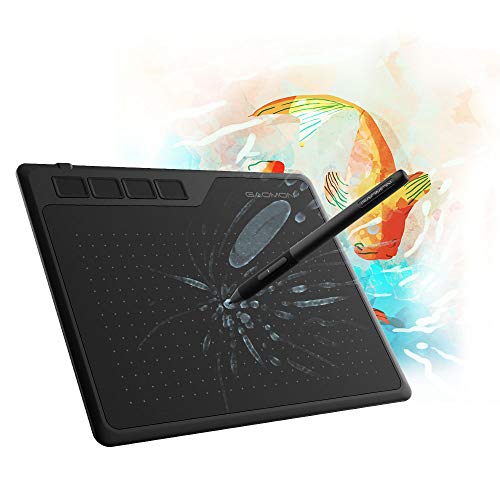
7. GAOMON S620 Drawing Tablet — Best Budget Pen Tablet for Beginners
The GAOMON S620 occupies a similar category to the HUION HS64 as a computer-connected pen tablet, but it positions itself as the most affordable entry point for kids who want to explore digital art without a large upfront commitment. The 6.5 × 4 inch active drawing area is compact and lightweight, making it genuinely portable enough to carry to school, a friend's house, or pack into a bag for travel. The 8192-level passive pen (battery-free, like the HUION) provides the same class of pressure sensitivity at a price point that lowers the risk of buying a device your child tries twice and abandons. Four customizable ExpressKeys along the left edge let your child assign frequently-used shortcuts — undo, zoom, brush size — which meaningfully speeds up workflow once they learn the basics.
Compatibility covers Windows 7 and later and macOS 10.12 and later, and the GAOMON S620 works with most popular drawing programs, including Photoshop, Illustrator, Clip Studio, Krita, Sketchbook Pro, Paint Tool SAI 2, and others. Notably, it is not compatible with iPad or iPhone, which is a relevant limitation if your household's primary device is Apple mobile. The S620 is also a popular choice among OSU! players and rhythm game enthusiasts, which may or may not appeal to your child but does speak to its tracking accuracy and responsiveness at lower price points. For families where gaming and art interests overlap, this dual-use capability adds practical value.
The 6.5 × 4 inch drawing area will feel cramped for some children, particularly those transitioning from larger surfaces or working on complex, detailed pieces. The S620 is best understood as a trial device — it gives a serious taste of professional digital drawing at minimal cost, and if your child develops a genuine passion, it provides a clear upgrade path to larger, higher-end tablets without having wasted significant money on the discovery process. If you are unsure whether your child will commit to learning a pen tablet, the GAOMON S620 is the lowest-risk way to find out.
Pros:
- Highly affordable entry point for professional-grade pressure sensitivity
- Battery-free stylus with 8192 pressure levels and four customizable ExpressKeys
- Lightweight and portable enough for school and travel use
- Compatible with most major drawing programs on Windows and Mac
Cons:
- 6.5 × 4 inch drawing area is small for detailed or complex artwork
- Not compatible with iPad or iPhone devices
- Requires a computer — not a standalone device for independent use
Choosing the Right Drawing Tablet for Kids: A Buying Guide
Age and Developmental Stage Matter More Than Specs
The single most important factor in choosing a drawing tablet for a child is not screen resolution or stylus sensitivity — it is whether the device matches where your child currently is developmentally. Children under six generally benefit most from physical, tactile tools that build fine motor skills, and the Crayola Tracing Pad or Boogie Board Jot serve this age range better than any screen-based device. Children aged 6 through 10 who want digital art are well-served by tablets like the Fire HD 8 Kids Pro or the PicassoTab XL, where they can explore creative apps without needing adult help to set up or manage a computer connection. Children aged 10 and above who are genuinely passionate about digital art are ready to benefit from a dedicated pen tablet like the HUION HS64 or GAOMON S620, where professional-level pressure sensitivity and software compatibility become relevant rather than overwhelming. Matching the tool to the stage avoids the common frustration of a child who receives a sophisticated device they cannot yet use effectively, loses interest, and the device sits unused in a drawer.
Standalone vs. Computer-Connected: Understanding the Trade-Off
Standalone tablets — the Fire HD 8, Fire 7, and PicassoTab XL — work independently and give your child complete creative freedom without needing to share a family computer or set up software. They are more portable, require less technical management from parents, and lower the barrier to picking up and starting a drawing session. Computer-connected pen tablets — the HUION HS64 and GAOMON S620 — deliver significantly better drawing quality and access to professional-grade software, but they require a dedicated computer, driver installation, and the adjustment period of drawing while looking at a separate screen. For most households, the right choice depends on whether your child has consistent, independent access to a suitable computer. If they do, a pen tablet is worth considering seriously for any child over 10 with genuine artistic interest; if they do not, a standalone tablet delivers a more self-sufficient and frustration-free experience.
Pressure Sensitivity and Stylus Quality
If your child is interested in serious digital drawing rather than casual doodling, pressure sensitivity levels matter substantially for line quality and creative control. Consumer tablets like the Amazon Fire HD series use capacitive touchscreens that respond to touch but not to the variable pressure that distinguishes a light sketch stroke from a bold line. Dedicated pen tablets like the HUION HS64 and GAOMON S620 use electromagnetic resonance technology that reads 8192 distinct pressure levels, producing line quality that responds to subtle variations in hand pressure the way traditional drawing media does. The PicassoTab XL sits between these extremes — it includes an active stylus with pressure sensitivity, but at a lower resolution than dedicated pen tablets. Understanding this spectrum helps you set accurate expectations for your child and avoid disappointment when a touchscreen tablet does not produce the line variation they see in tutorial videos made on professional equipment.
Budget, Durability, and Long-Term Value
Drawing tablets for kids range enormously in price, and the right budget allocation depends on your child's demonstrated commitment level as much as their current enthusiasm. The Crayola Tracing Pad and Boogie Board Jot are low-cost options with essentially zero technology risk — if a child loses interest, the investment is minimal. The Amazon Fire Kids tablets include a two-year worry-free replacement guarantee that effectively removes the durability risk for clumsy children, making them a better value proposition than many similarly-priced alternatives that lack this protection. For the HUION and GAOMON pen tablets, the modest price is deceptive in a positive way — both deliver drawing quality that would have cost significantly more a few years ago, and both will last through years of serious use if treated with basic care. Whatever your budget, factor in accessories: some devices need batteries, stylus replacements, or software subscriptions that add to the total cost of ownership over the first year of use.
Common Questions
What age is appropriate for a child's first drawing tablet?
Most children are ready for a simple drawing tablet around age 3 to 4, starting with tactile tools like the Crayola Light Up Tracing Pad or a basic touchscreen device like the Amazon Fire 7 Kids. For digital pen tablets that connect to a computer, age 10 or older is generally appropriate, as younger children struggle with the disconnect between drawing on the tablet surface and watching the results appear on a separate screen. The best age-to-tool matching prioritizes your individual child's patience and fine motor development over any fixed number.
Do drawing tablets for kids need a computer to work?
It depends on the type of tablet. Standalone tablets like the Amazon Fire HD 8 Kids Pro, the Amazon Fire 7 Kids, and the PicassoTab XL operate independently and require no computer connection. Pen tablets like the HUION HS64 and GAOMON S620 must be connected to a computer or compatible Android device to function — they have no display of their own and work as input devices for drawing software running on a separate machine. The Crayola Light Up Tracing Pad and Boogie Board Jot require no technology connection at all and work entirely offline.
What drawing apps work best for kids on a tablet?
For younger children on Amazon Fire tablets, apps available through Amazon Kids+ provide age-appropriate drawing and coloring experiences. Older children on Android-based tablets like the PicassoTab XL can access Sketchbook (free, professional-grade tools), ibis Paint X (popular among teen artists), and Infinite Painter (strong brush simulation). For children using a computer-connected pen tablet, Krita is a completely free, full-featured digital art application that many art teachers recommend specifically for beginners, while Clip Studio Paint is widely used for illustration and animation at an accessible price point in 2026.
Is the HUION HS64 too advanced for a 10-year-old beginner?
The HUION HS64 is genuinely manageable for a motivated 10-year-old, but it requires a willing investment of learning time upfront. The hand-eye disconnect of drawing on a surface while watching a screen typically takes one to three weeks of regular practice to feel natural, and some children adapt faster than others. If your child regularly watches drawing tutorials online, has already shown patience with learning new software, and has consistent access to a suitable computer, the HS64 is a realistic choice. If they are newer to digital art and prefer immediate, rewarding results, the PicassoTab XL's built-in screen removes the learning curve entirely and may be a better starting point.
Can kids use these drawing tablets for school assignments?
Several tablets on this list have genuine utility for school work beyond art class. The Amazon Fire HD 8 Kids Pro and Fire 7 Kids both run educational apps and can handle basic assignments through compatible productivity tools. The Boogie Board Jot is useful for quick note-taking, math practice, and writing exercises that benefit from a consequence-free, erasable surface. The HUION HS64 and GAOMON S620 work well for digital annotation, online class participation via Zoom, and signature tasks on documents. The PicassoTab XL's Android OS and 64GB of storage make it capable of handling school-related apps alongside creative work.
How do I know if my child will actually use a drawing tablet regularly?
The clearest indicator is whether your child currently draws, doodles, or colors consistently with traditional materials. A child who fills sketchbooks, asks for colored pencils, and watches art videos independently is showing genuine interest that tends to transfer to digital tools. If you are unsure, start with a lower-cost option like the Crayola Tracing Pad, the Boogie Board Jot, or the GAOMON S620 rather than committing to a more expensive device. Most parents find that two to four weeks of regular unprompted use with a starter tool is a reliable indicator of sustained interest — if the habit sticks, that is the right time to invest in a more capable device.
Buy on Walmart
- Amazon Fire HD 8 Kids Pro tablet (newest model), ages 6-12. — Walmart Link
- Amazon Fire 7 Kids tablet (newest model) ages 3-7. Top-selli — Walmart Link
- Crayola Light Up Tracing Pad Pink, Essential Easter Basket S — Walmart Link
- Boogie Board Jot Reusable Writing Tablet, Includes 8.5 in LC — Walmart Link
- PicassoTab XL Drawing Tablet • No Computer Needed • 11.6" Sc — Walmart Link
- Drawing Tablet HUION HS64 Beginner Graphics OSU Tablet with — Walmart Link
- GAOMON S620 Drawing Tablet 6.5 x 4 Inch Graphics Tablet with — Walmart Link
Buy on eBay
- Amazon Fire HD 8 Kids Pro tablet (newest model), ages 6-12. — eBay Link
- Amazon Fire 7 Kids tablet (newest model) ages 3-7. Top-selli — eBay Link
- Crayola Light Up Tracing Pad Pink, Essential Easter Basket S — eBay Link
- Boogie Board Jot Reusable Writing Tablet, Includes 8.5 in LC — eBay Link
- PicassoTab XL Drawing Tablet • No Computer Needed • 11.6" Sc — eBay Link
- Drawing Tablet HUION HS64 Beginner Graphics OSU Tablet with — eBay Link
- GAOMON S620 Drawing Tablet 6.5 x 4 Inch Graphics Tablet with — eBay Link
Next Steps
- Check the current price on Amazon for your shortlisted tablet — prices on the Fire HD Kids series and the HUION HS64 fluctuate regularly, and bundles occasionally include bonus accessories that change the value equation significantly.
- Match the device to your child's age and current art habits before buying — if they draw daily with traditional materials, a dedicated pen tablet makes sense; if their interest is newer, start with a lower-cost tool and upgrade when the habit is established.
- If you are considering the HUION HS64 or GAOMON S620, confirm your household computer meets the driver requirements by checking the manufacturer's compatibility page before purchasing, as these pen tablets require software installation to work correctly.
- Read parent reviews filtered to your child's age group on Amazon — the most useful feedback for a 5-year-old and a 12-year-old will be very different, and age-filtered reviews surface durability and usability issues that general ratings do not capture.
- Bookmark our guides to the best Android tablets for kids and the best tablet for artists to revisit when your child is ready to upgrade — knowing what the next step looks like makes it easier to set expectations and plan the investment at the right time.
 |
 |
 |
 |

About Priya Anand
Priya Anand covers laptops, tablets, and mobile computing for Ceedo. She holds a bachelor degree in computer science from the University of Texas at Austin and has spent the last nine years writing reviews and buying guides for consumer electronics publications. Before joining Ceedo, Priya worked as a product analyst at a major retailer where she helped curate the laptop and tablet category. She has personally benchmarked more than 200 portable computers and is particularly interested in battery longevity, repairability, and the trade-offs between Windows, macOS, ChromeOS, and Android tablets. Outside of work, she runs a small Etsy shop selling laptop sleeves she sews herself.