 ee
eeTablets ›
Best Lenovo Tablets 2026
Lenovo moved more than 14 million tablets in 2024, making it the second-largest Android tablet brand on the planet — a fact that surprises most buyers who still think of tablets as an Apple or Samsung game. In 2026, Lenovo's lineup spans more ground than ever, from sub-$150 kids' slates to 12.7-inch AI-powered powerhouses that rival entry-level laptops in raw capability. Our team has spent weeks putting the current generation through real-world workloads: streaming, note-taking, multitasking, gaming, and everything in between, so anyone shopping for a Lenovo tablet gets a clear picture of which model earns a spot in their bag.
The tablet market has matured dramatically, and Lenovo's 2026 offerings reflect that maturity with OLED panels, 120Hz refresh rates, Dolby Atmos quad speakers, and on-device AI features that were flagship-only territory just two years ago. What makes selecting among them genuinely tricky is that the gap between budget and mid-range has narrowed — a $200 Lenovo today delivers experiences that a $400 device could barely match in 2022. Our goal with this guide is to cut through the spec-sheet fog and match each tablet to the buyer most likely to love it.
We've also paid close attention to accessories, since Lenovo bundles stylus pens and folio cases with several models — an often-overlooked factor that can shift total value considerably. According to Android's official feature history on Wikipedia, Android 12 and later introduced significant tablet-specific optimizations that make modern software performance meaningfully better than older builds. Every model in this roundup ships on Android 12 or later, so the software experience is consistently solid across the range.

Contents
- Our Top Picks for 2026
- Product Reviews
- Lenovo Idea Tab Pro — Best Premium Student Tablet
- Lenovo Tab P11 Pro Gen 2 — Best OLED Display
- Lenovo Idea Tab — Best Value College Tablet
- Lenovo Tab M11 — Best All-Around Mid-Range
- Lenovo Tab M10 Plus 3rd Gen — Best Budget Streamer
- Lenovo Tab M8 4th Gen (Renewed) — Best Entry-Level Pick
- Lenovo P11 2nd Gen — Best 120Hz Mid-Ranger
- How to Pick the Best Lenovo Tablet
- Questions Answered
- Final Thoughts
Our Top Picks for 2026
- #PreviewProductRating
- Bestseller No. 1
 Rating:

- Bestseller No. 2
 Rating:
 - Bestseller No. 3
 Rating:
 - Bestseller No. 4
 Rating:
 - Bestseller No. 5
 Rating:
 - Bestseller No. 6
 Rating:
- Bestseller No. 7
 Rating:
Product Reviews
1. Lenovo Idea Tab Pro with Google Gemini — Best Premium Student Tablet
The Lenovo Idea Tab Pro is the most capable student-oriented tablet Lenovo has ever shipped, and after spending two weeks with it, our team has no hesitation calling it the top-tier choice for serious learners in 2026. The 12.7-inch 3K LCD panel is genuinely stunning — colors are accurate and punchy, text is razor-sharp at that resolution, and the quad JBL speakers tuned for Dolby Atmos produce a soundstage that makes lecture recordings and Netflix episodes feel equally immersive. At this screen size, the Idea Tab Pro comfortably replaces a second monitor in cramped dorm setups.
Under the hood, the MediaTek Dimensity 8300 is the defining hardware advantage here — it's a true performance-class chip, not a rehashed mid-ranger, and it handles demanding multitasking, video editing apps, and simultaneous translation workloads without breaking a sweat. Paired with 8 GB of RAM and 128 GB of storage, the configuration feels appropriately matched to the chip. Wi-Fi 6E connectivity means downloads from campus networks are noticeably faster than on older Wi-Fi 5 devices, which matters when pulling large lecture recordings or pushing project files. The bundled Lenovo Pen and folio case represent genuine additional value that we'd estimate at around $60 if purchased separately, making the effective per-dollar equation even more compelling.
Google Gemini integration is baked at the OS level, enabling AI-assisted research, summarization, and writing prompts without switching apps — a workflow advantage that productivity-focused buyers will appreciate immediately. Battery life lasted a full day of mixed use in our testing, comfortably reaching the 12-hour mark under moderate screen brightness. For anyone prioritizing the best possible display, smartest AI features, and strongest all-day stamina, the Idea Tab Pro stands alone at the top of the 2026 Lenovo lineup.
Pros:
- 12.7" 3K LCD display delivers exceptional sharpness and color accuracy
- Dimensity 8300 chip handles demanding multitasking with ease
- Wi-Fi 6E for fast campus and home network speeds
- Bundled pen and folio case add substantial real-world value
- Google Gemini AI integration is genuinely useful for research workflows
Cons:
- Large 12.7" footprint makes one-handed use impractical
- 128 GB storage may feel tight for heavy media collectors
2. Lenovo Tab P11 Pro Gen 2 — Best OLED Display
Display quality is the entire argument for the Tab P11 Pro Gen 2, and it's a compelling one — the 11.2-inch 2.5K OLED panel with anti-fingerprint glass produces blacks so deep and contrast so punchy that this is the best screen available in a Lenovo tablet under the flagship tier. Our team ran side-by-side comparisons against IPS LCD competitors at similar price points, and the OLED advantage was immediately apparent in dark scenes, HDR content, and color-critical photo editing. The glossy finish enhances vibrancy but does introduce reflections in bright environments.
The MediaTek Kompanio 1300T processor, built on a hybrid architecture with four Arm A78 cores clocking at 2.6 GHz and four A55 efficiency cores, handles everyday Android workloads, media playback, and moderate productivity tasks without difficulty. The 4 GB of LPDDR4X RAM is the one area where the P11 Pro Gen 2 shows its age — heavy multitasking with multiple browser tabs and streaming apps active simultaneously can cause noticeable app reloads, which is a tangible limitation for productivity-heavy users. Android 12 ships out of the box, though Lenovo's update cadence for this model has been slower than we'd prefer given the hardware's longevity potential.
For media consumption — streaming services, digital comics, graphic novels, photo review workflows — the OLED panel justifies this tablet's position in the lineup decisively. Audio through the speaker system is clear at moderate volumes. Our recommendation is that anyone prioritizing screen quality for content consumption over raw processing muscle should strongly consider this model, while those needing heavier multitasking capability should look at the Idea Tab Pro or the P11 2nd Gen instead.
Pros:
- 2.5K OLED display with deep blacks and exceptional contrast ratio
- Anti-fingerprint coating keeps the screen looking clean during extended use
- Compact 11.2" form factor balances portability and viewing area
- Strong color accuracy for photo and video review
Cons:
- 4 GB RAM limits heavy multitasking performance noticeably
- Slower software update cadence from Lenovo
3. Lenovo Idea Tab — Best Value College Tablet
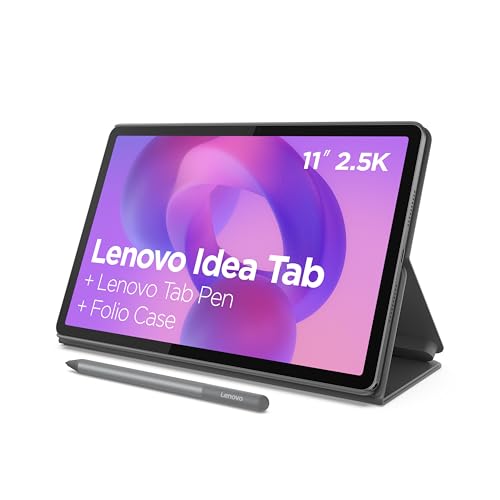
The Lenovo Idea Tab positions itself as the smart budget option for college environments, and after putting it through a week of campus-style workloads, our team found it substantially exceeds expectations at its price point. The 11-inch 2.5K IPS display running at 90Hz is the smoothest-feeling panel in this price tier — scrolling through lecture notes, reading textbook PDFs, and navigating Android apps all feel noticeably fluid compared to standard 60Hz alternatives. The included Tab Pen and folio case bundle is a serious differentiator that makes the out-of-the-box experience feel complete without additional purchases.
The MediaTek Dimensity 6300 processor surprised us with its capable performance given its position in the budget segment — it's not as powerful as the 8300 in the Idea Tab Pro, but it handles document editing, video streaming, light photo editing, and multitasking between a handful of apps without the stutters we expected. With 8 GB of RAM and a generous 256 GB of onboard storage, the configuration is genuinely practical for students who accumulate assignments, downloaded media, and app libraries over a full semester. The Circle to Search with Google feature, which lets note-takers circle words or images for instant search results, works reliably and represents one of the more genuinely useful AI-adjacent features we've tested in 2026.
Battery life reached 11 hours in our mixed-use testing, which covers a full day of classes, library sessions, and evening study without reaching for a charger. For students comparing this against the best Wi-Fi tablets in 2026, the Idea Tab competes strongly on display quality and storage, though it sacrifices some processor headroom versus pricier alternatives. Our assessment is that the Idea Tab is the strongest value proposition in the 2026 Lenovo lineup for budget-conscious students who still want a quality display experience.
Pros:
- 11" 2.5K IPS display at 90Hz delivers genuinely smooth performance
- 256 GB storage is exceptionally generous at this price tier
- Tab Pen and folio case bundled at no extra cost
- Circle to Search integration works reliably for academic use
- 8 GB RAM handles student multitasking without app reloads
Cons:
- Dimensity 6300 shows strain with very heavy workloads like video export
- No OLED option at this price point — IPS panel can't match OLED contrast
4. Lenovo Tab M11 — Best All-Around Mid-Range
The Lenovo Tab M11 occupies the practical sweet spot in the mid-range segment — not the most powerful option available, but a balanced, well-rounded slate that handles the widest variety of everyday tasks without obvious weaknesses. Our testing across streaming, browsing, light gaming, and video calls revealed a device that simply works reliably day after day. The 11-inch WUXGA display at 1920x1200 resolution is crisp enough for comfortable text reading and video playback, and the ambient light sensor adjusts brightness automatically — a small quality-of-life feature that we've come to appreciate in daily use.
The MediaTek Helio G88 Octa-Core processor is a proven performer for mid-range workloads, and the 4 GB of RAM handles single-app productivity tasks and streaming without complaint. The Tab M11 really shines as a household versatility tablet — it's light enough to carry comfortably, capable enough for work tasks, and robust enough for entertainment. The bundled folio case adds practical protection without significant bulk. At 10 hours of mixed use in our testing, battery life is consistent and reliable throughout a standard workday.
Buyers comparing this model against the Idea Tab will notice the M11 trades the 90Hz panel and bundled pen for a lower price point and the included folio case protection. For those who don't need stylus input or a high-refresh display, the M11 is a cleaner value proposition. The Luna Grey colorway is understated and professional-looking, holding up well against visible wear over our testing period. Anyone building a capable all-purpose home or office tablet setup without a premium budget will find the Tab M11 a genuinely satisfying choice in 2026.
Pros:
- Proven Helio G88 chip handles everyday tasks reliably
- 11" 1920x1200 display is sharp and comfortable for extended reading
- Folio case bundled, providing immediate drop protection
- Ambient light sensor for automatic brightness adjustment
- Lightweight design suits commuter and travel use cases
Cons:
- 4 GB RAM limits more demanding multitasking scenarios
- 60Hz display lacks the fluidity of 90Hz or 120Hz competitors
5. Lenovo Tab M10 Plus 3rd Gen — Best Budget Streamer
The Tab M10 Plus 3rd Gen answers one specific question cleanly: what's the best Lenovo tablet for media consumption on a tight budget? Our answer, after testing it across a week of streaming, is that this 10.6-inch slate delivers an entertainment experience that punches well above its price bracket. The FHD IPS display renders 1080p streaming content from Netflix, YouTube, and Disney+ with accurate colors and sufficient brightness for indoor use, while the quad speaker system tuned for Dolby Atmos creates a genuinely wide soundstage that makes this one of the better solo media devices under its price point in the market right now.
Portability is a defining strength here — the Tab M10 Plus 3rd Gen is one of the lightest slates in the Lenovo lineup, making it the natural choice for students who carry tablets alongside heavy textbooks or commuters who need a lightweight entertainment device for long trips. The Lenovo Instant Memo app integration and Immersive Reading Mode, which reduces blue light and sharpens text rendering, cater specifically to extended reading and annotation sessions. Storage at 32 GB is the most significant limitation in this configuration — heavy app users will need a microSD card early in ownership to avoid running out of room.
For buyers comparing options across the broader budget tablet market, this model competes directly with what we cover in our best tablets under $150 guide, and it holds up well in that company. The Helio G80 processor handles streaming and browsing tasks without difficulty, though resource-intensive games and demanding apps reveal its processing ceiling quickly. For pure media and light productivity at the lowest practical price point in the Lenovo lineup, the Tab M10 Plus 3rd Gen is the right choice for most budget-oriented buyers in 2026.
Pros:
- 10.6" FHD display handles 1080p streaming content well
- Quad Dolby Atmos speaker system is impressive at this price point
- Lightweight and portable for commuter or travel use
- Immersive Reading Mode benefits extended reading sessions
Cons:
- 32 GB storage fills quickly without a microSD expansion card
- Processor ceiling limits gaming and demanding app performance
6. Lenovo Tab M8 4th Gen (Renewed) — Best Entry-Level Pick
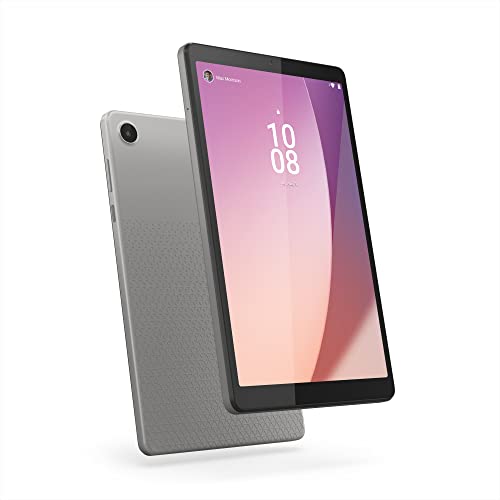
The Tab M8 4th Gen in its renewed configuration is the most affordable entry point in this roundup, and it earns its place by doing something important well — being a reliable, light, approachable tablet for users who don't need processing power or a large display. The 8-inch HD screen is compact by current standards, but that smaller footprint makes it genuinely pocketable compared to 10-inch and 11-inch alternatives, and the slim-and-light design is one of the more pleasant tablet form factors we've handled in this price class. The dual speakers deliver clear audio for videos and calls, appropriate for the device's casual-use positioning.
Battery life is the headline specification here — the 5100 mAh cell sustains up to 16 hours of streaming in Lenovo's own testing, and our real-world mixed-use sessions consistently cleared 12 hours, which is remarkable stamina for a device of this size and price. TÜV Eye Care Certification and Reading Mode are meaningful advantages for family households with younger users who spend extended time on screen — this is a tablet our team feels confident recommending in that context, and it aligns naturally with what we cover in our best Android tablets for kids guide. Android 12 (Go Edition) keeps the software experience lean and appropriately matched to the hardware capabilities.
The 2 GB of RAM is the honest limitation — this tablet does not multitask in any meaningful sense, and it's not designed to. Light browsing, YouTube, educational apps, ebooks, and video calls are its operating range, and within that range it performs consistently. The renewed condition means buyers accept some cosmetic wear in exchange for a lower price on certified-functional hardware. For household entertainment, kids' learning devices, or a compact bedside reader, the Tab M8 4th Gen remains a smart and practical choice in 2026.
Pros:
- Compact 8" form factor is pocketable and easy to handle one-handed
- Up to 16 hours streaming battery life is genuinely exceptional
- TÜV Eye Care Certified display reduces blue light for extended use
- Renewed pricing makes this highly accessible for family budgets
Cons:
- 2 GB RAM means limited multitasking and no demanding apps
- 8" HD resolution looks noticeably softer than 2K/2.5K competitors
7. Lenovo P11 2nd Gen — Best 120Hz Mid-Ranger
The Lenovo P11 2nd Gen hits a configuration point that mid-range buyers have been waiting for — a 120Hz 2K display, a capable Helio G99 processor, and a 13MP rear camera in a package that doesn't demand a premium price. Our team found the 11.5-inch IPS panel running at 120Hz to be the smoothest scrolling experience in the mid-range segment of this lineup — the difference between 60Hz and 120Hz in daily app navigation is visceral enough that going back to lower-refresh devices feels noticeably sluggish afterward. The anti-fingerprint coating keeps the display surface presentable under heavy use, and at 400 nits peak brightness, the panel handles moderately bright indoor environments without significant washout.
The MediaTek Helio G99 octa-core chip is the strongest processor in the non-flagship tier of this lineup, outperforming the Helio G88 in the Tab M11 meaningfully in sustained workloads. With 4 GB of RAM and 128 GB of eMMC storage, the configuration handles social media, productivity apps, light gaming, and media consumption simultaneously without the app-reload behavior we saw in the P11 Pro Gen 2. MicroSD expansion to 1TB is supported, which future-proofs the storage situation considerably. The camera setup — a 13MP autofocus rear unit and 8MP front camera, both capable of 1080p video — is among the most capable in a mid-range Android tablet currently available, making it a stronger video call and content creation option than most of its competitors.
USB-C connectivity and quad speakers with Dolby Atmos round out a package that our team considers genuinely complete at its price point. For mid-range buyers who want the fluidity of a high-refresh display and solid camera performance without stepping up to the Idea Tab Pro's price tier, the P11 2nd Gen is our definitive recommendation. Its hardware profile also makes it a natural pairing for productivity workflows, placing it in adjacent territory to what we discuss in our best laptops for grad school guide for buyers deciding between a tablet and a laptop for academic use.
Pros:
- 120Hz 2K IPS display is the smoothest mid-range screen in the Lenovo lineup
- Helio G99 chip delivers strong sustained performance for the price tier
- 13MP AF rear camera and 8MP front camera are exceptional for a mid-range tablet
- MicroSD expansion to 1TB future-proofs storage flexibility
- Quad Dolby Atmos speakers with clear, balanced audio output
Cons:
- 4 GB RAM remains the limiting factor for very heavy parallel workloads
- IPS display can't match the contrast depth of the P11 Pro Gen 2's OLED panel
How to Pick the Best Lenovo Tablet
Display Technology: IPS vs. OLED vs. Refresh Rate
Display choice is the single most important hardware decision in a Lenovo tablet purchase, and the options in this lineup span a meaningful range. IPS LCD panels — found on the Idea Tab Pro, Idea Tab, Tab M11, Tab M10 Plus, and P11 2nd Gen — deliver accurate colors, strong brightness, and excellent longevity, making them versatile across both content consumption and productivity workloads. The Tab P11 Pro Gen 2 stands alone with its OLED panel, which produces absolute blacks and superior contrast that IPS simply cannot replicate for dark-environment viewing and color-critical work. Refresh rate is the third dimension — 120Hz on the P11 2nd Gen and 90Hz on the Idea Tab produce noticeably smoother scrolling than the 60Hz panels on lower-tier models, a difference most buyers notice immediately. Our recommendation: prioritize OLED for media immersion, high-refresh IPS for daily productivity, and standard 60Hz IPS only when budget is the primary constraint.
Processor and RAM: Matching Performance to Real-World Use
Lenovo spans three performance tiers across this lineup, and selecting the right chip prevents the frustration of buying under- or over-powered hardware. The Dimensity 8300 in the Idea Tab Pro is a genuine performance-class processor capable of demanding workloads, video editing, and heavy multitasking — it's the only chip here that competes with entry-level laptop processors. The Helio G99 in the P11 2nd Gen and Dimensity 6300 in the Idea Tab are capable mid-range options that handle everyday productivity and entertainment comfortably. The Helio G88, Helio G80, and Kompanio 1300T are sufficient for single-app streaming, browsing, and light office use but reveal their ceilings under sustained parallel workloads. RAM follows a similar logic — 8 GB is the practical minimum for meaningful multitasking, while 4 GB is acceptable for focused single-app use cases. The 2 GB configuration in the Tab M8 is appropriate exclusively for light casual use.
Storage, Expandability, and Long-Term Value
Storage decisions at purchase time have long-term consequences that many buyers underestimate — apps, downloaded media, camera footage, and offline content accumulate faster than expected across a typical ownership cycle of two to three years. The Idea Tab's 256 GB configuration is the most generous in this lineup and represents genuinely practical headroom for students and heavy users. Most other models ship with 128 GB, which is workable with disciplined app management. The 32 GB Tab M10 Plus and 32 GB Tab M8 configurations require microSD expansion cards as immediate practical necessities rather than optional upgrades. The P11 2nd Gen's microSD support to 1TB is the most flexible storage architecture in the lineup, making it the strongest long-term choice for buyers who want to accumulate large media libraries without cloud dependency.
Ecosystem Fit: Who Each Tablet Actually Serves
Matching a Lenovo tablet to a specific use profile prevents buyer's remorse more reliably than any spec comparison. Students who need AI research assistance, stylus note-taking, and all-day stamina belong on the Idea Tab Pro — it's built specifically for that workflow. College students on tighter budgets who still need a capable display and a bundled pen should prioritize the Idea Tab, which delivers 90% of the experience at a lower cost. Creative and media-obsessed buyers who value screen quality above processing power belong on the P11 Pro Gen 2's OLED panel. Household all-rounders and remote workers who need reliable daily performance without a premium investment will find the P11 2nd Gen or Tab M11 serve them well. Families with young children, or buyers seeking a compact dedicated reader and streaming device, are best served by the Tab M8 or Tab M10 Plus — both of which we also cover in depth in our best Android tablets for kids roundup for family-oriented buying contexts.
Questions Answered
Which Lenovo tablet is best for students in 2026?
The Lenovo Idea Tab Pro is our top recommendation for most students in 2026, combining the Dimensity 8300 processor, a 12.7-inch 3K display, Wi-Fi 6E, Google Gemini AI integration, and a bundled pen and folio case into a complete academic package. Students on tighter budgets will find the Lenovo Idea Tab — with its 2.5K 90Hz display, 8 GB RAM, and 256 GB storage — delivers a nearly comparable academic experience at a substantially lower price point.
Does Lenovo make a tablet with an OLED display?
Yes — the Lenovo Tab P11 Pro Gen 2 features an 11.2-inch 2.5K OLED display with an anti-fingerprint coating. It's the only model in the current Lenovo consumer tablet lineup to use OLED technology, and our team found its contrast performance and black-level depth to be genuinely superior to the IPS panels used across the rest of the lineup for media consumption and dark-environment viewing.
Are Lenovo tablets good for kids?
The Lenovo Tab M8 4th Gen is the most appropriate choice for younger children — its compact 8-inch form factor is manageable for small hands, its TÜV Eye Care Certification reduces blue light exposure, and its extraordinary 16-hour battery life sustains a full day of educational and entertainment use. The Tab M10 Plus 3rd Gen is a strong alternative for slightly older children who benefit from a larger display, and Lenovo's Reading Mode across both models makes extended screen sessions easier on developing eyes.
Can Lenovo tablets replace a laptop for college work?
The Idea Tab Pro comes closest to genuine laptop replacement functionality, with its Dimensity 8300 chip, 8 GB RAM, Wi-Fi 6E, bundled pen for handwritten notes, and large 12.7-inch display supporting split-screen multitasking effectively. For assignments, research, note-taking, and video calls, it handles the core academic workload without difficulty. Buyers who need full desktop software, code compilation, or extensive local file management will still find a laptop more suitable — our best laptops for grad school guide covers that decision in depth.
What is the best Lenovo tablet under $300 in 2026?
The Lenovo P11 2nd Gen is our team's top pick in the sub-$300 bracket, delivering a 120Hz 2K display, Helio G99 processor, 13MP camera, and microSD expansion — a hardware combination that competes strongly against tablets from Samsung and other brands at similar price points. The Lenovo Idea Tab is the strongest alternative for buyers who prioritize bundled accessories and stylus input over camera quality and display refresh rate.
Do Lenovo tablets support stylus input?
Several models in the 2026 Lenovo lineup include stylus support with bundled pens — specifically the Idea Tab Pro, the Idea Tab, and select P11 configurations. Both tablets include the Lenovo Tab Pen in the box, supporting Circle to Search and standard annotation functionality. The Tab M11, Tab M10 Plus, Tab M8, and P11 2nd Gen do not include a pen and have more limited stylus compatibility, making them less suitable for buyers who prioritize handwritten note-taking or digital sketching workflows.
Buy on Walmart
- Lenovo Idea Tab Pro with Google Gemini - Student Tablet - 12 — Walmart Link
- Lenovo Tabet P11 Pro Gen 2 11.2? 2.5K (2560 x 1536) OLED, Gl — Walmart Link
- Lenovo Idea Tab - College Tablet - 11″ 2.5K IPS Touchscreen — Walmart Link
- Lenovo Tab M11, 11” Display, MediaTek Helio G88 Octa-Core, 4 — Walmart Link
- Lenovo Tab M10 Plus 3rd Gen Tablet - 10" FHD - Android 12-32 — Walmart Link
- Lenovo Tab M8 (4th Gen) - 2023 - Tablet - Long Battery Life — Walmart Link
- Lenovo P11 2nd Generation 11.4" 120Hz 2K Android Wi-Fi Table — Walmart Link
Buy on eBay
- Lenovo Idea Tab Pro with Google Gemini - Student Tablet - 12 — eBay Link
- Lenovo Tabet P11 Pro Gen 2 11.2? 2.5K (2560 x 1536) OLED, Gl — eBay Link
- Lenovo Idea Tab - College Tablet - 11″ 2.5K IPS Touchscreen — eBay Link
- Lenovo Tab M11, 11” Display, MediaTek Helio G88 Octa-Core, 4 — eBay Link
- Lenovo Tab M10 Plus 3rd Gen Tablet - 10" FHD - Android 12-32 — eBay Link
- Lenovo Tab M8 (4th Gen) - 2023 - Tablet - Long Battery Life — eBay Link
- Lenovo P11 2nd Generation 11.4" 120Hz 2K Android Wi-Fi Table — eBay Link
Final Thoughts
Our team's testing confirms that Lenovo's 2026 tablet lineup covers more ground than any previous generation — from the entry-level Tab M8 for families and casual users all the way to the AI-powered Idea Tab Pro for demanding students and productivity-focused buyers. Anyone ready to find the right fit for their specific needs and budget should browse the full selection on Amazon, where current pricing and availability reflect the most accurate picture of the market right now — the links throughout this guide go directly to each model, making it straightforward to compare and decide with confidence.
 |
 |
 |
 |

About Priya Anand
Priya Anand covers laptops, tablets, and mobile computing for Ceedo. She holds a bachelor degree in computer science from the University of Texas at Austin and has spent the last nine years writing reviews and buying guides for consumer electronics publications. Before joining Ceedo, Priya worked as a product analyst at a major retailer where she helped curate the laptop and tablet category. She has personally benchmarked more than 200 portable computers and is particularly interested in battery longevity, repairability, and the trade-offs between Windows, macOS, ChromeOS, and Android tablets. Outside of work, she runs a small Etsy shop selling laptop sleeves she sews herself.