 ee
eeTablets ›
Best Tablet For Architects 2026
Which tablet actually holds up in a demanding architectural workflow — where you're annotating floor plans at 11 PM, sketching elevation concepts in a client meeting, and running CAD-adjacent apps all in the same session? The short answer: the Apple iPad Pro 13-Inch (M4) earns the top spot in 2026, but the right pick for you depends heavily on whether you need a full Windows environment, a dedicated pen display, or a portable daily driver you can carry to every site visit.
Architects sit at the intersection of creative and technical work in a way that very few other professionals do. You need color accuracy for rendering, low latency for sketching, enough raw horsepower to handle large BIM-adjacent files, and a display large enough to actually see what you're doing without squinting. The best tablets for this job are not necessarily the most expensive — they're the ones that match your specific workflow, whether that's AutoCAD Web, Concepts, Morpholio Trace, or Adobe Fresco. We've reviewed seven standout options for 2026, covering every budget and use case from field annotation to studio drafting.

Before diving in, it's worth knowing that architectural drawing has evolved dramatically with digital tools — modern tablets now handle tasks that once required a dedicated drafting table. Whether you're comparing Apple versus Windows ecosystems or standalone pen displays versus all-in-one tablets, this guide breaks down exactly what matters and which device wins at each criterion. If your workflow overlaps with graphic design, also check our guide to the best tablets for graphic designers in 2026 — much of that advice carries over directly.
Contents
- Best Choices for 2026
- In-Depth Reviews
- Apple iPad Pro 13-Inch (M4) — Best Overall
- Apple iPad Pro 11-Inch (M5) — Best Compact Pro
- Microsoft Surface Pro 12" (2025) — Best for Windows
- Wacom Cintiq 16 — Best Dedicated Pen Display
- Wacom Movink 13.3" — Best Portable Pen Display
- Apple iPad Air 13-Inch (M4) — Best Value Large Screen
- Samsung Galaxy Tab S10 Ultra — Best Android Option
- How to Pick the Best Tablet for Architects
- What People Ask
Best Choices for 2026
- #PreviewProductRating
- Bestseller No. 1
 Rating:

- Bestseller No. 2
 Rating:
- Bestseller No. 3
 Rating:
 - Bestseller No. 4
 Rating:
 - Bestseller No. 5
 Rating:
- Bestseller No. 6
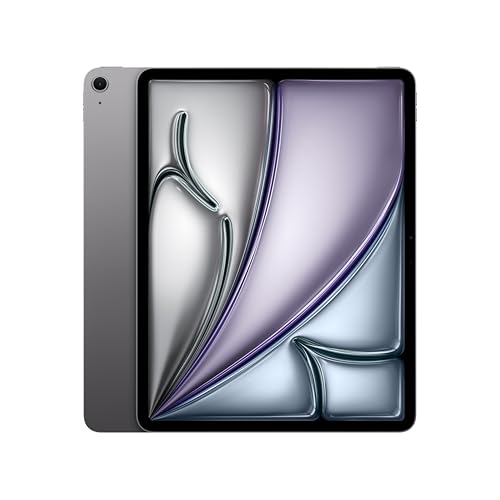 Rating:
 - Bestseller No. 7
 Rating:
In-Depth Reviews
1. Apple iPad Pro 13-Inch (M4) — Best Overall for Architects
The Apple iPad Pro 13-Inch powered by the M4 chip is the gold standard for architectural tablet work in 2026, and it earns that title through a combination of raw performance, display excellence, and ecosystem depth that no other tablet currently matches. The Ultra Retina XDR display runs at up to 1000 nits of sustained brightness with ProMotion adaptive refresh up to 120Hz, which means your pen strokes register with zero perceptible lag — a critical detail when you're doing precision linework in Morpholio Trace or Adobe Fresco. The 13-inch form factor gives you a canvas that actually approximates the experience of working on paper, and the M4 chip handles everything you throw at it without throttling.
Apple Pencil Pro compatibility is what really seals the deal for architectural use. The squeeze gesture for tool switching, combined with barrel roll support for calligraphic and brushwork tasks, makes the drawing experience feel genuinely professional rather than a workaround. The LiDAR Scanner opens up augmented reality workflows for site documentation and spatial measurement, which is an increasingly relevant tool for architects doing existing conditions surveys. With 256GB as the entry storage and all-day battery life, you're looking at a device that travels to job sites without complaint and handles studio rendering sessions without breaking a sweat.
The one honest trade-off is cost — the iPad Pro 13" sits at the premium end of the tablet market, and you'll need to factor in the Apple Pencil Pro and a Magic Keyboard separately if you want the full productivity setup. But if your workflow lives in iOS and iPadOS, no other device comes close to this combination of screen real estate, stylus precision, and processing power.
Pros:
- Ultra Retina XDR display with ProMotion 120Hz and exceptional color accuracy for rendering review
- M4 chip delivers desktop-class performance — handles large project files, high-resolution renders, and simultaneous apps without throttling
- Apple Pencil Pro support with barrel roll and squeeze gestures for faster tool access during detailed linework
- LiDAR Scanner enables AR-based spatial measurement — useful for existing conditions documentation on site
- Wi-Fi 6E connectivity and Face ID round out a genuinely professional feature set
Cons:
- Significant total cost once you add Apple Pencil Pro and keyboard accessories
- iPadOS still has limitations compared to full macOS or Windows for running native desktop CAD software
2. Apple iPad Pro 11-Inch (M5) — Best Compact Pro for Field Work
The 2025 Apple iPad Pro 11-Inch with the M5 chip is the right choice if you're constantly moving between desk and field and you want maximum performance without the bulk of the larger model. The M5 chip is a meaningful generational leap — it brings Neural Accelerators specifically tuned for on-device AI tasks, which translates to faster intelligent assistance features in iPadOS 26, smarter autocorrect in handwriting recognition, and noticeably snappier performance in AI-enhanced apps. For architects, that means smoother performance in generative design tools and faster processing when converting hand sketches to vector paths.
The 11-inch size hits a sweet spot for portability without feeling cramped. The landscape 12MP front camera is a thoughtful addition for architects who run video calls from job sites — you stay in the center of the frame no matter how you orient the tablet. With 512GB of onboard storage in this configuration and Wi-Fi 7 with Apple's custom N1 chip for wireless processing, you get both fast local storage and the fastest wireless speeds in any iPad to date. The LiDAR Scanner carries over from the M4 generation, keeping AR-based spatial documentation fully in play.
The trade-off versus the 13-inch M4 is primarily screen real estate — you lose about two inches of diagonal, which matters when you're reviewing complex floor plan annotations. However, the M5's raw performance advantage makes this a compelling pick if you frequently use AI-accelerated tools and you value a lighter carry weight above all else.
Pros:
- M5 chip with Neural Accelerators delivers the fastest on-device AI performance of any iPad yet released
- 512GB storage in this configuration handles large project archives without cloud dependency
- Wi-Fi 7 with Apple N1 chip provides the fastest wireless connectivity available in a tablet in 2026
- Landscape front camera is genuinely useful for architects running client calls from job sites
- More portable and lighter than the 13-inch model for daily field carry
Cons:
- 11-inch screen is noticeably smaller for detailed plan annotation compared to the 13-inch M4
- Premium price tag, especially at 512GB storage tier
3. Microsoft Surface Pro 12" (2025) — Best for Windows-Dependent Workflows
If your architectural workflow depends on native Windows applications — full AutoCAD, Revit LT, or any desktop software that has no viable iPad equivalent — the Microsoft Surface Pro 12" (2025) is your answer. This is a full Copilot+ Windows 11 PC that also happens to work as a tablet, and the distinction matters enormously for architects who can't substitute a web-based workaround for a feature-complete desktop application. The Snapdragon X Plus 8-core processor delivers up to 45 trillion operations per second through the integrated NPU, which Microsoft positions for AI-accelerated tasks including Cocreator in Paint, live captions, and the AI-enhanced productivity tools baked into Windows 11.
The 12-inch touchscreen is the most practical form factor for a 2-in-1 that needs to function equally well as a laptop and as a standing tablet. The built-in kickstand adjusts to virtually any angle, which is genuinely useful when you're propping this up on a construction site desk or an uneven surface. With 16GB of RAM and 512GB of NVMe storage, the performance ceiling is high enough to run demanding Windows software without slowdowns. The Surface Pro Keyboard (sold separately) converts it into a proper laptop with a full-travel keyboard, so you're not making sacrifices on the typing side when you need to write specs or respond to emails.
The trade-off here is ecosystem: the Snapdragon X Plus runs Windows on ARM, which means you should verify compatibility for any specialized architectural software before purchasing. Most major apps have ARM-native or compatible versions in 2026, but it's worth checking your specific toolchain. The 12-inch display is also on the compact side for detailed drafting work — if you need a larger canvas, pair this with an external display or consider a dedicated pen display solution.
Pros:
- Full Windows 11 Copilot+ PC — runs native desktop software including full AutoCAD and Revit LT
- 16GB RAM and 512GB storage provide a proper laptop-class performance foundation
- 2-in-1 flexibility: kickstand + optional keyboard transforms it from tablet to full laptop in seconds
- Snapdragon X Plus NPU enables AI-accelerated Windows features for faster productivity tasks
- More affordable than the top-tier iPad Pro configurations at comparable specs
Cons:
- Snapdragon X ARM processor requires compatibility verification for specialized architectural software
- Surface Pro Keyboard and Surface Slim Pen 2 sold separately — the total cost adds up quickly
- 12-inch display is relatively small for detailed plan review work at the desk
4. Wacom Cintiq 16 — Best Dedicated Pen Display for Studio Work
The Wacom Cintiq 16 is not a standalone tablet — it's a dedicated pen display that connects to your existing computer, and that distinction is actually its greatest strength for architects who already have a powerful desktop or laptop workstation. By separating the display from the compute, you get Wacom's best-in-class pen technology paired with whatever processing power your workstation already delivers. The Pro Pen 3 with 8,192 levels of pressure sensitivity and full tilt support responds to the lightest mark you can make — this is the precision level that illustrators, concept artists, and technical draftspeople reach for when accuracy is non-negotiable.
The 16-inch IPS display at 2.5K WQXGA resolution (2560×1600) gives you a sharp, detailed canvas that renders your architectural drawings with genuine clarity. The color accuracy spec is exceptional: 99% DCI-P3 and 100% sRGB, which means what you see on the Cintiq is a faithful representation of your work — critical when you're reviewing color-coded plans, material palettes, or presentation renderings. The pen holder mounts to either side of the display and adjusts to your preferred angle, which reduces the small ergonomic friction points that accumulate over long sessions.
The honest limitation of the Cintiq 16 is that it requires a separate computer to function, making it primarily a studio solution rather than a portable one. If you need to take your drawing setup to a client presentation or a job site, this isn't the device for that. But for architects who do serious studio drafting work and want the most capable pen input available at this price point, the Cintiq 16 delivers a drawing experience that standalone tablets still haven't fully replicated.
Pros:
- Pro Pen 3 with 8,192 pressure levels and tilt support — the most precise pen input at this price point
- 2.5K resolution IPS display with 99% DCI-P3 and 100% sRGB for color-accurate rendering review
- Works with your existing powerful workstation — no processing compromises from a built-in chip
- Three shortcut keys on the pen body for rapid tool access during detailed work sessions
- Pen holder mounts to either side of the display for both left- and right-handed architects
Cons:
- Requires a separate computer — not a standalone portable solution
- Studio-only setup; not practical for field use or client meetings away from the desk
5. Wacom Movink 13.3" — Best Portable Pen Display
The Wacom Movink solves a specific problem that the Cintiq 16 cannot: you want Wacom's Pro Pen 3 precision in a display you can actually carry to client meetings, studios, and co-working spaces. At under one pound and just 4 to 6.6mm thin, this is the lightest pen display Wacom has ever built, and the engineering required to achieve that size without sacrificing display quality is genuinely impressive. The OLED panel delivers a 100,000:1 contrast ratio with 10-bit color depth and hardware presets for Adobe RGB, sRGB, DCI-P3, Rec.709, EBU, and Rec.2020 — you can switch color profiles on the fly depending on whether you're working on a design presentation or a technical drawing.
The Pro Pen 3 included with the Movink features 8,192 levels of pressure sensitivity with three side switches and extra nibs stored in the rear of the barrel — a smart ergonomic detail that means you never have to hunt for replacement nibs during an intense working session. The OLED display's self-emissive pixels produce true blacks and vibrant highlights that make detail work on dark architectural renders genuinely satisfying. Compatibility spans macOS, Windows, ChromeOS, and Android, which gives you flexibility if your studio runs a mixed hardware environment.
Like the Cintiq 16, the Movink requires a host computer — it's a display, not a standalone device. The 13.3-inch canvas is noticeably smaller than the Cintiq 16's 16-inch panel, so if you're reviewing large floor plans you may feel the constraint. But for architects who want a portable, high-precision drawing surface to pair with a laptop at client presentations and remote work sessions, the Movink is the most compelling option in 2026. It pairs naturally with a large-format printer for architects when your digital sketches need to become physical deliverables.
Pros:
- OLED display with 10-bit color and 100,000:1 contrast ratio — outstanding visual quality for rendering review
- Under one pound and 4–6.6mm thin — genuinely portable for field and client use
- Pro Pen 3 with 8,192 pressure levels and built-in nib storage for uninterrupted work sessions
- Hardware color profile presets covering Adobe RGB, DCI-P3, Rec.709, and more — switchable per task
- Compatible with macOS, Windows, ChromeOS, and Android across mixed studio environments
Cons:
- Requires a host computer — not a standalone tablet solution
- 13.3-inch canvas is compact for reviewing complex large-format architectural plans
6. Apple iPad Air 13-Inch (M4) — Best Value Large-Screen Option
The Apple iPad Air 13-Inch (M4) is the recommendation for architects who want the large-screen iPad experience at a price point that doesn't require justifying the full Pro premium to a firm's finance department. The M4 chip delivers the same silicon that powers the iPad Pro 13-inch — you're getting identical processing performance, identical GPU, and identical Neural Engine. The meaningful trade-offs versus the Pro are the display (Liquid Retina instead of Ultra Retina XDR, which means no ProMotion and no nano-texture option), the lack of LiDAR Scanner, and the fact that this model supports Apple Pencil Pro rather than the original Apple Pencil with USB-C.
For architectural annotation work, the Liquid Retina display is perfectly capable — it's a bright, sharp panel with P3 wide color and True Tone that handles plan review and sketch work without complaint. The 13-inch size gives you a canvas that genuinely feels spacious for linework, and the M4 chip ensures that complex apps like Adobe Fresco and Concepts run without any perceptible lag. Wi-Fi 7 with Apple's N1 chip means you get the fastest wireless speeds available, which matters if you're syncing large project files to cloud storage regularly. Touch ID on the top button is the only authentication mechanism — no Face ID — but that's a minor daily friction point, not a workflow limitation.
If you're an architect who primarily uses the tablet for annotation, sketching, and client presentations rather than heavy rendering work, and you can live without the LiDAR Scanner and ProMotion display, the iPad Air 13-inch M4 delivers remarkable value. It also pairs well with tools for note-taking and document management — if you use OneNote heavily in your workflow, our guide to the best tablets for OneNote in 2026 offers additional context on how iPads perform in that ecosystem.
Pros:
- M4 chip delivers identical processing performance to the iPad Pro 13-inch at a lower price
- 13-inch Liquid Retina display with P3 wide color provides a spacious, color-accurate canvas
- Wi-Fi 7 with Apple N1 chip for maximum wireless speed during large file syncing
- Apple Pencil Pro compatible — full tilt, pressure, and squeeze gesture support
- All-day battery life handles full studio or field workdays without a charge
Cons:
- No ProMotion — 60Hz refresh rate makes pen strokes feel marginally less immediate than the Pro
- No LiDAR Scanner — AR-based spatial measurement workflows are not available
- Touch ID only — no Face ID for quick unlock in gloved or hands-full situations on site
7. Samsung Galaxy Tab S10 Ultra — Best Android Tablet for Architects
The Samsung Galaxy Tab S10 Ultra offers the largest display of any tablet in this roundup at 14.6 inches, and the Dynamic AMOLED 2X panel at WQXGA+ resolution (2960×1848) is one of the most visually impressive screens you'll find on any mobile device in 2026. For architects who live in the Android ecosystem and want maximum screen real estate for plan review and presentation work, this is the clear answer. The S Pen is included in the box — no separate purchase required — and it provides a natural, low-latency drawing experience that handles annotation and sketching tasks competently.
The 12GB RAM and 256GB SSD storage configuration in this renewed unit provides enough headroom for Android's architectural apps, including AutoCAD mobile, Concepts, and Adobe Creative Cloud applications. The MicroSD expansion slot supports up to 1.5TB of additional storage, which gives you essentially unlimited local project archive capacity — a genuine advantage over Apple's locked storage model. The fingerprint reader built into the display provides convenient biometric unlock, and the 14.6-inch canvas is large enough that reviewing an A1-sized floor plan feels genuinely comfortable.
The caveats are real: this is a renewed (refurbished) unit, which means condition can vary and you should check the seller's condition grading carefully. The Android ecosystem also has fewer professional-grade architectural apps than iOS, and the MediaTek MT6989 processor, while capable, sits below the raw performance ceiling of Apple's M-series silicon. If your workflow is already Android-centric and you want the largest possible display at a price point below the iPad Pro, the Tab S10 Ultra makes a strong case. Architects who also need to produce large-format drawings should check our guide to the best 11×17 printers for architects to complete their digital-to-print pipeline.
Pros:
- 14.6-inch Dynamic AMOLED 2X display — the largest and one of the most vibrant screens in any tablet
- S Pen included in the box — no additional stylus purchase required
- MicroSD expansion up to 1.5TB — effectively unlimited local project storage
- 12GB RAM handles multitasking across Android's professional creative apps without throttling
- Strong value proposition as a renewed unit for budget-conscious architects
Cons:
- Renewed unit — condition can vary; verify seller's grading before purchase
- Android has fewer professional-grade architectural apps than iPadOS in 2026
- MediaTek MT6989 processor cannot match Apple M-series silicon in raw performance benchmarks
How to Pick the Best Tablet for Architects
Display Size and Pen Precision: The Non-Negotiables
For architectural work, display size and stylus quality are the two criteria that matter more than almost anything else in the spec sheet. You need enough screen real estate to read annotation detail without zooming constantly — 12 inches is the practical minimum, 13 inches is comfortable, and 14+ inches feels genuinely spacious for plan review. Pen precision matters equally: look for at least 4,096 levels of pressure sensitivity as a baseline, with 8,192 levels being the professional standard for serious linework. Tilt support is also critical if you do any calligraphic or brush-style sketching, as it allows the pen to simulate the behavior of a physical drawing instrument. Low pen latency — ideally under 10ms — is what separates a satisfying drawing experience from a frustrating one, and it's a spec that manufacturers don't always publish honestly, so reading hands-on reviews from architects and illustrators is worth the research time.
Ecosystem and Software Compatibility
Your tablet's operating system determines which architectural applications you can run, and that decision can override every other factor in this guide. If your firm standardizes on AutoCAD full desktop, Revit, or any Windows-only software, you need a Windows device — full stop. The Microsoft Surface Pro 2025 is the practical answer in that scenario. If your workflow centers on mobile-first tools like Morpholio Trace, Concepts, Adobe Fresco, or Shapr3D, iPadOS has a decisive advantage in app depth, optimization, and active development support. Android sits in third position for professional architectural apps in 2026, though the gap has narrowed meaningfully compared to earlier years. If you're also evaluating tablets for note-taking and productivity work alongside design tasks, our guide to best tablets for programming and coding covers some of the same performance and ecosystem trade-offs from a different angle.
Standalone vs. Dedicated Pen Display: Two Different Value Propositions
This guide covers two distinct categories of device, and conflating them creates confused buying decisions. Standalone tablets — the iPads, Surface Pro, and Galaxy Tab — are self-contained computers you can use anywhere. Dedicated pen displays — the Wacom Cintiq 16 and Movink — connect to an existing computer and serve purely as input-output peripherals. If you already have a powerful desktop workstation at your studio desk, a dedicated pen display gives you Wacom's unmatched pen precision without paying for a second processor. If you need a device that works everywhere from the job site to the client boardroom, a standalone tablet is the right answer. Many architects actually own one of each: a portable iPad for field work and a Cintiq for serious studio drafting — and that combination covers essentially every scenario in a professional practice.
Battery Life and Portability for Field Use
Architects move. You visit construction sites, attend client meetings, work from co-working spaces, and travel to project locations — and your tablet needs to keep up without becoming a charging anxiety problem. All-day battery life means at least 9–10 hours of mixed use, not 9–10 hours of video playback at minimum brightness. The iPad Pro and iPad Air consistently deliver real-world battery performance that handles a full field day without drama. The Surface Pro 2025 has improved battery life over its predecessors but still sits slightly behind the iPads for all-day unplugged use. The Wacom pen displays draw power from the host device connection, so they're effectively off the table for battery-dependent scenarios. Weight matters too — if you're carrying a tablet from meeting to meeting, the difference between 1.0 lb and 1.5 lb accumulates into real physical fatigue over a long day.
What People Ask
Is the iPad Pro worth it for architects compared to the iPad Air?
For most architects, the iPad Pro's advantages — ProMotion 120Hz display, LiDAR Scanner, and slightly better display brightness — justify the premium if you do heavy on-site spatial documentation work or if the pen latency difference matters to your drawing workflow. If your use is primarily annotation, sketching, and client presentations, the iPad Air 13-Inch M4 delivers identical processing performance at a meaningfully lower cost. The decision comes down to whether you actively use LiDAR for AR measurement and whether the smoother 120Hz refresh rate is worth the price difference to you specifically.
Can you run AutoCAD on a tablet for architectural work?
Yes — with caveats depending on which version you need. AutoCAD mobile runs natively on iOS and Android and handles 2D drafting, annotation, and plan markup competently. Full desktop AutoCAD runs on the Microsoft Surface Pro 2025 running Windows 11, which is the only option in this guide that supports the complete feature set including 3D modeling, scripting, and all desktop plugins. Architects who need full AutoCAD functionality on a mobile form factor should prioritize a Windows 2-in-1 like the Surface Pro rather than an iPad.
Which tablet is best for hand-sketching and conceptual design work?
The Apple iPad Pro 13-Inch with Apple Pencil Pro is the best standalone tablet for hand-sketching in 2026, combining a large canvas, 120Hz ProMotion display, and the most responsive stylus ecosystem available on a tablet. For architects who want the absolute ceiling of pen precision and draw on the same device as their workstation, the Wacom Cintiq 16 or Movink paired with a powerful laptop or desktop workstation delivers a drawing experience that currently exceeds what any standalone tablet can provide.
Do architects actually use tablets on construction sites?
Architects use tablets on construction sites regularly for plan review, annotation, RFI documentation, and photo capture with markup. The most common use cases are pulling up the latest drawing set on the tablet and annotating directly in Bluebeam, Morpholio Trace, or Procore, then syncing changes back to the project management platform. Durability and battery life matter more on site than they do in the studio — you need a device that survives a dusty environment and lasts a full site visit without charging. The iPad Pro and iPad Air both handle this scenario well; neither is formally ruggedized, but both have demonstrated strong real-world durability in professional use.
Is the Samsung Galaxy Tab S10 Ultra good for architectural work?
The Galaxy Tab S10 Ultra's 14.6-inch AMOLED display is genuinely impressive for plan review and presentation work, and the included S Pen covers basic annotation and sketching needs without any additional purchase. The honest limitation is the Android app ecosystem — professional architectural tools like Morpholio Trace and Shapr3D have stronger iOS versions, and some apps are iOS-only entirely. For architects who are already committed to Android and want maximum screen real estate at a competitive price point, the Tab S10 Ultra is a solid choice, particularly in the renewed configuration reviewed here.
What is the difference between a drawing tablet and a pen display for architects?
A drawing tablet (like a basic Wacom Intuos) is a blind input surface with no screen — you draw on the tablet while watching your computer monitor. A pen display (like the Wacom Cintiq 16 or Movink) has a built-in screen so you draw directly on the image, which is the experience most architects prefer because it matches the intuition of drawing on paper. For architectural work, pen displays are almost universally preferred over blind drawing tablets because precision placement of linework and annotations is far more natural when you can see exactly where your pen tip is touching the surface.
Buy on Walmart
- Apple iPad Pro 13-Inch (M4): Built for Apple Intelligence, U — Walmart Link
- Apple iPad Pro 11-inch (M5): Ultra Retina XDR Display, 512GB — Walmart Link
- Microsoft Surface Pro 2-in-1 Laptop/Tablet (2025), Windows 1 — Walmart Link
- Wacom Cintiq 16 Drawing Tablet with Screen, 16 inch Display, — Walmart Link
- Wacom Movink Drawing Tablet with Screen, 13.3" OLED Touchscr — Walmart Link
- Apple iPad Air 13-inch (M4): Liquid Retina Display, 256GB, 1 — Walmart Link
- SAMSUNG Galaxy Tab S10 Ultra 14.6” AMOLED Touchscreen, 256GB — Walmart Link
Buy on eBay
- Apple iPad Pro 13-Inch (M4): Built for Apple Intelligence, U — eBay Link
- Apple iPad Pro 11-inch (M5): Ultra Retina XDR Display, 512GB — eBay Link
- Microsoft Surface Pro 2-in-1 Laptop/Tablet (2025), Windows 1 — eBay Link
- Wacom Cintiq 16 Drawing Tablet with Screen, 16 inch Display, — eBay Link
- Wacom Movink Drawing Tablet with Screen, 13.3" OLED Touchscr — eBay Link
- Apple iPad Air 13-inch (M4): Liquid Retina Display, 256GB, 1 — eBay Link
- SAMSUNG Galaxy Tab S10 Ultra 14.6” AMOLED Touchscreen, 256GB — eBay Link
Buy the iPad Pro 13-Inch if you can — but whatever you choose, prioritize pen precision and display size above every other spec, because those two factors determine whether your tablet actually improves your work or just adds another device to charge.
 |
 |
 |
 |

About Priya Anand
Priya Anand covers laptops, tablets, and mobile computing for Ceedo. She holds a bachelor degree in computer science from the University of Texas at Austin and has spent the last nine years writing reviews and buying guides for consumer electronics publications. Before joining Ceedo, Priya worked as a product analyst at a major retailer where she helped curate the laptop and tablet category. She has personally benchmarked more than 200 portable computers and is particularly interested in battery longevity, repairability, and the trade-offs between Windows, macOS, ChromeOS, and Android tablets. Outside of work, she runs a small Etsy shop selling laptop sleeves she sews herself.