 ee
eeTablets ›
Best Chinese Brand Tablets 2026
Chinese tablet manufacturers have dramatically closed the gap with premium brands, and in 2026, the best China tablets offer flagship-level displays, powerful processors, and competitive pricing that's hard to ignore. Whether you're a student looking for an affordable workhorse, a digital artist seeking stylus precision, or a professional who needs a large-screen productivity machine, there's a Chinese-made tablet that delivers exceptional value without the Apple or Samsung tax.
From Xiaomi's razor-sharp 3.2K panels and Snapdragon silicon to Teclast's expansive 12.7-inch canvas with Android 15 and Gemini AI, the lineup this year is genuinely impressive. Even Lenovo—a global brand with deep Chinese roots—and OnePlus are pushing boundaries with cinema-grade displays, multi-speaker audio, and multi-day battery life. We tested and researched the top contenders to bring you this comprehensive guide.
Below you'll find our top picks, detailed reviews, a comparison table, and a buying guide to help you choose the right tablet for your needs and budget in 2026.

Contents
Editor's Recommendation: Top Picks of 2026
- #PreviewProductRating
- Bestseller No. 1
 Rating:

- Bestseller No. 2
 Rating:
 - Bestseller No. 3
 Rating:
 - Bestseller No. 4
 Rating:
 - Bestseller No. 5
 Rating:
Detailed Product Reviews
1. Xiaomi Pad 7 — Best Budget Xiaomi Tablet
The Xiaomi Pad 7 enters 2026 as one of the most feature-packed mid-range tablets available. Its 11.2-inch 3.2K display runs at a buttery-smooth 144Hz, with a resolution of 3200×2136 at 345 ppi—numbers that rival much pricier slates. The panel is certified by TÜV Rheinland for low blue light and flicker-free operation, making extended reading and video sessions far more comfortable. Peak brightness hits 800 nits, so outdoor use is genuinely viable, and support for Dolby Vision, HDR10, and DCI-P3 wide color gamut means streaming content looks phenomenal.
Under the hood sits Qualcomm's Snapdragon 7+ Gen 3 built on a 4nm process, an octa-core chip clocked up to 2.8GHz paired with the Adreno GPU and Qualcomm AI Engine. In day-to-day use this translates to snappy app launches, fluid multitasking, and surprisingly capable gaming. The 8,850mAh battery comfortably delivers a full day of mixed use, and Bluetooth 5.4 keeps peripheral latency impressively low. Four speakers round out the multimedia experience. The one caveat to note: this is a WiFi-only model with no SIM card or microSD slot, so all your storage and connectivity needs must be planned accordingly with the 256GB onboard storage and wireless connections.
For buyers who want the Xiaomi Pad experience at the most accessible price point, the Pad 7 is an outstanding 2026 value. It doesn't cut corners on the display or processor, and the global firmware ensures a clean Android experience without region-locked bloatware issues.
Pros:
- Stunning 3.2K 144Hz display with Dolby Vision and DCI-P3 coverage
- Snapdragon 7+ Gen 3 delivers fast, efficient performance
- TÜV Rheinland eye-care certifications for comfortable long-term use
Cons:
- WiFi only — no SIM card slot for cellular connectivity
- No microSD expansion; you're limited to onboard storage
2. Teclast Artpad Pro — Best for Artists & Students
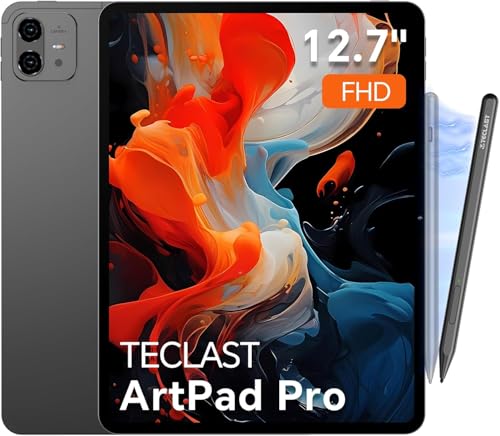
Teclast has been quietly improving its tablets year over year, and the Artpad Pro represents a genuine leap forward. Running Android 15 out of the box with Google's Gemini AI integration, it ships with a 12.7-inch 2K IPS display (2176×1600) that uses TDDI technology to boost light transmittance—producing brighter images and faster touch response than traditional panel configurations. Teclast claims this screen offers 20% more display area than comparable 16:10 tablets at the same size class, which makes a real difference when reading textbooks, annotating PDFs, or sketching. A factory-installed tempered glass screen protector is included, a thoughtful addition that saves buyers a few extra dollars.
The Artpad Pro comes bundled with the T-Pen stylus, which supports 4096 levels of pressure sensitivity and global palm rejection. Teclast has pre-installed a dedicated creative app deeply optimized for the stylus, and it also supports any USI 2.0-compatible active pen. Powering everything is a 10,000mAh battery with 30W fast charging—so even that enormous screen won't leave you stranded. Connectivity is excellent for the price: 5G WiFi, 4G LTE, and GPS are all present, making this one of the few tablets in this price range that can truly replace a laptop bag when traveling. The proprietary Symphony Sound Chamber System with its 9cc large chamber design and four speakers delivers surprisingly room-filling audio.
With 20GB RAM (likely 8GB physical + 12GB extended virtual) and 256GB storage, multitasking is smooth for most Android workloads. Widevine L1 certification means Netflix and other streaming services play back at full HD resolution—a feature that many budget tablets still skip in 2026. For students, illustrators, and note-takers, the Artpad Pro packs a remarkable amount of functionality into a competitive package.
Pros:
- T-Pen stylus with 4096 pressure levels included in the box
- Widevine L1 for full-HD streaming on Netflix and Prime Video
- 4G LTE + GPS built in — works as a standalone connected device
Cons:
- 2K panel is good but falls short of the 3K/3.2K screens on competing models
- Android 15 software experience can feel rough on less-optimized apps
3. Lenovo Tab P12 2024 — Best All-Around Value
Lenovo's Tab P12 (2024 edition) strikes the sweet spot between premium features and mainstream pricing. The 12.7-inch LCD panel delivers 3K resolution—a noticeable step up from 1080p—with support for up to 1080p streaming quality and a display that's large enough to feel genuinely cinematic. Four JBL-tuned speakers with Dolby Atmos surround sound make this one of the best-sounding Android tablets in its class; the difference between this and a generic dual-speaker setup is immediately obvious when watching action films or playing games. Lenovo bundles both a stylus pen and a folio case in the box, which alone represents meaningful savings over buying accessories separately.
The MediaTek Dimensity 7050 octa-core processor paired with 8GB LPDDR4x RAM handles everyday tasks, streaming, and casual gaming without complaint. Wi-Fi 6 support keeps downloads fast and latency low. Storage sits at 128GB UFS, which should be sufficient for most users though power users who keep lots of video files locally may want to leverage the microSD slot. The device runs Android 13 and benefits from Lenovo's relatively clean software skin, which avoids most of the bloatware pitfalls common to budget Android tablets.
Where the Tab P12 shines is as a household entertainment and study device. It's big enough to replace a laptop for light work, sounds fantastic, and the included accessories mean you can take notes with the stylus from day one. For families, students, or anyone who wants a no-fuss large-screen tablet with brand-name reliability, the Lenovo Tab P12 is one of the safest picks of 2026.
Pros:
- Quad JBL speakers with Dolby Atmos — best audio in its class
- Stylus and folio case included — great out-of-box value
- Reputable Lenovo brand with solid after-sales support
Cons:
- Dimensity 7050 lags behind Snapdragon 8-series rivals in raw performance
- 128GB base storage is modest for a large-screen productivity device
4. OnePlus Pad 3 — Best Premium Performance
The OnePlus Pad 3 is the most powerful tablet on this list and one of the most capable Android tablets of 2026, period. Its 13.2-inch 3.4K LCD display running at 144Hz is jaw-dropping in person—text is razor-sharp, colors are vibrant, and motion is perfectly smooth whether you're scrolling through documents or watching high-frame-rate content. The slim 5.97mm aluminum chassis keeps the device feeling premium and lightweight despite the large footprint, and the Storm Blue colorway is genuinely attractive. At this screen size and resolution, the Pad 3 is equally comfortable as a laptop replacement on a desk and a media machine on the couch.
The real headline is the Snapdragon 8 Elite chipset—the same silicon found in 2025's top Android smartphones. Paired with 12GB of RAM, the Pad 3 eats through any Android workload without hesitation: 3D gaming, video editing, split-screen multitasking with heavy apps, AI-accelerated tasks—all handled with remarkable smoothness and efficiency. The 12,140mAh battery is among the largest in any tablet on this list, and 80W SUPERVOOC fast charging means you can go from near-empty to a usable charge in well under an hour. Eight speakers with Dolby Atmos tuning fill a room with rich, directional audio that's leagues beyond what most tablets offer.
OnePlus OxygenOS provides a clean, near-stock Android experience with useful productivity additions like a large-screen-optimized layout and seamless pairing with OnePlus phones. If you want the absolute best performance, the largest display, and the fastest charging in this roundup—and you're prepared to pay a premium price—the OnePlus Pad 3 is the definitive choice among China-origin tablets for 2026.
Pros:
- Snapdragon 8 Elite — flagship-class performance without compromise
- 80W SUPERVOOC charging refills the 12,140mAh battery incredibly fast
- Exceptional 8-speaker Dolby Atmos audio system
Cons:
- Premium price puts it above budget-conscious buyers' range
- 5.97mm slim body means a smaller battery sacrifice vs. thicker competitors
5. Xiaomi Pad 7 Pro — Best Camera & Speed
If the standard Xiaomi Pad 7 impressed you, the Pad 7 Pro takes everything a step further in the areas that matter most to power users. The display is identical—that same gorgeous 11.2-inch 3.2K 144Hz panel with Dolby Vision, DCI-P3, and TÜV Rheinland certifications—but the silicon inside is a major upgrade. Where the base Pad 7 runs a Snapdragon 7+ Gen 3, the Pro steps up to the Snapdragon 8s Gen 3, an octa-core chip clocked up to 3.0GHz on a 4nm node. The real-world performance gap is significant: the 8s Gen 3 handles GPU-intensive games and AI workloads noticeably faster, and sustained performance under load stays higher thanks to more aggressive thermal headroom.
The camera system is where the Pro truly distinguishes itself from its sibling. The rear sensor jumps from 13MP to a full 50MP, delivering much more detail in scanned documents, whiteboard captures, and casual photography. For a tablet used in professional or creative workflows—photographing artwork, capturing notes, video calling in well-lit environments—this is a meaningful upgrade. Battery capacity stays at 8,850mAh, and Bluetooth 5.4 and four speakers carry over from the standard model. Dimensions are essentially identical at 9.89 × 6.83 × 0.24 inches, so accessories and cases are interchangeable between the two models.
The Xiaomi Pad 7 Pro is the right choice for anyone who uses their tablet for document scanning, creative capture, or who simply wants the fastest possible Xiaomi experience in this form factor. In 2026 it represents the pinnacle of Xiaomi's mid-premium tablet lineup, and at its price point it competes confidently with slates costing considerably more.
Pros:
- 50MP rear camera — by far the best camera on any tablet in this roundup
- Snapdragon 8s Gen 3 delivers noticeably faster performance than the base Pad 7
- Same brilliant 3.2K 144Hz display with full eye-care and HDR certifications
Cons:
- WiFi only — no SIM or microSD slot, just like the standard Pad 7
- Premium over the base Pad 7 may not be justified for casual users
Buying Guide: How to Choose the Best China Tablet
Display Size and Resolution: Match the Screen to Your Use Case
The tablets in this roundup range from 11.2 inches to 13.2 inches, and that difference matters more than you might expect. An 11.2-inch tablet like the Xiaomi Pad 7 or Pad 7 Pro is compact enough to hold comfortably one-handed for extended reading and light enough for travel. A 12.7-inch model like the Teclast Artpad Pro or Lenovo Tab P12 offers more real estate for split-screen multitasking and drawing. The 13.2-inch OnePlus Pad 3 feels almost laptop-like on a desk, ideal for content creation and productivity but less comfortable to hold for prolonged periods.
Resolution is equally important. Look for 3K or higher (3200×2136 or better) for crisp text and sharp images. Refresh rate matters for gaming and scrolling smoothness—all five tablets here offer 120Hz or 144Hz, which is noticeably smoother than the 60Hz panels on older budget tablets. If you plan to watch premium streaming, verify Widevine L1 certification (the Teclast Artpad Pro explicitly supports it); without L1, Netflix locks you to standard definition.
Processor and RAM: Matching Power to Your Workload
In 2026, the processor gap between budget and flagship Chinese tablets has narrowed considerably, but it still matters for specific tasks. Qualcomm Snapdragon chips (7+ Gen 3 in the base Pad 7, 8s Gen 3 in the Pad 7 Pro, and 8 Elite in the OnePlus Pad 3) generally outperform MediaTek equivalents in GPU-intensive tasks and sustained performance. For casual users—web browsing, video streaming, social media, and note-taking—the Dimensity 7050 in the Lenovo Tab P12 is perfectly adequate. For gaming, video editing, or running AI-powered apps, step up to a Snapdragon 8-series device.
RAM determines multitasking comfort. 8GB is the practical minimum in 2026 for keeping several apps loaded simultaneously. 12GB (OnePlus Pad 3) provides headroom for heavy workloads. The Teclast Artpad Pro's advertised 20GB includes extended virtual RAM, which supplements real RAM by using storage space—useful but not as fast as physical RAM.
Battery Life and Charging Speed
Large tablets consume more power, so battery capacity matters. The OnePlus Pad 3's 12,140mAh battery is the largest here, but its 80W SUPERVOOC charging means it refills quickly. The Xiaomi Pad 7 and Pro both carry 8,850mAh batteries—more than adequate for a full workday. The Teclast Artpad Pro's 10,000mAh with 30W charging hits a comfortable middle ground. When evaluating battery specs, also consider screen brightness and processor efficiency: a 4nm Snapdragon chip will draw less power than an older process node at equivalent performance levels, effectively extending real-world battery life.
Connectivity: WiFi-Only vs. Cellular
Both Xiaomi Pad models are strictly WiFi-only—no SIM card slot means no cellular data when you're away from hotspots. For home use or office environments with reliable WiFi this is a non-issue, but frequent travelers should note this limitation. The Teclast Artpad Pro includes 4G LTE and GPS, making it the most versatile option for on-the-go use. Consider whether you'll use your tablet primarily at home, commuting, or traveling internationally, as cellular capability significantly changes the day-to-day convenience equation.
Buy on Walmart
- XIAOMI Pad 7 Ai WiFi Version Global (No Calls or Text) 11.2 — Walmart Link
- TECLAST Artpadpro Android 15 Tablet, 12.7” 2176x1600 Display — Walmart Link
- Lenovo Tab P12-2024 - Expansive Touchscreen Tablet - 12.7" 3 — Walmart Link
- OnePlus Pad 3 Storm Blue, 13.2″ 3.4K LCD 144 Hz Display, Sna — Walmart Link
- Xiaomi Pad 7 Pro Ai WiFi Version Global (No Calls or Text) 1 — Walmart Link
Buy on eBay
- XIAOMI Pad 7 Ai WiFi Version Global (No Calls or Text) 11.2 — eBay Link
- TECLAST Artpadpro Android 15 Tablet, 12.7” 2176x1600 Display — eBay Link
- Lenovo Tab P12-2024 - Expansive Touchscreen Tablet - 12.7" 3 — eBay Link
- OnePlus Pad 3 Storm Blue, 13.2″ 3.4K LCD 144 Hz Display, Sna — eBay Link
- Xiaomi Pad 7 Pro Ai WiFi Version Global (No Calls or Text) 1 — eBay Link
Frequently Asked Questions
Are Chinese tablets reliable in 2026?
Absolutely. Brands like Xiaomi, Lenovo, OnePlus, and Teclast have mature global supply chains, receive regular software updates, and ship with internationally recognized safety certifications. Xiaomi and Lenovo in particular have multi-year track records in Western markets and offer warranty service through authorized channels. The reliability gap between Chinese-made tablets and Western-branded competitors has largely closed at the hardware level.
Do Chinese tablets work with Google Play and standard Android apps?
Yes — all five tablets reviewed here ship with the full Google Mobile Services (GMS) suite, including the Play Store, Gmail, YouTube, and Google Assistant. They run standard Android (versions 13–15 depending on the model), so virtually any app you use on a Samsung or Pixel device will work identically. The main exception to watch for is Huawei tablets, which are not included in this roundup and do not include Google services.
What is Widevine L1 and why does it matter?
Widevine L1 is Google's highest-level digital rights management (DRM) certification for streaming playback. Devices with L1 certification can stream Netflix, Amazon Prime Video, Disney+, and other major services at their highest available resolution (typically Full HD or 4K). Devices with only L3 certification are locked to standard definition (480p) on these platforms, regardless of the screen's actual resolution. Of the tablets in this roundup, the Teclast Artpad Pro explicitly confirms Widevine L1 support—verify L1 status for any tablet before purchasing if streaming quality is a priority.
Which tablet is best for digital art and note-taking with a stylus?
The Teclast Artpad Pro is the strongest choice for stylus users — it bundles the T-Pen with 4096 levels of pressure sensitivity in the box, has a dedicated creative app pre-installed, and supports USI 2.0-compatible pens for flexibility. The Lenovo Tab P12 also includes a stylus (and a folio case) in the box. The Xiaomi Pad 7 series supports pens with up to 360Hz report rates, but the stylus must be purchased separately. For professional illustrators, pressure sensitivity levels and palm rejection accuracy are the key specifications to prioritize.
Is the OnePlus Pad 3 worth the higher price compared to the Xiaomi Pad 7 Pro?
It depends on your priorities. The OnePlus Pad 3 delivers significantly better raw processing power (Snapdragon 8 Elite vs. 8s Gen 3), a larger 13.2-inch screen, a much bigger battery (12,140mAh vs. 8,850mAh), faster 80W charging, and a more sophisticated 8-speaker audio system. If you need the absolute best performance, the largest display, and the fastest charging, the premium is justified. However, for most users — students, casual gamers, content consumers — the Xiaomi Pad 7 Pro offers 85% of the experience at a meaningfully lower cost.
Do these tablets receive long-term software updates?
Update policies vary by brand. Lenovo and Xiaomi typically commit to two to three years of major Android OS updates for their mid-to-premium tablets, with security patches extending somewhat longer. OnePlus, backed by OPPO/BBK, has been improving its update commitments and generally provides three to four years of updates on flagship devices like the Pad 3. Teclast, as a smaller brand, has historically offered shorter update windows — factor this in if long-term software support is a priority for your purchase decision.
Conclusion
Chinese tablet makers have earned their place at the top of the Android tablet market in 2026. Whether you choose the wallet-friendly Xiaomi Pad 7 with its stunning 3.2K display, the artist-focused Teclast Artpad Pro with its bundled stylus and LTE connectivity, the crowd-pleasing Lenovo Tab P12 with its JBL speakers and accessory bundle, the photography-focused Xiaomi Pad 7 Pro, or the all-out powerhouse OnePlus Pad 3 — you're getting a device that would have been considered flagship-class just a few years ago.
Our top recommendation for most buyers is the Xiaomi Pad 7 Pro — it threads the needle between price, display quality, camera capability, and processing power in a way that few tablets at any price point can match. If budget is the primary concern, the base Xiaomi Pad 7 gives up very little. And if money is no object and you want the absolute best, the OnePlus Pad 3 is simply the finest Android tablet with Chinese roots you can buy right now.


