 ee
eeTablets ›
Best Portable Drawing Tablet 2026
If you want the best portable drawing tablet in 2026, the Wacom Intuos Pro Small (2025 Edition) delivers professional-grade Pro Pen 3 precision in a compact form factor that fits in any bag. Whether you're a digital illustrator commuting between studios, a teacher running remote lessons, or a student building your first serious creative setup, the right drawing tablet transforms your workflow in ways a standard mouse simply cannot replicate. The category has matured significantly, with brands like Wacom, XPPen, and HUION all pushing pressure sensitivity, pen latency, and wireless connectivity to new heights this year.
Choosing the right tablet comes down to more than raw specs. Active area size, pressure levels, wireless capability, and software compatibility all intersect with your specific workflow in ways that make one tablet a perfect fit and another a frustrating compromise. A professional illustrator working in Photoshop needs different hardware than a teacher annotating slides over Zoom or a hobbyist experimenting with Procreate on a Chromebook. This guide covers seven of the strongest portable drawing tablets available in 2026, with honest assessments of who each one actually serves. If you're also researching display-based tablets or standalone devices, check out our roundup of the best tablets for artists for a broader perspective on the full category.
We've organized this guide to move from budget-friendly entry points all the way to professional-tier hardware, so you can find your level quickly and move on to creating. According to Wikipedia's overview of graphics tablets, electromagnetic resonance (EMR) technology — which eliminates the need for battery-powered pens — has become the standard across virtually all serious drawing tablets, and every product in this guide uses it. That's good news for your wrist and your workflow.

Contents
- Top Rated Picks of 2026
- Detailed Product Reviews
- Wacom Intuos Small — Best for Beginners
- Wacom Intuos Medium Bluetooth — Best Mid-Size Wireless
- XPPen StarG640 — Best Ultra-Budget Pick
- XPPen Deco Mini7 V2 — Best for Students
- HUION Inspiroy Dial 2 — Best for Efficiency-Focused Creators
- Wacom Intuos Pro Small 2025 — Best Professional Option
- HUION Kamvas 13 Gen 3 — Best Pen Display
- Buying Guide
- Questions Answered
- Final Thoughts
Top Rated Picks of 2026
- #PreviewProductRating
- Bestseller No. 1
 Rating:

- Bestseller No. 2
 Rating:
 - Bestseller No. 3
 Rating:
 - Bestseller No. 4
 Rating:
 - Bestseller No. 5
 Rating:
 - Bestseller No. 6
 Rating:
 - Bestseller No. 7
 Rating:
Detailed Product Reviews
1. Wacom Intuos Small Graphics Drawing Tablet — Best for Beginners
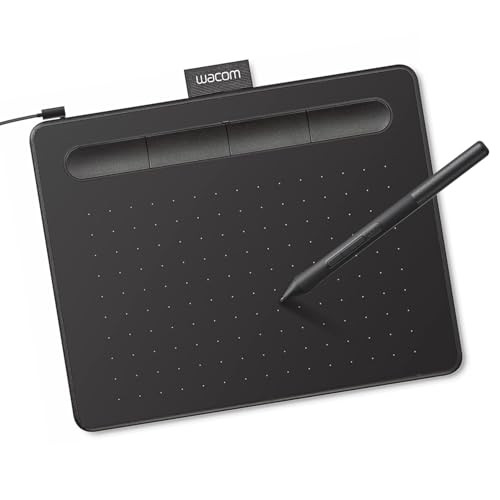
The Wacom Intuos Small is the tablet you recommend to someone who asks "where do I even start?" It packs Wacom's industry-standard EMR pen technology into one of the most compact and affordable packages the brand has ever produced, giving you genuine professional-grade pressure sensitivity without asking you to invest at the professional price tier. The 2048-level pen requires no battery and delivers the natural pen-on-paper feel that Wacom has refined over decades of hardware development, and the four customizable ExpressKeys let you map your most-used shortcuts without ever lifting your hand from the active area.
Compatibility is a genuine strong suit here. The Intuos Small works across Windows, Mac, Android, and Chromebook, which means it moves with you regardless of what device you're working on this semester or this job. Wacom bundles training software and a creative suite with purchase, giving beginners a structured path into digital art that doesn't require spending extra on applications. The active area is compact — ideal for desk-limited spaces and travel — though users who work with large sweeping gestures across an ultrawide monitor may eventually want to step up to the medium size.
For photo editing, light illustration, and document markup, the Intuos Small performs with a confidence that belies its entry-level price. It's the lowest-risk way to confirm that pen tablet drawing is the right input method for your workflow before committing to more expensive hardware. If you're pairing this with a creative laptop, our guide to the best laptops for digital art covers compatible machines that won't bottleneck your creative output.
Pros:
- Genuine Wacom EMR technology at an accessible price point
- Works with Windows, Mac, Android, and Chromebook out of the box
- Bundled training and creative software adds real value for beginners
- Four customizable ExpressKeys speed up common editing shortcuts
Cons:
- Small active area limits comfort for users who prefer wide gesture strokes
- USB connection only — no Bluetooth wireless option at this tier
2. Wacom Intuos Medium Bluetooth Graphics Drawing Tablet — Best Mid-Size Wireless
The Wacom Intuos Medium Bluetooth is the natural next step for anyone who has outgrown a small tablet or who knows from the start that they work better with more real estate under the pen. The medium active area gives your hand room to make natural, full-range strokes without the cramped, compressed gestures that small tablets require, and Bluetooth connectivity means you can position the tablet anywhere on your desk without cable routing becoming a distraction. The same reliable EMR battery-free pen technology from the Small carries over here, with four customizable ExpressKeys that adapt to your application of choice.
Teachers in particular will appreciate the flexibility this tablet offers. You can use it wired via USB-A when working at a fixed desk, then switch to Bluetooth when presenting or moving around a classroom — the transition is seamless and the connection stable across typical classroom ranges. The Intuos Medium is compatible with Chromebook, Mac, Android, and Windows, making it a practical choice for schools running mixed device environments in 2026. Wireless operation combined with the larger active area makes this the most versatile all-around tablet in the Intuos lineup.
The trade-off compared to the Small is straightforwardly size and price — neither of which should surprise you. If you're consistently working on detailed illustration projects, annotating complex documents, or teaching visual concepts to students who need to see precisely what you're drawing, the medium active area pays for itself in comfort within the first week of use. The Intuos Medium strikes the balance between professional capability and approachable pricing that a very wide range of users will find genuinely satisfying.
Pros:
- Larger active area enables natural, full-range pen strokes for illustration and annotation
- Bluetooth wireless plus USB-A wired — flexible for classroom and desk use
- Battery-free EMR pen with Wacom's proven feel and precision
- Compatible with Chromebook, Mac, Android, and Windows
Cons:
- Larger footprint than the Small makes it slightly less travel-friendly
- Higher price than entry-level alternatives from XPPen and HUION
3. XPPen StarG640 Digital Graphic Tablet — Best Ultra-Budget Pick
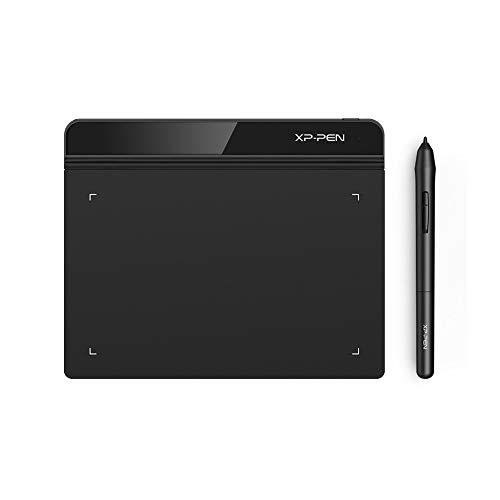
The XPPen StarG640 makes a compelling case for itself on portability alone before you even consider its performance. At just 2mm thick, this tablet is as slim as a folder and fits into virtually any bag without adding meaningful bulk or weight to your load. The 6x4 inch active area gives you a workable surface for digital drawing, e-signatures, online teaching, and remote work, while the battery-free PN01 stylus handles continuous use without the anxiety of watching a charge indicator creep toward zero. XPPen has designed this as a genuine mouse replacement for users whose work involves constant freehand input.
Compatibility covers Mac, Windows, and Chromebook, with explicit support for Microsoft Office apps including Word, PowerPoint, and OneNote — which makes the StarG640 a practical choice for teachers and office professionals who need handwriting and annotation capabilities rather than high-end illustration precision. For online education workflows in 2026, this tablet delivers exactly what remote instructors need at a price that removes all barriers to entry. Zoom and Xsplit compatibility is built in, so your handwritten annotations appear on screen in real time without driver conflicts.
The honest limitation of the StarG640 is that it's built for functional use rather than artistic ambition. Aspiring illustrators who plan to spend hours in Procreate or Clip Studio Paint refining detailed character art will quickly want more pressure sensitivity and a larger active area. But for the student who needs to handwrite equations during a Zoom session, the teacher who wants to annotate a PowerPoint slide, or the professional who wants cleaner e-signatures — the StarG640 performs its intended role with quiet reliability. It's available through our tablet category page alongside a wide range of complementary hardware options.
Pros:
- 2mm ultra-slim profile is genuinely one of the most portable tablets available
- Battery-free stylus means no charging interruptions during long sessions
- Compatible with Zoom, Xsplit, and Microsoft Office for online teaching workflows
- Extremely accessible price for users who need functional annotation over high-end art
Cons:
- Pressure sensitivity and active area are limited compared to mid-range tablets
- Not designed for detailed illustration or professional creative work
4. XPPen Deco Mini7 V2 Drawing Tablet — Best for Students and Beginners
The XPPen Deco Mini7 V2 arrives as one of the most spec-complete student tablets in the 2026 market, leading with 16,384 levels of pressure sensitivity — a figure that rivals hardware priced significantly above its bracket. That pressure ceiling means you can achieve genuinely nuanced line variation and shading in applications like Clip Studio Paint, Krita, or Photoshop, with 60-degree tilt recognition adding another dimension of control for users developing their shading technique. The battery-free stylus with enhanced nibs handles extended sessions without degradation, and the 7x4 inch active area gives your hand comfortable room to work through detailed compositions.
XPPen has invested in the driver experience on the V2 update, shipping a simplified interface that cuts the setup friction that used to frustrate students and beginners in earlier driver generations. Eight customizable shortcut keys — designed for both right- and left-hand users — give you application-specific shortcut mapping that keeps your workflow uninterrupted while you're focused on creating. The tablet is compatible with Chrome OS, PC, and Mac, covering the full range of student environments you're likely to encounter across a typical school or university setup.
The Deco Mini7 V2 is the strongest argument for choosing XPPen over Wacom at the student price tier. You get dramatically more pressure sensitivity than Wacom's similarly-priced Intuos tablets, a larger active area, and more physical shortcut keys — the trade-off being that Wacom's pen feel and driver maturity still hold a marginal edge for professionals who have worked with both. For students building their first serious digital art practice, that difference is theoretical rather than practical. If you're also researching the best standalone creative hardware for more intensive 3D projects, our guide to the best tablets for ZBrush covers compatible options at higher price points.
Pros:
- 16,384 pressure levels is top-tier sensitivity for the price bracket
- 60-degree tilt recognition supports nuanced shading and line variation
- 8 customizable shortcut keys work for both right- and left-hand users
- Updated driver with simplified UI reduces setup friction for beginners
Cons:
- No Bluetooth wireless option — USB connection only
- Wacom's pen feel and driver ecosystem remain the benchmark for professional comparison
5. HUION Inspiroy Dial 2 — Best for Efficiency-Focused Creators
The HUION Inspiroy Dial 2 takes a distinctive approach to portable drawing tablet design by centering workflow efficiency as its primary engineering goal, rather than simply competing on pressure sensitivity numbers alone. The dual-dial system is the headline feature: two physical rotary dials that you can assign to brush size, zoom level, scroll speed, canvas rotation, or any custom shortcut your application supports — giving you the tactile control that keyboard shortcuts can't replicate when your hand is already committed to the stylus. Combined with six press keys that support up to 12 programmable functions per software application, this is a tablet built for creators who want their hardware to stay out of the way while they focus on the work.
HUION's PenTech 3.0 technology and the high-friction textured surface deliver an on-tablet feel that genuinely approximates the resistance of paper under a real pen, which significantly reduces the learning curve for artists transitioning from traditional media. Bluetooth 5.0 wireless with up to 18 hours of battery life means you can work through a full creative day without hunting for a cable, and the large 10.5 x 6.56 inch active area gives even wide-gesture illustrators ample room to work. A USB-C cable connection is available as a backup, which matters when you're on deadline and can't afford to manage a charging battery.
Compatibility covers Mac, Windows, Linux, and Android — a broader OS support list than most competitors in this space, and particularly relevant if you're working in a Linux-based creative environment where driver support has historically been patchy. The Inspiroy Dial 2 sits at a mid-to-upper price point that reflects its feature density rather than inflating for brand prestige. For digital editors, photo retouchers, and illustrators who spend long sessions in a single application and want their hardware to accelerate rather than interrupt their process, this is a very strong choice in 2026.
Pros:
- Dual physical dials provide tactile control over brush size, zoom, and custom shortcuts
- 18-hour battery life handles full creative workdays without recharging
- Large active area with high-friction surface for natural pen-on-paper feel
- Bluetooth 5.0 wireless plus USB-C wired connectivity
- Linux compatibility in addition to Mac, Windows, and Android
Cons:
- Larger physical size makes it less pocketable than smaller alternatives
- Dual dials add a learning curve for users new to rotary shortcut hardware
6. Wacom Intuos Pro Small Bluetooth — Best Professional Portable Option
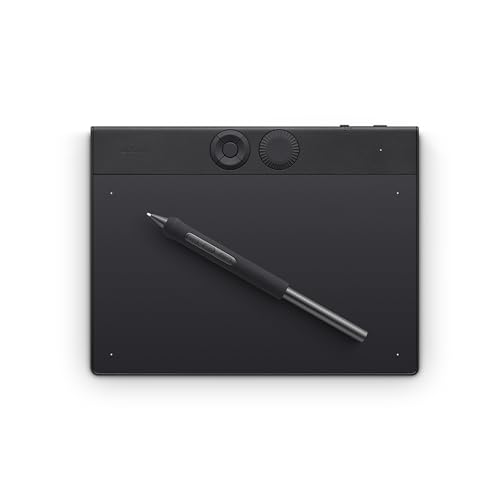
The Wacom Intuos Pro Small (2025 Edition) is the portable drawing tablet that professional digital artists reach for when they need their hardware to perform at the same level as their creative ambitions, regardless of where they're working. The centerpiece is the Pro Pen 3 — Wacom's most advanced stylus to date, delivering 8,192 pressure levels, full tilt support, and lag-free tracking that makes precise strokes feel completely natural from the first mark. What separates Pro Pen 3 from previous generations is the level of physical customization it offers: you can choose between slim, straight, or flared grip configurations, and adjust balance and button layout to match your specific holding style and workflow preferences.
The mechanical dial positioned at the top of the tablet, close to where your keyboard hand rests, is a genuine productivity tool rather than a novelty. Combine it with five customizable ExpressKeys and you have a compact hardware setup that keeps your creative flow uninterrupted through long illustration or retouching sessions. The 16:9 aspect ratio and 8.4" x 6.4" active area are optimized for modern widescreen monitors, and the footprint stays genuinely compact despite the usable active area being larger than it appears on paper. Bluetooth wireless connectivity means this tablet works cleanly in any desk configuration.
The Intuos Pro Small is the tablet you choose when you're done experimenting and ready to commit to a professional creative practice. Its price reflects that positioning — this is a tool for working professionals and serious students in competitive programs, not a casual weekend purchase. For illustrators who also work in 3D sculpting environments, our companion guide to the best drawing tablets for Mac covers additional hardware options optimized for Apple workflows. The 2025 Edition is the most refined version of this tablet Wacom has produced, and it earns the top professional recommendation in this roundup without reservation.
Pros:
- Pro Pen 3 with 8,192 pressure levels, tilt support, and customizable grip configurations
- Mechanical dial plus 5 ExpressKeys for fast, flow-preserving shortcut access
- 16:9 active area optimized for modern widescreen monitor setups
- Bluetooth wireless connectivity in a genuinely portable compact form factor
- Wacom's most advanced professional-grade pen technology available in 2026
Cons:
- Premium price tier — not the right choice for casual or occasional users
- Small active area may feel limiting for artists who prefer very large gesture strokes
7. HUION Kamvas 13 Gen 3 Drawing Tablet with Screen — Best Pen Display
The HUION Kamvas 13 Gen 3 represents a fundamentally different category of drawing hardware: a pen display rather than a standalone blind tablet, meaning you draw directly on a screen while seeing your marks appear exactly where your stylus touches. This changes the learning curve dramatically, removing the hand-eye coordination adjustment that new users find challenging about traditional pen tablets. The 13.3-inch fully laminated screen with HUION's new Canvas Glass 2.0 anti-sparkle treatment delivers accurate color reproduction at 99% sRGB coverage, making it a credible tool for color-critical illustration, photo retouching, and design work where color fidelity is non-negotiable.
PenTech 4.0 powers the stylus experience here, providing 16,384 levels of pressure sensitivity alongside a 2g initial activation force that responds to the lightest touch — critical for artists who use light pressure to build up tone gradually rather than pressing hard from the first mark. Three customizable pen side buttons and a dual-dial control system give you hardware shortcut access without breaking contact with the drawing surface. The anti-sparkle Canvas Glass 2.0 reduces glare without introducing the grainy texture that older matte screen coatings produced, preserving the visual clarity you need for detailed work.
The Kamvas 13 Gen 3 requires a computer connection to function — it is not a standalone tablet — which is an important clarification before purchase. But for users who are ready to invest in a pen display experience rather than a blind tablet, it delivers exceptional value at its price point, with hardware capabilities that compete directly with options priced considerably higher. It's the strongest recommendation in this guide for anyone whose workflow involves color-sensitive design work, character illustration, or photo retouching where seeing exactly what you're drawing is a meaningful advantage over working blind. For additional context on pairing this with the right hardware, our guide to the best tablets for artists covers compatible setups in detail.
Pros:
- Draw directly on screen — eliminates the hand-eye coordination learning curve of blind tablets
- Canvas Glass 2.0 anti-sparkle treatment reduces glare while preserving visual clarity
- 99% sRGB color accuracy for color-critical illustration and retouching work
- PenTech 4.0 with 16,384 pressure levels and 2g initial activation force
- Dual dial plus three pen side buttons for hardware shortcut access
Cons:
- Requires a connected computer to function — not a standalone device
- Larger and heavier than blind pen tablets at the same price tier
Buying Guide: How to Choose the Best Portable Drawing Tablet
Active Area Size and How It Affects Your Workflow
The active area is the portion of the tablet surface that responds to pen input, and its size directly affects how your hand moves while you draw. A small active area — like the 6x4 inches on the XPPen StarG640 — requires tighter, more controlled movements and maps well to users who primarily annotate documents or sign forms. A larger active area like the 10.5x6.56 inches on the HUION Inspiroy Dial 2 accommodates the wide, flowing strokes that illustrators and painters rely on for natural-feeling compositions. The general rule is to match active area size to your monitor size — working on a small tablet with a large monitor creates a mismatch where tiny hand movements produce large cursor jumps, making precision difficult. For most users working on a standard 24-inch monitor, a medium active area strikes the best balance.
Pressure Sensitivity and Tilt Recognition
Pressure sensitivity levels determine how many gradations of force your tablet can detect between the lightest touch and full pressure, which translates directly into your ability to produce varied line weights and nuanced shading in your application. The practical difference between 2,048 levels (entry Wacom Intuos) and 8,192 levels (Wacom Intuos Pro) is meaningful for professional illustrators building complex tonal work, but negligible for annotation, teaching, and casual sketching. If you're committed to developing a serious illustration practice in 2026, targeting 8,192 levels or higher puts a ceiling on your hardware that you won't outgrow quickly. Tilt recognition adds another input dimension — tablets with 60-degree tilt support allow you to use the angle of your stylus to vary stroke character, mimicking the behavior of traditional brushes and pencils in a way that flat pressure-only detection cannot replicate.
Wireless vs. Wired Connectivity
Bluetooth connectivity is a genuine quality-of-life upgrade for users who move between locations, work in classrooms, or simply prefer a clean desk without cable management. The HUION Inspiroy Dial 2's 18-hour Bluetooth 5.0 battery life makes it a practical wireless tool for all-day creative sessions, while the Wacom Intuos Medium's dual wired/wireless mode gives you the flexibility to use USB when the battery runs low. If your workflow is desk-bound and your tablet never moves, wireless connectivity is a convenience rather than a necessity — save the budget for pressure sensitivity or active area size instead. For users who present, teach, or travel with their tablet, Bluetooth becomes an important feature rather than a nice-to-have.
Pen Display vs. Blind Tablet: Which Is Right for You?
The most fundamental hardware decision in this category is whether you want a pen display — like the HUION Kamvas 13 Gen 3, where you draw directly on a screen — or a blind tablet where your marks appear on a separate monitor. Pen displays eliminate the hand-eye coordination adjustment period and feel immediately natural for users coming from traditional media, but they cost more, require more desk space, and generate heat during extended use. Blind tablets take several hours to days of practice before the disconnected input-output feels natural, but they're lighter, more portable, and more affordable at equivalent feature levels. Most professional illustrators who have used both eventually develop strong preferences — the decision is worth thinking through before purchasing rather than after.
Questions Answered
What is the best portable drawing tablet for beginners in 2026?
The Wacom Intuos Small is the strongest beginner recommendation in 2026, combining proven EMR pen technology with bundled training software and broad compatibility across Windows, Mac, Android, and Chromebook. If budget is the primary constraint, the XPPen StarG640 delivers functional annotation and drawing capability at an exceptionally low price, though with fewer features than the Intuos. Beginners who plan to grow into illustration work quickly will benefit from stepping up to the XPPen Deco Mini7 V2, which provides 16,384 pressure levels that won't limit your progress as your skills develop.
Do I need a drawing tablet with a screen, or will a blind tablet work?
A pen display like the HUION Kamvas 13 Gen 3 removes the hand-eye coordination learning curve and is the right choice if you prioritize immediate natural feel and color-accurate visual feedback. However, blind tablets perform at the same level for professional work once you adapt to the input-output separation — most professional illustrators use blind tablets as their primary tool, and the adaptation period is typically measured in hours rather than weeks. Blind tablets are also lighter and more portable, which matters if you travel frequently with your hardware.
Is Wacom still worth the premium price over XPPen and HUION in 2026?
At the professional tier, yes — the Wacom Intuos Pro Small (2025 Edition) with Pro Pen 3 delivers measurable advantages in pen feel, driver stability, and customization depth that working professionals notice and value. At the entry and student tiers, the value calculation shifts: the XPPen Deco Mini7 V2 offers 16,384 pressure levels at a lower price than comparable Wacom hardware, making it the stronger specification purchase for budget-conscious students. The honest answer is that brand choice at the entry level has less impact on your creative output than practice time does.
Can I use a drawing tablet with a Chromebook?
Yes — the Wacom Intuos Small, Wacom Intuos Medium, and XPPen StarG640 all explicitly list Chromebook compatibility in their specifications, making them practical choices for students and educators working in Google Workspace environments. Chromebook compatibility is increasingly common across the category in 2026, though you should verify driver support for your specific Chromebook model before purchasing, as older Chromebook hardware occasionally has compatibility gaps. Web-based creative applications like AutoDraw and Adobe Fresco (web version) work well with any of the compatible tablets listed above.
How many pressure sensitivity levels do I actually need for digital art?
For casual sketching, annotation, and online teaching, 2,048 levels provides more than enough sensitivity variation to work comfortably. For serious illustration work where you're building complex tonal ranges and varied line weights, 8,192 levels gives you the headroom to achieve subtle transitions that lower-sensitivity hardware will compress into cruder gradations. The 16,384-level tablets from XPPen and HUION represent the current ceiling of consumer hardware sensitivity, and the practical difference between 8,192 and 16,384 levels is appreciable for advanced illustrators working at high zoom levels with fine detail. For most users, 4,096 or 8,192 levels is the practical sweet spot that covers both current skill level and meaningful room to grow.
What software works best with portable drawing tablets?
The drawing tablets in this guide are compatible with all major creative software including Adobe Photoshop, Illustrator, Fresco, Clip Studio Paint, Krita, Procreate (via compatible devices), Autodesk Sketchbook, and Corel Painter. For teaching and annotation use cases, Microsoft OneNote, PowerPoint, Zoom, and Google Slides all work reliably with any tablet that has proper driver installation. Krita is an excellent free option for beginners who want to explore digital painting without a software subscription, and it takes full advantage of pressure sensitivity and tilt recognition on all the tablets reviewed here.
Buy on Walmart
- Wacom Intuos Small Graphics Drawing Tablet, Includes Trainin — Walmart Link
- Wacom Intuos Medium Bluetooth Graphics Drawing Tablet, Porta — Walmart Link
- Drawing Tablet XPPen StarG640 Digital Graphic Tablet 6x4 Inc — Walmart Link
- XPPen Updated Deco Mini7 V2 Drawing Tablet-16384 Levels of P — Walmart Link
- HUION Inspiroy Dial 2 10.5 x 6.56inch Bluetooth Wireless Gra — Walmart Link
- Wacom Intuos Pro Small Bluetooth Professional Graphic Drawin — Walmart Link
- HUION Kamvas 13 (Gen 3) Drawing Tablet with Screen,13.3" Ful — Walmart Link
Buy on eBay
- Wacom Intuos Small Graphics Drawing Tablet, Includes Trainin — eBay Link
- Wacom Intuos Medium Bluetooth Graphics Drawing Tablet, Porta — eBay Link
- Drawing Tablet XPPen StarG640 Digital Graphic Tablet 6x4 Inc — eBay Link
- XPPen Updated Deco Mini7 V2 Drawing Tablet-16384 Levels of P — eBay Link
- HUION Inspiroy Dial 2 10.5 x 6.56inch Bluetooth Wireless Gra — eBay Link
- Wacom Intuos Pro Small Bluetooth Professional Graphic Drawin — eBay Link
- HUION Kamvas 13 (Gen 3) Drawing Tablet with Screen,13.3" Ful — eBay Link
Final Thoughts
Every tablet in this guide earns its place for a specific type of user, and the right choice for you comes down to where you are in your creative journey and what you actually need the hardware to do. Start with the Wacom Intuos Small if you're just beginning, step up to the XPPen Deco Mini7 V2 or HUION Inspiroy Dial 2 if you want serious mid-range capability, and reach for the Wacom Intuos Pro Small or HUION Kamvas 13 Gen 3 when your creative ambitions demand professional-grade tools. Pick the tablet that matches your actual workflow today — you can always upgrade as your skills grow, and any of these options will serve you well in 2026.
 |
 |
 |
 |

About Priya Anand
Priya Anand covers laptops, tablets, and mobile computing for Ceedo. She holds a bachelor degree in computer science from the University of Texas at Austin and has spent the last nine years writing reviews and buying guides for consumer electronics publications. Before joining Ceedo, Priya worked as a product analyst at a major retailer where she helped curate the laptop and tablet category. She has personally benchmarked more than 200 portable computers and is particularly interested in battery longevity, repairability, and the trade-offs between Windows, macOS, ChromeOS, and Android tablets. Outside of work, she runs a small Etsy shop selling laptop sleeves she sews herself.