 ee
eeLaptops ›
Best Laptops For MBA Students 2026
Which laptop should an MBA student actually buy in 2026 — and does the answer change depending on whether you're deep in financial modeling, racing through case competitions, or presenting to professors who expect a polished slide deck? The short answer is that it depends on your workload, but after evaluating seven of the strongest contenders on the market right now, the Apple MacBook Air 13-inch with M5 chip stands out as the best overall choice for most business school students. That said, the right machine for you could easily be a different one, and the differences matter more than you might expect at this price range.
An MBA program demands a laptop that handles spreadsheet-heavy courses like Corporate Finance and Operations Management without breaking a sweat, stays alive through back-to-back lectures without hunting for an outlet, and fits comfortably into a shoulder bag alongside a textbook and a thermos of coffee. The machines reviewed here all clear that bar, but they diverge sharply when it comes to display quality, 2-in-1 flexibility, weight, and the software ecosystems they lock you into. If you're also considering a device for heavier analytical work, our roundup of the best laptops for data science in 2026 covers configurations with more raw memory and GPU headroom. For now, let's focus on what MBA students specifically need.
According to the MBA degree's core curriculum, students routinely juggle quantitative coursework, group collaboration tools, cloud-based case databases, and video conferencing — all simultaneously, often from a coffee shop or an airport lounge. That profile rewards thin, light machines with exceptional battery life and solid connectivity over pure processing muscle. You'll find all of those qualities in the picks below, along with honest notes on where each machine falls short. Browse the full spectrum of laptop recommendations on our site if you want to compare categories beyond business school. Let's get into the reviews.

Contents
- Our Top Picks for 2026
- Our Hands-On Reviews
- Apple MacBook Air 13" M5 — Best Overall
- Dell XPS 13 9340 — Best for Windows Power Users
- HP Spectre x360 14 — Best 2-in-1 Convertible
- Microsoft Surface Laptop 6 — Best for Microsoft Ecosystem
- ASUS Zenbook 14 AI OLED — Best Display Quality
- LG gram 14 — Best Ultra-Lightweight
- Dell Inspiron 14 Plus 7440 — Best Value for Performance
- What to Look For When Buying
- What People Ask
- Final Thoughts
Our Top Picks for 2026
- #PreviewProductRating
- Bestseller No. 1
 Rating:

- Bestseller No. 2
 Rating:
- Bestseller No. 3
 Rating:
 - Bestseller No. 4
 Rating:
 - Bestseller No. 5
 Rating:
 - Bestseller No. 6
 Rating:
 - Bestseller No. 7
 Rating:
Our Hands-On Reviews
1. Apple 2026 MacBook Air 13-inch M5 — Best Overall for MBA Students
Apple's 2026 MacBook Air with the M5 chip is the laptop that sets the benchmark for everything else in this category, and it earns that position by being genuinely excellent in the areas that MBA students care about most. The M5 chip's CPU and unified memory architecture handles Excel models with thousands of rows, simultaneous Zoom calls, browser tabs stacked three layers deep, and Keynote presentations rendering in real time — all without a single fan spin, because the MacBook Air has no cooling fan at all. Performance that would have required a premium workstation just a few years ago is now tucked inside a 2.7-pound chassis that disappears into your bag.
Battery life is where this machine truly separates itself from the Windows competition. Apple's rated figure of up to 18 hours is optimistic by design, but in realistic MBA use — six to eight hours of classes, research, and video calls — you routinely hit the end of a full school day with 30 to 40 percent charge remaining. The 13.6-inch Liquid Retina display delivers sharp, color-accurate visuals that make reviewing financial reports and presentations a genuinely pleasant experience, and the 12MP Center Stage camera produces the kind of professional video quality that holds up during recruiting calls with investment banks and consulting firms. Wi-Fi 7 support means you're pulling fast speeds even on congested university networks, and Touch ID authentication is fast enough that unlocking the machine never interrupts your flow.
Apple Intelligence integration brings on-device AI tools for writing, summarization, and contextual suggestions — a practical advantage when you're drafting executive summaries or refining case write-ups under time pressure. The 512GB SSD is fast enough that cold boots and app launches feel instantaneous. If you're choosing between this and any Windows machine for a full-time MBA program, the MacBook Air M5 is the safer, more capable, and more durable long-term investment for most students.
Pros:
- Fanless design stays completely silent under typical MBA workloads
- Up to 18-hour battery life comfortably outlasts a full day of classes
- M5 chip delivers fast, efficient performance across all business school tasks
- Wi-Fi 7 and a premium 12MP Center Stage camera for recruiting calls
Cons:
- Only two Thunderbolt ports requires a hub for multi-peripheral setups
- macOS limits compatibility with some Windows-only finance and operations software
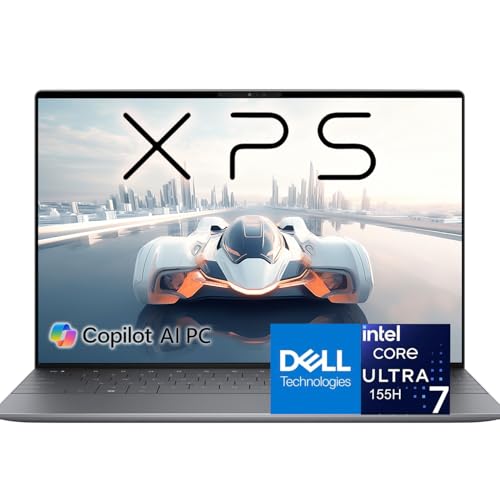
2. Dell XPS 13 9340 AI Powered Laptop — Best for Windows Power Users
If you're committed to the Windows ecosystem and want the most refined, premium ultrabook experience available on that platform, the Dell XPS 13 9340 is the machine you're looking for. It's built around the Intel Core Ultra 7 155H, a 16-core processor with a Turbo frequency of 4.80GHz, and that hardware makes short work of the kind of analytical and productivity tasks that define MBA coursework — think Python scripts for data analysis electives, complex PowerPoint decks with embedded Excel charts, and simultaneous video conferencing with screen sharing. The Intel Arc integrated graphics handle everyday visuals cleanly, and the 2TB PCIe SSD in this configuration gives you more local storage than most MBA students will ever use, which is a meaningful edge if you're accumulating case study databases, industry reports, and multimedia project files across a two-year program.
The 13.4-inch FHD+ display with a 120Hz refresh rate and 500 nits of brightness is one of the sharpest screens in this size class, and the anti-glare InfinityEdge panel with EyeSafe technology means you're not squinting at a washed-out screen under harsh lecture hall lighting. Dell's build quality on the XPS line is exceptional — the machined aluminum chassis feels like a premium product in a way that communicates professionalism in every environment from a study group to a case competition boardroom. The 16GB DDR5X RAM handles heavy multitasking smoothly, and the Windows 11 platform ensures compatibility with every piece of finance and operations software your program throws at you without requiring virtualization workarounds.
The XPS 13's 120Hz display and 2TB of storage make it an exceptional value for students who need Windows compatibility and don't want to compromise on screen quality or build refinement. Battery life doesn't quite match the MacBook Air, but it's respectable for a Windows ultrabook with this processing profile, and the fast SSD means your machine is ready to work the moment you open the lid.
Pros:
- Intel Core Ultra 7 155H with 2TB SSD delivers outstanding Windows performance
- 500-nit, 120Hz anti-glare InfinityEdge display is premium and easy on the eyes
- Full Windows 11 compatibility with all MBA program software
- Compact, beautifully machined aluminum chassis projects professionalism
Cons:
- Battery life falls short of Apple's M5 silicon in all-day real-world use
- Thermal management can throttle performance during extended, sustained workloads
3. HP Spectre x360 14 2-in-1 — Best 2-in-1 Convertible
The HP Spectre x360 14 is the pick for MBA students who want a single device that functions as both a traditional clamshell laptop and a tablet for handwritten notes, sketches, and on-screen annotation. The 360-degree hinge rotates smoothly and locks firmly in every position — laptop, tent, presentation, and tablet — and the 14-inch touchscreen display at 2880×1800 resolution with a 120Hz refresh rate is one of the most visually impressive panels you'll find in this form factor. Corning Gorilla Glass protection on the display means it handles the everyday hazards of campus life without accumulating micro-scratches, and the anti-reflection coating keeps the screen readable in bright lecture hall conditions.
Under the hood, the Intel Evo Core Ultra 7 155H with Intel Arc graphics delivers strong performance for the full range of MBA productivity tasks, and the 16GB LPDDR5 RAM keeps multitasking smooth across financial modeling, web research, and collaboration tools running simultaneously. Thunderbolt 4 support enables high-speed docking, and if you find yourself needing to connect to external displays for group study sessions, the connectivity options here are well above average for a machine this thin. The 1TB SSD is fast and spacious, and the 100% DCI-P3 color gamut on the display means that any visual design work — presentation decks, infographics, pitch materials — looks accurate and polished on screen.
The Spectre x360 14's combination of a stunning 2.8K touchscreen and full 2-in-1 flexibility makes it the strongest option for MBA students who rely heavily on stylus-based note-taking or who want one device that serves double duty across handwritten class notes and typed deliverables. HP's premium build quality and the Intel Evo certification — which guarantees minimum performance, battery, and connectivity standards — add confidence that this machine will hold up through a demanding two-year program without compromising on any front.
Pros:
- 2880×1800 120Hz touchscreen with Gorilla Glass is exceptional for a 14-inch laptop
- Full 360-degree 2-in-1 design supports stylus-based note-taking in tablet mode
- Intel Evo certification guarantees baseline performance and connectivity standards
- 100% DCI-P3 color gamut for accurate visual content and polished presentations
Cons:
- Heavier than pure clamshell ultrabooks at this size, which adds up across long commutes
- Premium price reflects the display and build quality, making it one of the pricier options here
4. Microsoft Surface Laptop 6 13.5" — Best for Microsoft Ecosystem
Microsoft's Surface Laptop 6 is the laptop that feels most at home in a Windows-first business school environment, and that's not a coincidence — Microsoft designed it specifically to deliver the best possible experience with its own software stack, which means Excel, Word, PowerPoint, Teams, and OneNote all run with a level of integration and fluidity that no third-party Windows laptop can fully replicate. The 13.5-inch touchscreen at 2256×1504 resolution uses a 3:2 aspect ratio that provides noticeably more vertical space than standard 16:9 panels, which is a practical advantage when you're scrolling through long financial models or reading dense PDF case studies without constantly reaching for the scroll bar.
The Intel Core Ultra 7 165H processor and 16GB LPDDR5X memory handle the full range of MBA workloads without hesitation, and the fast 256GB SSD ensures that resume from sleep is instantaneous — a small quality-of-life detail that adds up over the course of a school year when you're constantly opening and closing the lid between classes. This Renewed listing delivers Surface's premium build quality at a more accessible price point, and Microsoft's quality certification process on Renewed units means you're getting a machine that meets the same performance standards as a new device. The Alcantara-covered keyboard deck (on select colorways) is one of the most distinctive and comfortable typing surfaces in any laptop at this size.
If your MBA program is deeply integrated with Microsoft 365 tools and Teams for collaboration, the Surface Laptop 6 is the machine that makes all of it feel most seamless and intentional. The 3:2 display is a genuine productivity advantage for document-heavy work, and the build quality communicates the kind of understated professionalism that reads well in every business school setting from the first-year orientation to the final recruiting season.
Pros:
- 3:2 display aspect ratio provides more vertical workspace for documents and spreadsheets
- Seamless Microsoft 365 and Teams integration designed by the software's own developer
- Premium Alcantara finish and understated design communicate professionalism
- Renewed certification delivers premium hardware at a more competitive price
Cons:
- 256GB SSD is tight for a two-year program without disciplined cloud storage habits
- Port selection is limited compared to competitors at this price point
5. ASUS Zenbook 14 AI PC OLED — Best Display Quality
The ASUS Zenbook 14 AI makes a compelling case that you shouldn't have to trade display quality for portability, and it backs that claim with an OLED touchscreen panel that delivers deeper blacks, more saturated colors, and better contrast than every IPS or LCD competitor in this roundup. If you're regularly presenting pitch decks, analyzing visual data, or simply spending eight hours a day staring at a screen full of text and charts, the visual advantage of OLED is substantial and immediately noticeable. The 14-inch FHD+ panel at 1920×1200 resolution with 100% DCI-P3 coverage and 500 nits of brightness handles everything from dimly lit study rooms to brightly lit presentation halls with equal competence.
The processing muscle here is Intel's Core Ultra 9 285H — a 16-core chip that sits at the top of Intel's mobile lineup for 2026 — paired with 32GB of DDR5 RAM, which is more memory than any other machine on this list and a genuine advantage for students who push their machines hard with multiple heavy applications running simultaneously. The 1TB PCIe NVMe SSD is fast and capacious, and ASUS's rated 18-hour battery life is ambitious but reflects a genuine commitment to all-day mobility that the hardware largely delivers in real-world use. Wi-Fi 7 support and dual Thunderbolt 4 ports round out the connectivity package, and the IR webcam with privacy shutter is a thoughtful touch for students who take remote recruiting calls seriously.
For MBA students who also engage in photo-heavy work or design-forward coursework, this machine overlaps with the kinds of configurations we cover in our guide to the best laptops for photo editing on a budget — the OLED panel and color accuracy translate directly across both use cases. The Zenbook 14 AI is the machine you choose when display quality is non-negotiable and you also want best-in-class memory and connectivity for a demanding two-year program.
Pros:
- OLED touchscreen with 100% DCI-P3 delivers the best display quality in this roundup
- 32GB DDR5 RAM leads the field for heavy multitasking and analytics workloads
- Intel Core Ultra 9 285H offers top-tier processing performance in a thin chassis
- Wi-Fi 7 and dual Thunderbolt 4 ports for premium connectivity
Cons:
- FHD+ resolution (1920×1200) is modest relative to the OLED panel's quality potential
- Premium spec sheet comes with a premium price that may stretch MBA student budgets
6. LG gram 14 — Best Ultra-Lightweight Option
At just 2.5 pounds, the LG gram 14 is the lightest laptop in this roundup by a meaningful margin, and that weight advantage compounds over the course of a business school day where you're moving between buildings, lugging a bag full of reading materials, and possibly commuting. LG's military-grade MIL-STD-810G durability certification means the gram is built to handle real-world rough treatment despite its featherweight profile — drops, temperature swings, and the daily abuse of a full-time MBA program won't stress this chassis. The 14-inch IPS display delivers clean, accurate visuals for document work and presentations, and the Intel Core Ultra 5 225H processor handles everyday MBA productivity tasks with smooth efficiency.
LG has built gram AI tools directly into the platform, creating a hybrid intelligence layer that blends local on-device AI processing with cloud-based generative capabilities through gram chat. In practice, this translates to smart search across your local file system, AI-assisted writing suggestions, and automated scheduling support — genuinely useful tools for a student managing case prep, team projects, and recruiting deadlines simultaneously. The 16GB RAM and 512GB SSD are appropriate for the machine's positioning as an ultralight productivity device, and Windows 11 Home with Copilot integration means you have access to Microsoft's AI layer on top of LG's own toolset.
The gram 14's weight advantage is its primary selling proposition, and it's a real one for MBA students who prioritize mobility above all else. If you're frequently traveling between campuses, commuting on public transit, or attending off-site case competitions where every pound in your bag matters, this is the machine that makes carrying a full-featured laptop feel effortless. The trade-off is that you're giving up the raw processing power and display premium of heavier competitors, but for email, documents, spreadsheets, and video calls, the gram 14 delivers everything an MBA student needs in the most portable package available.
Pros:
- 2.5-pound weight is the lightest in this roundup — genuinely easy to carry all day
- Military-grade durability certification handles the daily wear of a full-time program
- Hybrid AI tools (on-device + cloud) for writing, search, and scheduling assistance
- Windows 11 Home with Copilot adds another AI productivity layer to the platform
Cons:
- Intel Core Ultra 5 (not Ultra 7 or 9) limits heavy analytical and rendering performance
- 512GB storage fills quickly if you accumulate large case databases and multimedia files
7. Dell Inspiron 14 Plus 7440 — Best Value for Performance
The Dell Inspiron 14 Plus 7440 is the machine that proves you don't need to spend at the absolute ceiling of the laptop market to get a genuinely capable, well-specced machine for an MBA program. Dell has packed the Intel Core Ultra 7 155H processor and 32GB of LPDDR5X RAM into the Inspiron 14 Plus at a price point that undercuts most of its competitors by a meaningful margin, and that memory configuration alone puts it ahead of several more expensive machines in this roundup when it comes to raw multitasking capacity. The 14-inch 2.8K display at 2880×1800 resolution with a 16:10 aspect ratio delivers more vertical screen space than traditional widescreen displays, which makes reading long documents and financial models a noticeably more comfortable experience.
Intel Arc integrated graphics handle light creative work and HD video with competence, and the 1TB SSD provides generous local storage for two years of case study archives, project files, and program materials. Dell's Onsite and Migrate Service adds a layer of peace of mind that premium ultrabooks often exclude from their package — knowing that hardware support comes to you rather than requiring you to ship the machine off for repairs is a meaningful advantage during recruiting season when downtime is not an option. The Ice Blue colorway is genuinely attractive and projects a slightly more distinctive visual identity than the silver or dark finishes that dominate this market segment.
For MBA students who are watching their budget carefully — whether because of program tuition costs or simply because you'd rather put money toward professional development resources — the Inspiron 14 Plus 7440 delivers the same core performance profile as machines that cost significantly more. If you're also considering how this machine would handle adjacent technical coursework, note that its specs align well with configurations we review in our guide to the best mobile workstation laptops, where 32GB RAM and a fast SSD are the baseline requirements. The Inspiron 14 Plus proves that value and capability aren't mutually exclusive in 2026.
Pros:
- 32GB LPDDR5X RAM matches the best-specced machines in this roundup at a lower price
- 2.8K 16:10 display provides exceptional resolution and vertical space for productivity
- Onsite and Migrate Service adds hardware support flexibility that competitors lack
- 1TB SSD and Intel Core Ultra 7 deliver strong performance for the price
Cons:
- Build quality and finish don't match the premium feel of XPS or Spectre at this price tier
- Slightly heavier and thicker than the ultrabook competitors in this category
What to Look For When Buying a Laptop for MBA School
Battery Life: Your Most Important Spec
Battery life is the single most impactful specification for an MBA student's daily experience, and it's also the one that marketing claims distort the most aggressively. Every manufacturer measures battery life under ideal, low-intensity conditions that bear no resemblance to a day of simultaneous Zoom calls, browser-heavy research, and Excel modeling. A machine rated at 18 hours typically delivers 10 to 12 hours under real MBA workloads — which is still excellent if you're comparing it to a Windows laptop rated at 12 hours that actually delivers 6. Look specifically for machines that use efficient silicon (Apple's M-series chips or Intel's Core Ultra lineup) rather than older, power-hungry processors, and prioritize laptops that weigh under 3 pounds so that the charger you occasionally carry doesn't negate the portability you're paying for.
RAM and Storage: Plan for Two Years, Not Just Today
The minimum RAM you should accept for a 2026 MBA laptop is 16GB, and 32GB is the configuration that ages best across a two-year program that grows progressively more data-intensive. Business school applications scale up over time — first-year students running basic Excel models become second-year students running Python scripts, building financial databases, and managing multiple recruiting pipelines simultaneously. Storage is a similar story: 512GB is workable with disciplined cloud storage habits, but 1TB removes the anxiety of managing what lives locally versus what lives in the cloud. Fast PCIe NVMe SSDs matter more than raw capacity because resume-from-sleep speed directly affects how productive those five minutes between classes actually feel.
Display Size, Resolution, and Aspect Ratio
The 13- to 14-inch range is the sweet spot for MBA laptops, balancing portability with enough screen real estate to work effectively from a lecture hall desk, an airplane tray table, or a café table shared with a study partner. Resolution matters most when you're reading dense documents — a 2K or 2.8K display makes long case studies and financial reports significantly easier to parse than a 1080p panel. The aspect ratio choice between 16:9 and 16:10 (or 3:2 on the Surface) is worth your attention: the taller formats provide meaningfully more vertical space for documents and spreadsheets, which translates directly to less scrolling and fewer split-screen compromises during intensive study sessions.
Platform and Software Compatibility
Your choice between macOS and Windows affects more than personal preference — it shapes which software you can run natively, how your machine integrates with your program's IT infrastructure, and how much technical friction you accept over two years. Most MBA programs are Microsoft 365-native, which runs well on both platforms in 2026, but some specialized finance and operations research software remains Windows-only without workarounds. If your program or target industry uses Bloomberg Terminal, specific econometrics packages, or Windows-only trading platforms, Windows is the safer default. If you're in a program where flexibility matters more than legacy software compatibility, the MacBook Air M5's performance-per-watt advantage and build quality make it the technically superior choice for the majority of MBA coursework.
What People Ask
Is a MacBook or a Windows laptop better for an MBA program in 2026?
For most MBA programs in 2026, the MacBook Air M5 is the better overall choice because of its exceptional battery life, silent performance, and build quality — but if your program or target industry relies on Windows-only software like specific trading platforms or econometrics tools, a premium Windows laptop like the Dell XPS 13 or HP Spectre x360 is the smarter, more compatible investment.
How much RAM do I need for an MBA laptop?
You need at least 16GB of RAM for a comfortable MBA experience, but 32GB is the configuration that holds up best across a two-year program as your workloads grow more demanding. If you're choosing between a 16GB and 32GB option at similar price points, always pick the 32GB — RAM is the one spec you can't upgrade after purchase on most modern ultrabooks.
What screen size is best for an MBA student?
The 13- to 14-inch range is the ideal screen size for MBA students because it balances portability with enough display real estate to work productively from any environment — lecture halls, libraries, airports, and co-working spaces. Anything larger becomes genuinely difficult to use on a cramped desk or airplane tray, and anything smaller forces you to compromise on the visual workspace you need for financial modeling and slide work.
Do MBA students need a touchscreen laptop?
A touchscreen is a genuine advantage for MBA students who rely on stylus-based note-taking or want tablet-mode flexibility for reading and annotating case studies, but it's not a requirement for students who prefer keyboard-and-trackpad workflows. The HP Spectre x360 14 is the strongest choice if touchscreen functionality is a priority; the MacBook Air M5 and Dell XPS 13 are better choices if you want the lightest, most battery-efficient clamshell experience without the 2-in-1 overhead.
How long should an MBA laptop last?
A well-chosen MBA laptop should comfortably cover your full two-year program and several years of post-graduation professional use — meaning you're effectively buying a four- to five-year machine. Prioritize configurations with enough RAM (32GB ideally) and storage (1TB) to handle workloads that scale upward over time, and choose brands with strong customer support reputations like Apple, Dell, and HP so that hardware issues don't derail you at critical program moments like case competitions or final exams.
Is 512GB of storage enough for an MBA student?
512GB of local storage is workable for an MBA student who maintains disciplined cloud storage habits using OneDrive, Google Drive, or iCloud, but 1TB is the more comfortable configuration for students who accumulate large case study libraries, video project files, or extensive industry research archives over a two-year program. If you're choosing between a 512GB and 1TB model at a modest price difference, the 1TB configuration removes the ongoing storage management overhead so you can focus on your coursework instead.
Buy on Walmart
- Apple 2026 MacBook Air 13-inch Laptop with M5 chip: Built fo — Walmart Link
- Dell XPS 13 9340 AI Powered Laptop • Intel 16-Core Ultra 7 1 — Walmart Link
- HP Spectre x360 2-in-1 14 Laptop 2024 14” 2880 x 1800 120hz — Walmart Link
- Microsoft Surface Laptop 6 13.5" Touchscreen Notebook - Inte — Walmart Link
- ASUS Zenbook 14 AI PC OLED Touchscreen Laptop, Intel Ultra 9 — Walmart Link
- LG gram 14-inch Thin and Lightweight Laptop, Windows 11 Home — Walmart Link
- Dell Inspiron 14 Plus 7440 Laptop- 14-inch 16:10 2.8K (2880x — Walmart Link
Buy on eBay
- Apple 2026 MacBook Air 13-inch Laptop with M5 chip: Built fo — eBay Link
- Dell XPS 13 9340 AI Powered Laptop • Intel 16-Core Ultra 7 1 — eBay Link
- HP Spectre x360 2-in-1 14 Laptop 2024 14” 2880 x 1800 120hz — eBay Link
- Microsoft Surface Laptop 6 13.5" Touchscreen Notebook - Inte — eBay Link
- ASUS Zenbook 14 AI PC OLED Touchscreen Laptop, Intel Ultra 9 — eBay Link
- LG gram 14-inch Thin and Lightweight Laptop, Windows 11 Home — eBay Link
- Dell Inspiron 14 Plus 7440 Laptop- 14-inch 16:10 2.8K (2880x — eBay Link
Final Thoughts
Every laptop in this 2026 roundup is a capable machine for business school, but the right choice for you comes down to whether you prioritize raw battery life and ecosystem simplicity (MacBook Air M5), premium display quality and maximum RAM (ASUS Zenbook 14 AI OLED), versatile 2-in-1 flexibility (HP Spectre x360 14), or the strongest value-to-performance ratio at a lower price point (Dell Inspiron 14 Plus 7440) — click through to Amazon on the machine that matches your priorities, check the current price, and make the call that sets your two years of MBA work up for success from day one.
 |
 |
 |
 |

About Priya Anand
Priya Anand covers laptops, tablets, and mobile computing for Ceedo. She holds a bachelor degree in computer science from the University of Texas at Austin and has spent the last nine years writing reviews and buying guides for consumer electronics publications. Before joining Ceedo, Priya worked as a product analyst at a major retailer where she helped curate the laptop and tablet category. She has personally benchmarked more than 200 portable computers and is particularly interested in battery longevity, repairability, and the trade-offs between Windows, macOS, ChromeOS, and Android tablets. Outside of work, she runs a small Etsy shop selling laptop sleeves she sews herself.