 ee
eeTablets ›
Best Tablet For Lightroom
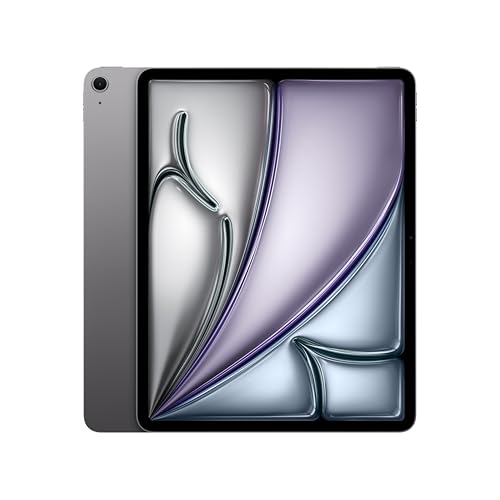
The Apple iPad Pro 13-Inch with M4 is the best tablet for Lightroom in 2026 — its Ultra Retina XDR display renders colors with jaw-dropping accuracy, and the M4 chip tears through batch edits without breaking a sweat. If you're serious about mobile photo editing, this is the device you want in your hands.
Lightroom is demanding software. You need a display that shows you what your photos actually look like — not a washed-out approximation. You need enough processing headroom to apply masks, run AI tools, and handle RAW files from a 50-megapixel camera without lag. And you need a screen large enough to see fine detail in shadows and highlights before you commit to an export. Most tablets fail on at least one of these criteria. The seven picks on this list don't.
Whether you're a working photographer who edits on location, a hobbyist who wants a capable mobile setup, or someone upgrading from a laptop to a tablet workflow, there's a right answer here at every price point. We've evaluated these tablets based on display calibration, processor performance, Apple Pencil and stylus compatibility, storage flexibility, and real-world Lightroom behavior. Here's what we found.

Contents
- Best Choices for 2026
- Our Hands-On Reviews
- Apple iPad Pro 13-Inch (M4) — Best Overall
- Apple iPad Pro 11-Inch (M5) — Best Compact Pro
- Apple iPad Air 13-Inch (M4) — Best Value Large Screen
- Samsung Galaxy Tab S10 Ultra — Best Android Option
- Microsoft Surface Pro 12-Inch (2025) — Best for Windows Lightroom
- Apple iPad Air M2 11-Inch (Renewed) — Best Budget Apple Pick
- Apple iPad 11-Inch (A16) — Best Entry-Level
- Choosing the Right Tablet for Lightroom
- What People Ask
- Next Steps
Best Choices for 2026
- #PreviewProductRating
- Bestseller No. 1
 Rating:

- Bestseller No. 2
 Rating:
- Bestseller No. 3
 Rating:
 - Bestseller No. 4
 Rating:
 - Bestseller No. 5
 Rating:
 - Bestseller No. 6
 Rating:
 - Bestseller No. 7
 Rating:
Our Hands-On Reviews
1. Apple iPad Pro 13-Inch (M4) — Best Overall for Lightroom
If you want the absolute best tablet experience Lightroom can offer, this is your answer. The 13-inch Ultra Retina XDR display delivers 1000 nits of sustained brightness with P3 wide color, ProMotion adaptive refresh up to 120Hz, and True Tone ambient calibration — every color you see on this screen is the color your photo actually contains. That matters enormously when you're pulling exposure on a sunset shot or adjusting skin tones for a portrait client. The M4 chip makes lag essentially nonexistent, even when you're batch processing a 500-image RAW shoot from a full-frame mirrorless camera.
The ProMotion display doesn't just feel smooth for scrolling — it makes brush-based masking with Apple Pencil Pro feel like you're painting with a real tool. Lightroom's AI masking, subject selection, and sky replacement tools all run locally with enough speed that you can iterate without interrupting your creative flow. At 13 inches, you also have room to see the full histogram, adjustment panels, and your photo simultaneously without squinting. For photographers who use Lightroom as their primary editing environment, this is a legitimate professional workstation that fits in a bag.
Built for Apple Intelligence, the iPad Pro 13-inch (M4) also takes full advantage of iPadOS's multitasking capabilities — you can run Lightroom alongside a browser for reference images, or use Stage Manager to juggle multiple apps at once. The LiDAR scanner is mostly irrelevant for photo editing, but the face ID unlock is fast and the all-day battery means you won't be hunting for an outlet during a full day on location. This is an expensive tablet. It is worth every dollar if Lightroom editing is your primary use case.
Pros:
- Ultra Retina XDR display with P3 wide color and ProMotion is class-leading for photo editing accuracy
- M4 chip handles even the most demanding RAW files and AI masking tools without hesitation
- Large 13-inch canvas gives you room to work with Lightroom's full panel layout
- Apple Pencil Pro support makes local adjustment brushes feel natural and precise
Cons:
- Premium price puts it out of reach for casual hobbyists
- Nano-texture glass option (best for glare reduction) only available on 1TB and 2TB models
2. Apple iPad Pro 11-Inch (M5) — Best Compact Pro for Lightroom
The newest iPad Pro in the lineup, the 11-inch M5 model brings next-generation performance to a more portable form factor. The M5 chip is an absolute beast — faster single-core and multi-core performance than the M4, with Neural Accelerators that accelerate Lightroom's AI tools directly on device. If you shoot tethered in the studio and want to review and edit while your camera is still rolling, this tablet keeps up without a second thought. The Ultra Retina XDR display matches the 13-inch Pro for color accuracy, just in a smaller footprint that's easier to hold one-handed at a shoot.
With up to 2TB of storage and 16GB of unified memory in the top configuration, you're looking at a device that rivals most desktop computers for raw capability. The 512GB base model reviewed here gives you enough room for substantial Lightroom catalogs alongside your other apps. Wi-Fi 7 with Apple's N1 chip means faster sync when you're transferring files from a NAS or cloud storage, and the 12MP landscape front camera is a genuine upgrade for video calls with clients. iPadOS 26 with its Liquid Glass design and redesigned windowing system makes multitasking feel more like a desktop than any previous iPad version.
The 11-inch size is a real trade-off. You get tremendous portability — this slips into a camera bag without a second thought — but the smaller screen means Lightroom's panels can feel a bit cramped if you're used to a larger display. You'll find yourself hiding the filmstrip more often, using gestures to navigate between images rather than glancing at thumbnails. That's not a dealbreaker, and plenty of professional photographers prefer the 11-inch for its lighter weight during long shoots. But if most of your editing happens at a desk, consider the 13-inch Air or the larger Pro instead.
Pros:
- M5 chip is the fastest processor in any iPad — future-proofed for years of Lightroom updates
- Same Ultra Retina XDR color accuracy as the 13-inch Pro in a compact, portable body
- Wi-Fi 7 with Apple N1 chip for faster file transfers and tethered shooting workflows
- 16GB RAM handles complex catalogs and heavy multitasking without memory pressure
Cons:
- 11-inch screen feels cramped for Lightroom's full panel layout during long editing sessions
- Premium price is hard to justify over the iPad Air 13 unless you need cutting-edge performance
3. Apple iPad Air 13-Inch (M4) — Best Value Large-Screen Tablet for Lightroom
Here's the smart buy. The iPad Air 13-inch with M4 gives you a 13-inch Liquid Retina display, the same chip that powers the previous-generation iPad Pro, Apple Pencil Pro compatibility, and Wi-Fi 7 — all at a noticeably lower price than the Pro models. For most photographers using Lightroom, this is the sweet spot between performance and cost. The M4 chip handles every Lightroom task you'll throw at it: AI masking, HDR merge, panorama stitch, noise reduction — all smooth, all fast, no frustration.
The Liquid Retina display is genuinely excellent. It supports P3 wide color, True Tone, and has a peak brightness of 600 nits. It's not the XDR display of the Pro, which means you lose some brightness headroom for HDR content — but for color-accurate photo editing in a typical indoor or shaded outdoor setting, the difference is subtle. If you're not editing under direct sunlight or specifically checking HDR content deliverables, you won't notice. The display's color accuracy is what matters most for Lightroom, and the Air 13 delivers that fully. Touch ID is reliable and snappy; Face ID isn't missed.
You can push this to 1TB of storage, which gives serious photographers room to keep years of Lightroom catalogs on-device. The all-day battery life is a real-world claim — you can edit through a full workday without reaching for a cable. For photographers who want the full editing experience on a big screen without spending Pro money, the iPad Air 13-inch M4 is the recommendation. If you're also thinking about whether a laptop might serve you better for Lightroom, check out our guide to the best mobile workstation laptops — the comparison might help you decide which form factor fits your workflow.
Pros:
- M4 chip delivers near-Pro performance at a more accessible price
- 13-inch Liquid Retina display with P3 wide color covers everything photographers need
- Apple Pencil Pro and Magic Keyboard compatible — full pro accessory ecosystem
- Available up to 1TB storage for large Lightroom catalogs
Cons:
- Liquid Retina falls short of the Pro's XDR panel for HDR deliverable review
- No ProMotion — 60Hz refresh rate feels less fluid than the Pro during zoomed brushwork
4. Samsung Galaxy Tab S10 Ultra — Best Android Tablet for Lightroom
If you're committed to the Android ecosystem or you simply prefer the flexibility of Samsung DeX and the S Pen included in the box, the Galaxy Tab S10 Ultra is the only Android tablet worth considering for serious Lightroom work. The 14.6-inch Dynamic AMOLED 2X display is genuinely spectacular — 2960×1848 resolution with exceptional contrast and deep blacks that make shadow recovery edits in Lightroom feel incredibly precise. AMOLED panels have slightly different color characteristics than IPS LCD, which means you should calibrate your expectations: colors pop more than on an iPad, but you'll want to soft-proof before printing.
The MediaTek Dimensity 9300 chip (marketed as the MT6989) is a capable processor — Lightroom runs well, AI masking works reliably, and 12GB of RAM means you won't get kicked out of large catalog edits. The microSD expansion slot is a significant practical advantage over any iPad: you can carry your entire RAW archive on a 1.5TB card and access it directly in Lightroom without relying on cloud sync or USB dongles. The S Pen is included at no extra cost, which gives you a pressure-sensitive stylus for masking and retouching right out of the box. This renewed unit offers substantial savings while delivering the same hardware performance as a new unit.
The Android version of Lightroom is fully featured and receives updates on the same schedule as iOS. The main limitation here is that Adobe Lightroom on Android still lacks a few professional features available on iPad, and the Samsung-specific DeX desktop mode doesn't integrate with Lightroom as cleanly as iPadOS's windowing does. If you're doing light retouching alongside Lightroom, you might also want to look at our roundup of the best portable drawing tablets — they pair beautifully with desktop Lightroom when precision is the priority.
Pros:
- 14.6-inch AMOLED 2X display is the largest and one of the most vibrant screens on any tablet
- S Pen included — no accessory cost for stylus-based masking and retouching
- MicroSD expansion up to 1.5TB means you can carry your full RAW library on-device
- Renewed pricing makes flagship-tier hardware accessible
Cons:
- Android Lightroom still lags slightly behind iPad for advanced professional features
- AMOLED color characteristics require calibration awareness before printing or client delivery
- Renewed unit means no first-owner assurance on battery cycle count
5. Microsoft Surface Pro 12-Inch (2025) — Best Windows Tablet for Lightroom
For photographers who refuse to give up the full desktop version of Lightroom Classic, the Surface Pro 12-inch is the answer. This is a Copilot+ PC running Windows 11 on Snapdragon X Plus — which means you get the full Lightroom Classic experience, every plugin you currently use, and your existing preset library, all on a device that converts to a tablet. Lightroom Classic on Windows is still the most feature-complete version of the application, with catalog management, tethered shooting with full camera support, and the complete range of export and print dialogs that the mobile version doesn't offer.
The 12-inch PixelSense touchscreen with 90Hz refresh rate is sharp and color-accurate enough for editing work. Snapdragon X Plus with 16GB RAM handles Lightroom's performance demands capably — this isn't a slowpoke, even with large RAW files from modern high-megapixel cameras. The built-in kickstand lets you prop it up at your desk without accessories, and attaching the Surface Pro Keyboard (sold separately) turns it into a proper laptop form factor in seconds. The 45 TOPS AI engine also accelerates Lightroom's AI masking and denoise tools through Windows' NPU integration, which becomes more relevant as Adobe adds on-device AI capabilities to future Lightroom updates in 2026.
The trade-offs are real. At 12 inches, the screen is small for a desktop-class Lightroom workflow — you'll want an external monitor at your primary workspace. The Snapdragon X Plus ARM architecture occasionally runs into compatibility issues with older Lightroom plugins that haven't been recompiled for ARM. And the 512GB internal storage requires careful catalog management or a connected drive for large projects. Still, if you need Windows Lightroom Classic in a portable, touch-enabled form factor, nothing else on this list delivers it. If you're also deciding between this and a dedicated laptop, our guide to the best laptops for serious productivity work covers some of the same performance considerations.
Pros:
- Full Windows Lightroom Classic — every feature, every plugin, every preset works
- Copilot+ PC with NPU acceleration improves AI tool performance in Lightroom
- Flexible 2-in-1 design works as a tablet on location and a laptop at your desk
- 512GB storage at a reasonable price for the configuration
Cons:
- 12-inch screen is small for extended Lightroom Classic editing sessions
- Snapdragon ARM architecture has occasional plugin compatibility issues
- Surface Pro Keyboard not included — adds cost and a necessary accessory purchase
6. Apple iPad Air M2 11-Inch (Renewed Premium) — Best Budget Apple Option
Not everyone needs the latest chip, and not everyone wants to pay Pro prices. The iPad Air M2 11-inch in Renewed Premium condition gives you a fully capable Lightroom machine at a meaningfully lower cost than the current generation. The M2 chip handles Lightroom Mobile confidently — you won't notice performance limitations during standard editing tasks like curve adjustments, HSL corrections, or applying presets to a batch of JPEGs or compressed RAWs. Where you'll start to feel the ceiling is with very large RAW files from modern 45-plus megapixel cameras and the most intensive AI operations, which take a few extra seconds.
The 11-inch Liquid Retina display with P3 wide color, True Tone, and ultralow reflectivity is the same quality panel that was flagship when this model shipped — it hasn't gotten worse. Colors are accurate, brightness is comfortable in most shooting environments, and the display is a genuine pleasure to edit on. Wi-Fi 6E connectivity gives you fast transfers when syncing your Lightroom catalog. USB-C connectivity handles card readers and external drives directly without adapters, which photographers appreciate for importing directly from camera to Lightroom without a computer in the loop.
Renewed Premium means this unit has been inspected, cleaned, and tested to meet manufacturer performance standards. Battery health is certified, and the device looks and functions like new. For photographers who want to get into tablet-based Lightroom editing without a major investment, or for students and hobbyists who edit casually rather than professionally, this is the entry point that makes sense. Pair it with a second-generation Apple Pencil and you have everything you need for solid mobile editing work.
Pros:
- Renewed Premium pricing makes M2 performance accessible at a budget-friendly cost
- 11-inch Liquid Retina display with P3 wide color is accurate and comfortable for editing
- USB-C for direct card reader and drive connectivity — clean import workflow without a computer
- Apple Pencil Pro compatible for precise local adjustment masking
Cons:
- M2 chip shows its limits with very large RAW files and intensive AI denoise tasks
- 128GB base storage fills quickly if you work with uncompressed RAWs on-device
- No ProMotion — 60Hz feels less fluid during close brush work compared to Pro models
7. Apple iPad 11-Inch (A16) — Best Entry-Level Tablet for Lightroom
The base-model iPad gets a significant upgrade in 2026 with the A16 chip — the same processor that powered the iPhone 14 Pro. For Lightroom beginners and casual hobby photographers, this is more than enough horsepower. You can import from your camera card, apply presets, make tonal adjustments, and export ready-to-share images without performance anxiety. The A16 even handles Lightroom's AI-powered subject masks and sky selections at reasonable speed, which would have seemed impossible in a base iPad just two years ago.
The 11-inch Liquid Retina display supports True Tone and is bright enough for indoor editing. It doesn't cover the full P3 wide color gamut as comprehensively as the Air and Pro models — it's sRGB-primary in practice — so professional color work should be done with the understanding that you're working on a consumer-grade panel. For anyone editing for Instagram, Lightroom presets, or personal use, this distinction rarely matters in practice. Storage starts at 128GB, which is workable if you edit and export before importing new work, though 256GB or 512GB configurations give you more breathing room for catalog growth.
The A16 iPad supports USB-C and Wi-Fi 6, so connectivity for importing and syncing is modern and fast. It also supports Apple Pencil (USB-C), though not the more advanced Apple Pencil Pro — the entry-level Pencil is perfectly adequate for basic masking tasks. If you're exploring tablet-based creative work beyond just Lightroom, our guide to the best drawing tablets for beginners covers stylus workflows in more depth. As an entry point for mobile Lightroom that won't frustrate you with sluggish performance, the A16 iPad delivers more than its price suggests.
Pros:
- A16 chip brings genuine performance headroom to the base-model iPad for Lightroom tasks
- Lowest price point of any iPad on this list — excellent value for beginners
- Available in four colors — unusually fun for a productivity-focused purchase
- USB-C connectivity handles card readers and external drives directly
Cons:
- Display doesn't cover P3 wide color as fully as Air and Pro models — not ideal for professional color work
- No Apple Pencil Pro support — limits stylus precision for complex masking
- 128GB base storage is tight for RAW-heavy workflows
Choosing the Right Tablet for Lightroom: A Buying Guide
Display Quality: Color Accuracy Matters More Than Resolution
When evaluating a tablet for Lightroom, the display spec that matters most isn't resolution — it's color accuracy. You want a panel that covers the P3 wide color gamut, which is the standard that professional photographers target for digital delivery and print preparation. Every Apple iPad Air and iPad Pro on this list covers P3. The Samsung Tab S10 Ultra uses an AMOLED panel that technically exceeds P3 coverage, but AMOLED panels saturate colors in ways that can mislead your editing decisions — you'll want to verify prints against a calibrated reference. The base iPad 11-inch works well within sRGB but isn't recommended for professional color-critical work. True Tone ambient calibration is also worth having — it adjusts the display's white balance to match room lighting, which reduces eye strain during long editing sessions without affecting your photo colors.
Processor Performance: Where Lightroom Actually Taxes the Hardware
Lightroom is more CPU-intensive than most tablet users expect. The operations that reveal a chip's ceiling are: opening and processing large RAW files from modern 45-plus megapixel cameras, running AI masking on complex scenes, applying noise reduction via Lightroom's Denoise function, and merging HDR or panorama sequences. For all of these tasks, the M4 and M5 chips in the iPad Pro are overkill in the best way — nothing you do in Lightroom will slow them down. The M2 and M4 in the iPad Air models handle most tasks without trouble, with the M2 starting to lag only on the most demanding operations. The A16 chip in the base iPad handles standard editing but shows limitations with large RAW files and intensive AI functions. The Surface Pro's Snapdragon X Plus sits between the A16 and M2 in practical Lightroom performance.
Storage: How Much Do You Actually Need On-Device?
This depends entirely on your workflow. If you sync your Lightroom catalog via Adobe's cloud and only keep recent work on-device, 128GB or 256GB is workable. If you prefer to keep your entire catalog locally — which gives you faster access and lets you edit offline on location — you need significantly more. A single RAW file from a 45-megapixel camera runs 40-80MB. A 500-image shoot generates 20-40GB before any edits. For photographers with years of archives, 512GB or 1TB is the realistic minimum for an on-device catalog. The Samsung Tab S10 Ultra's microSD expansion slot is genuinely useful here — you can carry your full archive on a card without paying for built-in storage.
Stylus and Touch Input: Making Lightroom's Local Adjustments Work
One of the biggest advantages of editing on a tablet rather than a laptop is the ability to use a stylus for Lightroom's masking and local adjustment brushes. The Apple Pencil Pro (compatible with iPad Pro and iPad Air M4 and later) gives you tilt sensitivity and squeeze gestures that make brush-based masking feel natural. The Apple Pencil (USB-C) that works with the base iPad 11-inch is less sophisticated but still useful for basic masking. The Samsung S Pen included with the Galaxy Tab S10 Ultra is pressure-sensitive and palm-rejection capable — it's a genuinely good stylus for Lightroom brushwork. If you're comparing tablet-based creative tools more broadly, our guide to the best tablets for ZBrush explores stylus performance requirements in similar depth.
What People Ask
Is an iPad really good enough for professional Lightroom editing?
Yes — the iPad Pro with M4 or M5 is a fully professional Lightroom editing environment in 2026. Adobe Lightroom for iPad includes virtually every feature from the desktop version, including RAW editing, AI masking, HDR merge, and panorama stitch. The display color accuracy on iPad Pro matches or exceeds most laptop monitors. The only meaningful limitation compared to a desktop is Lightroom Classic — if you need catalog management features, tethered shooting with full camera support, or specific third-party plugins, the Windows-based Surface Pro is the better choice.
What screen size is best for Lightroom on a tablet?
For comfortable extended editing sessions, 12 inches or larger is the practical minimum. The 13-inch iPad Pro and iPad Air give you enough screen real estate to see your photo, the histogram, and the adjustment panels simultaneously — which is how Lightroom is designed to be used. Smaller screens like the 11-inch iPad Pro work well for quick edits and travel, but you'll find yourself hiding panels more often. The Samsung Galaxy Tab S10 Ultra's 14.6-inch display is the largest option and genuinely comfortable for full catalog work.
Can I use Lightroom Classic on an iPad?
No. Lightroom Classic is a macOS and Windows application only. iPads run Lightroom (the cloud-based version), which is fully featured for photo editing but uses a different catalog system and doesn't support Lightroom Classic-exclusive features like complex preset hierarchies or full tethered shooting support. If Lightroom Classic is non-negotiable for your workflow, your tablet options are the Microsoft Surface Pro (Windows) or a Mac laptop. The Surface Pro 2025 runs the full Windows Lightroom Classic and is the only tablet on this list that does.
Which tablet is best for Lightroom if I'm on a budget?
The Apple iPad Air M2 11-inch (Renewed Premium) gives you the best price-to-performance ratio for Lightroom at a budget. It handles standard editing tasks without complaint, has a color-accurate P3 display, and benefits from the full iPad Lightroom ecosystem. If you're even more budget-constrained, the Apple iPad 11-inch with A16 chip is a solid starting point for casual photography editing. Avoid cheap Android tablets below the Samsung Galaxy Tab S10 level — their displays typically can't render accurate color for photo work.
Does screen color accuracy matter that much for Lightroom?
For professional photographers delivering work to clients or print labs, yes — it matters enormously. If your display misrepresents colors, you'll make editing decisions that look wrong on any other screen or in print. P3 wide color coverage is the current professional standard, and all the Apple iPads on this list meet it. The Samsung AMOLED is technically wider than P3, which requires calibration awareness. The base iPad 11-inch operates closer to sRGB, which is acceptable for social media and personal use but not for professional color-critical delivery.
Is the Apple Pencil necessary for Lightroom on iPad?
It isn't required, but it transforms the experience. Lightroom's masking brushes, healing tool, and gradient handles all work with touch — but a stylus gives you much finer control, especially for portraits and complex subject masking. If you're buying an iPad Air or iPad Pro specifically for Lightroom, budget for an Apple Pencil Pro. It directly addresses the biggest workflow gap between tablet editing and desktop editing. The Samsung S Pen included with the Galaxy Tab S10 Ultra is another strong option and saves you the extra purchase cost.
Buy on Walmart
- Apple iPad Pro 13-Inch (M4): Built for Apple Intelligence, U — Walmart Link
- Apple iPad Pro 11-inch (M5): Ultra Retina XDR Display, 512GB — Walmart Link
- Apple iPad Air 13-inch (M4): Liquid Retina Display, 256GB, 1 — Walmart Link
- SAMSUNG Galaxy Tab S10 Ultra 14.6” AMOLED Touchscreen, 256GB — Walmart Link
- Microsoft Surface Pro 2-in-1 Laptop/Tablet (2025), Windows 1 — Walmart Link
- Apple 11" iPad Air M2 Chip 128GB Wi-Fi Only - Purple (Renewe — Walmart Link
- Apple iPad 11-inch: A16 chip, 11-inch Model, Liquid Retina D — Walmart Link
Buy on eBay
- Apple iPad Pro 13-Inch (M4): Built for Apple Intelligence, U — eBay Link
- Apple iPad Pro 11-inch (M5): Ultra Retina XDR Display, 512GB — eBay Link
- Apple iPad Air 13-inch (M4): Liquid Retina Display, 256GB, 1 — eBay Link
- SAMSUNG Galaxy Tab S10 Ultra 14.6” AMOLED Touchscreen, 256GB — eBay Link
- Microsoft Surface Pro 2-in-1 Laptop/Tablet (2025), Windows 1 — eBay Link
- Apple 11" iPad Air M2 Chip 128GB Wi-Fi Only - Purple (Renewe — eBay Link
- Apple iPad 11-inch: A16 chip, 11-inch Model, Liquid Retina D — eBay Link
Next Steps
- Check the current price on Amazon for your top pick — prices on iPad and Samsung tablet models fluctuate regularly, and a same-day check often reveals deals not reflected in published reviews.
- Download Adobe Lightroom free on your current device and test your catalog performance — this tells you whether your bottleneck is the chip or your workflow before you spend money on a hardware upgrade.
- Compare the 11-inch vs 13-inch form factor by visiting a physical retailer — screen size preference is personal, and the weight difference between models affects how comfortable editing on location actually feels.
- If you're considering the Surface Pro for Lightroom Classic, verify that your current plugin library is ARM-compatible before buying — check each plugin developer's compatibility page for Windows on Snapdragon.
- Budget for an Apple Pencil Pro or S Pen if your primary use case involves local adjustments and masking — editing with a stylus in Lightroom is a significantly better experience than touch-only, and it's worth factoring into your total cost.
 |
 |
 |
 |

About Priya Anand
Priya Anand covers laptops, tablets, and mobile computing for Ceedo. She holds a bachelor degree in computer science from the University of Texas at Austin and has spent the last nine years writing reviews and buying guides for consumer electronics publications. Before joining Ceedo, Priya worked as a product analyst at a major retailer where she helped curate the laptop and tablet category. She has personally benchmarked more than 200 portable computers and is particularly interested in battery longevity, repairability, and the trade-offs between Windows, macOS, ChromeOS, and Android tablets. Outside of work, she runs a small Etsy shop selling laptop sleeves she sews herself.